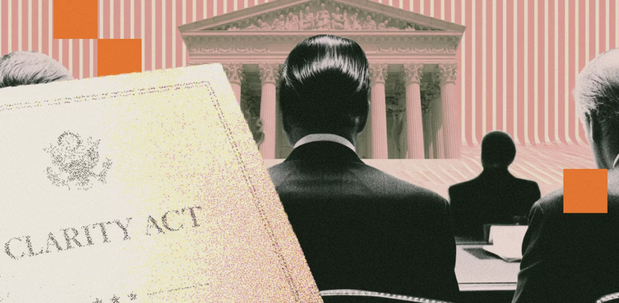
As key officials are set to leave office, who will take the lead on the CLARITY Act in the future?
By: Cleve Mesidor
Translated by: Chopper, Foresight News
The intense debate this year surrounding the Digital Asset Market Structure Act (the CLARITY Act) was not aimed at completely rejecting the legislation. At its core, this legislative struggle is about who gets to draft the bill.
Even Senator Elizabeth Warren, widely viewed by the industry as crypto's largest adversary, wants a seat at the rulemaking table. In fact, since the Senate version of the bill was rejected in January, the list of groups seeking to participate in drafting the legislation continues to grow.

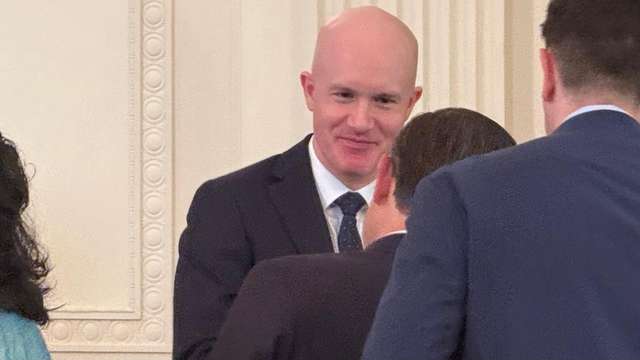
On December 11, 2025, Charles Scharf, President and CEO of Wells Fargo (right), departs after meeting with members of the Senate Banking Committee at the U.S. Capitol Visitor Center.
Coinbase CEO Brian Armstrong stated in a recent social media post: "In January, I opposed submitting the draft bill to committee for a vote because it still had numerous provisions that needed improvement regarding decentralized finance (DeFi), tokenization, Commodity Futures Trading Commission (CFTC) authority, and stablecoin yield-related clauses. The draft at the time was severely flawed, would harm the interests of the crypto industry, and faced fractured support across factions, making passage impossible. We worked with multiple parties to amend the bill to give it a realistic chance of passing. In the revised draft submitted to the committee for deliberation roughly four months later, all four issues I raised were addressed. I am proud of this work, and I would do it again because it resulted in a much better piece of legislation. This is just one step in a long process."
Ironically, the response from numerous stakeholders to Armstrong's January move was largely, "We want to help revise this too." Various institutions have stepped forward, claiming they want to team up to "make this bill better."
Conflicting Demands from Multiple Parties
Banks were the first to voice opposition to the revision plan driven by Armstrong. This subsequently led the White House to host several small summits, inviting executives from both crypto firms and traditional banks to attend.
Shortly after, law enforcement agencies raised objections, expressing concern over developer protection clauses and risks related to illicit finance.
Disclosure documents revealed in June showed that President Trump holds $1.4 billion in crypto asset gains, which significantly boosted bipartisan calls for stronger ethics provisions in the bill.
Regulatory experts also continue to issue warnings that both the Commodity Futures Trading Commission (CFTC) and the Securities and Exchange Commission (SEC) are facing vacancies in their commissioner seats.
The political tug-of-war between the legislative and executive branches over the crypto legislative process is also shaping broader perceptions of the emerging industry.
Even so, bipartisan senators on the Senate Banking and Agriculture committees continue to negotiate, attempting to find compromises and push the legislation forward.

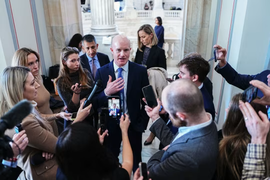
On July 16, 2025, Blockchain Association CEO Summer Mersinger (center) attends a hearing before the House Ways and Means Oversight Subcommittee on "Building a Global Crypto Hub: Establishing 21st-Century Digital Asset Policy," held at the Longworth House Office Building.
What Happens Next?
Nearly two weeks have passed since the final vote on the CLARITY Act failed. Wounds have yet to fully heal, and policy advocates with opposing stances are still reviewing the outcome, all claiming their goal is to refine the CLARITY Act.
Some are looking toward the lame duck session following the midterm elections, hoping to revive the bill. Others pin their hopes on financial regulators issuing direct rules to fill regulatory gaps. Meanwhile, another camp believes the legislation is already dead in the water.
But most stakeholders have already been quietly crafting strategies for the next Congress. Regardless of whether Democrats retake the House or control both chambers, external factions will need stronger bipartisan approaches and tactics.
The Banking Policy Institute (BPI) made it clear in a statement regarding the final vote on the CLARITY Act that its member institutions will not back down: "The entire U.S. banking sector continues to support the establishment of a robust, long-term regulatory framework for digital assets that will cement America's global leadership position for decades to come. We believe Congress can achieve this objective while also safeguarding the bank credit facilities that underpin economic growth. As lawmakers consider next steps, we recommend targeted adjustments to policies surrounding stablecoin yield. We are prepared to collaborate with all stakeholders to accomplish this critical goal."
Crypto trade associations have also declared their intention to press on. Blockchain Association CEO Summer Mersinger announced her upcoming departure last Friday, with the association's founding executive Kristin Smith returning to serve as interim CEO. Following the vote, Mersinger stated: "The work to deliver the long-awaited consumer protection provisions and clear regulatory rules for U.S. digital asset users and entrepreneurs has not ended. Tens of millions of Americans hold digital assets, yet U.S. builders still lack clear federal regulations; meanwhile, Europe, the UK, Singapore, the UAE, and Japan have already established their own regulatory frameworks… We will not stop until the U.S. industry secures clear regulatory guidelines."

On December 11, 2025, U.S. Senate Banking Committee Senator Raphael Warnock (Democrat, Georgia, left) crosses paths and shakes hands with Senator Thom Tillis (Republican, North Carolina) during a meeting with banking executives at the U.S. Capitol Visitor Center.
Key Republican Negotiators Step Down
Unfortunately, several key officials who have served as crucial bridges in the nearly decade-long debate over crypto policy and regulation are departing Washington.
North Carolina Senator Thom Tillis will not seek a third term and is stepping down at the end of the year. He negotiated a compromise on yield-related issues with Maryland Democratic Senator Angela Alsobrooks and collaborated with Arizona Senator Ruben Gallego to push the White House to incorporate stronger bipartisan ethics provisions.
Wyoming Senator Cynthia Lummis has decided not to run for another six-year term, stating she will return to her ranch. As Chair of the Senate Banking Committee's Digital Assets Subcommittee, Lummis spearheaded the legislative efforts for the CLARITY Act. Known for her bipartisan collaboration, she previously co-sponsored the GENIUS Act alongside New York Senator Kirsten Gillibrand. Filling the vacancy she leaves behind will be difficult.
The core regulatory agencies overseeing the CLARITY Act face staffing shortages as well. SEC Commissioner Hester Peirce, serving her second term, has her tenure expiring this Friday as she prepares to return to academia. She has been a highly influential figure in crypto regulation since 2018. Prior to departing on October 2, Peirce posted on X platform last week directed at the White House: "A subtle yet vital task for regulators is to maximize individuals' freedom to make the best choices for themselves and their families within a reasonable regulatory framework, fostering confidence in transactions. As I step down, I am confident that under the excellent leadership of Chair Paul Atkins and Commissioner Mark Uyeda, the outstanding SEC team will continue to maintain this balance."
When Washington resumes legislative discussions to craft long-term policies that drive innovation and protect U.S. competitiveness, the departures of Peirce, Lummis, and Tillis will have a significant impact.
The Next Congress and Crypto Legislation
New and current members of the 120th Congress must collaborate with crypto trade associations, banking lobbying groups, law enforcement agencies, compliance organizations, and other entities seeking to refine the Digital Asset Market Structure Act before the legislation can possibly be signed into law and enter the subsequent complex rulemaking process. Given that Congress has never passed a bill that perfectly satisfies all parties, these objectives are undoubtedly ambitious. Bipartisan compromise bills stand the best chance of surviving congressional procedures.
There is reason to believe that institutions with deep connections in both partisan camps will be in a strong position to assist the next Congress in drafting a new version of the CLARITY Act.
Join TechFlow official community to stay tuned
Telegram:https://t.me/TechFlowDaily
X (Twitter):https://x.com/TechFlowPost
X (Twitter) EN:https://x.com/BlockFlow_News
 Forbes