Apple waited for him for 12 years, NVIDIA can’t survive past the fourth day after Jensen Huang’s departure.
Author: David, TechFlow
The cruelest yet most fascinating proposition in business history lies in the tug-of-war between empire-building founders and the empires they forged with their own hands.
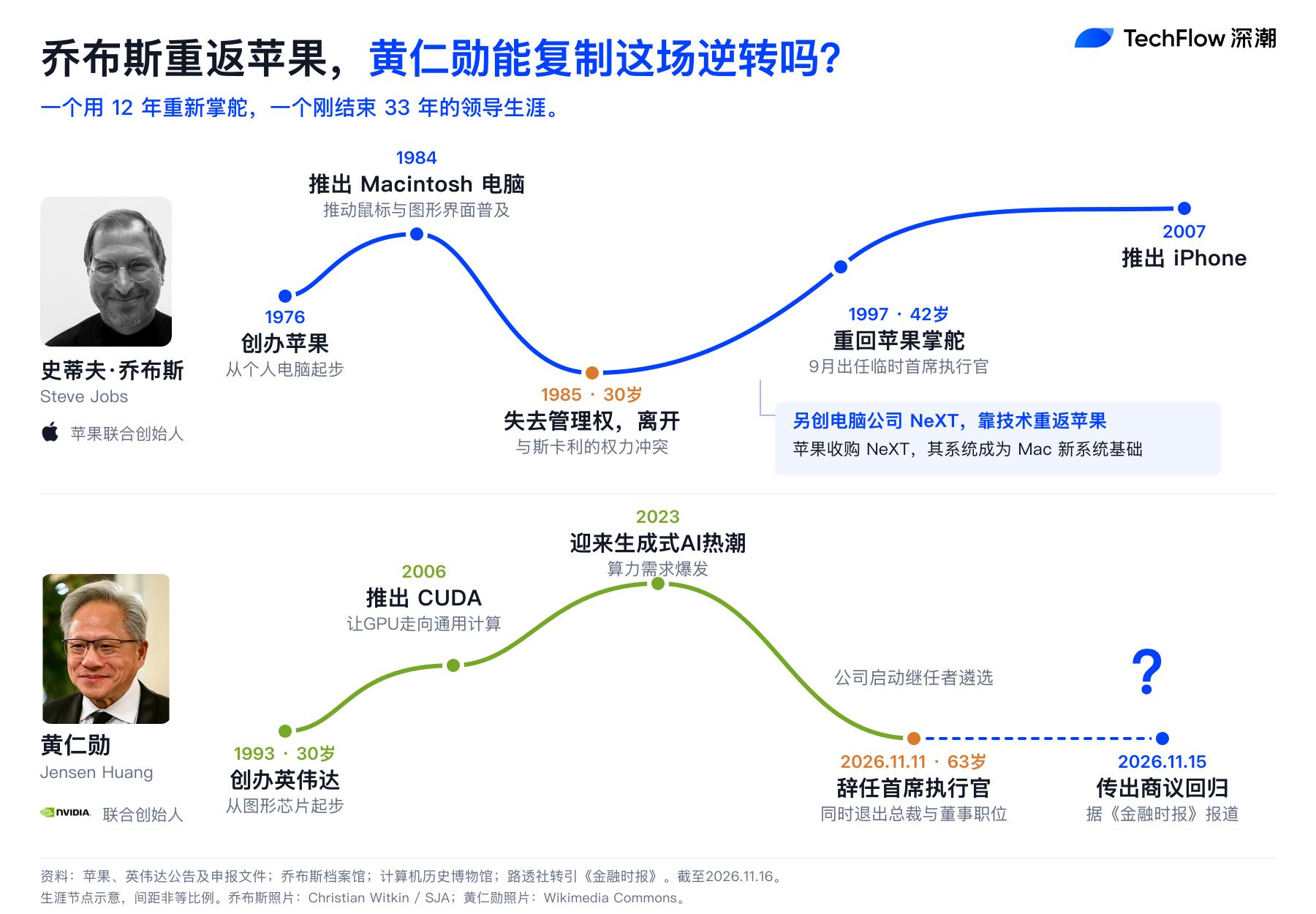
In 1985, a 30-year-old Steve Jobs lost a power struggle with John Sculley and was ousted from Apple, the company he co-founded. He spent 12 years on the bench in Silicon Valley, founded NeXT, bet big on Pixar, stumbled through those wilderness years, and finally returned to Apple in 1997 with new technology, ultimately crafting a comeback legend in business history with the iPhone.
Forty years later, another tech empire with a market capitalization exceeding $4 trillion traced an arc at a completely different pace.
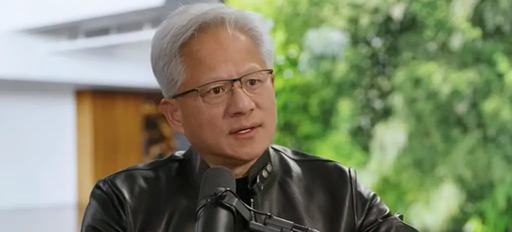
On November 11, 2026, 63-year-old Jensen Huang announced his resignation as CEO and stepped down from the board amid personal life controversies and external investigations, personally bringing a close to a leadership career spanning 33 years.
Yet, before the institution could even adjust to the silence of losing its core pillar, the plot took a dramatic turn within 100 hours.
According to disclosures by The Financial Times, Huang has already been secretly plotting paths to reclaim the CEO role with his inner circle. Allies in Silicon Valley spontaneously formed a "war room" for him, Musk publicly weighed in in support, hundreds of thousands flooded petition websites to sign, and even previously silent Wall Street shareholders turned coat and pressured the board to clear the way for Old Huang's return.
If Apple waited 12 years for Jobs back then, can today's NVIDIA barely endure until the fourth day after Huang's departure?
This wasn't about suddenly forgiving his moral flaws. It was only after the man in the black leather jacket truly walked out of the building that the entire computing power world panicked and realized they might simply not be able to afford the cost of losing Jensen Huang.
100 Hours in the Wilderness
During the days Huang left the building, Silicon Valley experienced a rare sense of weightlessness.
In the initial expectations of Washington regulators and NVIDIA's board, this was supposed to be a standard modern corporate governance maneuver: separate the founder's personal scandal from the company itself, initiate a succession selection process, bring in a polished, flawless corporate executive acceptable to both political and business circles, and let the giant continue its steady course.
But they clearly underestimated the true operating logic of the NVIDIA beast.
The day Old Huang handed over power, panic began spreading underwater across the entire AI industry chain. Major tech giants were the first to lose their composure; they never cared about his marriage, but rather who would now allocate the queue of reserved Blackwell chips, and who could make multi-billion-dollar procurement calls for the next-generation architecture over a private drinks gathering, just as Old Huang had done.
The crisis quickly translated into action.
The "war room" composed of tech giants and venture capitalists operated quietly, with Musk openly backing him on social media. Industry titans like Epic Games co-founder Tim Sweeney and Y Combinator president Garry Tan continuously spoke out. An open letter titled "Standing with Jensen Huang" gathered tens of thousands of signatures within days. NVIDIA engineers and Silicon Valley peers even discussed how the entire compute supply chain would have to realign if Old Huang couldn't return with dignity.
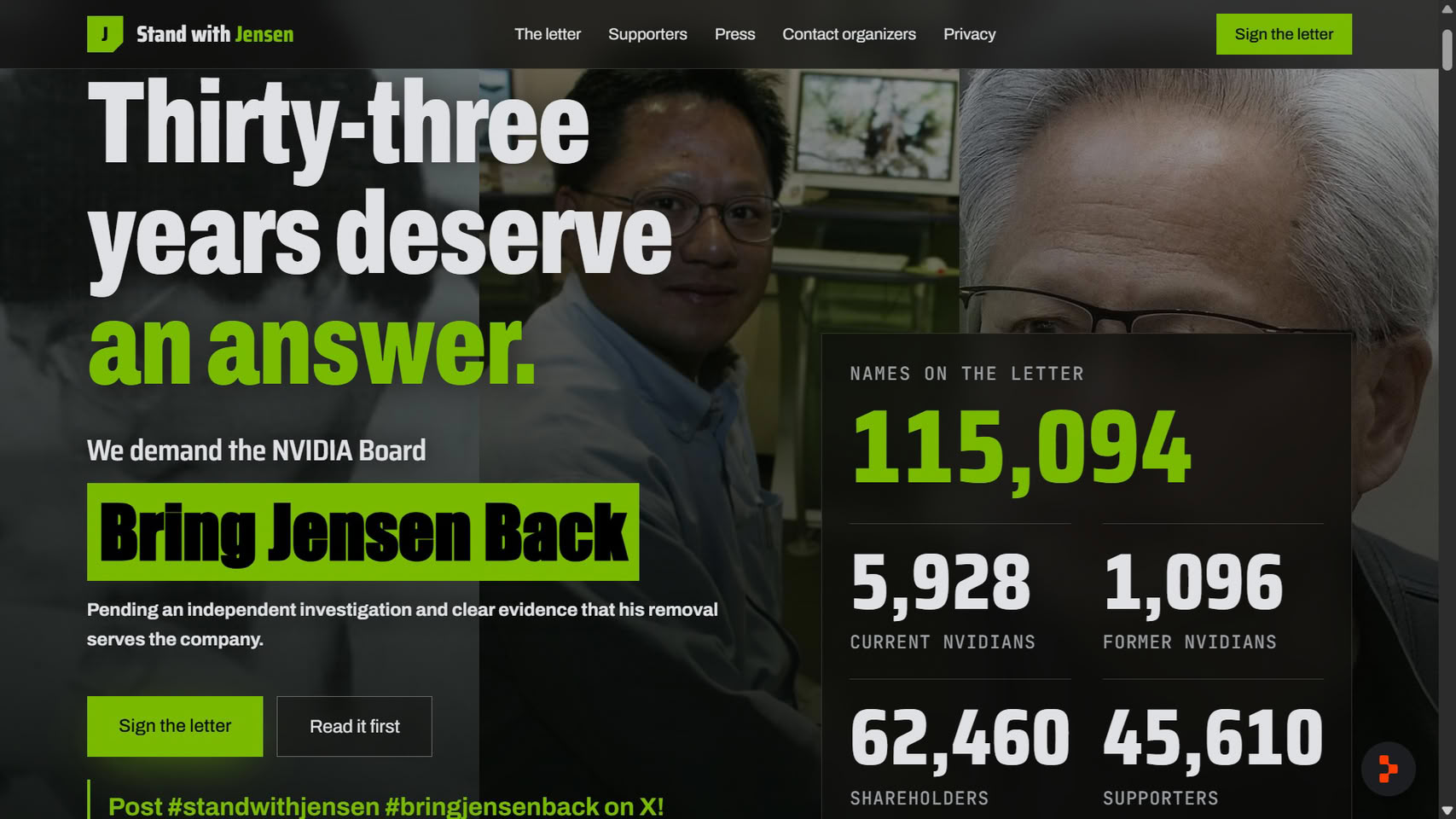
When Jobs was ousted from Apple back then, Silicon Valley responded with detached sighs; but when Huang was pushed off his pedestal, everyone on the mountain was eager to pull him back up.
Becausethis was no longer a mere family matter for one company; the engine of the entire AI era was tied to Old Huang's personal schedule. What everyone defended wasn't a billionaire's reputation, but the computing power order upon which they rely for survival.
NVIDIA Is Not Apple in 1985
Why did Jobs have to wander the wilderness for 12 years back then, while Huang plotted his way home in just four days?
The fundamental difference, I believe, lies in the entirely different ecological niches the two companies occupied in their respective eras.
Apple in 1985 was essentially just a PC manufacturer. Even without Jobs' foresight, the PC market continued to expand steadily, and Silicon Valley had an entire alternative ecosystem including Microsoft and IBM. The industry could afford Apple's mediocrity, and could also spare its decade-plus missteps in wrong product lines. Jobs' talent was irreplaceable, but the Apple of that day didn't choke the throat of the entire industry.
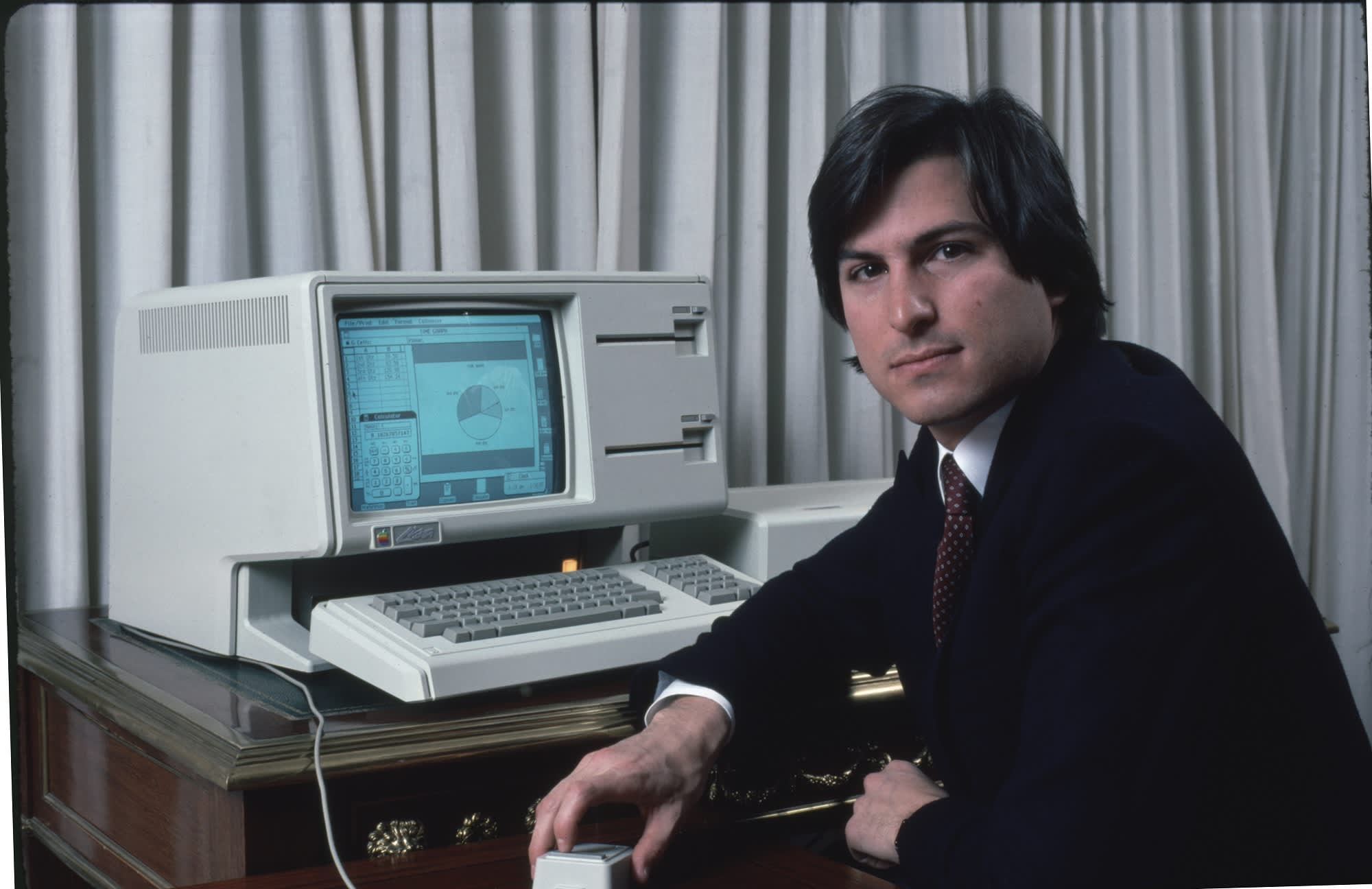
NVIDIA is a completely different story. It monopolizes nearly 90% of global advanced AI computing power, and its commercial empire is a precision arsenal hand-built by Huang's iron will over 33 years.
Within this trillion-dollar giant, there has never truly been a number-two deputy.
Old Huang long maintained an extremely flat management structure, with dozens of core VPs reporting directly to him. From the lowest-level CUDA compiler code, to optical module wiring inside server racks, to negotiating advanced packaging capacity with TSMC's CC Wei, every major decision bore the imprint of his personal nerve endings.
More importantly, NVIDIA doesn't sell consumer goods; it sells a business alliance built on exceptionally high trust costs. Who gets capacity, who gets priority testing rights for next-gen architectures, and even who survives compute shortages, all hinges on the tacit understandings Huang has maintained over the years through personal credibility.
Remove Jobs, and 1985 Apple just swapped drivers for mediocre ones; remove Huang, and today's NVIDIA is more like having its central processing unit directly yanked out. In the frenetic race where compute arms races change daily, no professional manager could take over this massive machine—which runs entirely on personal intuition and prestige—within a single week.
Moral Purity Steps Aside as Reality Takes Over
Behind this lightning reversal, the cold reality of the business world once again crushed the squeamishness of political morality.
The push that forced Huang's resignation looked on the surface like controversy over personal conduct, but at its core was Washington's strict scrutiny of supply chains routed through Southeast Asia. Politicians wanted to see a more compliant, cleaner NVIDIA, even attempting to use this moment to drive Washington's will into the very heart of the chip empire.
But capital and the market ultimately voted with their feet.
The moment news of Old Huang's resignation broke, Wall Street's major shareholders moved first. Core investment firms including hedge funds Altimeter and Atreides chose to write directly to the board after a brief silence. Their wording was diplomatic, but the underlying calculus was brutally direct: at a critical juncture in great-power tech rivalry, allowing NVIDIA to implode in leaderless infighting was gambling trillions of dollars in wealth and national compute advantages.
In the real world of business, moral flaws are often shockingly fragile when faced with irreplaceable commercial value.
Whether it was the Megaspeed compute channels Huang established or complex offshore structures, both were originally designed to satisfy the market's genuine hunger for compute. When everyone realized that swapping in a "clean" CEO meant slowing chip iteration rhythms and untangling the global supply chain, even the capital tycoons who originally demanded strict punishment began tacitly accepting, and even pushing for, the return of the old god.
So-called institutional compliance, facing the relentlessly rolling chariot of AI interests, can only manage an emergency brake stop.
The Old God on His Way Back
When Jobs returned to Apple back then, he relied on the NeXT technology and mature mindset honed in the wilderness. Over ten years, he built the iPod and MacBook, finally unleashing the iPhone to complete a textbook-style self-redemption, becoming an impeccable saint on the business altar.
But if 63-year-old Old Huang truly completes this lightning restoration in just a few days, what he faces will inevitably not be a Jobs-style romantic script.
He doesn't need to prove his technical prowess to the world; every component of this company bears his name. But he must face a reality fractured by cracks: the board has begun to brace itself, Washington's regulatory probes have pierced inward, and the fissures once suppressed by strongman will are now thrust into the spotlight. Returning to the CEO chair won't be a triumphal march for him; it will be a second stint at the helm shackled in irons.
Still, this mere 100-hour dramatic reversal has already laid bare an irrefutable fact to the world.
Between the flawless illusion of institutional compliance and an irreplaceable super-individual, the jungle law of the AI era unhesitatingly chooses the latter. The era may desire a flawless modern corporation, but this fiercely accelerating compute track may still desperately depend on that imperfect madman in a worn leather jacket, working 14 hours a day.
Join TechFlow official community to stay tuned
Telegram:https://t.me/TechFlowDaily
X (Twitter):https://x.com/TechFlowPost
X (Twitter) EN:https://x.com/BlockFlow_News
 深潮TechFlow