a16z: CLARITY Act Hangs by a Thread, Only the Senate Can Prevent the Next FTX-Style Disaster
Written by: Miles Jennings, Head of Policy and General Counsel at a16z crypto
Translated by: Chopper, Foresight News
Nearly four years have passed since the collapse of FTX, the cryptocurrency exchange founded by Sam Bankman-Fried (SBF). During this period, the U.S. Congress has held multiple hearings, the Department of Justice has secured convictions regarding FTX's misappropriation of customer funds, and creditors have already recovered nearly $10 billion in assets.
Yet Congress has failed to establish a set of protective mechanisms that could have prevented or curtailed this fraud much earlier.
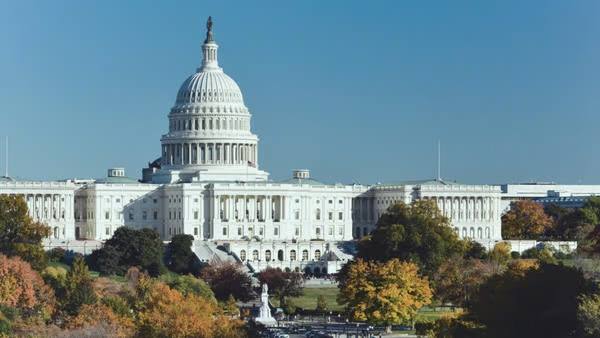
Congress has been advancing related legislation for years. The House has passed the Market Structure Bill twice, granting regulators the authority to prevent an FTX-like scenario. The most recent vote occurred in July 2025, passing along party lines with 294 votes in favor and 134 against. Earlier this year, the Senate Banking Committee and the Senate Agriculture Committee also reviewed corresponding versions of the bill—the CLARITY Act—which is set for its first floor debate in the full Senate.
On September 15, the Senate will vote on whether to proceed with debates on the bill. If enacted into law, crypto exchanges serving U.S. users will be required to implement the risk management safeguards that were absent during the FTX era; if it fails, these security vulnerabilities will remain.
The collapse of FTX was not due to regulators failing to see through a sophisticated scheme. The fraud itself was technologically rudimentary: FTX simply deliberately concealed its misappropriation of customer assets. At the time, the industry lacked independent custodians, segregation of client funds, disclosure requirements, and regulatory oversight to enforce these protections. Once the fraud was exposed, users triggered a mass withdrawal run, causing the platform to crumble and leaving an $8 billion hole.
These safeguard mechanisms, which could have prevented the crisis, have existed for nearly a century—they simply never covered the digital asset spot market. As early as the Commodity Exchange Act of 1936, futures commission merchants were required to segregate customer assets. Securities brokers holding customer funds must comply with regulations on custody, reserves, capital adequacy, disclosures, and audits, including the SEC's Customer Protection Rule. The Securities Investors Protection Act of 1970 established complementary frameworks for broker-dealer insolvency scenarios.
These are not novel innovations, but rather long-standing rules in maturely regulated markets.
In other words, the status quo that various factions in Washington have criticized for years is not a neutral natural state. Whether the digital asset market will survive is no longer the question; the real issue is what rules will govern it.
The CLARITY Act brings digital commodity brokers, dealers, and exchanges under regulatory oversight, introducing proven regulatory mechanisms from traditional finance into the crypto sector: segregation of customer property, qualified custodianship, restrictions on conflicts of interest involving affiliates, mandatory disclosures, listing standards, insider trading restrictions, and the appointment of a chief compliance officer responsible for legal adherence.
It resolves the longstanding jurisdictional disputes between the SEC and the Commodity Futures Trading Commission (CFTC), which have historically been subject to expansive interpretations and instrumentalization. It moves away from relying on project promoters' unverifiable claims of being "sufficiently decentralized," replacing them with codified statutory criteria. It establishes issuer disclosure obligations, lock-up periods, and restrictions on insider trading.
In short, the CLARITY Act requires the digital asset market and its intermediaries to comply with regulatory rules broadly equivalent to those governing traditional markets and intermediaries.
Currently, three lines of opposition are blocking the bill from coming up for a full Senate vote. First, the argument that the bill fundamentally deregulates the crypto industry; second, concerns that public officials holding crypto assets would profit from it; third, the claim that stablecoin yield returns will drain bank deposits. Each viewpoint warrants discussion, but none justifies maintaining the status quo.
First, some argue that CLARITY's "deregulation" will allow cryptocurrencies to develop unchecked. This premise is flawed, resting on the assumption that all crypto assets inherently fall under securities regulation. That is not the case, as confirmed by multiple court rulings. The boundaries of which crypto assets qualify as securities remain unclear, with mainstream assets like Bitcoin and Ethereum generally not classified as securities.
The CLARITY Act attempts to resolve two extreme misconceptions: that everything on-chain is a security, and that there are absolutely no securities on-chain. Neither extreme reflects reality, and ordinary consumers ultimately pay the price for unresolved jurisdictional disputes. The "Wild West" critics refer to is precisely the current status quo.
It was precisely the absence of rules that allowed FTX to masquerade as a legitimate enterprise. An offshore exchange faces virtually no disclosure requirements yet competes directly with domestic institutions, while local players are forced to navigate fragmented state-level regulation, shifting asset classifications, and inconsistent enforcement actions. This is far from a level playing field; it actively penalizes compliant participants.
Second, the concern that officials holding cryptocurrencies might profit from them. This worry is reasonable; public servants should not enrich themselves from industries they regulate. However, this is a matter of government ethics governance that applies across all asset classes.
Whether a trillion-dollar market requires a federal regulatory framework and whether public officials should adhere to ethical standards are two distinct issues. Tying them together amounts to rejecting legislation for one out of displeasure with the other, ultimately exposing millions of market participants to risk.
This concern is not unique to cryptocurrency. Officials trade stocks, own real estate, and hold private company shares, while conflict-of-interest rules constraining them do not target specific asset classes. Crafting ethics rules around a single asset is akin to whack-a-mole, as anyone determined to profit can easily circumvent them. If Congress deems existing rules too weak, the solution should be to strengthen oversight across all assets, not to tie the Market Structure Bill to addenda that target only one asset class while ignoring others.
The CLARITY Act text itself already contains unprecedented constraint provisions. Vetoing the bill does not restrict anyone's asset holdings; instead, it leaves relevant activities entirely unregulated. The bill mandates that token issuers fulfill disclosure requirements, lock-up periods, and insider trading restrictions comparable to those of publicly traded companies—safeguards that currently exist as a complete void. The "opaque, rule-less asset market" opponents warn of is exactly the status quo that will persist if the bill is rejected.
Third, stablecoin rewards will drain deposits from the banking system. Banks argue that stablecoin balances offer yield-like returns, effectively acting as unregulated savings accounts that siphon off bank funding originally destined for household and small business lending.
This view currently lacks empirical support. Even if the risk were valid, the negotiated, amended version of the bill addresses it: it prohibits purely passive investment yields but permits incentive rewards derived from genuine business activity. The latest version also authorizes the Treasury Department to impose additional restrictions if concrete evidence of deposit flight emerges.
But this is not merely a deposit issue. The White House Council of Economic Advisers estimates that a blanket ban on such yields would impact bank credit by approximately $2.1 billion, which represents just 0.02% of total bank lending volume. This appears more like an anti-competitive demand disguised as a financial stability rationale.
Even if the Senate version of the CLARITY Act is sent to the president for signature, it will inevitably be a product of multi-party compromise—that is how legislation works. The crypto industry accepts a federal regulatory framework in exchange for clear, codified law. No one can deny that this trade-off is far superior to perpetuating the status quo.
Regulators cannot solve this dilemma alone. Rules issued by agencies can be overturned when a new administration takes office; any regulatory framework can be challenged in court, dragged through litigation for years. In recent years, the legal treatment of the entire industry has indeed swung dramatically with changes in presidential administrations.
Firms holding other people's funds should not operate within a compliance framework that a future administration might dismantle; major institutions will not invest in critical infrastructure under such uncertainty. Regulatory certainty is itself a public good, achievable only through congressional legislation.
If the Senate fails to act now, the next major crypto crisis will inflict even greater damage.
When FTX collapsed, the crypto industry was largely confined to the retail fringes of the financial system. But times have changed. In July 2025, Congress passed the GENIUS Act, establishing a federal regulatory framework for dollar-pegged stablecoins. Since then, the total stablecoin supply has surpassed $300 billion, trading volumes have surged, and stablecoin issuers are now among the top holders of U.S. Treasury securities. Yet the GENIUS Act only governs dollars circulating on-chain, entirely leaving untouched the underlying blockchain infrastructure that hosts these assets.
Other on-chain sectors are experiencing similar explosive growth. The market capitalization of tokenized assets has expanded significantly, far surpassing native crypto assets. The Depository Trust & Clearing Corporation (DTCC), which safeguards over $114 trillion in securities, completed its first formal tokenized asset transaction in July and will fully launch tokenization services next month. BlackRock, Fidelity, Franklin Templeton, and Goldman Sachs have all deployed digital asset businesses and have publicly endorsed the CLARITY Act.
Bipartisan negotiators in both chambers have already completed the hardest bargaining; it is now time for the Senate to finish the legislative process. Every additional week of delay means another exchange can hold U.S. users' assets without adhering to the safety safeguards standard in every other sector of finance.
Join TechFlow official community to stay tuned
Telegram:https://t.me/TechFlowDaily
X (Twitter):https://x.com/TechFlowPost
X (Twitter) EN:https://x.com/BlockFlow_News
 a16z