CLARITY Act Vote Fails: Crypto Legislation Back to the Waiting Game
Author: David Christopher
Translated by: TechFlow
TechFlow Reads: The CLARITY Bill failed in the Senate with a vote of 49 to 50, falling far short of the 60-vote threshold. This is not the end for crypto: the CFTC and SEC will continue to push regulations forward, but a comprehensive legislative framework that is hard to overturn is unlikely to materialize in the near term. For long-term investors, the timeline for regulatory clarity has once again grown blurry.

The latest—and most anticipated—vote on CLARITY failed early this morning.
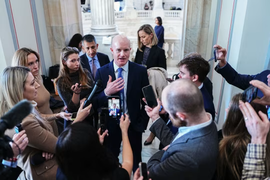
To be clear, this vote was not intended to pass CLARITY in the Senate outright. It merely determines whether senators are ready to bring the bill out of months of negotiations and formally place it before the full Senate for consideration.
The result was 49 to 50, far short of the required 60. It appears they are not yet ready.
How We Got Here
This long-stalled bill sparked renewed hope over the weekend, making today's disappointment all the more sharp.
On Sunday night, Republicans released what they called the final draft of CLARITY, incorporating more than 100 substantive amendments proposed by Democrats. The most notable among them was a significantly stronger ethics rule package, which President Trump has already agreed to. This was originally intended to address one of the biggest obstacles to Democratic support.
Under the new rules, “covered” officials—including the president, vice president, members of Congress, federal judges, other senior executive branch officials, and their spouses—will be prohibited from issuing or promoting digital assets. However, children of covered officials are exempt from this restriction. They are also barred from holding equity exceeding $15,000 in a company whose primary revenue comes from issuing or “sponsoring” digital assets.
For officials like Trump who are already involved in such commercial interests, they must either sell their shares or transfer them into a qualified blind trust (a trust managed by an independent trustee).
Additionally, a key component of these ethics restrictions is that they grant state attorneys general the power to enforce the rules. This addresses Democratic concerns that, otherwise, enforcement authority might fall primarily under Trump’s own Department of Justice, which would hesitate to touch him.
With these amendments, it finally looked possible to gather enough votes.
The Deal Falls Apart
But by Monday night, Democrats returned with a counterproposal demanding stricter ethical restrictions.
The full proposal remains unpublicized, but reports indicate Democrats want to expand the rules to cover officials’ children more directly and require public officials with substantial stakes in crypto companies to actually liquidate their assets rather than simply transferring them into trusts. Concerns also persist over whether the enforcement mechanism still leaves the president too insulated from actions taken by state attorneys general.
Republicans fiercely rejected the counterproposal on Tuesday morning. A spokesperson for Senator Cynthia Lummis stated that the proposal “looks exactly like the Democrats’ position from a few weeks ago.” Democrats rebutted, saying they have been pushing for these provisions for most of the past year.
By this point, optimism surrounding the bill’s passage had begun to evaporate. However, for the market, Bitcoin did not drop until the actual vote failed: it plummeted 4% at one point, briefly breaking below $75,000 before recovering.
What’s Next?
When it comes to CLARITY specifically, the path forward is unclear.
Technically, the bill is not dead. Lawmakers could return to the negotiating table, make further concessions, and attempt another vote. But reports suggest Republicans are already quite fatigued, while Democrats do not appear willing to back down. Compounding the issue is an unfavorable calendar: Congress is preparing to leave Washington ahead of the midterms in November.
Pursuing it again after the election is possible, or lawmakers might try once more if they unexpectedly strike a deal beforehand. But today’s defeat greatly diminishes the likelihood of CLARITY regaining status as a top legislative priority this autumn.
Importantly, however, crypto rulemaking itself will not stop.
The CFTC and SEC will continue using their existing authorities to craft regulations and clarify how current commodities and securities laws apply to crypto assets to the extent possible. The limitation lies in permanence. These agencies can still make an impact, but they cannot recreate the certainty that a comprehensive law like CLARITY would bring, and these rules may still be overturned or rewritten by future administrations. That said, I still expect crypto’s “mainstreaming” to continue, even if the process becomes messy once again.
But if mainstreaming is to be set in stone, backed by a framework that is harder to reverse, it appears we must simply keep waiting. As for when, no one knows.
Join TechFlow official community to stay tuned
Telegram:https://t.me/TechFlowDaily
X (Twitter):https://x.com/TechFlowPost
X (Twitter) EN:https://x.com/BlockFlow_News
 Bankless