CLARITY Act Falls Short of 50 Votes, Blockchain Block Production Will Not Stop
Written by: Xiao Bing
49 votes in favor, 50 against.
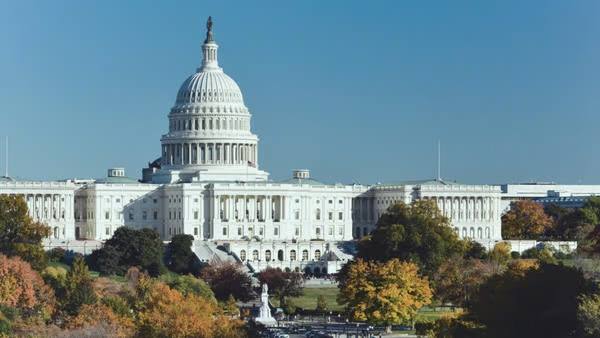
The U.S. Senate rejected the cloture motion for the CLARITY Act on the afternoon of September 15. Eight years of waiting, hundreds of millions of dollars in lobbying investments, culminated in a single procedural vote. It didn't even qualify for formal debate.
An industry figure sent a text message to journalist Eleanor Terrett: "It died."
A Premeditated Betrayal
The cruelty of the vote result lies not just in the numbers themselves, but in who voted no.
All seven Democratic senators (Gillibrand, Warner, Booker, Warnock, Gallego, Alsobrooks, Cortez Masto) voted against it. These seven were not bystanders. They spent the entire summer sitting across from Republicans, line by line amending the bill, putting forward 126 demands, and pushing for upgrades to the ethical provisions. Over the weekend, Lummis incorporated all their amendments into the final text, calling it the "last, best, and final package."
Then they collectively voted No.
The Republican side also split. Maine Senator Susan Collins voted against it. Adding expected votes from Rand Paul and Hawley, the GOP lost at least three votes on its own.
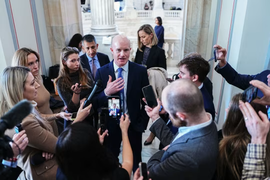
Ten minutes before the vote, staff from both parties were still conducting final negotiations on the ethical provisions in Senator Tillis's office. A Democratic source said: "A lot of hard work is underway, but time is extremely tight." Then time ran out. Negotiations broke down. The vote began.
Elizabeth Warren took the podium, warning that the CLARITY Act would trigger "Great Depression-level" financial risks, and the voting concluded.
BTC fell to $75,850, down 4.2% over 24 hours. COIN dropped 6.7%. Circle fell 8%. On Polymarket, the probability of the CLARITY Act passing this year plummeted from 17% to 5%.
The market had already smelled blood long ago. The real shock was emotional: the federal legislation this industry spent eight years pushing forward was abandoned at the eleventh hour by its closest allies in the attempt closest to the finish line.
Why It Died on Ethical Provisions
Looking back at the entire process, there is only one cause of death for the CLARITY Act: Trump's crypto conflict of interest.
The technical content of the bill itself (jurisdictional division between the SEC and CFTC, definition of digital commodities, registration requirements for DeFi, rules for stablecoin yields) could bridge partisan divides on these issues. The bipartisan passage in the House with 294 votes to 134 proves it.
But the Senate is different. The Senate requires 60 votes, which means needing Democrats. And the core condition Democrats set was not technical, but political: how to handle the conflict of interest of a sitting president who has made over $2.2 billion from cryptocurrency.
Lummis's final version required officials to divest crypto holdings or use blind trusts, and introduced state attorney general enforcement powers. She stated this covered 80% of Democrats' ethical demands. But Senator Adam Schiff commented: "These provisions effectively do not apply to the President and his family."
This is not a divide that can be bridged with technical jargon. It is a political judgment regarding power and accountability. Democrats clearly believed that in an era where a president openly profits from cryptocurrency, granting the industry a federal license comes at too high a political cost.
What's Next?
The CLARITY Act is dead. But the crypto industry will not grind to a halt because of a single vote.
This is not just comforting talk.
The GENIUS Act already became law in 2025. A federal legal foundation for stablecoin reserves, disclosures, and licensing frameworks is already in place. The compliance path for USDC, USDT, and next-generation stablecoins is clear.
The SEC and CFTC are driving change through administrative means. SEC Chair Atkins issued a statement on the day of the vote, saying the SEC "will deliver results for investors and innovators, with or without legislation." This is not empty talk; the SEC has already begun adjusting its regulatory posture toward crypto assets, and the CFTC is actively expanding its jurisdiction over spot digital commodity markets. Coinbase CFO Alesia Haas forecasted this path back on September 11: Congress, regulators, or courts—any one of the three paths will suffice.
The failure of the market structure bill does not equate to a regulatory vacuum. In a post-vote statement, Grayscale said: "This is not the outcome we hoped for, but the industry continues to advance through ongoing work with the SEC and CFTC." While administrative rules are less stable than legislation (a future administration can overturn them), they still provide operational runway for the industry in the short term.
On-chain realities are more persuasive than Washington votes. On the exact same day as the CLARITY Act vote, Circle's Arc mainnet went live, with BlackRock, Visa, and DTCC serving as validators. Uniswap v4's StablePair Hooks are redistributing value from stablecoin trading. Robinhood Chain pays $370,000 daily to Arbitrum. The tokenized stock market reached $3.6 billion. These numbers do not require Senate approval.
The crypto industry's fifteen-year history has proven one thing: its progress has never depended on the legislative timetable of any single country. Ethereum launched without waiting for clear guidance from the SEC. DeFi exploded without awaiting jurisdictional divisions from the CFTC. Stablecoins became global payment rails without waiting for the GENIUS Act.
The failure of the CLARITY Act is regrettable. It could have definitively answered the question plaguing the industry for eight years: "What is a security, and what is a commodity?" It could have granted irreversible legal identities to BTC, ETH, SOL, and XRP. It did not.
But the crypto industry has already learned to operate in a world without "certainty." It has always walked this path.
49 to 50, a shortfall of 11 votes.
No matter. The blockchain doesn't need 60 votes to produce the next block.
Join TechFlow official community to stay tuned
Telegram:https://t.me/TechFlowDaily
X (Twitter):https://x.com/TechFlowPost
X (Twitter) EN:https://x.com/BlockFlow_News
 深潮TechFlow