Ethena Halts USDe-Related ENA Incentives: Buyback Hasn't Started, Relying on Yields and Payment Distributions to Survive?
Author: 0xTindorr
Edited by: TechFlow
TechFlow Guide: Analysis indicates Ethena has already discontinued the ENA incentives tied to USDe supply growth before launching its buyback engine; current USDe supply stands at approximately $4.9 billion, with the first buyback threshold set at roughly $7.5 billion. The author breaks down the sustainability path into two tracks: equity perpetual basis yield and Ethena Pay distribution—for those tracking ENA/USDe, the key lies in whether supply continues to grow after subsidy cuts, and whether protocol revenue can sustain the buybacks.

Ethena has already shut off token subsidies before its buyback engine even launched.
This is a fairly bold bet for $USDe growth.
So, how does @ethena plan to continue growing without distributing more $ENA to users?
I believe the answer primarily boils down to two things: yield and distribution.
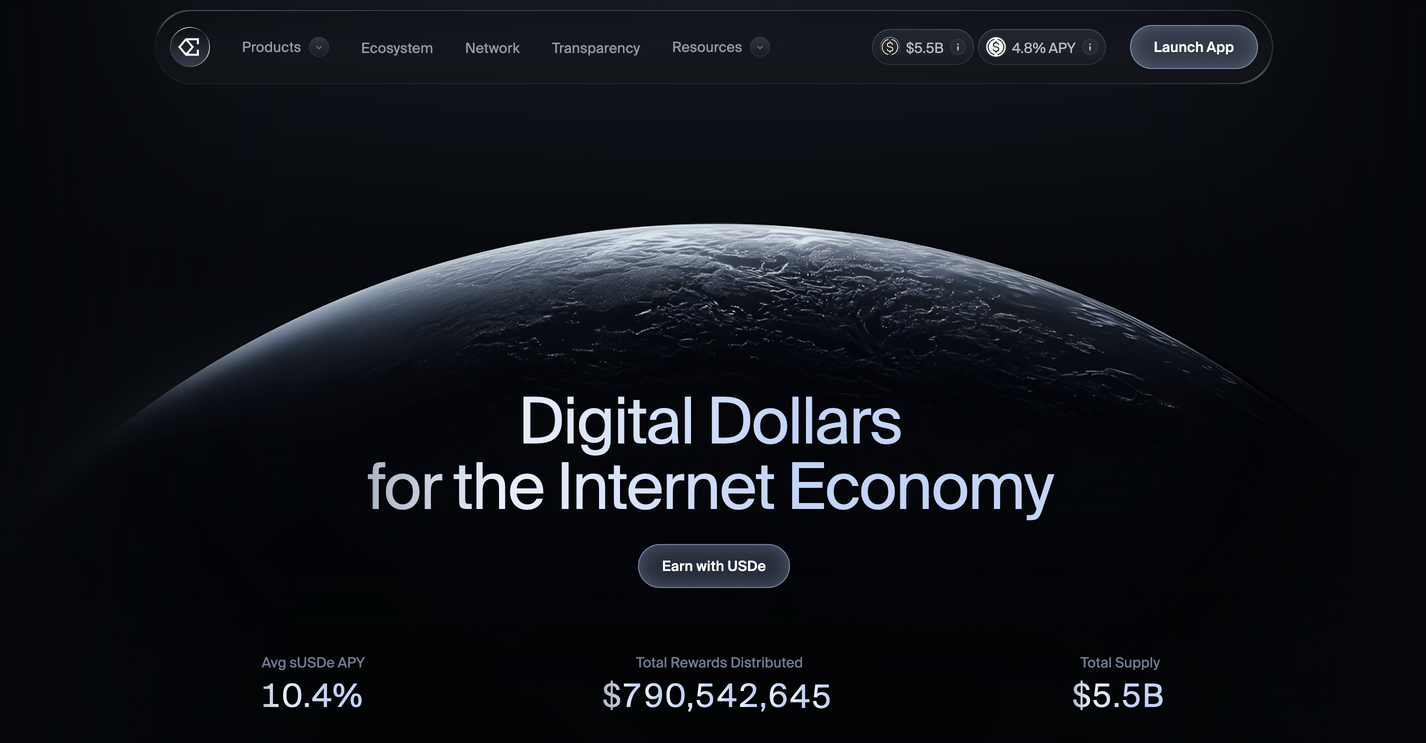
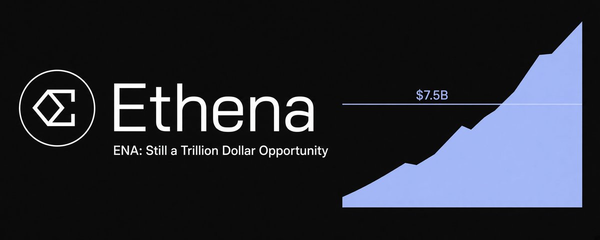
To set the context: USDe is currently around $4.9 billion. The $ENA incentives tied to USDe supply growth ended in September, while the first buyback threshold will only trigger once USDe reaches $7.5 billion.
1. Yield: Equity Perpetual Basis Trading
Ethena is expanding basis trading from crypto into tokenized equities.
The strategy is relatively straightforward:
Long tokenized stocks + short corresponding stock perpetuals = collect funding rates, while hedging out most directional exposure.
And the opportunities could be quite substantial.
The Ethena Risk Committee found that approved Binance stock perpetual targets had an average annualized funding rate of roughly 7% at the time of research, while approved OKX targets ranged from 8%–16%.
Of course, these returns are not guaranteed. Funding rates fluctuate and can turn negative; hedges still carry execution, basis, and counterparty risks.
But this gives Ethena another yield-generating market alongside BTC/ETH funding rates.
Among the venues studied, the stock perpetuals market then held approximately $2.9 billion in one-sided open interest.
This could represent a significant expansion for USDe's yield opportunities.
2. Distribution: Ethena Pay
The second bet is that people are increasingly holding USDe because it is "useful," rather than simply because they are paid token incentives.
USDe is now integrated across over 100 platforms and protocols.
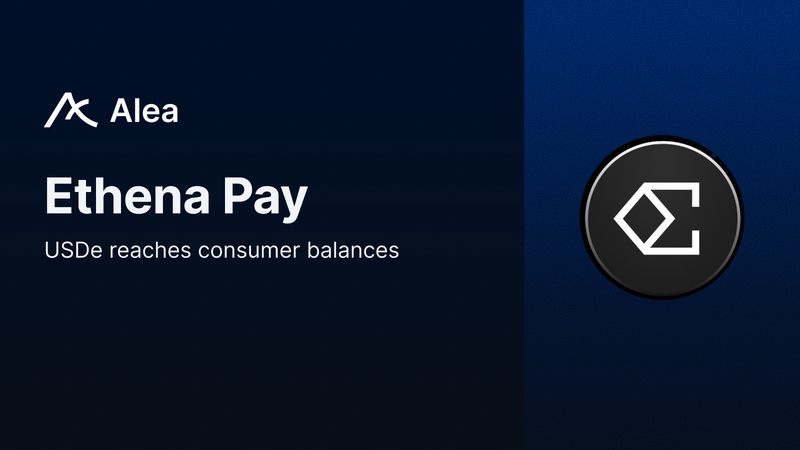
Now, Ethena Pay aims to take it beyond the crypto-native sphere and into everyday payments, savings, and spending.
Interestingly, Ethena is moving away from fully relying on third-party platforms to distribute USDe.
Through Ethena Pay, it is building direct-to-consumer distribution channels.
Of course, launching a payment product does not automatically equate to meaningful USDe adoption.
But if successful, it becomes another demand source that doesn't rely on continuous $ENA emissions.
And this is where the tokenomics become interesting.
The old growth model relied heavily on: $ENA incentives → USDe growth → more incentives to sustain demand.
Ethena's new bet leans toward: attractive yields + broader distribution → organic USDe demand → higher USDe supply → potentially larger revenue base → $7.5B supply threshold → revenue-funded $ENA buybacks.
Buyback allocations start at 5% of protocol revenue when USDe reaches $7.5 billion, and scale up with higher milestones.
Therefore, USDe growth alone is not enough. The protocol also needs to generate sustainable revenue from that supply.
Which is why I believe USDe supply and protocol revenue are likely the two metrics $ENA holders should watch most closely right now.
Ethena is essentially testing whether it can continue growing without using token emissions as its primary incentive.
At a current USDe level of roughly $4.9 billion, there is still a considerable gap to the first buyback threshold.
If supply continues to grow after incentives end, it points much more strongly to genuine demand than growth driven by continuously pumping more $ENA to users would.
Whether this demand can ultimately translate into meaningful value capture for holders is the next question.
That is precisely the experiment I am watching unfold.
Join TechFlow official community to stay tuned
Telegram:https://t.me/TechFlowDaily
X (Twitter):https://x.com/TechFlowPost
X (Twitter) EN:https://x.com/BlockFlow_News
 @0xTindorr