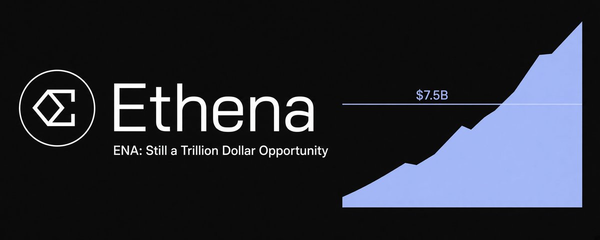
After pocketing $3 million in unrealized gains and calling for ENA to hit $0.5, what exactly is Arthur Hayes buying into?
By Gemini, TechFlow
On September 20, BitMEX co-founder Arthur Hayes publicly called for a price target, setting an immediate 0.50 USD target for Ethena governance token $ENA.
Following the statement, secondary market buy orders quickly followed, with ENA spot price rapidly surging from around 0.17 USD to break through 0.21 USD, seeing intraday gains exceeding 24% at one point.

But before retail investors blindly chase the highs, they should first take a closer look at the cards and cost basis of large capital.
According to on-chain analytics firm Arkham, Arthur Hayes completed his early accumulation over a month ago. His linked wallets accumulated 25.33 million $ENA at an average price of approximately 0.09 USD, totaling roughly 5.53 million USD. At current market prices, the unrealized profit on this position has reached 3.28 million USD, representing a paper return of over 146%.

(Image caption: On-chain tracking by Arkham shows Arthur Hayes' address holds 25.33 million $ENA at an average price of ~0.09 USD, with unrealized profits exceeding 3.28 million USD)
A prominent figure publicly going long on social media after doubling their unrealized profits is traditionally an extremely dangerous signal in the crypto market. To many keen on-chain observers, this looks more like distribution. Some community users point out that when a hedge fund trader holding tens of millions of low-cost chips starts peddling distant windfall expectations to retail investors, it often means they are seeking exit liquidity for their massive unrealized gains.
Shortly after Arthur's call, ENA indeed saw a decline, further leading people to view this as evidence of the big player selling into retail FOMO.

However, if you reduce this anomaly to merely a simplistic "high-price call to find buyers to take positions," you will equally miss the narrative shifts occurring within Ethena or other structurally similar "legacy tokens."
This round of capital speculation on legacy tokens has focused on assets with actual revenues, beneficially restructuring chip distributions, and solid fundamentals, with ENA being a prime example.
Arthur Hayes' precise bottom-fishing and loud public statements coincidentally aligned with Ethena's most aggressive tokenomics change since its inception. On one side lies the hardcore reshaping of fundamentals from a governance shell to a cash-flow asset; on the other, structural hidden risks from early chips not yet fully cleared.
In this bull-bear tug-of-war, the logic behind placing buy orders and the calculations for cashing out are clashing fiercely over the same asset, which is precisely what we should dig deeper into beyond the price calls.
Fund Buys Out Early Shares, But Sell Pressure Before October Remains Unresolved
For a long time, the core pain point suppressing ENA token valuation has not been the protocol's business scale, but rather the massive unlockings on the supply side arriving monthly as expected, which have almost become open cards used to suppress the price.
For a synthetic asset protocol managing billions in funds, monthly unlocks act like a drain hanging over the secondary market. Any valuation premium brought by business growth gets entirely eaten up by selling pressure amid continuous inflation dilution expectations.
This deadlock saw a shift at the end of August.
An earlier announcement from the Ethena Foundation indicates that the official body utilized ecological reserves to OTC-buy out the locked shares of seed-round early investors. For early backers whose original allocation exceeded 0.25% of total supply, the foundation implemented targeted verification and protocol buyouts; the remaining locked shares that did not reach buyout agreements were mandated to be released in a single batch before October 5, eliminating any future long-term monthly unlock schedules.

(Image caption: Community researcher @0xsubwizard maps on-chain adjustments regarding the Ethena Foundation's OTC buyout of early shares and tokenomics changes)
While this move theoretically severs years of prolonged bleeding, the flip side is an extreme front-loading of risk.
The concentration of unbought-out early shares for release before October 5 means the secondary market must brunt-force weather a severe token liquidation pulse in the short term. In other words, so-called supply-side vacuum periods won't arrive until mid-October.Before this major unlock settles at the beginning of October, any violent rallies detached from real absorption capacity are highly likely to become golden windows for early backers and whales to exit at premium prices.
95% Net Revenue Buyback Implemented, Buyback Narrative Becomes Speculative Focus
Beyond changes in the chip distribution, what truly fuels bullish hopes for valuation revaluation is the opening of value capture channels.
In past DeFi narratives, the vast majority of protocols were trapped in the disconnected cycle of "protocols earning massively while coin prices bleed slowly." Ethena's synthetic dollar USDe and USDtb, invested in traditional US treasuries, rapidly expanded in size thanks to highly competitive basis arbitrage and government bond yields, successively securing 1 billion USD in financing support from FalconX and integration with BlackRock's Aladdin system.
However, no matter how much the protocol's front-end earns, $ENA token holders economically get nothing, with token utility long confined to "air governance" lacking substantive dividend rights.
The mechanism that changed this status quo is the recent implementation of an Ethena governance proposal directing 95% of protocol net revenue toward $ENA secondary market buybacks.
This scheme constructs an on-chain value transmission closed loop: Users minting USDe and USDtb drive protocol AUM expansion; Ethena generates short basis income from hedging on derivatives exchanges, combined with reserve asset spreads, settling as retained protocol net profit; Smart contracts then capture 95% of this net cash flow to execute scheduled buybacks directly in the secondary market, transferring purchased tokens to the treasury or burning them.
Once the entire mechanism runs smoothly, ENA's pricing logic shifts away from pure sentiment multiples toward actual protocol cash flow discounting. The governance proposal ultimately passed unanimously with an absolute majority of 14.1 million votes in favor and 0 against, far exceeding the 5 million vote statutory threshold, indicating that whales and market-making capital have tied their interests to enabling the Fee Switch.

Yet beneath this seemingly perfect cash flow machine lies an extremely fragile drive shaft: perpetual contract funding rates.
Ethena's foundational income pillar relies on bullish sentiment in the derivatives market and positive basis. If the broader crypto market plunges into a deep bear market and perpetual contract funding rates remain persistently negative, the protocol will not only fail to secure high basis income but may even need to tap reserves to subsidize short hedging positions. Once foundational income shrinks, the 95% net revenue buyback amount will plummet synchronously, causing the cash flow flywheel to stall in reverse.
Thus, the protocol's lifeline actually hinges on the broader crypto market. With the current stable market conditions, there is still considerable room to tell this real revenue story.
Calling for 0.5, Don't Believe Everything
Analyzed from an investment research perspective, the 0.5 USD target price given by Arthur Hayes is essentially a masterful exercise in expectation management.
My core assessment is: The massive chip barrier Arthur Hayes built at 0.09 USD grants him near-absolute initiative. The rally space from 0.21 USD to 0.50 USD paints a wealth-creation blueprint for retail, but this absolutely does not prevent him from sequentially smashing liquidity into buy orders at any stage en route to the target.
For a whale already sitting on 146% in unrealized profits, distributing during peak market sentiment is inherently the most standard hedge fund trading maneuver. We welcome him manufacturing call-out heat, but we must carefully manage our own following-the-trader pace.
Therefore, for sharp players, the most crucial step is to monitor his address(click here) to see if actions align with words, providing reference points for their own investment pacing.
But putting aside personal positions and chip dynamics, ENA's asset attributes are indeed shifting compared to other legacy tokens. The 95% net revenue buyback of $ENA facilitates telling the real revenue story. It is recommended to closely watch price action changes ahead of the concentrated token unlock approaching on October 5.
After all, the turnover and sell-pressure absorption performance of large holders will yield the most objective answer.
Join TechFlow official community to stay tuned
Telegram:https://t.me/TechFlowDaily
X (Twitter):https://x.com/TechFlowPost
X (Twitter) EN:https://x.com/BlockFlow_News
 深潮TechFlow