Ethena Earned $1.04 Billion, Yet ENA Captured Nothing: A Turning Point May Be Coming
Author: 0xWizard
Compiled by: TechFlow
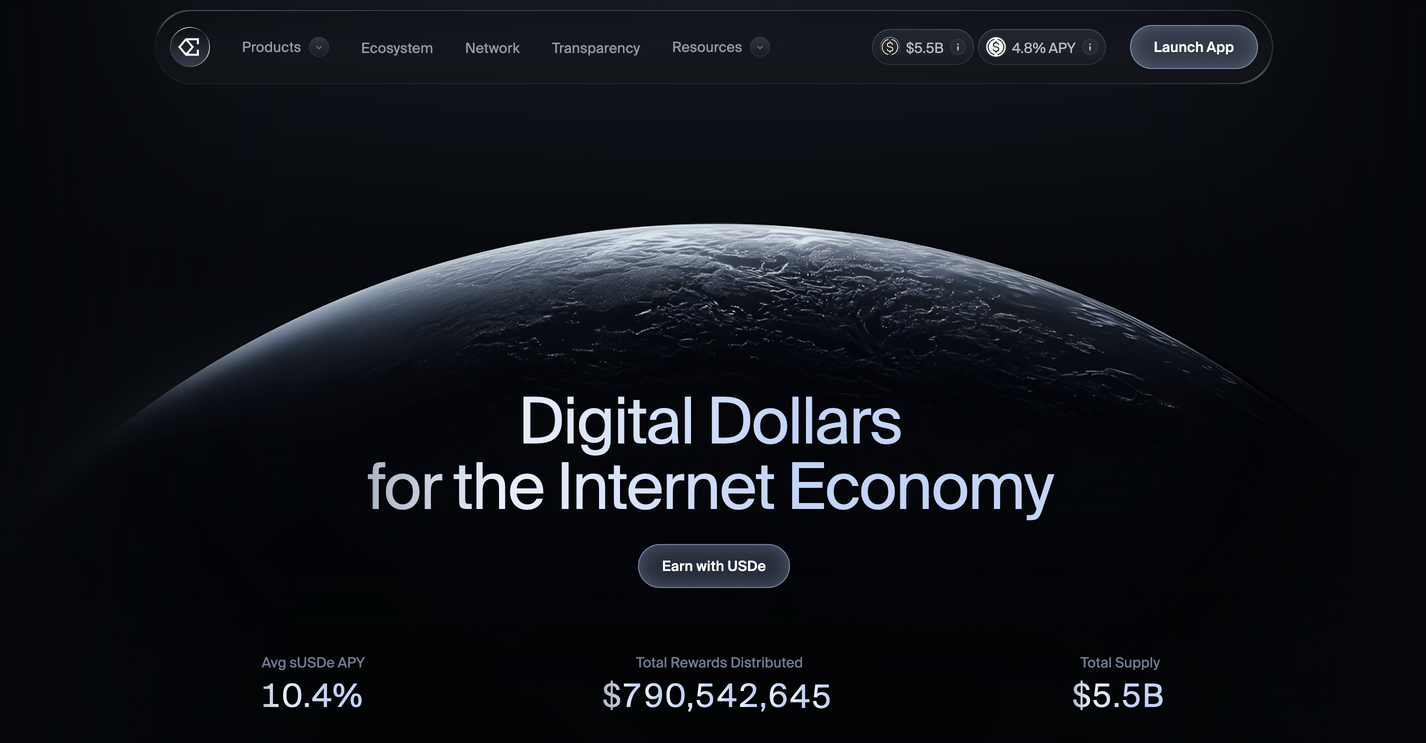
TechFlow Summary: Since its launch, Ethena has generated a cumulative $1.04 billion in revenue, with $284 million contributed over the past 12 months despite unfavorable market conditions. Yet, ENA holders have received zero returns so far. On September 2, governance passed the "fee switch": once the 14-day moving average of USDe supply exceeds $7.5 billion, 95% of the revenue routed through this switch will be used to buy back ENA on the open market. Current USDe size is $4.75 billion, still 58% below the threshold. The author believes it will cross the threshold within the next 3 to 6 months, driven by three major catalysts: equity perpetual contracts, positive crypto funding rates, and expanded distribution channels.

Since its launch, Ethena has generated $1.04 billion in revenue, with $284 million contributed over the past 12 months despite unfavorable market conditions. Yet, to date, ENA holders have earned nothing from this.
However, on September 2, holders finally got a path to tap into this revenue. Governance approved the fee switch: once the 14-day average of USDe supply surpasses $7.5 billion, 95% of the revenue flowing through this switch will be used to purchase ENA on the open market.
The current USDe supply stands at $4.75 billion, still 58% below the threshold. We believe it will cross this threshold within the next 3 to 6 months, driven by three key catalysts:
- Equity Perpetuals: A foundational book earning 15%–20% funding rates, independent of crypto market conditions
- Crypto Perpetuals: Funding rates have recovered from negative territory, trending toward +8%
- Improved Distribution: Ethena Pay, TRON deployment, and CEX collateral integrations are all bringing USDe to potential new holders

At a current valuation of $1.43 billion, ENA trades at roughly 5 times the fees collected during the protocol’s worst year. Once the fee switch is triggered, that changes: the "revenue engine" Ethena has been building for two years begins directly paying out earnings to ENA holders.
Three Key Catalysts
1. Equity Perpetual Contracts
As of late August, open interest in equity perpetual contracts across major trading platforms reached approximately $6.2 billion, roughly 10 times the March levels. Over recent months, funding rates for these positions annualized to around 14% on Hyperliquid and 17.5% on Binance, compared to just 4%–7% for ETH and BTC. Crucially, equity funding rates are uncorrelated with crypto funding rates: this represents a revenue stream that pays regardless of whether the crypto market is in a bull or bear cycle.

On August 28, Ethena announced it would expand USDe backing to equity perpetual foundational trading, with deployments by initial partner exchanges expected within the coming weeks. Ethena projects that RWA perpetual contracts will overtake crypto allocations (currently representing 13% of backing) within 12 to 24 months.
If RWA perpetual contracts exceed the crypto book at 15%–20% funding rates, that would boost blended yields by 2%–3%. If this segment eventually expands to half of total backing, the equity leg alone could contribute a sustainable 8%–10% yield.
More importantly, the upside potential behind equity perpetual contracts far surpasses that of crypto perpetuals. In July 2026, global equity market cap hit $166.5 trillion, versus roughly $2.2 trillion for crypto. According to Ethena’s own projections, equity perpetual open interest could grow to $4 trillion—about 40 times the peak $110 billion crypto perpetual book. It is fundamentally the same trade, just scaled up by orders of magnitude. Of course, a $4 trillion market won’t perpetually pay 15%–20% (funding rates will compress as more capital floods in), but depth is what matters. A larger, uncorrelated revenue engine is precisely what will push USDe supply toward the $7.5 billion threshold and trigger the subsequent fee switch.

2. Crypto Funding Rates Have Recovered
From February to April 2026, crypto funding rates on Binance entered negative territory, with ETH averaging -4.0% in February—the weakest month since 2023. During this period, Ethena reallocated its backing away from foundational trading into various DeFi lending pools, liquidity stablecoins, institutional credit, and RWAs (up until recently, foundational trading made up only 1% of USDe backing). Although these allocations yielded less than the 2024 crypto foundational trades, they provided sUSDe holders with a steady 4%–5% return when funding rates were not paying out.

Fast forward to today, BTC is priced at $80,000, and funding rates have turned positive again. August saw ETH funding rates average +5.7% and BTC average +7.3%. As the market continues to recover, Ethena is likely to shift more book capacity back toward crypto foundational trades, replicating the playbook that drove USDe supply to $15 billion during 2024 to 2025.
Notably: Ethena’s crypto foundational trading has now demonstrated strong Lindy effects. It survived historical liquidation events like the October 10 crash and other broadly poor market environments, while smaller competitors crumbled.
3. Distribution: TRON Launch, CEX Collateral Integration
Yield alone does not drive USDe growth. People need a place to buy it and a reason to hold it.
Traders can now use USDe as margin on Bybit and Binance, and hold it across Bybit, OKX, Bitget, and Binance. Coinbase and Robinhood have already integrated it into their products (Coinbase Vault, Robinhood Earn). USDe also launched on TRON on September 11, the chain that naturally handles the highest stablecoin transaction volume. Note that when a chain is truly critical and growth strategies are executed well, chain expansion is vital (see how USDe quickly reached $300 million after listing on Robinhood).
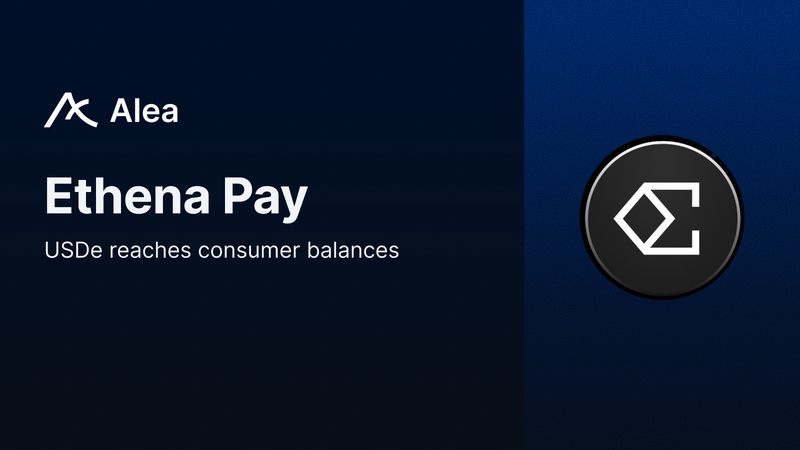
On September 1, Ethena launched Ethena Pay (@EthenaPay), spearheaded by @gdog97_ and @litocoen. Holding USDe balances earns up to 6% yield, and all spending receives a 5% AVAX cashback, making the Pay feature a perfect hook to attract retail users to hold USDe. Between September 1 and September 9, on-chain card spend reached $632,000, with daily average expenditure climbing from $16,000 to $61,600. This remains a beta version (initially limited to a few hundred non-US/EU users), but it marks the first time everyday users can hold USDe, earn yield from it, and spend using a card.
Given the success of crypto card products from EtherFi and Plasma, coupled with Ethena Pay’s generous rewards (backed by @avax), this is poised to become one of the flagship products driving USDe toward the $7.5 billion mark.
The Fee Switch
Once the aforementioned catalysts push USDe supply past $7.5 billion, the fee switch will activate. A portion of Ethena’s revenue will begin buying back ENA on the open market. The revenue share tiers are as follows: 5% at $7.5 billion, 10% at $10 billion, 15% at $15 billion, and 20% at $20 billion. Nearly all of this allocated share (95%) will be directed toward buybacks.
The buyback scale scales with the profitability of USDe’s reserve book. The protocol yield is the interest rate Ethena earns on the assets backing USDe, so the formula is:
USDe Supply × Protocol Yield × Fee Switch Revenue Share × 95%
At a 6% protocol yield, buyback volumes per tier are as follows:

The first tier is relatively small, but the $10 billion and $15 billion tiers (when USDe once briefly hit $15 billion in 2025) are the critical ones. At 4% and 9% of current market cap annually, respectively, these amounts will be deployed to buy back the token.
Reference: Ethena Foundation Announcement
Risks & Considerations
- October 5 Unlock: All VC token unlocks have been compressed into October 5. Estimated at 14% of circulating supply, valued at roughly $200 million at current prices, it occurs 17 months ahead of the original vesting schedule. The Ethena Foundation announced it has purchased the locked tokens from large seed investors who sold ENA after October 10, 2025. This eases supply pressure from the mass unlock, but investors should remain cautious.
- Negative Funding Rates: If the broader market stagnates and crypto perpetual funding rates turn negative again, USDe reserves will once again shift to lower-yielding non-foundational uses (4%–5%). This would dampen demand for holding USDe, particularly among sUSDe holders and PT loopers.
- Smaller-than-expected Scale for Equity Perpetuals: If deployment of equity perpetuals is delayed, open interest shrinks, or equity perpetual funding rates drop to crypto-like levels, the impact of this new uncoupled revenue source will be significantly muted. A blended sUSDe yield stuck in the mid-single digits would provide weaker incentives to mint USDe up to $7.5 billion.
- Lending or Credit Failure: A significant portion of reserves sits in DeFi lending (e.g., Aave, Morpho) and institutional credit (e.g., Maple, FalconX). A single exploit or borrower default could slash backing and pause minting.
- Supply Fails to Break $7.5 Billion: If USDe supply remains below the threshold throughout all of 2027, the fee switch will never trigger, leaving ENA as merely a governance token.
Conclusion
Once USDe supply sustainably stays above $7.5 billion, the fee switch will activate. Three new catalysts can drive it there: equity perpetual contracts, positive crypto funding rates, and new distribution channels for buying and holding USDe (TRON, CEX collateral integration, Ethena Pay).
When @0xENAS published "Ethena: A Trillion-Dollar Crypto Opportunity" in October 2024 (sadly deleted now), that opportunity rested on the stablecoin market combined with crypto foundational trades yielding USDe returns. Today, that market is larger, and distribution is stronger.
Everything in this article comes down to a bet: betting that the catalysts we've outlined will push USDe supply back to $7.5 billion and continue higher. If you don't believe that, do not hold ENA. If you do, you know what to do.
Join TechFlow official community to stay tuned
Telegram:https://t.me/TechFlowDaily
X (Twitter):https://x.com/TechFlowPost
X (Twitter) EN:https://x.com/BlockFlow_News
 @0xsubwizard