Ethena Pay: Earn Reserve Yields Instantly Upon Deposit, Is It Time to Revaluate ENA?
Written by: Joe Cho, Carlos
Translated by: AididiaoJP, Foresight News
In recent months, one of the most watched opportunities in the crypto market hasn't been new public chains or another wave of meme coins, but rather "new banks." Stablecoins integrate US dollar accounts, cross-border transfers, savings, and daily spending onto a single track. These products can be launched globally from day one without applying for licenses country by country.
Data also supports this view. Tracked crypto card spending reached a record weekly $283 million in the first week of September, up over 200% year-over-year. This indicates that the sector has moved beyond concept stage, with real transactions actually taking place.

Ethena enters the market differently from most peers.
Funds Deposited, Reserve Yields Automatically Go to the Protocol
In typical crypto neo-bank accounts, funds are held as USDC or USDT. The interest generated by reserves mostly goes to Circle or Tether. How do frontend companies survive? Primarily through transaction fee sharing, cashback-driven customer acquisition, and gradually funneling users toward lending, trading, and subscription services. But the problem is that customer acquisition itself is costly, and cashback often eats into swipe revenue. They cannot capture the most stable return: interest.
Ethena Pay changes this equation. Once funds enter an account, they are converted into USDe. From the client's very first deposit, the underlying reserve yield belongs to Ethena. It doesn't require a banking license nor does it need to share USDe's reserve yield with partner banks. After deducting user yields and operational costs, the remainder can be used to lower fees, increase rewards, and fund product iterations.

This logic isn't new in traditional fintech. Net interest income accounted for roughly 34% of Robinhood's 2025 revenue and about 22% of Revolut's. For them, interest has long ceased to be marginal income; it's a core business line. Ethena essentially locks this revenue stream directly into its own model upfront.
In other words, while other platforms spend money to acquire users first and then look for monetization paths, Ethena lets user balances themselves generate yield for the protocol. The larger the balance, the stronger the foundation.
Product Still Early, Competitors Already Ahead
An attractive economic model doesn't guarantee product success.
Ethena Pay's card transaction volume hit a record $250,000 last week, with 456 funded accounts holding a combined balance of $4.3 million. The numbers aren't large, but must be viewed against the backdrop of an invitation-only rollout. With the entry point not yet fully opened, transaction volume is naturally constrained. Expanding invitations and geographic regions should drive higher activity.

The comparison is straightforward. EtherFi has already reached approximately $30 million in weekly card spending, putting it an order of magnitude ahead. Other industry players like RedotPay and KAST have also launched earlier. Ethena's competition now isn't about "having a card," but whether the card is user-friendly, rewards are compelling enough, fiat on/off ramps are smooth, and users are willing to retain funds long-term.
The product side reveals clear intentions: self-custody wallets, automatic balance conversion to USDe, Visa spending, cashback, and using Boost to raise savings rates to competitive levels. Tiered offerings—Standard, Pro, VIP—allow upgrades by locking ENA or referring new users. The direction is clear, but still early-stage. Invitation-only access, regional restrictions, and incomplete rollout on Android and in Europe remain real-world constraints.
The only thing that truly needs validation is this: whether richer reserve yields can translate into low fees, high rewards, and premium experiences that users actually feel. If the model's advantages only exist on spreadsheets, they mean nothing.
Pay and USDe Fuel Each Other
Viewing Ethena Pay solely as a credit card narrows its significance.
New capital flowing into the neo-bank drives demand for USDe; as USDe's scale grows, reserve yields increase, which can then feed back into Pay's pricing and rewards. One end attracts users, the other nurtures stablecoin supply, creating a mutually reinforcing cycle.
If users make a single swipe and leave, there's limited value. The key lies in retaining balances. Balances stay put, reserve yields become sustainable, Pay subsidies can be maintained, and USDe demand won't be a one-off event. Therefore, what matters next isn't just weekly transaction volume, but also the number of funded accounts, average balance per user, retention rates, and whether these metrics rise in tandem once the invitation system opens up.

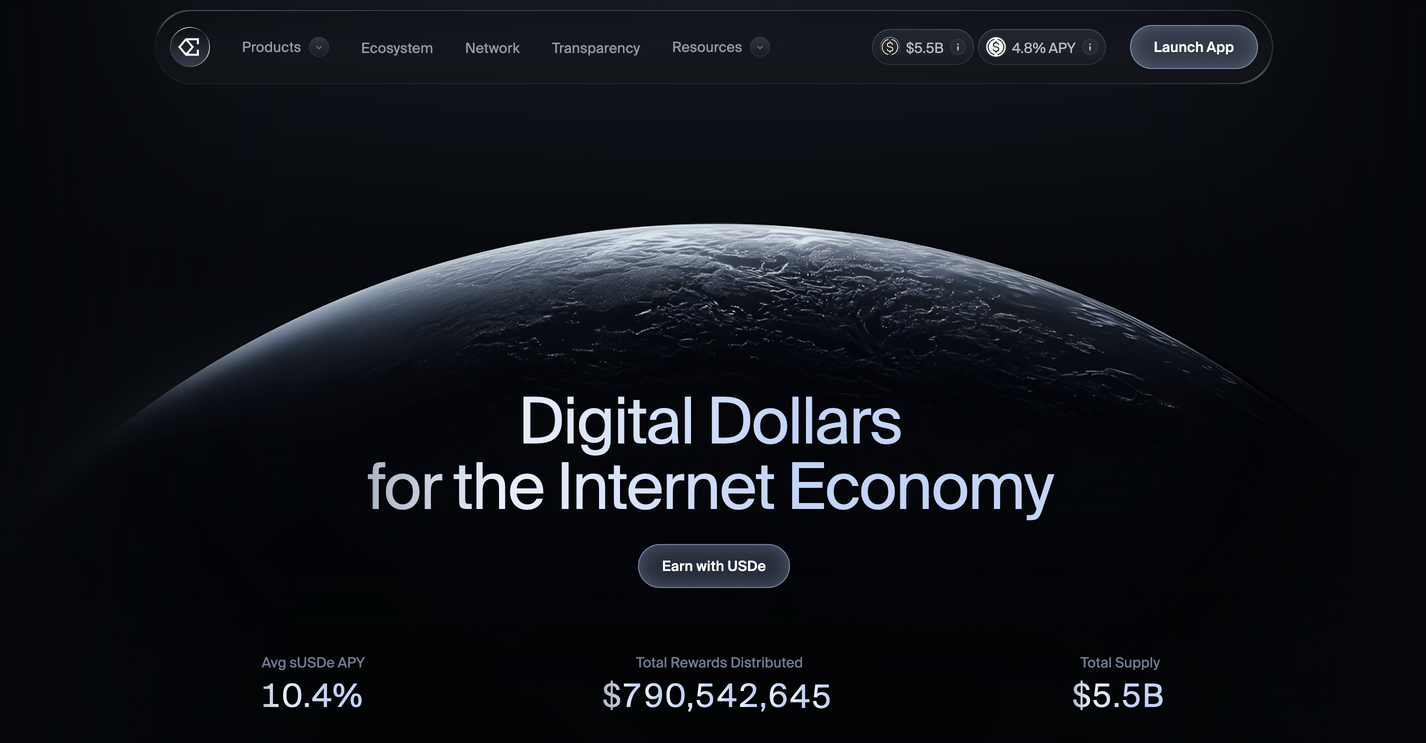
After six consecutive weeks of net inflows, USDe supply returned to $4.6 billion, listing on TRON last week as distribution channels continue to expand. Supply is recovering, distribution is widening. If Pay becomes a new capital entry point, it will add fresh supply rather than merely shifting existing users around.
Fee Switch Approved, Yet Buyback Thresholds Remain
Then there's ENA.
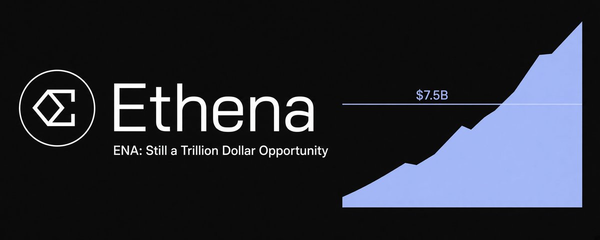
The fee switch has been approved. The buyback plan will activate once USDe supply reaches $7.5 billion, tying protocol revenue to token demand. This is a step holders have waited a long time for: the protocol makes money and begins buying tokens.
But the threshold isn't trivial. Supply needs to grow significantly from $4.6 billion to $7.5 billion. The switch also doesn't trigger full revenue extraction immediately; it activates in tiers following USDe's scale expansion. Entering the buyback pool is the portion of net revenue from each business line allocated to the foundation, with approximately 95% used for programmatic ENA buybacks and the rest reserved for growth. If Pay succeeds, it will theoretically contribute to this revenue stream, but at current volumes, it won't carry a massive narrative alone.
Ethena has also repurchased positions from some early investors to alleviate VC sell pressure. Token unlocks and early allocations have long cast a shadow over ENA's valuation. Repurchasing early positions while linking revenue to the token sends a clear message: relieve supply-side pressure first, then give fundamentals a chance to align with price.
These factors combine to create a revaluation window, but a window doesn't mean revaluation is complete. The $7.5 billion supply milestone hasn't been reached, so buybacks remain a forward-looking expectation; Pay is still invite-only, and the consumer finance narrative is still unfinished. The key is to watch whether two curves move upward in tandem: whether USDe supply approaches $7.5 billion, and whether Pay balances and spending continue to climb.
How to View ENA Currently
Laying three things on the same table, the logic is actually quite clear.
- First, Ethena's reserve yields don't need to be shared with issuers or partner banks, giving it a structural advantage over USDC/USDT-based neo-banks.
- Second, translating that advantage into product strength remains a challenge. The gap persists, with competitors like EtherFi already driving tens of millions in weekly spending.
- Third, the fee switch connects the token to protocol revenue, but the first tier of buybacks requires USDe to reach $7.5 billion; repurchasing early investor positions only mitigates sell pressure and doesn't signal that fundamental dynamics have fundamentally shifted.
Therefore, this isn't a story of "token price pumps the moment the card launches," but a closed loop still under verification: deposits convert to USDe, USDe generates reserve yields, yields subsidize Pay, Pay feeds back into USDe, and once supply crosses the threshold, revenue begins buying back ENA. If any link in this loop breaks, the narrative weakens.
Once the invitation system opens, the first metric to prove or disprove will be whether balances and spending can scale. That is the true dividing line for Pay's vertical moving from a showpiece to a viable business.
Join TechFlow official community to stay tuned
Telegram:https://t.me/TechFlowDaily
X (Twitter):https://x.com/TechFlowPost
X (Twitter) EN:https://x.com/BlockFlow_News
 Blockworks