US Stock Trends (October 10): SpaceX Spectrum Acquisition Deals Heavy Blow to Three Major Telecom Operators, Lumentum Optical Component Capacity Booked Through 2029
Written by: Chaoxiang Research

On Friday, the three major U.S. stock indexes closed higher, with the S&P 500 up 0.59% at 7,811.54 points, the Nasdaq up 0.64% at 27,366.17 points, and the Dow Jones Industrial Average up 0.83% at 51,654.95 points, advancing 1.15%, 0.93%, and 0.64% for the week, respectively. The communications sector experienced the largest volatility on Friday after SpaceX agreed to acquire low-frequency spectrum covering the entire U.S., causing T-Mobile, AT&T, and Verizon to plunge collectively while tower stocks surged significantly. Optical communications company Lumentum stated that production capacity for some of its optical components has been booked through early 2029, sending its stock price up over 5%. Tech stocks saw a rebound, but the Philadelphia Semiconductor Index still closed lower, as capital continued to seek clearer demand signals within the AI industry chain.
Three Major Indices Close Higher, Philadelphia Semiconductor Index Defies Trend to Close Lower
The S&P 500 rose 0.59% to 7,811.54 points, the Dow Jones gained 0.83% to 51,654.95 points, and the Nasdaq advanced 0.64% to 27,366.17 points, with all three major indices posting weekly gains. The VIX fell 3.70% to 14.84.
Nine of the 11 S&P 500 sectors rose, with real estate up 1.88%, consumer discretionary up 1.69%, and healthcare up 1.58%; telecom services fell 0.40% and energy fell 0.18%. Both the NYSE and Nasdaq had more gainers than losers, indicating Friday's rebound was not driven solely by a handful of large tech companies.
The Magnificent Seven showed mixed performance. Amazon rose 3.29%, Microsoft gained 2.38%, Tesla climbed 2.05%, and Alphabet Class A advanced 0.97%; Meta fell 0.31%, Nvidia dropped 0.52%, and Apple declined 1.11%. The Philadelphia Semiconductor Index fell 0.41% to 12,572.4 points. The Nasdaq Golden Dragon China Index rose 2.69% to 5,753.78 points.
U.S. Treasury yields saw a slight uptick, with the 2-year yield around 4.79% near the close and the 10-year yield around 5.24%. WTI crude oil futures settled at $91.85 per barrel, up 0.39%; Brent crude oil futures settled at $104.72 per barrel, up 0.42%. COMEX gold December contracts settled at $4,216.30 per ounce, gaining approximately 1.4%.
SpaceX Acquires Spectrum, Operators Plunge While Tower Stocks Surge
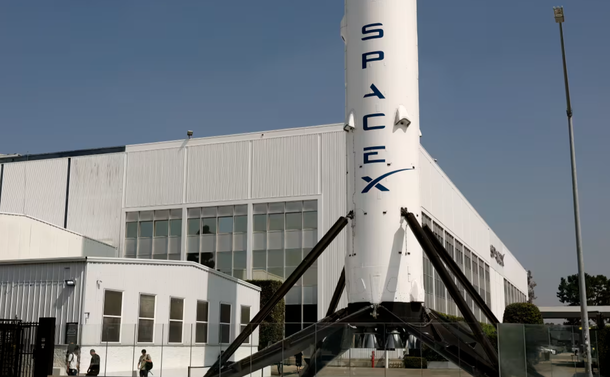
SpaceX agreed to acquire 800 MHz low-band spectrum licenses covering the United States from Grain Management, reportedly valued at about $8 billion. Compared to higher frequencies, low-band signals travel farther and penetrate buildings more easily. SpaceX plans to use this for Starlink Mobile, combining satellite connectivity with terrestrial communication facilities to serve smartphone users.
Markets immediately began reassessing the competitive pressure traditional carriers would face. T-Mobile fell approximately 13.3%, AT&T dropped roughly 9.8%, and Verizon plunged about 8.8%. Investors worry that if SpaceX gradually fills its indoor coverage gap, it will compete not only for users in remote areas but also for mobile customers of traditional operators.
Tower stocks moved in the exact opposite direction. Crown Castle rose about 15.6%, American Tower climbed roughly 9.3%, and SBA Communications increased by approximately 7.3%. Even though SpaceX relies primarily on satellite networks, improving urban and indoor coverage may still require towers, rooftop antennas, and other ground infrastructure.
This spectrum deal still requires regulatory approval, and network construction takes time. Friday's stock price movements reflect markets reassessing the future competitive landscape, not an indication that SpaceX has already built a nationwide mobile network.
Lumentum Capacity Booked Through 2029, Optical Communications Outperform Chips
Lumentum's CEO stated that production capacity for some of the company's optical components has already been sold through early 2029; certain products may still face unmet demand of around 70% next year. As AI data centers continue expanding, they require more high-speed optical interconnection equipment, prompting customers to lock in supply for the coming years. Lumentum's stock rose 5.23% on Friday.
However, strength in optical communications did not lift the broader semiconductor sector; the Philadelphia Semiconductor Index still fell 0.41% on the day, and Nvidia also closed slightly lower. Gains in Microsoft and Amazon indicate that the tech rebound is equally divided. The market is treating two types of companies differently: one group is already seeing order and capacity constraints, while the other must wait for demand to materialize.
The OpenAI revenue figures that sparked volatility in AI stocks the previous day received further clarification on Friday. Reports indicate the company's annualized revenue through late September was approximately $50 billion; the previously widely cited $70 billion figure represents a goal the company aims to reach or exceed by the end of this year. The two numbers correspond to different timeframes, so year-end targets should not be mistaken for revenue already achieved by late September.
Consumer Confidence Falls, Uncertainty Remains Over Apple Order Rumors
The University of Michigan's preliminary October consumer sentiment index dropped from 48.1 in September to 46.3. The current economic conditions component fell to 44.7, while expectations for inflation over the next year rose from 4.6% to 4.7%. Consumers' assessment of current economic conditions weakened further, and concerns about ongoing price increases have not eased.
Apple fell 1.11% on Friday. Reports indicated the company instructed some suppliers to reduce production volumes for iPhone 18 Pro series components. A representative from a supply chain firm noted that Pro orders have decreased while Pro Max orders have increased, suggesting little overall change in total volume at this stage. It is confirmed that some orders are being adjusted, but whether demand for the entire series is truly slowing down requires more sales data.
Join TechFlow official community to stay tuned
Telegram:https://t.me/TechFlowDaily
X (Twitter):https://x.com/TechFlowPost
X (Twitter) EN:https://x.com/BlockFlow_News
 @chaoxiangooo