Morgan Stanley Research Report Analysis: SpaceX Target Price at $300, AI Business Accounts for Half of Valuation
Author: Rita
SpaceX stock stands at $163.42, with a Morgan Stanley price target of $300, representing an upside potential of 83.6%. Investors only see rockets and satellites, overlooking the distributed inference cloud. Morgan Stanley considers this to be SpaceX's area with the greatest growth potential and the least market pricing.
In its report released on October 13, 2026, Morgan Stanley maintains an Overweight rating for SpaceX with a $300 price target. Summed up segment valuations are: Space $8, Connectivity $118, X & Grok $8, Enterprise AI $165. Enterprise AI accounts for 55% of the price target, making it the largest value driver. Morgan Stanley believes investor perception of SpaceX remains anchored to launch services and Starlink, while the market pricing for Enterprise AI and the distributed inference cloud is nearly zero.
Rockets and Satellites Are Just the Surface
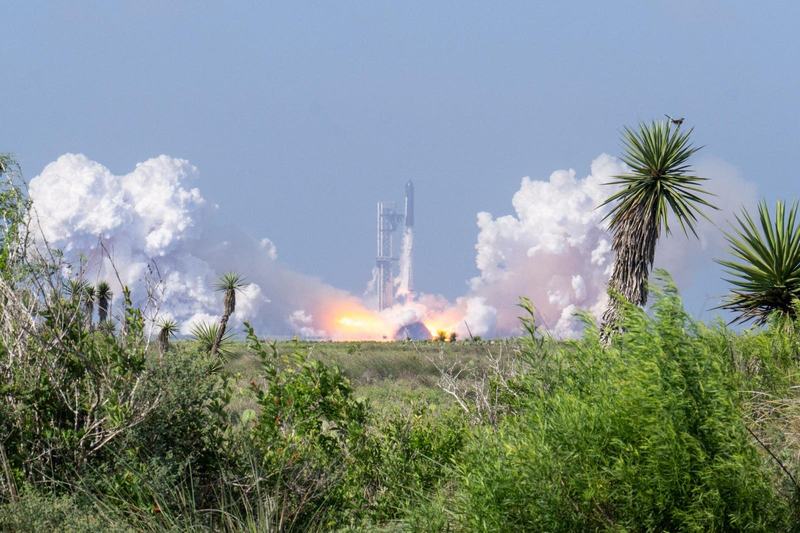
Morgan Stanley divides SpaceX's business into two parts: What and Why. What is observable: rockets, launch pads, ground stations, data centers, satellites, terminals, spacecraft, solar panels, turbine blades, semiconductors, telecom spectrum, and AI models. SpaceX spans consumer, industrial, and national security sectors.
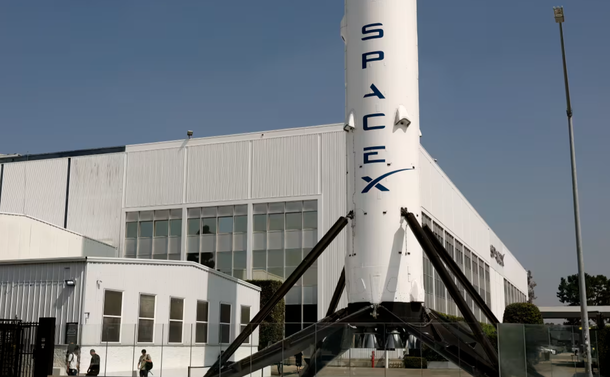
Morgan Stanley points out that SpaceX is the most vertically integrated manufacturer and infrastructure player Wall Street has seen in the past 30 years. From launch to chips, from spectrum to AI models, SpaceX covers the entire chain of AI infrastructure.
The Why requires deduction. Morgan Stanley argues that SpaceX converts energy into intelligence through physical agents (robots). The unifying equation is i=erA2. Connecting a small amount of energy to widespread agent clusters can generate massive intelligence. Investors need to envision a world with hundreds of billions of physical agents that require interconnectivity.
Distributed Inference Cloud Is the Core
Morgan Stanley identifies the distributed inference cloud as the part of the SpaceX story with the greatest growth potential and the least investor attention. Investors have already noted regulatory scrutiny and societal resistance toward data centers. SpaceX's efforts help propel both the superintelligence economy and the physical intelligence economy into their next phase of growth.
As physical agent density increases, the intelligent capabilities of collective mobile clusters improve. Morgan Stanley uses ant colonies as an analogy: a single carpenter ant has limited impact, but a mature colony of 15,000 ants can function as an intelligent cluster working in synergy. Billions of physical and digital AI clusters share information at light speed, generating vastly more energy than ant colonies.
Morgan Stanley expects investors to hear more discussions around the distributed inference cloud and physical AI clusters over the next year. This topic is approaching an explosion in investor discourse, beginning gradually before hitting suddenly.
Enterprise AI Implied Valuation Is Undervalued
With SpaceX stock at $163.42, the implied sales multiple for its Enterprise AI business sits in the low single digits. Morgan Stanley conducted sensitivity analysis: for every additional 1 gigawatt of nameplate computing capacity added, assuming $50 per watt, 70% incremental profit margins, and 10x EBITDA capitalization, the stock price would increase by $27, roughly 15% to 20% of its current level.
Morgan Stanley estimates fiscal year 2027 AI compute at 4.9 gigawatts, while the company targets nearing 10 gigawatts. If the company achieves its goal, Enterprise AI holds significant upside potential. Morgan Stanley believes the market undervalues Enterprise AI, failing to account for the potential of the distributed inference cloud and physical AI clusters.
The 2028 enterprise value/EBITDA/growth multiple shows SpaceX at 0.59x in the base case, lower than Tesla's 4.60x, Microsoft's 1.21x, and Palantir's 1.61x. Morgan Stanley considers SpaceX's valuation multiple low relative to its growth, with upside driven by a repricing of Enterprise AI.
Segment Breakdown of the $300 Price Target
Morgan Stanley's $300 price target is derived from segment valuations: Space $8, Connectivity $118, X & Grok $8, Enterprise AI $165. The valuation date is June 30, 2027, with a forecast period extending to 2040. The weighted average cost of capital is 11.2%, and the cost of equity is 11.9%. The Enterprise AI valuation is discounted by half to reflect execution risk.

Upside risks include faster progress in Starship reusability, stronger growth in Starlink capacity, robust direct-to-consumer and enterprise adoption, more new cloud orders, accelerating annual recurring revenue for Cursor, and reduced power delivery timelines and costs for AI infrastructure. Downside risks include slower Starship reuse cadence, decelerating Starlink user growth, weak monetization of Enterprise AI, rising compute cost per watt, extended power delivery timelines, increased financing needs and dilution, and regulatory delays.
Morgan Stanley believes SpaceX's fundamentals are strengthening across space, connectivity, and Enterprise AI, with a more positive outlook following the Q2 earnings report. The stock unlock has not weighed on the price as expected. Morgan Stanley maintains an Overweight rating with a $300 price target.

Disclaimer
This article is compiled and interpreted by TechFlow Research based on third-party brokerage research reports (Morgan Stanley, October 13, 2026), combined with the collation of public market information. The ratings, price targets, earnings forecasts, and related judgments cited herein are solely the views of the respective brokerage analysts, represent only the stance of their affiliated institutions, do not reflect the views of TechFlow Research, and do not constitute any investment advice.
Markets carry risks, and decisions must be made independently. This article should not serve as the basis for buying or selling any securities.
Join TechFlow official community to stay tuned
Telegram:https://t.me/TechFlowDaily
X (Twitter):https://x.com/TechFlowPost
X (Twitter) EN:https://x.com/BlockFlow_News
 @chaoxiangooo