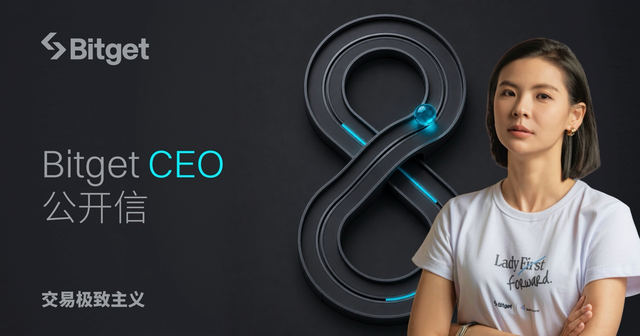
Bitget CEO Gracy on UEX Transformation, Pre-IPO Boom, and Three-Year Strategic Plans
Author: Wu Shuo Blockchain

In this episode of the Wu Shuo Blockchain podcast, Maodi interviews Bitget CEO Gracy Chen, discussing the previous security incident, the UEX (Universal Exchange) strategy, stock tokenization, traditional financial asset trading, institutional business, and future development.
Regarding the security incident, Gracy stated that Bitget has maintained a strong safety record since its inception eight years ago, and this incident originated from a zero-day vulnerability in third-party software. Bitget has patched the vulnerability, adjusted its credential management system, and re-reviewed the approval process for third-party software. She emphasized that exchanges must continuously improve their security frameworks and not let down their guard simply because of past incident-free records.
Looking at the industry's future, Gracy believes that Crypto exchanges are evolving from single-crypto asset trading platforms into comprehensive trading platforms covering stocks, Pre-IPO, commodities, and other multi-asset classes. She noted that demand for Bitget's Pre-IPO products exceeded expectations, while products like stock tokenization and stock perpetual contracts are still in their early stages. Future competition will hinge on liquidity, user experience, and the regulatory environment. As institutional capital becomes a significant incremental driver, Bitget is also increasing its investment in institutional business.
The guest's remarks do not represent Wu Shuo Blockchain's views and do not constitute any investment advice. Please strictly comply with local laws and regulations.
The $388 Million Security Incident: What Third-Party Zero-Day Vulnerabilities Reveal About Industry Issues
Maodi: For the first time in Bitget's eight-year history, you have encountered such a major security incident. What measures did you primarily take after it occurred?
Gracy: This incident stemmed from a zero-day vulnerability in third-party software. First, we patched the vulnerability, replaced the relevant functions, tightened internal credential and permission management, and restructured our security architecture. More importantly, we re-evaluated all third-party software used by the company and established a stricter approval process for third-party products.
We previously believed our internal security framework was well-built, but since this issue originated from external software, it highlights that third-party risks also require serious attention. Over the next six months, the security team, engineering team, and management will dedicate substantial time to strengthening our security infrastructure. Security enhancement is a long-term endeavor. As hacking attempts against exchanges are constant, the entire team must remain vigilant.
UEX Transformation: Moving from Crypto Assets to Global Financial Markets
Maodi: Bitget has navigated multiple bull and bear cycles over the past eight years. If you had to pick the most important strategic decision from the last one to two years, what would it be?
Gracy: I would choose the UEX, or Universal Exchange, strategy. We introduced this concept about a year ago and began positioning ourselves in traditional financial assets like tokenized stocks and Pre-IPOs. It appears to be working out well. Some Pre-IPO products offer scarcity value, attracting users who previously didn't trade on Bitget. Over the past year, trading volume and activity for tokenized US stocks have also been quite robust.
In the past, Crypto users wanting to buy US stocks had to first convert crypto to fiat, transfer it to a traditional brokerage account, and trade there, involving multiple deposit/withdrawal steps, fees, and platform switches. Now, users can trade cryptocurrencies, commodities, stocks, as well as stock perpetual contracts and options directly on Bitget, using stablecoins as their primary funding tool. I believe this is not a short-term narrative but a long-term transformation for Crypto exchanges.
In the future, the product boundaries between crypto exchanges and traditional securities brokers or financial trading platforms will become increasingly blurred, allowing users to allocate different types of assets within a single account.
Maodi: At the time of deciding to pivot to UEX, were you already certain this direction would succeed?
Gracy: Not really. We simply started from our own portfolio management needs, believing it made sense to trade different assets under one account. However, at the time, we faced regulatory concerns and weren't sure if Crypto users truly needed these products.
Early market solutions for tokenized stocks were relatively limited, such as Ondo and xStocks. This year, we launched our own Reality product, aiming to provide a better experience in areas like liquidity and dividend processing, bringing the product closer to actual US stock trading.
Based on current user data and competitors' product layouts, traditional financial assets are indeed becoming a key growth direction for Crypto exchanges.
Pre-IPO Demand Exceeds Expectations; Different Stock Products Cater to Different Users
Maodi: After Bitget launched Pre-IPO and stock tokenization products, did market demand exceed expectations?
Gracy: Overall, it definitely exceeded expectations. The subscription volume for the first two rounds of Pre-IPO products reached three to five times the available shares. Our model involves holding the corresponding Pre-IPO stocks through an underlying SPV, and then tokenizing them on a one-to-one basis according to the actual holdings.
Therefore, the number of shares that can be issued depends on the actual underlying assets held and cannot be increased indefinitely. We originally anticipated some demand, but the actual subscription performance was significantly better than expected. If we initially hoped the product would score 60 out of 100, market feedback might have pushed it to 80.
Maodi: Bitget now simultaneously offers direct stock access, tokenized stocks, stock perpetual contracts, and options. Why so many different products?
Gracy: Because different users have different needs. Crypto users are accustomed to using stablecoins to trade on-chain assets, making it easier for them to understand tokenized stocks. They can purchase US stock tokens like NVIDIA's just as they would buy Bitcoin. Reality publishes daily proofs of reserves, with underlying assets custodied by licensed institutions, giving users visibility into the asset backing. However, traditional brokerage users might not care about blockchain technology or want to dig into tokenization mechanics. They care more about whether they actually hold the stock, possess voting rights, and can attend shareholder meetings.
Therefore, we added direct stock access products to cater to those users. Options are mainly targeted at more professional traders. They are not satisfied with simple spot or futures buying/selling and prefer to employ more complex trading strategies. For instance, Duan Yongping is an investor who frequently uses options. Thus, these products do not replace each other but serve different types of users.
Stock Perpetual Contracts: Liquidity Concentration and New Price Discovery Mechanisms
Maodi: Currently, trading volume for stock perpetual contracts is highly concentrated in a few popular underlying assets. Will this situation change in the future?
Gracy: I believe the Matthew Effect will always persist. For example, the top ten underlying assets might account for half of the trading volume, while the top thirty could make up eighty percent. These are just examples, and actual proportions may shift, but the trend of liquidity concentrating in leading assets won't disappear. Stock perpetual contracts themselves are still a very new product, even in the US market. Historically, stocks were primarily regulated by the SEC, while perpetual contracts as derivatives fall under the CFTC. With both now combined, how regulatory responsibilities should be divided remains a subject of discussion.
Nevertheless, we are already witnessing a fascinating phenomenon: certain stock perpetual contracts are beginning to serve price discovery functions, potentially establishing market prices even earlier than Wall Street. Particularly for some unlisted AI companies, the Crypto perpetual contract market can already form anticipated price expectations in advance. This means crypto trading infrastructure is penetrating traditional finance and beginning to play a new role.
How US Regulation Will Impact the Development of Stock Perpetual Contracts
Maodi: If US regulation gradually becomes clearer and traditional exchanges start offering similar products, how much time window will Crypto exchanges still have?
Gracy: I believe there is a significant window, but its duration depends on US regulation and the pace of adoption by traditional financial institutions. If traditional trading platforms like the NYSE and Nasdaq are slow to adopt stock perpetual contracts, Crypto platforms will have the opportunity to lead this market for a period, potentially even gaining a price discovery advantage for certain assets.
However, if institutions like Nasdaq quickly roll out similar products, Crypto exchanges will need to rethink their competitiveness. At least for now, the crypto market has already provided a new pricing venue for certain Pre-IPO stocks. This shift has already begun around the IPOs of some AI companies this year, which I believe warrants continued attention.
Why Institutional Business Has Become the Exchange's New Growth Focus
Maodi: Bitget historically focused on retail business. Why is it placing increasing emphasis on institutional clients now?
Gracy: There are two reasons. First, looking at the broader market, institutional capital is becoming a crucial incremental source, and its share in trading volume and capital scale is likely to continue growing. Second, while Bitget performed well in the retail market, there is still significant room for improvement in serving institutional clients.
Our dedicated institutional team now exceeds thirty members, and we have hired a new head of institutional business. Including management and staff from other departments involved in institutional client services, over three hundred people across the company are engaged in this work. This signals a structural increase in our investment in institutional business. However, retail users remain incredibly important.
Retail and institutional investors have a symbiotic relationship: without retail traders, institutions lack sufficient trading demand; without institutions providing liquidity, retail trading experiences suffer. Therefore, we won't only serve institutions. Instead, we aim to foster a virtuous cycle between both client segments.
Bitget's Three-Year Outlook
Maodi: Looking ahead three years, what kind of platform do you hope Bitget will become?
Gracy: We still aim to focus on trading, but our trading products will become richer, no longer limited to crypto assets. Instead, we will expand across more traditional financial markets along the UEX strategy. Currently, we have started integrating different assets through UTA (Unified Trading Account), enabling users to share margin across products to improve capital efficiency. But this is just the first step of the UEX strategy.
Over the next three years, we hope to attract more global users to these products and further refine the entire trading ecosystem. The US market is also a key target. We are progressively advancing related licensing applications, hoping to secure more US licenses within the next three years and officially enter the American market.
Join TechFlow official community to stay tuned
Telegram:https://t.me/TechFlowDaily
X (Twitter):https://x.com/TechFlowPost
X (Twitter) EN:https://x.com/BlockFlow_News
 吴说区块链