
Bitget UEX Daily | Attack on Saudi Airport Exacerbates Middle East Risk; Major US Stock Indices Rebound; BTC Recovers to Around $84,000
I. Hot News Highlights
1. Middle East Situation: Saudi Arabia International Airport Hit Consecutively, Energy Supply Risks Heat Up Again
The King Khalid International Airport in Riyadh, the capital of Saudi Arabia, was attacked consecutively on October 10 and 11. The Houthi movement of Yemen claimed responsibility for the attacks and expanded operations to eastern airports and energy-related facilities in Saudi Arabia. The attacks have caused casualties and led to flight cancellations and disruptions in airport operations. The United States has indicated it may support Saudi military action against the Houthis, raising fears of further escalation in the Middle East.
Market Impact: The risks from this conflict are expanding from crude oil transport routes to airports, refining, and other critical infrastructure. If the attacks continue, they could increase regional energy transportation costs and supply disruption risks, impacting global inflation expectations through oil prices. The aviation, tourism, and transportation sectors face cost pressures, while energy and defense-related assets may attract more attention. Key follow-ups include assessing actual damage to Saudi energy facilities and monitoring shipping conditions in the Red Sea and Strait of Hormuz.
2. International Crude Oil: Rumors of Russia-Ukraine Energy Ceasefire Push Prices Down, Brent Falls Near $103
U.S. President Trump stated that Russia and Ukraine might reach a ceasefire arrangement regarding energy infrastructure, leading markets to anticipate a relaxation of restrictions on Russian energy supplies. However, as of now, the agreement has not been fully confirmed by both sides. Following the news, Brent crude initially fell to around $103.35 per barrel in early Asian trading on October 12, with WTI dropping to approximately $90.55 per barrel. Meanwhile, tanker attacks in the Middle East and strikes on Saudi airports continue to add supply uncertainty.
Market Impact: Current oil prices are being driven by two opposing factors: expectations of a Russia-Ukraine energy ceasefire easing supply tensions, while escalated Middle East conflicts heighten transport and energy facility risks. If the ceasefire is ultimately implemented, it could alleviate pressure on refined product supplies; however, if Middle Eastern attacks persist, oil prices may remain supported by geopolitical risk premiums. In the short term, focus should be placed on actual supply recovery rather than relying solely on diplomatic statements to gauge price trends.
3. U.S. Economy: This Week Brings Dual Tests of CPI and Bank Earnings Reports
The U.S. September Consumer Price Index (CPI) is scheduled for release on October 14. Markets expect the headline CPI to rise approximately 0.6% month-over-month due to higher energy prices, while core inflation may remain relatively mild. The preliminary October University of Michigan Consumer Sentiment Index dropped to 46.3, with one-year inflation expectations rising to 4.7%, indicating growing consumer concern over economic and price outlooks. This week, major banks including JPMorgan Chase, Citibank, Wells Fargo, and Goldman Sachs will also sequentially release their Q3 earnings.
Market Impact: Inflation data and corporate earnings will jointly determine whether U.S. equities can sustain their recent rally. If the CPI exceeds expectations, it may push Treasury yields back up and pressure highly valued tech stocks; if bank earnings reports show stable credit quality and growth in corporate financing and trading businesses, it could improve market perceptions of economic resilience. Currently, particular attention should be paid to how high interest rates impact corporate debt financing, AI capital expenditures, and consumer loan demand.
II. Market Review
1. Commodities and FX Performance
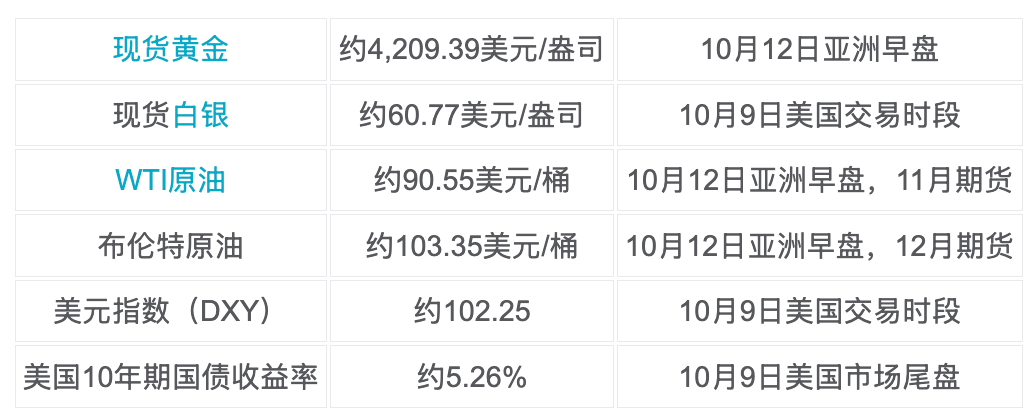
International crude oil dipped in early Monday trading but remained in a high range above $90 to $100 per barrel. The offset between Middle East attacks and expectations of a Russia-Ukraine energy ceasefire may further expand short-term oil price volatility. Gold rose approximately 0.4% in early Asian trading, reflecting investors' safe-haven demand amid geopolitical and economic uncertainty; however, higher U.S. Treasury yields continue to limit valuation space for non-yielding assets. Since the U.S. bond market was closed on October 12 for Columbus Day/Native American Day, Treasury yield references use the most recent complete trading day.
2. Cryptocurrency Performance
- BTC: Approximately 83,849.77 USDT; corresponding BTC/USD reference price approx. 83,887.55 USD, up 1.08% over 24 hours.
- ETH: Approximately 2,545.71 USDT; corresponding ETH/USD reference price approx. 2,542.42 USD, up 1.62% over 24 hours.
- Total Cryptocurrency Market Cap: Approximately $2.813 trillion, down 2.58% over the past 24 hours.
BTC and ETH data are sourced from Bitget, updated at Beijing Time 09:26:26 and 09:17:21 on October 12 respectively, with 24-hour gains calculated using the corresponding page USD reference benchmark. Total market cap is sourced from CoinGecko, current as of 09:29:48 Beijing Time. Due to differing coverage scopes and update times across datasets, the rise in BTC and ETH alongside a decline in total market cap should not be viewed as contradictory nor indicative of synchronous gains across other crypto assets.
BTC | Liquidation Zone Observation
This edition did not receive a timely CoinGlass BTC liquidation map containing complete price ranges and liquidation intensity data. Therefore, potential liquidation zones for major shorts above the current price, major longs below, and distance calculations are temporarily withheld. BTC has recently recovered from the ~$80,000 range to around $84,000, but a price rebound alone does not confirm concentrated short liquidations have occurred.
ETH | Liquidation Zone Observation
ETH has recently bounced from its correction lows back above $2,500, but similarly lacks verifiable latest distribution data on liquidation intensity. It is currently unreliable to compare potential liquidation pressure between shorts above and longs below, and standard technical support levels are not treated as liquidation zones.
Institutional Holding Cost | BTC
Strategy's latest verified official disclosure shows the company held 848,000 BTC as of October 4, with an overall average purchase cost of approximately $75,441. Based on Bitget's BTC/USD reference price of $83,887.55 at 09:26:26 Beijing Time on October 12, BTC is priced approximately 11.20% above Strategy's average cost. This represents a reference premium of the BTC market price relative to its average purchase cost, not the company's overall investment return rate. The comprehensive cost of U.S. spot BTC ETFs was not provided with verifiable latest estimates this time and is therefore left blank.
One-Line Market Takeaway
BTC has rebounded to approximately $84,000, maintaining a reference premium of about 11% over Strategy's average purchase cost, with institutional cost buffers recovering somewhat from previous levels. However, liquidation map data is insufficient to pinpoint current primary leverage risk positions. Future observations should concurrently monitor whether BTC can sustain its rebound and whether ETF fund flows show sustained improvement.
3. Major U.S. Stock Index Performance
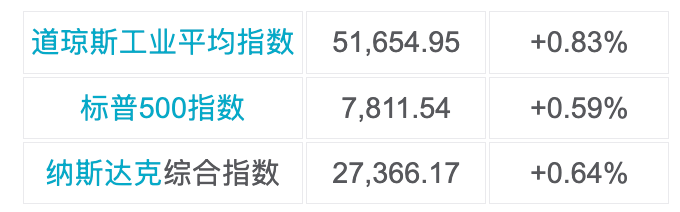
On October 9, the three major U.S. stock indices rallied collectively, with the Dow Jones Industrial Average rising over 400 points, while the S&P 500 and Nasdaq Composite each gained approximately 0.6%. For the full week, the Dow rose about 0.9%, the S&P 500 gained roughly 1.2%, and the Nasdaq increased by about 0.6%, demonstrating the resilience of major indices.
Nevertheless, clear divergence remains within the market. News of SpaceX acquiring wireless spectrum triggered sharp declines in traditional telecom operators' stock prices, while telecom tower companies bucked the trend and rose. In the tech sector, Microsoft and Amazon performed well, whereas Apple and NVIDIA faced pressure. Investors are increasingly focusing on individual companies' earnings realization rather than applying uniform valuations across the entire tech sector.
4. Magnificent Seven Tech Performance
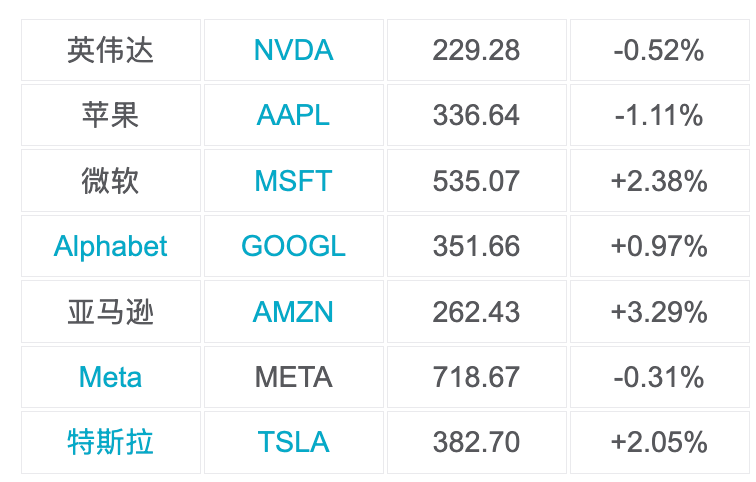
Among the Magnificent Seven, 4 stocks rose and 3 fell. Amazon rose 3.29%, Microsoft climbed 2.38%, and Tesla advanced 2.05%, emerging as top gainers; Apple declined 1.11%, and NVIDIA pulled back 0.52%. Microsoft's market capitalization has approached $4 trillion, with markets maintaining high growth expectations for its cloud computing and AI businesses, though future valuations will still hinge on Azure growth, AI revenue, and ROI on capital expenditures.
5. Sector Anomaly Observations
Telecom Operators: SpaceX Entering Wireless Spectrum Market Sparks Valuation Reassessment. SpaceX plans to acquire national 800MHz low-frequency spectrum via a deal worth approximately $8 billion to establish a more complete mobile communication capability for Starlink Mobile. T-Mobile fell approximately 13.3% on October 9, AT&T dropped about 9.8%, and Verizon declined roughly 8.8%. Telecom tower companies rose noticeably, indicating the market believes new networks may still require ground-based infrastructure.
Financial Sector: Large Bank Earnings Will Test Profit Resilience Amid High Interest Rates. JPMorgan, Citigroup, Wells Fargo, and Goldman Sachs will release earnings this week, with markets closely monitoring net interest income, investment banking, trading revenue, and loan loss provisions. Elevated interest rates may widen spreads for some banks but could also suppress loan demand and increase borrower repayment pressures.
Semiconductors & AI: Industry Focus Shifts to Revenue Realization. Last week, AI-related stocks were impacted by OpenAI's revenue expectations and financing costs for large-scale computing projects, prompting adjustments in some semiconductor firms. This week, operational data and earnings reports for ASML and TSMC will serve as key windows into observing chip demand, capital expenditures, and profit realization.
III. Key U.S. Stock DeepDive Analysis
1. T-Mobile (TMUS): SpaceX Spectrum Acquisition Challenges Traditional Operator Moats
Event Overview: T-Mobile fell approximately 13.3% on October 9. SpaceX plans to acquire 800MHz wireless spectrum to expand Starlink Mobile's network coverage in the United States and improve indoor communication services. The transaction remains subject to regulatory approval.
Market Interpretation: The competitive moats of traditional mobile operators are primarily built on spectrum rights, terrestrial base stations, network coverage, and user scale. By combining satellites with low-frequency wireless spectrum, SpaceX may establish a new network competition model over the long term. However, obtaining spectrum does not mean immediate replacement of traditional operators, as significant investments in network construction, device compatibility, and commercial operations are still required.
Investment Implications: Subsequent developments to watch include FCC approval, the actual service coverage of SpaceX, and whether T-Mobile's customer churn rate and per-user revenue are affected. If the new technology cannot quickly transition into stable commercial services, short-term market anxiety may exceed actual operational impacts; conversely, if SpaceX achieves scalable operations, the competitive landscape of the traditional telecommunications industry could undergo long-term shifts.
2. Apple (AAPL): Supply Chain Production Cut Report Sparks iPhone Demand Concerns
Event Overview: Apple closed at $336.64 on October 9, down 1.11%. Prior supply chain reports indicated Apple requested certain suppliers to reduce component orders for the iPhone 18 Pro and Pro Max, potentially due to shifting consumer demand, rising memory chip prices, and terminal product pricing strategies. The scale of these order adjustments has not yet been officially confirmed by Apple.
Market Interpretation: Growing demand from AI data centers for memory chips may impact the smartphone market through supply chain costs. Apple's high-end products must simultaneously maintain pricing power, sales volume, and profit margins; if component costs rise while end-user demand falls short, profitability could come under pressure. Nevertheless, supply chain order fluctuations may also relate to inventory management and product launch timelines, so they should not be directly equated with drops in final retail sales.
Investment Implications: Going forward, focus should be placed on Apple's quarterly iPhone revenue, product gross margins, and subsequent supply chain orders. If sales of high-end models remain persistently weak, it could negatively affect market expectations for Apple's hardware revenue and profit growth; conversely, if it merely reflects short-term inventory adjustments, the long-term impact may be limited.
3. Humana (HUM): Health Insurance Rating Upgrade Prompts Market to Reassess Profit Outlook
Event Overview: Humana surged approximately 11.6% on October 9. Latest Medicare Advantage star rating data shows that roughly 95% of the company's relevant members participate in four-star or higher-rated plans, marking a significant improvement from previous ratings.
Market Interpretation: Medicare Advantage star ratings directly influence certain quality bonuses and business competitiveness for insurance companies. Higher ratings could lead to increased incentive payments in the future and improve profitability expectations. However, rating improvements do not directly translate to lower medical payout costs, as the company remains exposed to actual healthcare expenses and shifts in membership demographics.
Investment Implications: Subsequent monitoring should focus on bonus payouts tied to ratings, medical loss ratios, and new member acquisition numbers. For health insurers, regulatory ratings can bolster revenue expectations, but ultimate investment value will still depend on sustained profitability and cash flow growth.
IV. Market and Project Updates
- Rising Saudi Energy Security Risks: Following consecutive attacks on Riyadh's international airport, eastern Saudi airports and energy facilities have also become targets. Executives from multiple international energy companies have canceled trips to Riyadh for energy conferences, indicating security concerns are already impacting regional business activities.
- U.S. StockTokenizationGains New Momentum: Securitize launched tokenized U.S. equity products based on Solana on October 8, initially covering 12 U.S. stocks including Apple, Microsoft, and NVIDIA, emphasizing real underlying securities backing and corresponding economic rights. While the product is live, it should be distinguished from future plans to integrate with trading venues like the NYSE.
- Traditional Finance Explores On-Chain Trading: OKXICE plans to develop a tokenized U.S. securities platform supporting round-the-clock trading and has advanced related regulatory applications. As more institutions enter the space, future competitive focuses may shift toward legitimate securities rights, liquidity, custody, and settlement efficiency, rather than merely on-chain token volumes.
- Corporate BTC Holdings: Strategy's most recent verified official ledger shows holdings of 848,000 BTC, with an average purchase cost of approximately $75,441. At this stage, unverified purchasing rumors for October 12 or incomplete disclosures should not be treated as executed transactions.
- Crypto Institutional Fund Flows: Compiled data for October 8 shows U.S. spot BTC ETFs experienced outflows of $244.1 million, while spot ETH ETFs saw outflows of $72.5 million. Due to incomplete verification of subsequent datasets, unconfirmed October 9 fund flow figures are not treated as facts this time, nor should they be used to conclude that institutional funds have consistently flowed back in.
V. Today's Market Calendar
Date: October 12, 2026, Beijing Time. U.S. equity markets traded normally, while the U.S. Treasury spot market was closed for Columbus Day/Native American Day. The following relevance ratings reflect editorial assessment.

Key Event Forecast: The most critical variables this week are the CPI print and bank earnings reports. Persistently high oil prices may elevate broader inflation levels, while bank operating metrics will test whether corporations and consumers can continue to withstand high interest rates. Meanwhile, attacks on Saudi airports and Middle East shipping risks could trigger another wave of energy price volatility ahead of data releases. For tech stocks, the market will also use semiconductor sector operating data to assess whether AI demand continues translating into tangible revenues.
Institutional Viewpoints: On October 9, Baird Head of Equity Strategy Ross Mayfield noted that conflicting Middle East-related messages make it difficult for investors to form clear directional views based on isolated geopolitical statements. Meanwhile, Infinox analyst Thadeu Dos Santos suggested that cooling oil prices help alleviate inflation and bond yield pressures, thereby supporting gold, though elevated interest rate environments remain the primary headwind for precious metals.
Disclaimer: This daily report is for market information reference only and does not constitute investment advice. Market prices are subject to the respective timestamps noted. Speculative filling for liquidation zones and ETF comprehensive costs will be omitted when verifiable data is unavailable.