We’ve built a Perp DEX—everyone says it’s incredible.
TechFlow Selected TechFlow Selected
We’ve built a Perp DEX—everyone says it’s incredible.
Perpl is the first on-chain DEX that requires no user choices—it features fully on-chain execution, a true CLOB, and gas efficiency sufficient for market making, all built on decentralized, general-purpose L1 storage.
 Navigating Web3 tides with focused insights
Author: @0x70626a, Co-founder of Perpl

Perp is a mature product—but its infrastructure challenges remain unresolved.
To build the ideal Perp DEX, the protocol layer must satisfy three conditions:
- Fully on-chain execution
- A truly granular CLOB (Central Limit Order Book)
- Low gas cost + fast updates
The problem? Every generation of blockchain infrastructure fails at least one of these.
- On Ethereum L1, 12-second block times make on-chain matching infeasible. So dYdX v2 moved its CLOB off-chain and only settled on-chain—introducing single points of failure.
- On various L2s, blocks arrive faster—but insufficient gas prevents running a full CLOB. Developers like GMX therefore resort to Perp AMMs, which are not CLOBs and deliver inferior trading experiences.
- On app-chains, while CLOBs can run, you must sacrifice decentralization and network effects—and trust either centralized sequencers or so-called “decentralized” validator sets.
- On Solana’s SVM, though it offers a high-speed L1, it’s non-EVM, limiting on-chain matching. Builders are forced toward DLOBs—or even further, toward prop-AMMs driven by a single market maker.
Every path demands compromise—until Monad arrived.
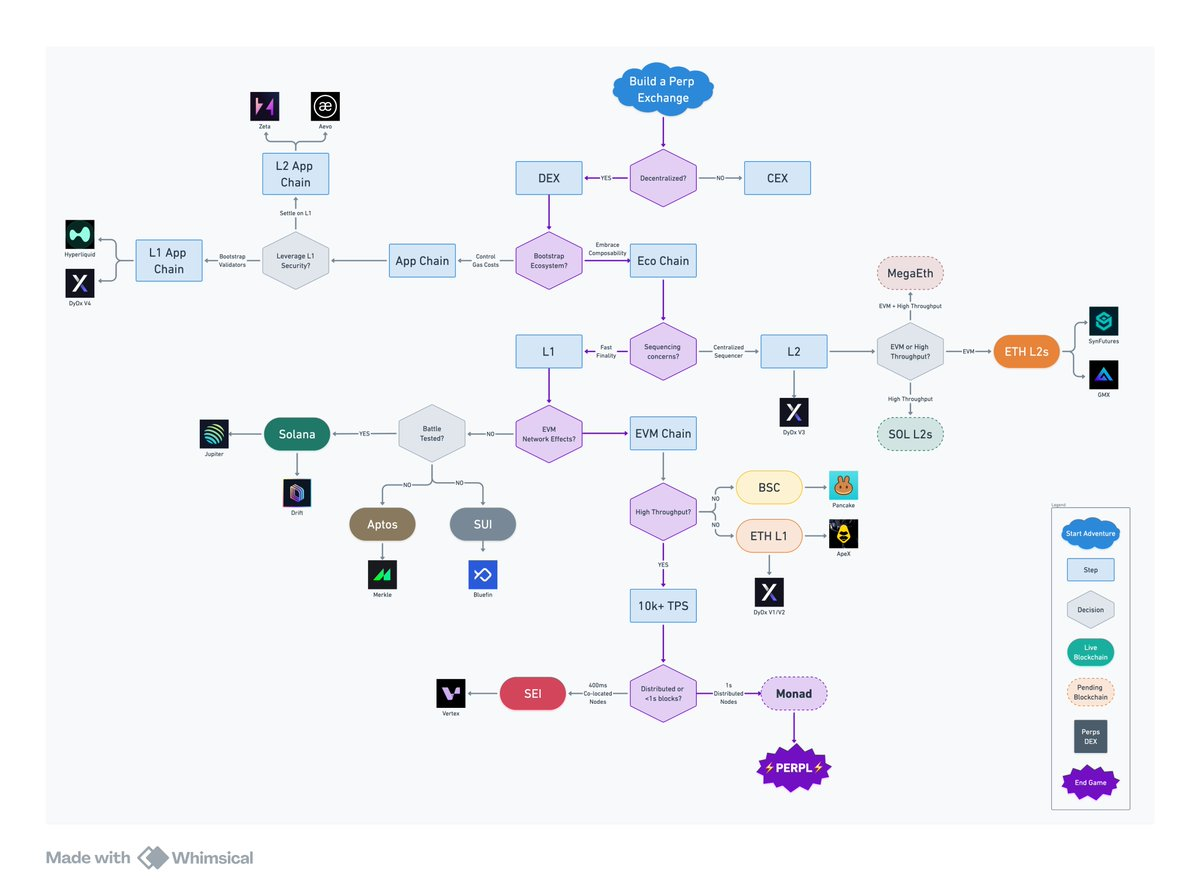
Perpl is the first on-chain DEX that requires no trade-offs: fully on-chain execution, a true CLOB, and gas efficiency sufficient for professional market making—all built atop a decentralized, general-purpose L1 storage layer.
This is the full Perpl story: the team, the technology, and why it matters.
Part 1 Why Us?
My co-founder AC and I have collaborated on development for over 15 years.
We were both FPGA developers. For decades, we built hardware design tools for systems where failure was not an option: space missions, deep-sea drilling, nuclear reactors. In those environments, a bug doesn’t just mean poor performance—it means loss of life.
Later, we built some of the most complex DeFi and crypto primitives ever deployed on-chain.
That track record earned us a $9.25M Series A led by Dragonfly, with participation from BHD, Mirana, L1D, HashKey, Cambria, and CMS. The reason is simple: we’ve shipped real products.
Today, we’re leading a 10-person team toward one goal: building the “endgame” perpetual DEX—something many believed impossible.

Part 2 What Is Perpl?
A one-sentence mental model: Uniswap, but as a perpetual futures exchange with a CLOB.
Monad delivers unprecedented capabilities: extreme speed without sacrificing decentralization or EVM compatibility. So we built what everyone thought impossible on-chain: a true CLOB with real market-making mechanics.
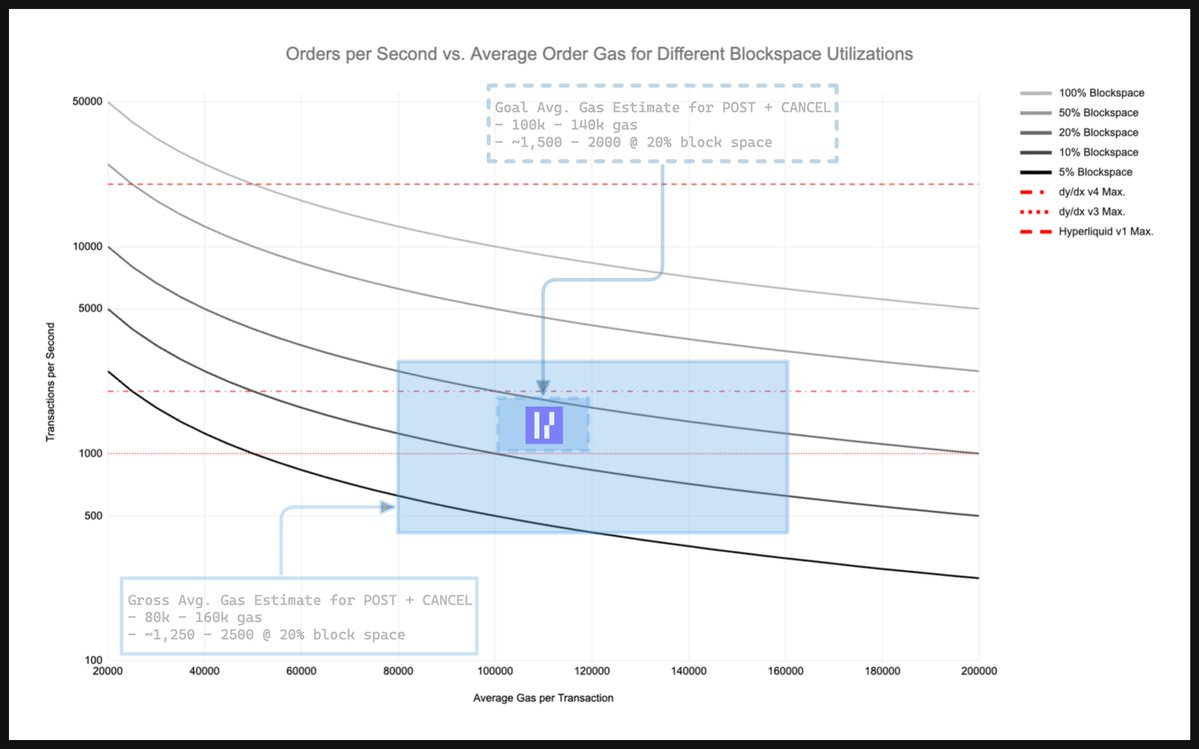
The approximate gas cost to post or cancel an order is ~100,000 gas. At the time of writing (MON priced at $0.02), that’s about $0.0001—meaning $1 buys 10,000 post/cancel operations.
Today, Perpl achieves double the throughput of dYdX v4—without running its own chain. At 500M gas/sec and 20% block space utilization, we process 1,000 posts/cancels per second. Given Monad’s average gas usage over the past four months (~3%) and 95% reserved headroom, our theoretical capacity approaches ~5,000 posts/cancels per second. As Monad increases its gas budget, performance will scale further.
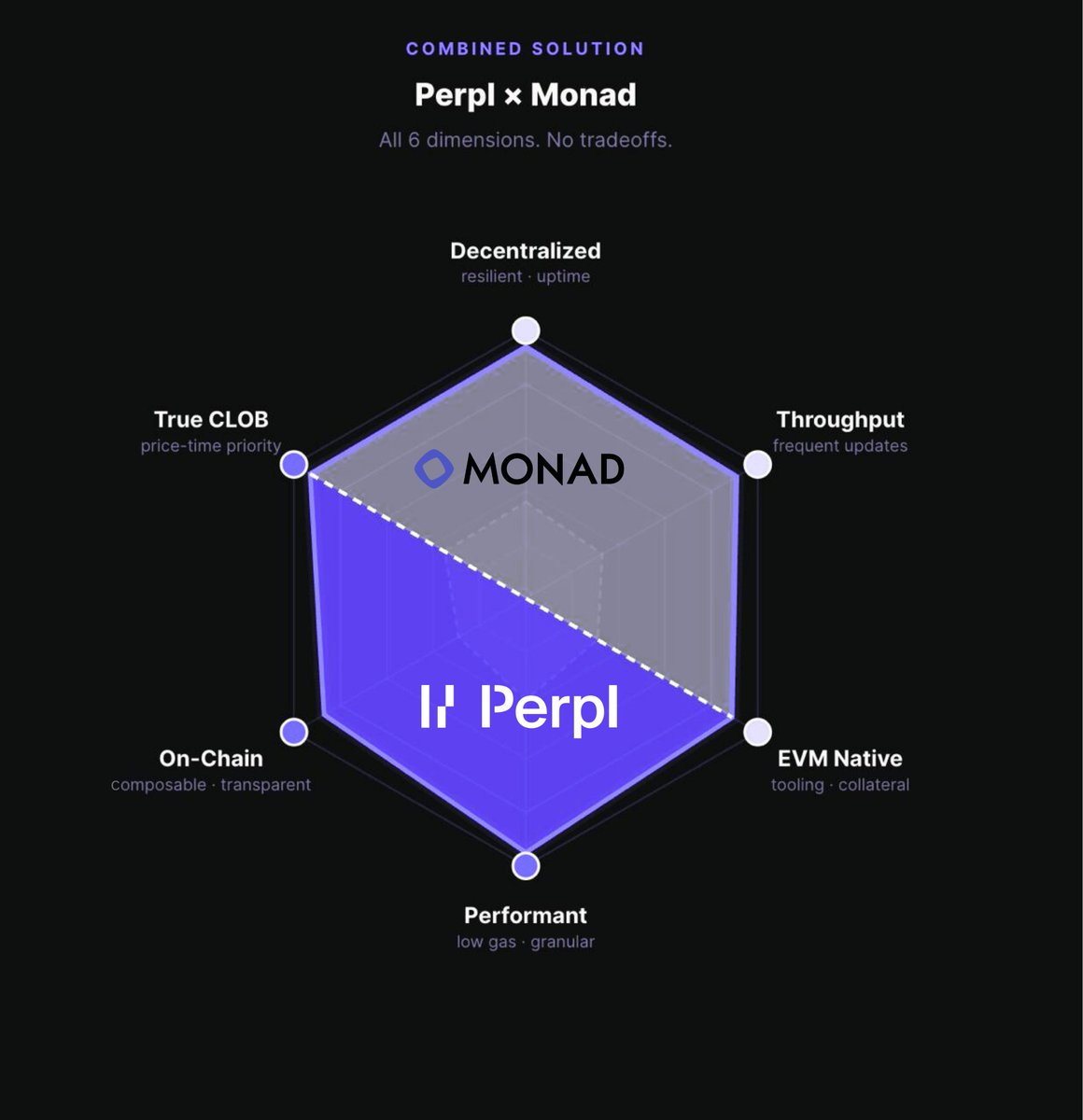
Perpl features: shared blockspace with the rest of the Monad DeFi ecosystem; native support for all ERC-20 tokens as collateral; full composability; full scalability; censorship resistance; and zero centralized bottlenecks.
Part 3 How Is Perpl Built?
From day one, Perpl was designed to be the most gas-optimized DEX for market makers. Unlike app-chains or off-chain DEXes, every on-chain order placement and cancellation incurs gas costs—the real marginal cost borne by someone on every trade.
Here’s how we optimized gas usage.
Data Structures
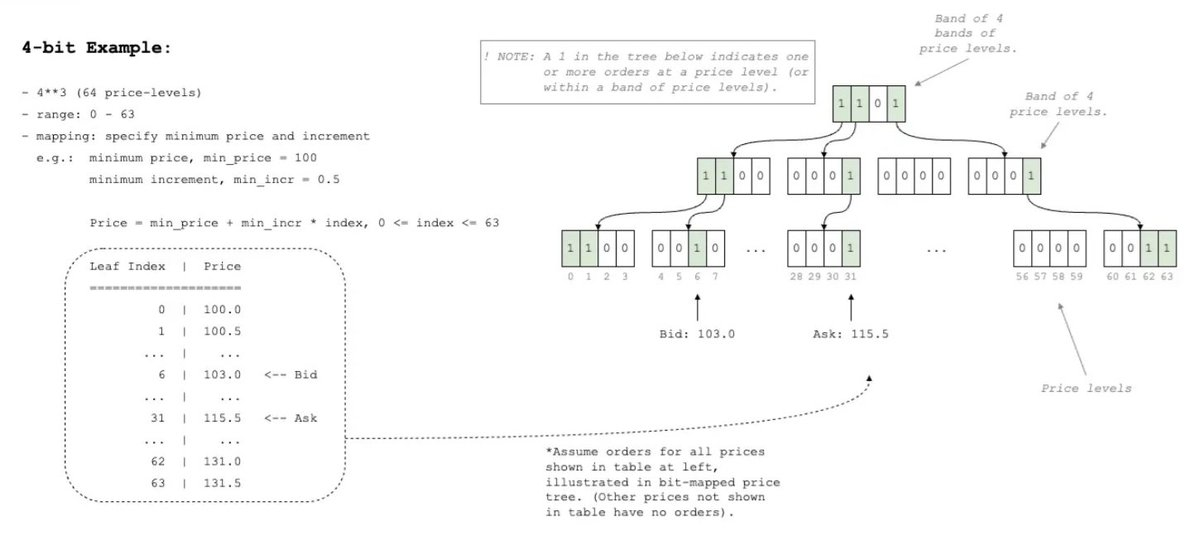
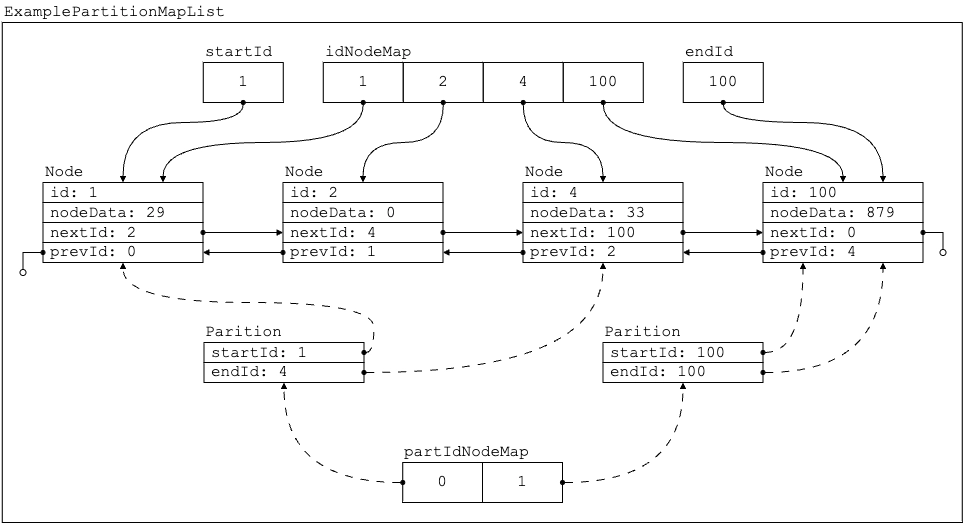
The order book is built from two binary-indexed trees and a partitioned list mapping. The linked list allows O(1) constant-time insertion and deletion of orders on the order book, ordered by price-time priority. Pointer manipulation also enables efficient updates to order price levels, expiry times, and sizes.
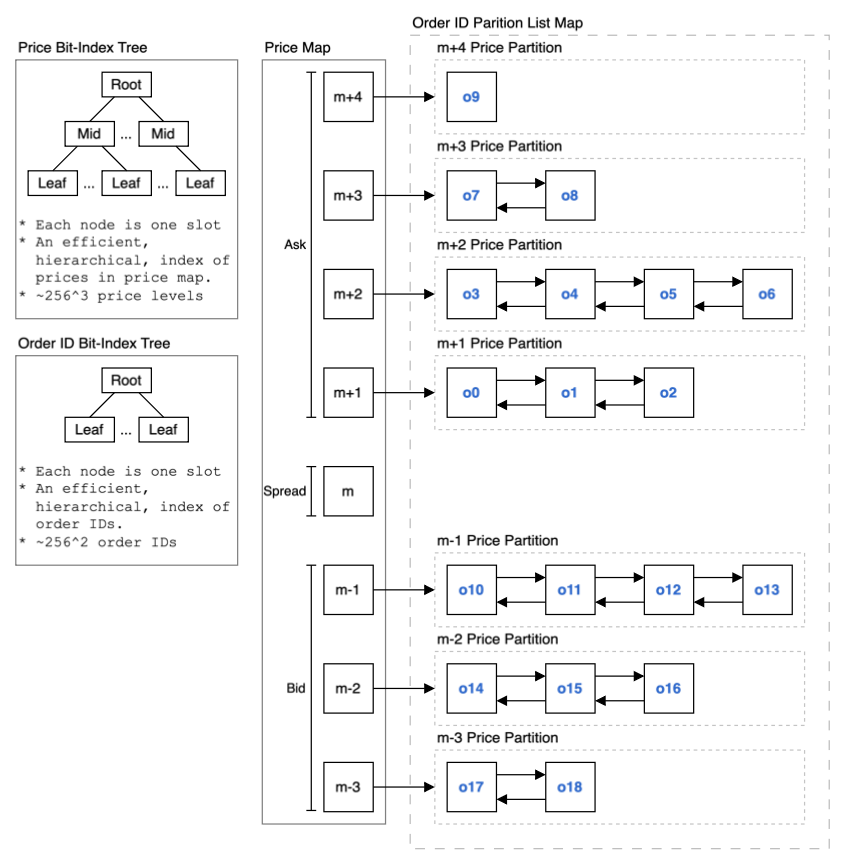
Two binary-indexed trees: one tracks orders, the other price levels. The order ID tree has depth 2 (256²), supporting up to ~65,000 orders per market. The price tree has depth 3 (256³), supporting up to ~1.6 million price levels.
For perspective: you could place orders across the entire $0–$1.6M BTC price range at $0.10 increments without issue. You can locate the best active bid or ask level in constant time—requiring at most three slot reads.
EVM Features
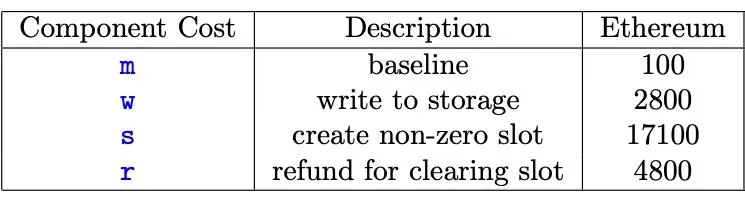
The EVM has many subtle but critical characteristics—especially around how it prices on-chain reads and writes. The obvious optimization is minimizing reads/writes, but if your DEX must run entirely on-chain, that’s hard to achieve. Still, clever techniques help. As shown below, writing to an empty slot is expensive. Writing → clearing → rewriting costs more than overwriting the same slot.
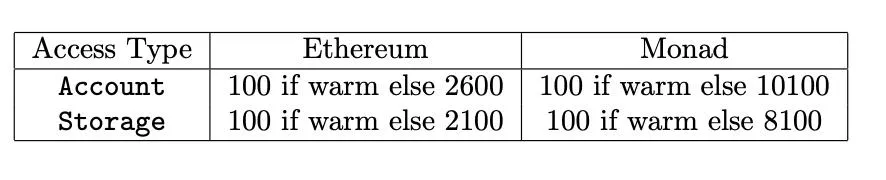
Another subtlety is the cost difference between reading “hot” vs. “cold” data. If you organize data predictably (e.g., order books), you can use `eth_createAccessList` to pre-warm slots you plan to access—drastically lowering on-chain read costs.
Algorithms
- Virtual Funding
Processing funding payments on-chain—even with unoptimized data structures and EVM usage—is prohibitively expensive. Explicitly settling each funding event on-chain would incur massive gas costs, given that perpetual contracts often hold hundreds or thousands of open positions.
To solve this, funding must be virtualized: the effect of funding settlement appears immediately after a single transaction, letting all perpetual users continue trading as if payment had already settled—without updating individual position states in the contract.
Perpl introduces a novel solution to efficiently virtualize funding payments across *all* perpetual positions. It builds on improvements to staking algorithms and virtual orders—eliminating the need for explicit, periodic funding settlements.
- Inverted Positions
Depending on strategy, market makers may hold orders on both sides of the book to profit from the spread. To handle on-chain position flips (long ↔ short) efficiently, we created an inverted position mechanism.
This avoids repeated memory allocation/deallocation: the same position memory is reused when flipping from long to short or vice versa. Moreover, when an order triggers a position change, computation reduces from separate reduce/close + open operations to a single inversion calculation.
- Modify Orders
Another key feature is order modification. Market makers frequently use post-cancel strategies: posting multiple orders, then canceling and reposting. A naive implementation—allocating, releasing, and reallocating slot state across one or more blocks for a post-cancel-post sequence—would be extremely inefficient on-chain.
At a macro level, we realized market makers aren’t really placing new orders—they’re *modifying* existing ones. That insight drove innovation: a modify-order operation enabling efficient, atomic changes to price, size, or expiry block—all within a single low-cost transaction. State never undergoes costly reallocation cycles. Furthermore, order memory is never zeroed out after initial use. Instead, it’s efficiently reused via a unique order ID counter that always selects the lowest available memory address.
This means the EVM’s most expensive operation—the transition from zero to non-zero in a storage slot—is performed only once per order memory slot over the exchange’s lifetime. All subsequent allocations become far cheaper X→Y transitions, where both X and Y are non-zero.
Bit Packing
The final piece is bit packing: maximizing information density within each 256-bit slot. To minimize read counts, frequently accessed fields are packed together—optimizing access patterns. Most variables don’t need 256-bit capacity (2²⁵⁶ ≈ 1.1579209×10⁷⁷), so careful sizing (rounding, overflow handling) minimizes each variable’s container—enabling optimal data packing.
The result: the most gas-efficient on-chain CLOB ever built.
Part 4 Why On-Chain?
- Liquidity Flywheel
Ultimately, traders judge perpetual DEXes on three criteria: execution quality, order book depth, and bid-ask spread.
App-chains offer cheap quotes—but in isolation, cheap quotes cannot generate deep liquidity. Traders need diverse collateral options, composability with lending and hedging protocols, and infrastructure they can trust—without relying on centralized sequencers.
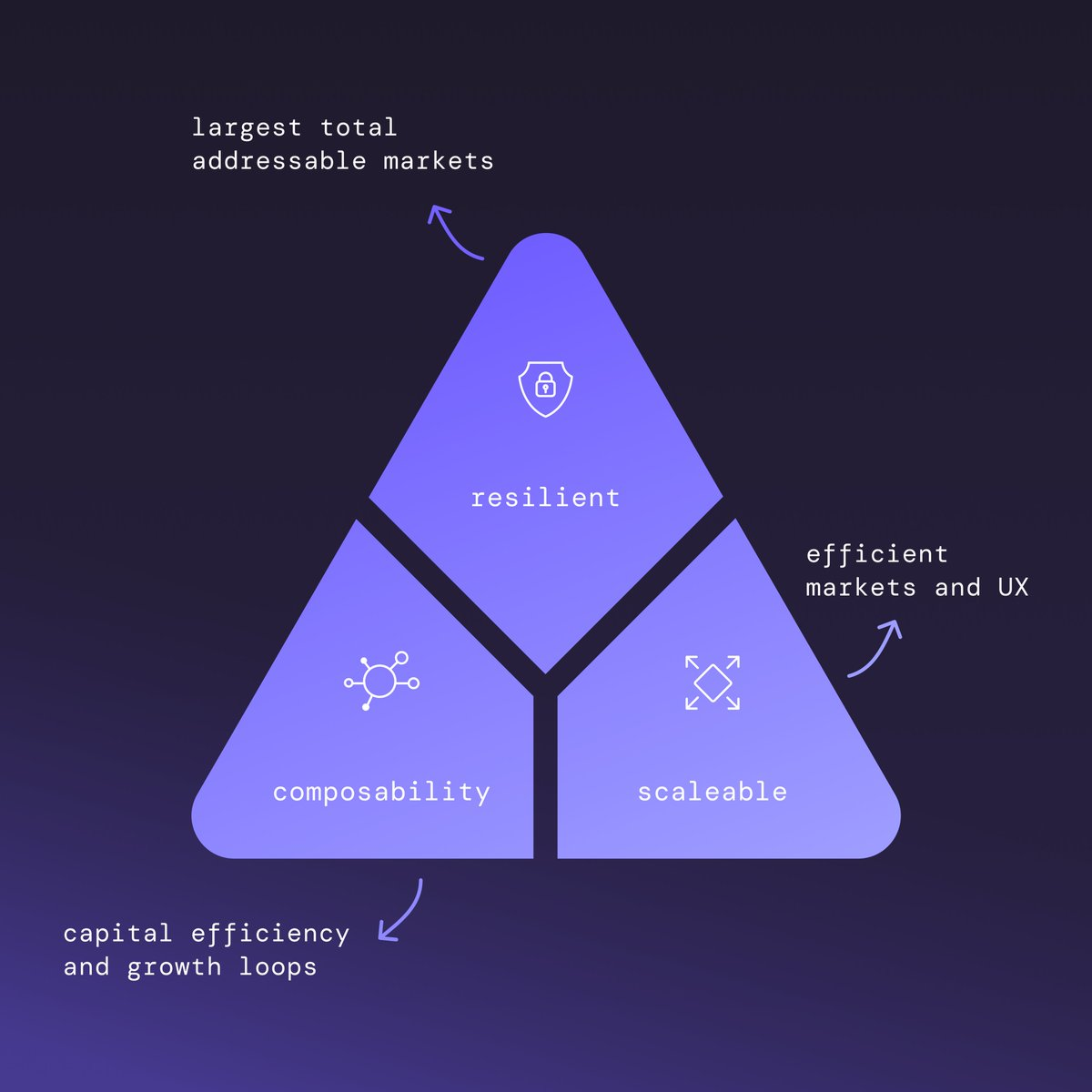
On Perpl, users seamlessly delta-hedge, use LP positions as collateral, borrow against margin—all on the same chain.
Perpl delivers app-chain gas efficiency for market makers—without compromise. O(1) operations, modify orders, time-in-force (TIF), all on a decentralized L1—each post/cancel costing just 100,000 gas, backed by the full Monad DeFi ecosystem.
Lower quote costs. More risk management tools. More collateral options. More reasons to stay.
Narrower spreads. Deeper order books. Better fills. More traders.
- Built for Autonomous Capital
Perpl is the first platform where anyone can fork the entire Perpl exchange. Full order book state and full blockchain state can be locally replicated and simulated using Hardhat or Foundry.
Traders backtest strategies on real order book data; protocols test integrations pre-deployment; agents verify execution before submission. No off-chain order book or app-chain offers this capability.
If you can’t fork it, you can’t trust it.
https://x.com/hosseeb/status/2024136762424185208
- Moat Auto-Reinforcement
Every time Monad increases its gas budget, Perpl’s throughput scales. Every new Monad DeFi protocol is a potential composable partner. Every new ERC proposal integrates seamlessly. Every EVM tool improvement automatically benefits Perpl.
App-chains must build everything themselves. Perpl inherits the entire EVM ecosystem’s innovations—for free. The longer the timeline, the wider the moat.
Perpl is built for finance’s future—not its past.
Part 5 Why Now?
In March 2025, Hyperliquid’s validators voted to delist a token and forcibly settle positions at a price of their choosing. Traders lost money—not due to market movement—but due to governance decisions made by an on-chain operations team.
This isn’t true decentralization. It’s just a CEX with extra steps.

This isn’t isolated. It’s the inevitable outcome of architectures where exchanges, validators, and bridges are controlled by the same entity. When failure occurs, on-chain operators decide who bears losses. If the chain itself is a single point of failure, “on-chain” is meaningless.
And it keeps happening: two-thirds of cross-chain bridges concentrate multi-sig control among a few individuals; app-chain sequencers are team-controlled; off-chain order book fills cannot be verified pre-execution—only confirmed post-facto. Each cycle repeats the same lesson: infrastructure that *appears* decentralized—but isn’t—will inevitably behave like it isn’t.
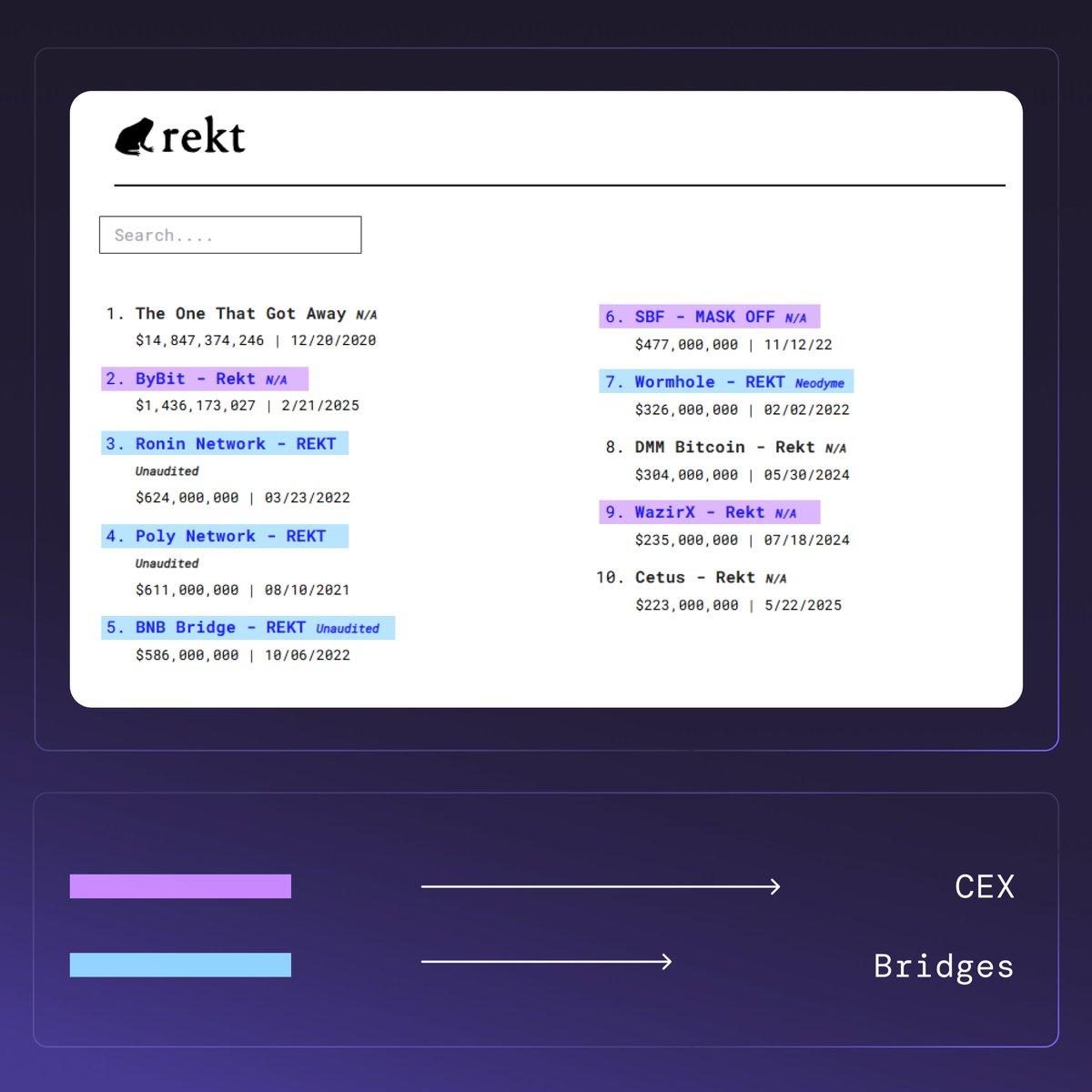
Meanwhile, demand-side growth is unprecedented.
On-chain trading volume climbs quarterly. Stablecoin market cap hits all-time highs. TradFi actively migrates trading and settlement onto crypto rails. Funds that shunned DeFi two years ago now actively seek venues offering full transparency and zero counterparty risk.
Plus, Agents—autonomous trading systems—are growing exponentially, with clear infrastructure requirements—and Perpl meets them precisely.

More capital flows on-chain. More institutions demand transparency. More Agents execute autonomously. More protocols interoperate.
And Perpl handles it all.
Part 6 When?
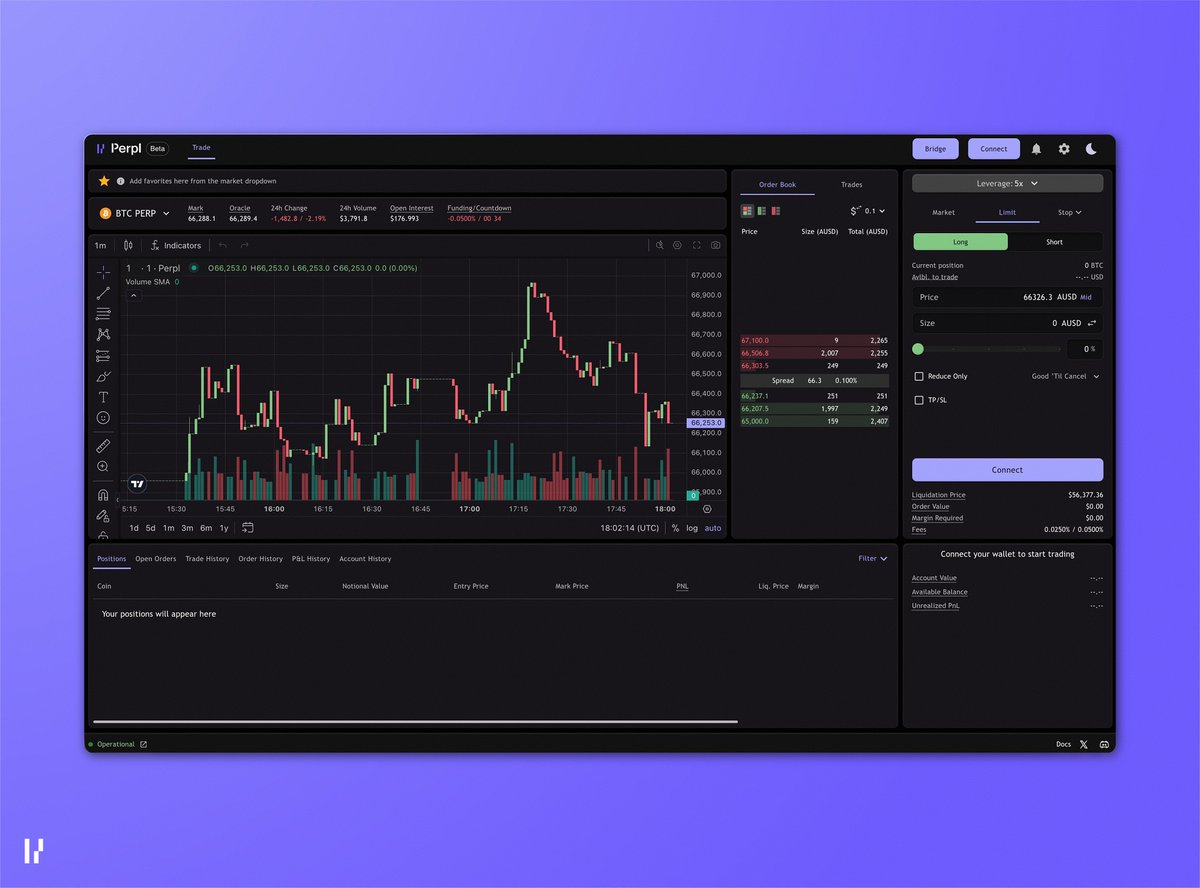
February 24, 2026
We made the impossible possible.
Join TechFlow official community to stay tuned
Telegram:https://t.me/TechFlowDaily
X (Twitter):https://x.com/TechFlowPost
X (Twitter) EN:https://x.com/BlockFlow_News
 @0x70626a