Sept. 15 Showdown: CLARITY Act Faces Crucial Senate Test as SEC’s Independent Regulatory Framework Imminent
Author: Claude, TechFlow
On September 2, SEC Chair Paul Atkins stated during a live Fox Business interview that the CLARITY Act will enter a procedural Senate vote on September 15, requiring 60 votes to advance debate. The bill, numbered H.R. 3633, missed the pre-recess window in August due to disagreements over ethical provisions, stablecoin yields, and other issues. Whether it can secure the crucial seven cross-party votes from Democrats remains uncertain. On August 18, the SEC independently launched the "Regulation of Crypto Assets" framework and initiated a 60-day public comment period. Regardless of whether the legislation passes, the regulatory logic for the U.S. crypto market has already entered a new phase.

September 15 Is Only a Procedural Starting Point; The CLARITY Bill Still Faces Three More Hurdles
Formally designated H.R. 3633, the bill passed the House with a bipartisan margin of 294 to 134 in July 2025, and was advanced by the Senate Banking Committee on a 15-9 vote in May 2026. The backdrop is the long-standing regulatory boundary ambiguity between the SEC and the CFTC (Commodity Futures Trading Commission) regarding digital assets. Atkins, who assumed the role of SEC Chair in 2025, has repeatedly stated publicly that legislative action is needed rather than reliance on administrative interpretation.
On September 15 at 2:15 PM ET (Eastern Time), the Senate will first vote on a "cloture motion." This step requires 60 votes to advance to debate on the bill's text and does not equate to passage. During the September 2 interview, Atkins shared his assessment: "I expect and hope the CLARITY Act will pass the Senate and ultimately reach the President's desk."
Even if the cloture vote proceeds smoothly, the bill itself must still clear three more hurdles: final Senate approval, House reconsideration, and presidential signature. Senate Majority Leader John Thune (R-SD) filed the cloture motion on August 10, carrying the bill over to September.
Seven Democratic Senators Hold the Deciding Vote for the 60-Vote Threshold
The bill requires 60 votes to end a filibuster. With Republicans currently holding 53 seats, it needs support from at least seven Democratic senators to advance.
There are three core points of contention remaining.
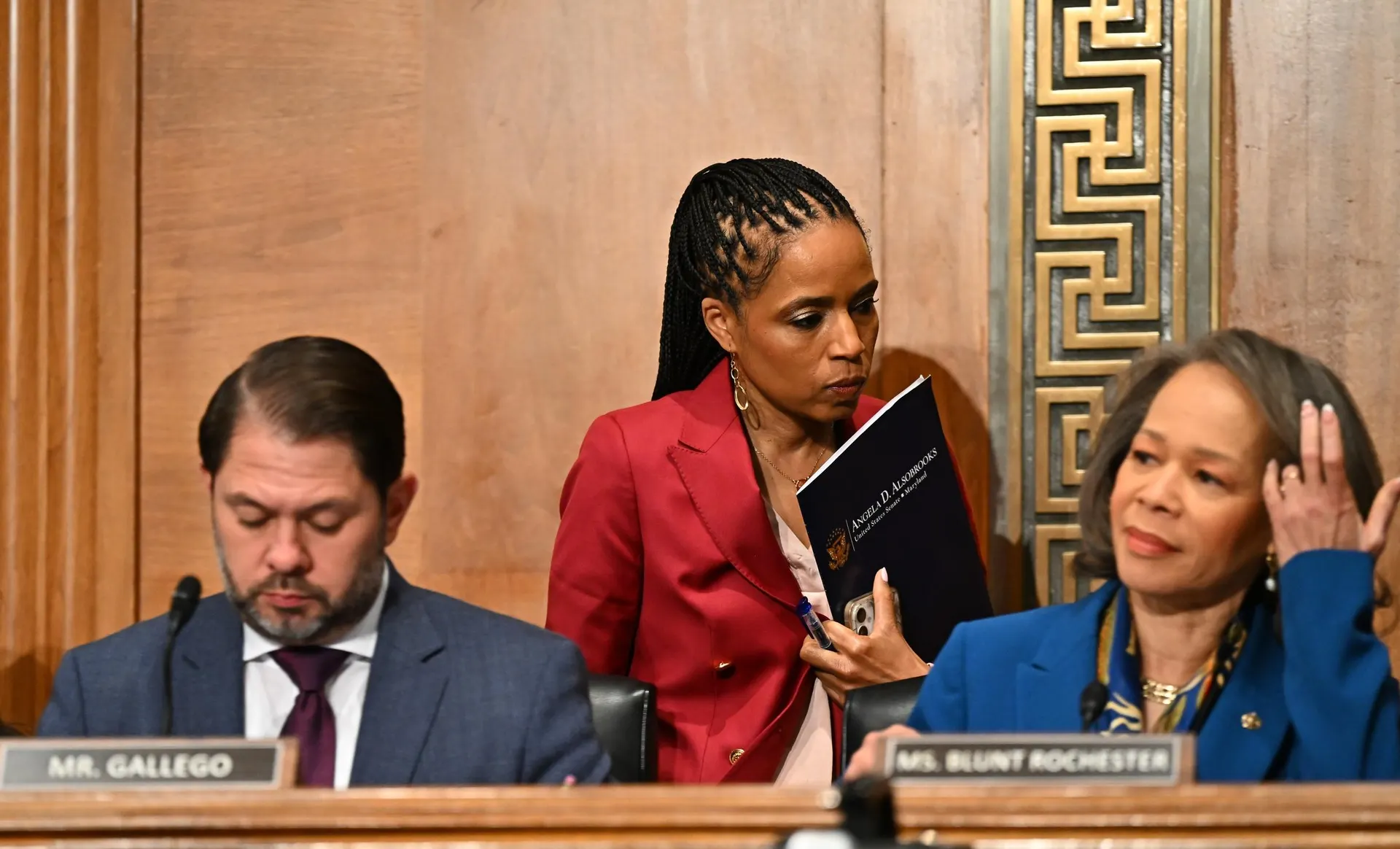
Ethical Provisions: Democrats are calling for conflict-of-interest rules for government officials holding digital assets worth over $1 million. This comes after Trump disclosed in 2025 that his family’s crypto business generated over $1 billion in revenue (including World Liberty Financial, the TRUMP meme coin, etc.). Senators Thom Tillis (R-NC) and Ruben Gallego (D-AZ) drafted a counter-proposal in late July and submitted it to the White House, which has yet to respond.
Stablecoin Yields: The Senate version prohibits stablecoin issuers from paying interest on idle balances, allowing only rewards tied to actual on-chain activity (such as staking). Coinbase consequently withdrew its support for the bill, citing concerns that the provision could restrict the competitive space for its stablecoin business.
Bloated Legislation: Expanded from an initial 309 pages to 616 pages, absorbing over 100 Democratic demands, this reflects deep-seated negotiations over banking protections and regulatory jurisdiction.

Prediction market Kalshi currently assigns a 49% probability to the CLARITY Act being signed into law within the year, while Polymarket’s similar contract prices it at 16%. The divergence between the two markets reflects differing assessments of the September window.
Atkins Won’t Wait for Congressional Approval; Backstop Rules Are Already Underway
Regardless of legislative progress, the SEC proposed its standalone framework, "Regulation of Crypto Assets," on August 18, establishing securities registration exemptions for certain token offerings and opening a 60-day public comment period.
Atkins made his position clear in the interview: "Even if Congress fails to pass the bill, the SEC will advance rules under the existing securities law framework." This echoes his comments when the proposal was released in August: "Legislation remains indispensable for crafting rules that can withstand future regulatory scrutiny, but the SEC can act first under current law."
The practical impact for market participants is: regardless of the outcome on September 15, the SEC will begin implementing specific rules after concluding the comment period in late October. The legislative and administrative windows are no longer mutually exclusive; they are running in parallel.
Only 14 Business Days Remain for the CLARITY Act in 2026
The Senate reconvenes on September 14, leaving a window of just 14 business days for the bill. November 3 is Election Day, and Congress will once again go into recess before the election in mid-October. If the bill fails to pass final Senate approval before September 30, it is effectively "dead for the year."
Secondary timeline milestones are equally critical: The FOMC (Federal Open Market Committee) will announce its interest rate decision on September 16. Some institutional traders are hedging bets on both regulatory tailwinds and monetary easing, which could heighten short-term volatility in the crypto market.
Spot ETF Underlyings Like XRP, SOL, and DOGE Will Undergo Status Changes Alongside It
If the bill passes final Senate approval and is signed into law by the end of September, fully decentralized digital assets like BTC and ETH will be explicitly classified as digital commodities under CFTC oversight, barring the SEC from pursuing enforcement based on "unregistered securities." A grandfather clause in the bill designates spot ETF underlyings listed before January 1, 2026 (XRP, SOL, LTC, HBAR, DOGE, LINK) as commodities by default, reducing the risk of these six tokens being reclassified as securities. Consequently, the "regulatory uncertainty discount" applied to institutional asset allocation would also dissipate.
The possibility remains that the Senate version passes but faces hiccups in the House: the bill would enter a conference committee between the two chambers, restarting the legislative process. While the year-end window remains open, political costs would increase.
The worst-case scenario is a failed cloture vote and inability to secure 60 votes. The backstop rules will proceed anyway, but disappointment over stalled comprehensive legislation will shift market attention to the SEC's rules expected in late October. JPMorgan has already warned that without a complete framework, applications like tokenization may be absorbed by traditional financial infrastructure rather than remaining on public blockchains.
Join TechFlow official community to stay tuned
Telegram:https://t.me/TechFlowDaily
X (Twitter):https://x.com/TechFlowPost
X (Twitter) EN:https://x.com/BlockFlow_News
 深潮TechFlow