Interview with Justin Sun: From the “Sky-High Banana” to the “Sky-High Bride Price”, He Says This Time It’s Really Not a Marketing Stunt
By Dong Yuqing, Phoenix Tech
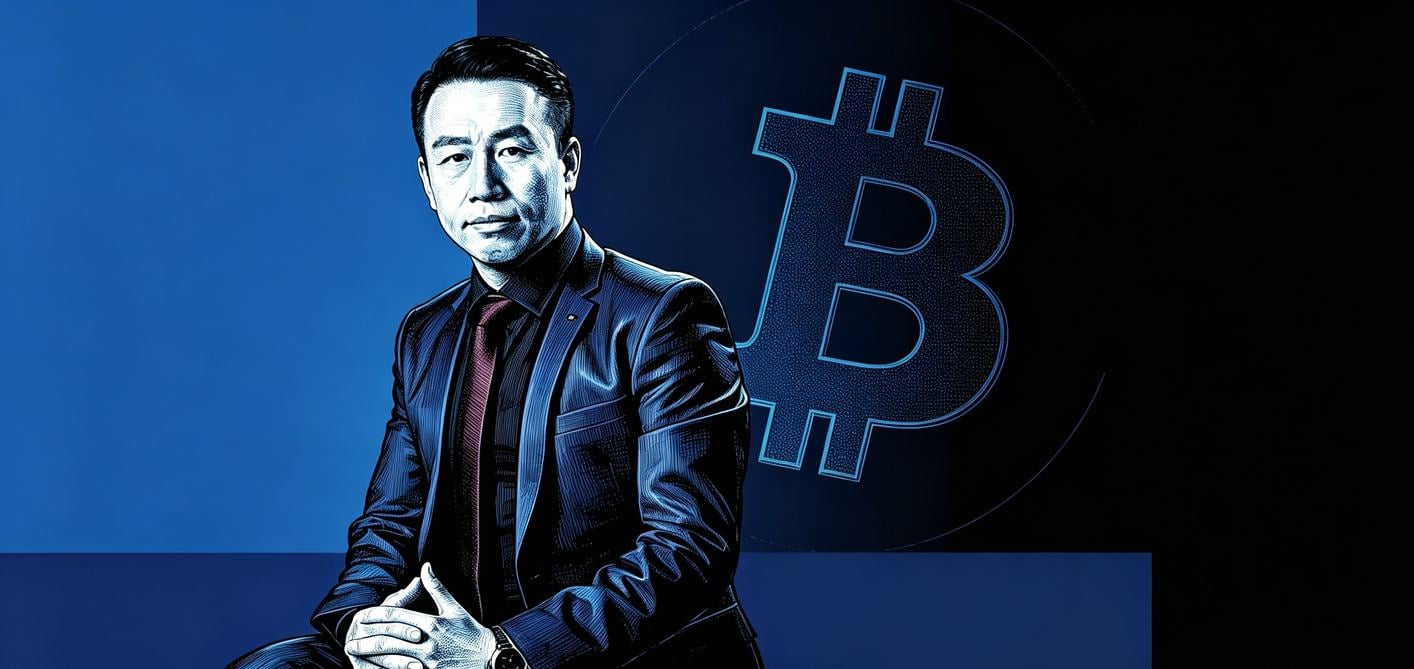
Justin Sun has once again become the center of trending searches.
For those familiar with him, this was hardly surprising.
For over a decade, Justin Sun has been one of China's most adept entrepreneurs at generating buzz. From being hailed as a "post-90s entrepreneurial leader" and founder of TRON, to winning a Warren Buffett charity lunch for $4.567888 million in 2019, he has repeatedly captured public attention through highly viral events. Following the peak of the 2019 Buffett lunch controversy, Sun even issued a public apology, expressing deep remorse for his "over-marketing and penchant for hype."
But since then, Sun has not stepped away from the spotlight.
In 2024, he paid $6.2 million for Maurizio Cattelan's banana artwork "Comedian," eventually ate it, and once again became the subject of global media coverage.
The controversies surrounding him extend beyond marketing.
In 2023, the U.S. Securities and Exchange Commission (SEC) sued Justin Sun and related companies, alleging he fabricated the impression of active TRX trading through wash trading and failed to disclose payments made to celebrities for promoting certain crypto assets. In March 2026, both parties reached a settlement in the nearly three-year case. Rainberry agreed to pay $10 million, while Sun and related parties neither admitted nor denied the allegations.
From exorbitant lunches to pricey bananas, from cryptocurrency to recurring public incidents spanning tech, finance, and entertainment, Sun seems to have always understood the value of attention exceptionally well.
Thus, when he recently chose to put his ex-girlfriend, a 50 million RMB betrothal gift, a private romance, and a lawsuit demanding a 30 million RMB return of that gift onto social media, one question becomes hard to avoid:
Is this merely an ordinary person's emotional expression after a relationship ends, or yet another Justin Sun-style attention grab?
Last night, Justin Sun suddenly set the Chinese internet on fire.
At 11:30 PM Beijing time, Justin Sun had just stepped off another event, his voice carrying fatigue. Before he could even check Weibo, more than 20 trending topics related to him had already emerged. Unfortunately, they were all in the entertainment section.
"I haven't even looked at them yet."
Justin Sun has publicly declared that you must "listen to AI, 100%."
In a phone interview with Phoenix Tech, he revealed that decisions worth millions to tens of millions of dollars daily at his company are now automatically executed by AI, with no exceptions for audits or reviews. His stance toward AI had been one of "unconditional trust"—until matters of the heart brought about his first disagreement with Claude.
According to what Justin Sun shared with us, this roughly 6,000-word essay took him over ten hours to write in recent days, during which he "barely slept for two nights." At the time, he was in Bhutan dealing with jet lag, handling company matters during the day, and only writing late at night when no one would contact him. During our nearly half-hour conversation, he mentioned feeling "lost" three times and "torn/conflicted" five times. Before publishing, he showed the draft to Claude, which offered suggestions, but he declined them.
"That’s just how it is between us two, I suppose we’ve reached some sort of reconciliation."
Sun defines publishing the essay as a process of seeking answers. At the same time, he instructed lawyers to file a lawsuit demanding the return of the betrothal gift. This was not just legal advice; it also represents, in Sun's view, the "only remaining connection" between him and Jing Tian.
As a cryptocurrency entrepreneur, Sun's decision to publish was also quite risky. Before going public, his team expressed concerns. Would partners waver knowing a tech founder's social media had just dominated the entertainment trending charts for the first time?
"I'm not a machine. I'm a human, not pure AI."
Justin Sun gained admission to Peking University after winning first prize in the New Concept Essay Competition, but he noted over the phone that he had "not written much else since." The high-profile entrepreneur spent two sleepless nights penning a story that even AI struggled to judge.
Below is an exclusive transcript of a conversation between Phoenix Tech and Justin Sun, edited without altering the original meaning:
Phoenix Tech: You have long been known as someone extremely skilled at generating public buzz, even publicly apologizing in 2019 for "over-marketing and a penchant for hype." By proactively sharing details about your ex-girlfriend, the betrothal gifts, and your private romance on social media, it's natural for outsiders to wonder if this is just another Justin Sun-style marketing stunt. Did you consider such skepticism and its potential negative impact before publishing?
Justin Sun: Not really. I wrote an article and posted it on my own Twitter account. It's simply my feelings and thoughts—really, nothing more.
Phoenix Tech: This was originally a deeply personal matter between two people. Your public account has now pulled her back into the public eye. Since the matter is already in legal proceedings, why choose to express yourself publicly rather than let the judicial process handle it? Did you consider whether she would want these private experiences turned into public discourse?
Justin Sun: I've handed the litigation part over to my lawyers. Whether the case is made public, and to what extent, will be decided by the court according to the law. My reason for publishing this article publicly was mainly to express some of my own emotions and reflections.
Phoenix Tech: However, this content currently stems largely from your unilateral account, with the other party not responding to the details point by point. You also noted in the article that some fictionalized elements exist. Given this, do you still consider the piece essentially an authentic account?
Justin Sun: Yes. I believe the vast majority of it aligns with my true feelings and is a genuine account. I marked parts as fictional because I couldn't guarantee every single detail was 100% accurate, but at least my own thoughts and how I phrased them are completely truthful. That is 100% confirmed. As for my internal conflicts, I didn't sugarcoat anything to force a clear-cut verdict on right or wrong.
Phoenix Tech: Above all, you are a tech and cryptocurrency founder, not an entertainment celebrity. By so overtly exposing a private relationship, even topping the entertainment trending lists, did your team and partners worry this could damage your company's reputation or your professional image?
Justin Sun: You're absolutely right. Actually, my team voiced these exact concerns before I hit publish. To be honest, I knew I had to inform them beforehand; I can't just make major moves entirely on my own without consulting anyone. But in the end, I figured, forget it. I'm not a machine. I'm a person, not pure AI, and I had thoughts and feelings I needed to express. I know I'm a tech entrepreneur, and many follow me on X and my social media primarily for my company or what I do. As for whether partners have commented yet, I just finished attending another event, so I haven't had time to check messages yet. Still, my team did warn me that this might bring changes, and some partners or collaborators worried about potential fallout. Ultimately, though, the team tolerated it and accepted that I wrote it and moved forward.
Phoenix Tech: The public impression you've built over the years is often that of a bold, assertive figure who expertly manages his public persona. Through this article, you're now revealing a lost, conflicted Justin Sun troubled by romance. Some might argue this is just another carefully constructed persona. What's your take?
Justin Sun: Friends have actually messaged me saying they feel like they've met a new version of me. To be completely honest, I rarely write these long-form posts or essays. Even though I got into Peking University thanks to the New Concept Essay Competition and later started a business, I basically stopped writing articles afterward. Probably just wasn't inclined to. But this time, I finally put my actual thoughts down on paper.
Phoenix Tech: Was this widely discussed article a spontaneous outburst driven by emotion, or the result of extensive preparation? How long did you spend writing it?
Justin Sun: It probably took around ten hours. My days are usually packed with work. Company staff constantly reach out, and there's endless chaos. So I wrote it in the early hours of the morning, barely sleeping up until now. Late night is the only time nobody contacts me. Roughly two nights total. I basically didn't sleep much during those two nights while writing it.
Phoenix Tech: So the events described just happened recently?
Justin Sun: Yes, I drafted it just these past few days.
Phoenix Tech: Are you still communicating with Jing Tian in any other way?
Justin Sun: Not anymore.
Phoenix Tech: Since you're no longer in contact with her, why is this lawsuit focused specifically on reclaiming the betrothal gifts? Is this solely your lawyer's suggestion based on legal strategy, or do you also hope the litigation will provide closure for the relationship?
Justin Sun: Partly it's my lawyer's advice. The other part is, it's somewhat ironic—the litigation might literally be the last thread connecting us two aside from this entire situation. Thinking about it endlessly has actually taken a heavy toll on me.
Phoenix Tech: You repeatedly mention Claude throughout the essay, treating its advice as a crucial variable in the relationship. But romance ultimately comes down to human choice. Many are now blaming Claude. Isn't this partly shifting a responsibility that belongs to humans onto an AI?
Justin Sun: I genuinely trust Claude, so I ask it about everything—not just company matters, but life decisions too. I just feed it enough context, ask what it thinks, and weigh whether something is feasible. Lately, I truly listen to Claude; whatever it says, I follow. But this time, as I wrote this piece... honestly, for the first time, I wasn't sure if its guidance was right or wrong. I felt quite lost. It's hard to describe, but I poured those unfiltered doubts directly into this article.
Phoenix Tech: You've previously emphasized your deep trust in AI, handing over many critical decisions to it. Have you never before encountered a moment where you felt such strong doubt and confusion regarding AI's judgment?
Justin Sun: Exactly. We hadn't. With a company of our scale, Claude and AI are already handling many decisions. I won't specify too many, but we're talking daily transactions and approvals worth millions to tens of millions of dollars, all automatically executed by AI—including audits and numerous compliance checks. But this is the only instance where a discussion between myself and Claude yielded zero alignment. It created a direct conflict, leaving me genuinely bewildered.
Phoenix Tech: If Claude is so deeply integrated into your life and work, does that mean the decision to sue was also guided by AI?
Justin Sun: How should I put it? The lawsuit itself? I delegated that entirely to my lawyers. Honestly, dwelling on it is exhausting for me, and I don't want to overthink it. But why write the article? Because I still harbored strong internal feelings, so I chose to release them through the essay. Other than that, I wanted my legal team to handle the rest. Because whenever I try to rationalize these questions, it becomes overwhelmingly difficult, tangled, and directionless.
Phoenix Tech: Has this emotional conflict actually impacted your daily operations? After all, you still manage a massive organization.
Justin Sun: Yes! Absolutely. Of course it affects me. Emotional matters create friction not just between people, but sometimes between my feelings and even AI's logic, which I also laid bare in the essay. Because I genuinely don't know right from wrong here, I just documented it. It's incredibly tormenting. Normally, things like company operations and audit reports get handed straight to Claude, which handles them instantly without conflict or delay. These emotional/legal entanglements are uniquely prone to friction and misalignment, so I wrote about them. Honestly, I still don't know what's right or wrong.
Phoenix Tech: You've consistently stressed that this publication was mainly for self-expression. Have you considered what kind of outcome would finally signal closure for this chapter?
Justin Sun: I haven't overthought the final outcome. Much like discussing it with Claude, I still struggle to label many things as strictly right or wrong, and perhaps I lack the capacity to fully adjudicate these matters. First, the future remains uncertain. Second, within that article, I explicitly documented all my inner turmoil and lingering uncertainties.
Phoenix Tech: Returning to AI itself. You mentioned your company delegates multi-million-dollar decisions to it. Which other AI tools do you personally use frequently?
Justin Sun: Yes, I use quite a few. I rely heavily on Claude Code daily for programming. Even though I'm the boss and not hands-on, I still frequently review code and various company systems using it. Our company also utilizes Codex extensively nowadays. For domestic tools, we developed a comprehensive AI service platform called B.AI, which integrates models like Zhipu, Moonshot, and MiniMax. To be transparent, I consult multiple AI tools across the board, though Claude and Codex remain my primary go-tos. Beyond those, we definitely reference outputs from other platforms as well. That's roughly the landscape.
Phoenix Tech: In a past article, you explicitly stated, "You must listen to AI, 100%." That's a very absolute stance. After experiencing this, do you still adhere to this AI-native philosophy?
Justin Sun: I did write that piece emphasizing listening to AI 100%. Admittedly, that stance came off as quite rigid, especially since I wrote it during the peak AI hype cycle. Back then, the message was straightforward: ignore human opinions, defer entirely to AI, and execute based on its recommendations. But despite that article gaining traction and spreading awareness about AI integration, this experience has made me realize I still struggle to verify whether AI's decisions are truly correct. It's a profound feeling, and perhaps genuinely the first time in my life I've questioned an AI-driven decision.
Phoenix Tech: So what makes this genuinely interesting isn't necessarily what advice Claude gave, but rather that a former advocate of "listening to AI 100%" has now decided to disregard it. When you shared the draft with Claude, how did it respond?
Justin Sun: When I sent the draft to Claude, it initially seemed almost annoyed. It pointed out that my personal relationship issues weren't tied to the strategic decisions it assists with—essentially declining to take the blame for them. I replied that regardless, I published it, and its earlier stance had genuinely influenced my thought process.
Phoenix Tech: Well, the public has already assigned Claude the blame.
Justin Sun: In a sense, yes.
Phoenix Tech: People are curious what result you might have gotten if you asked Doubao instead.
Justin Sun: I haven't asked Doubao, so I can't say what its response would be. Doubao is primarily a mobile app requiring a phone, whereas I work exclusively on desktop computers using tools like Codex. Asking Doubao might yield a completely different answer, even though I didn't test it.