Crypto Platforms Splash Nearly $900 Million to Secure Anthropic IPO Shares—How Did They Ultimately Perform?
Over the past ten days, Bitget, Gate, Binance Wallet, Kraken, and Walt (formerly Telegram Wallet) have sequentially opened subscription channels for Anthropic's IPO. Among the three platforms that have published data, they have attracted a cumulative on-chain fund total of approximately $869 million.
After the allocation results were announced, the stark disparity in each platform's ability to secure allocations was laid bare.
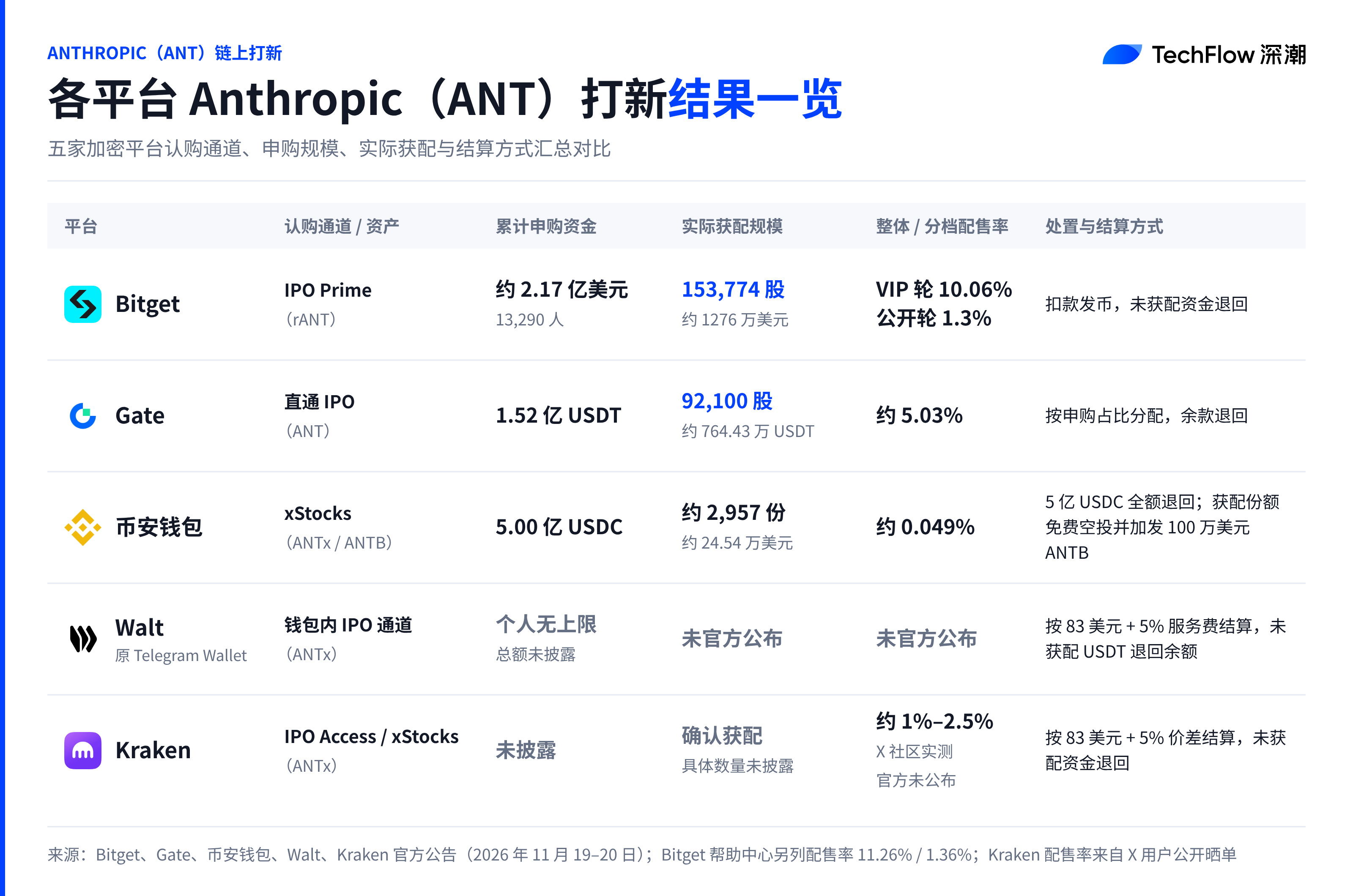
Comprehensive Breakdown of Subscriptions and Actual Allocations Across Five Platforms
The rule designs and final allocation volumes across the five crypto platforms reveal a clear tiered disparity.
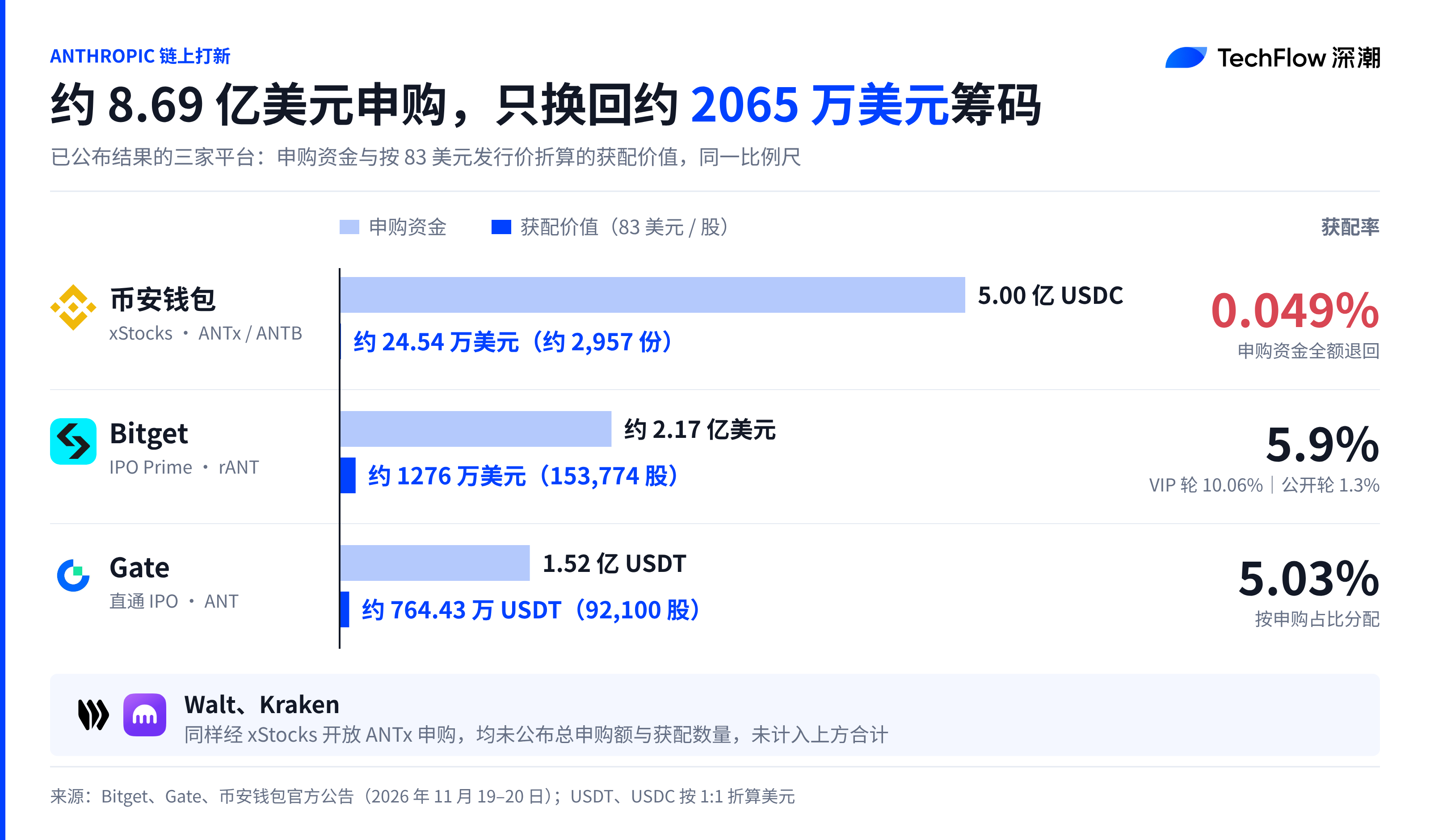
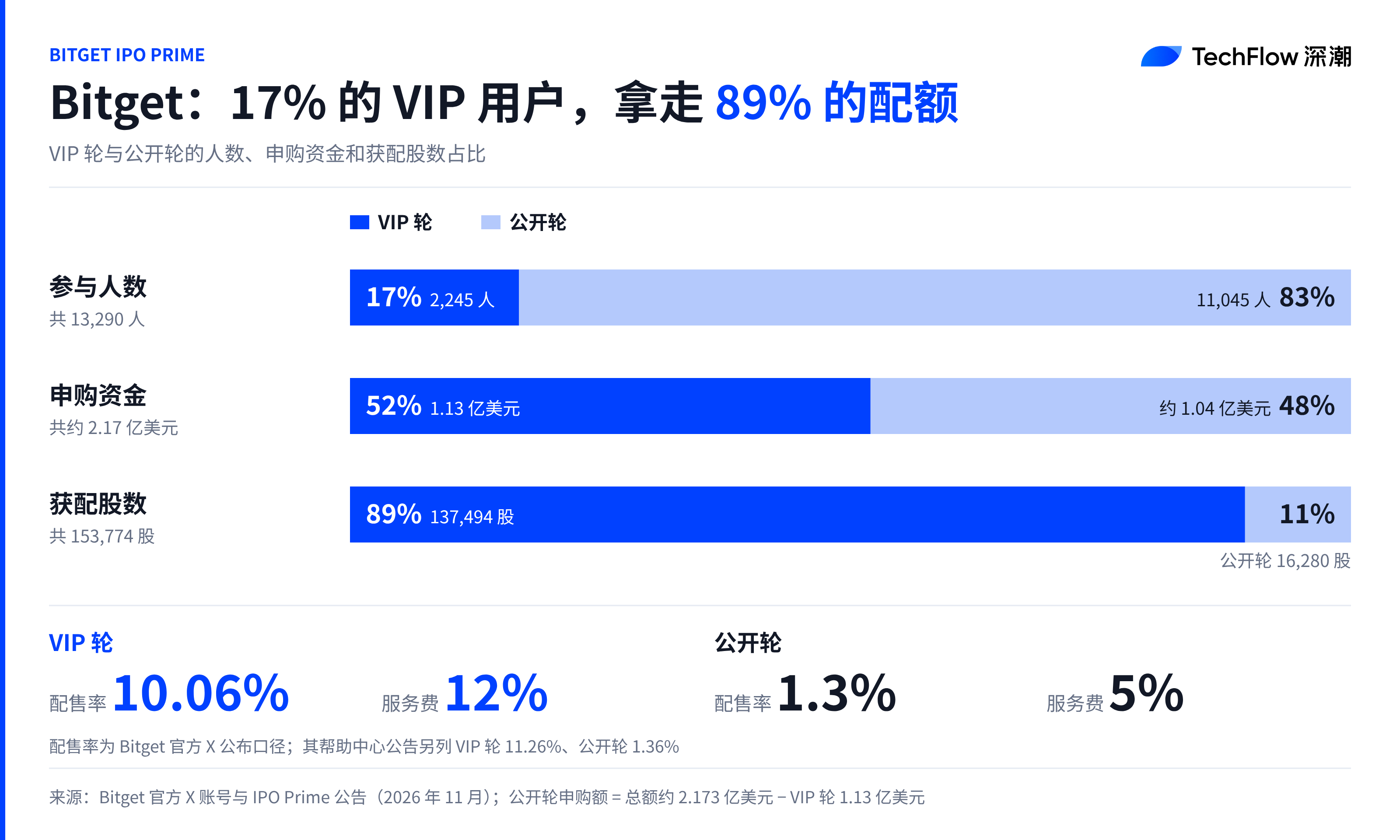
Bitget secured the largest batch of shares among currently publicly available data. Through its IPO Prime channel, the platform attracted cumulative subscriptions from 13,290 users, with a total subscription amount of approximately $217 million. It ultimately received an allocation of 153,774 tokenized shares of Anthropic (rANT), valued at roughly $12.76 million based on the $83 issue price.
However, Bitget heavily favored whale allocations internally. In the VIP round, 2,245 participants contributed $113 million and were allocated 137,494 shares, achieving an allocation rate of 10.06% (with a VIP round underwriting service fee of 12%). In the public round for retail users, 11,045 participants contributed over $100 million but received only 16,280 shares, resulting in an allocation rate of merely 1.3% (public round service fee 5%). These allocation rates reflect figures published on Bitget's official X account; its help center notices list them separately as 11.26% and 1.36%.
Gate released the allocation statement for the third phase of its "Direct IPO" on the evening of November 19. This channel accumulated intention-based subscription amounts of 152 million USDT, ultimately securing 92,100 ANT shares. Valued at the $83 issue price, the total value is approximately 7.6443 million USDT, yielding an overall allocation rate of about 5.03%.
Binance Wallet attracted the most capital but secured the fewest allocations, presenting the sharpest contrast of the entire event. After opening subscriptions on November 18 in partnership with tokenized stock platform xStocks, it hit a hard cap of 500 million USDC within just a few hours, with actual locked subscription funds reaching 500,002,764 USDC.
When allocation results were disclosed on November 20, Binance Wallet revealed that due to quota restrictions from upstream partners, the entire campaign secured only about 2,957 Anthropic tokenized stocks. Valued at the $83 issue price, the total value amounted to merely approximately $245,400, with an actual winning rate of less than 0.05%.
Amidst this shortfall, Binance Wallet launched a full refund plus airdrop compensation plan. The 500 million USDC locked by all participating users were refunded in full to their original accounts in two batches. The 2,957 allocated tokenized stocks were distributed free via airdrop to participants proportionally to their subscriptions. Additionally, the platform allocated $1 million worth of bStocks Anthropic tokens (ANTB) for airdrops, guaranteeing each qualified participant at least approximately 6 USDC worth of tokens.
Repeated failed subscriptions sparked community dissatisfaction. Some users suggested on X that Binance directly blacklist xStocks and seek alternative IPO sourcing channels, noting that nearly "zero allocations" twice in a row damages brand trust and forces the platform to pay out compensation. Binance co-founder He Yi immediately responded in the comments with four characters: "Fully agree."
Walt (formerly Telegram Wallet) took a more aggressive route. Upgraded from the built-in wallet brand of Telegram in late September this year, Walt opened its Anthropic IPO subscription channel on November 11. Users could participate directly using USDT by accessing it through official Telegram announcements or via the app's "Trade → IPO" section.
Unlike other platforms that set personal or pool hard caps, Walt simply removed individual subscription limits. Subscriptions closed on November 16 at 17:00 UTC. Integrated with the xStocks ecosystem, settlements for ANTx were calculated at the final $83 issue price plus a 5% service fee. Walt did not disclose the total pool size during the event, and as of press time on November 20, had not yet separately released details on total subscription amounts and final allocated shares.
Kraken also opened subscriptions for ANTx tokenized stocks through its IPO Access and xStocks systems, closing on November 19 at 01:00, settled at the final issue price plus a 5% spread.
Kraken confirmed on November 20 that it has received partial allocations, but official figures for total shares allocated and a unified allocation rate have not been published. Community rumors citing 1.3% to 1.5% allocation rates for retail users and nearly 3% for VIP users remain unverified.
Why Did the Most Capital Attracted Yield the Fewest Allocations?
The divergence observed in crypto platforms—stronger subscriptions, fewer wins—stems from differing underlying acquisition pathways.
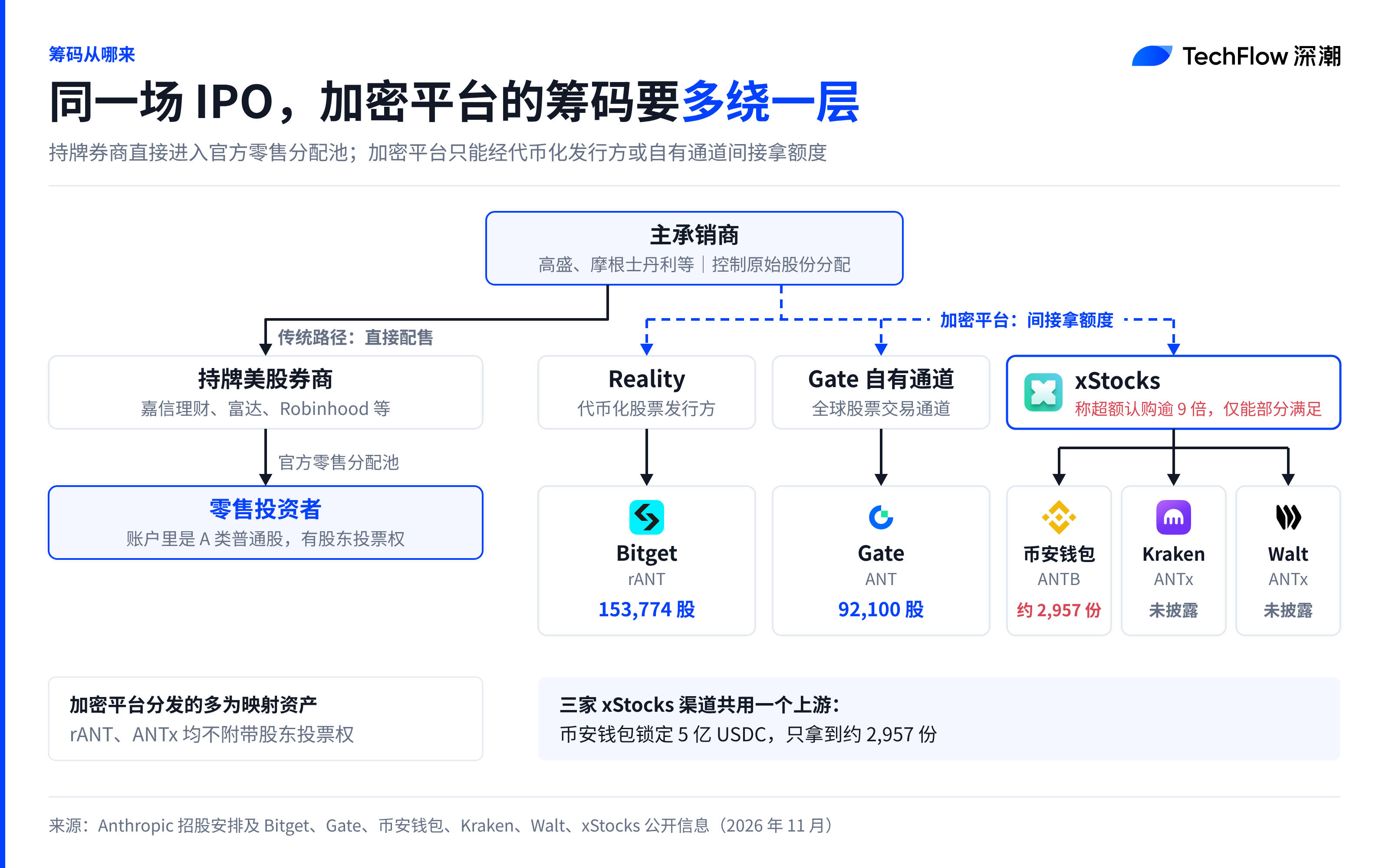
Underlying shares in traditional U.S. IPOs are controlled by lead underwriters like Goldman Sachs and Morgan Stanley. Only licensed U.S. brokerage firms such as Charles Schwab, Fidelity, and Robinhood can directly access official retail distribution pools. Crypto trading platforms are not on the direct allocation lists of these lead underwriters; they must compete for quotas through secondary distribution channels involving third-party custodians, special purpose vehicles (SPVs) holding pre-IPO shares, or tokenized asset issuers.
The tokenized stocks backing Bitget are issued by Reality, while Gate leverages its own global stock trading channel to connect with its Direct IPO service; both secured relatively certain underlying share pools prior to subscription. In contrast, xStocks, which supplies Binance Wallet, Kraken, and Walt, faced a situation where Anthropic's official decision to raise the issue price to $83 doubled institutional oversubscription. Consequently, the actual shares secured upstream fell far short of estimates, directly causing Binance Wallet—which absorbed 500 million USDC in massive funds—to face a liquidity shortage scenario.
What Exactly Are the Subscription Allocations Received?
Winning the allocation is just the first step; understanding the legal attributes of the assets held is equally critical.
Unlike the genuine Class A common shares held in Charles Schwab or Robinhood user accounts, crypto platforms primarily distribute mapped assets or internal stock shares, and the terms vary significantly across platforms.
The rANT distributed by Bitget is a tokenized stock issued by Reality. It maps 1:1 to the economic returns of the underlying stock and trades on the platform's spot and perpetual contract markets, but carries no direct shareholder voting rights.
The ANTx distributed by Kraken, Binance Wallet, and Walt via xStocks is explicitly marked in product terms as providing price exposure only, not representing direct ownership. Furthermore, due to geographical compliance restrictions, it is unavailable to users in the U.S., UK, Canada, and Australia (Kraken also restricts Japan and New Zealand). The ANTB provided as additional compensation by Binance Wallet belongs to the bStocks series, backed by real stocks held by regulated custodians on a 1:1 reserve basis.
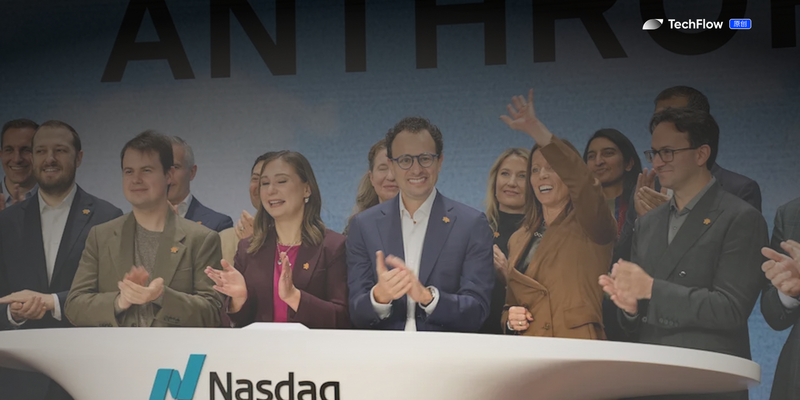
Crypto subscriptions also involve an implicit time lag. When NASDAQ opened trading on November 19, the tokenized stocks for most crypto traders had not yet completed settlement and airdropping. They could only watch as ANT surged intraday to approximately $115 (a premium of about 38.6% over the $83 issue price). By the time platforms began distributing shares on November 20, the U.S. market closing price had retreated to $97.17, narrowing the first-day premium to 17.07%.
This round of Anthropic subscriptions essentially serves as the inaugural stress test for crypto infrastructure facing trillion-dollar U.S. IPO traffic. For retail investors, the next time they encounter chain-based subscriptions like Hot IPOs, it is far more crucial to identify the upstream issuer tied to the platform, check for mandatory lock-up periods, and verify if token issuance occurs after the U.S. market opens—than to blindly lock up capital in a race for quotas.
Join TechFlow official community to stay tuned
Telegram:https://t.me/TechFlowDaily
X (Twitter):https://x.com/TechFlowPost
X (Twitter) EN:https://x.com/BlockFlow_News
 深潮TechFlow