Top Investor Who Made 7 Billion From Anthropic's IPO Turns Out to Be a Hollywood Actor
Author: Kuli, TechFlow
TechFlow:
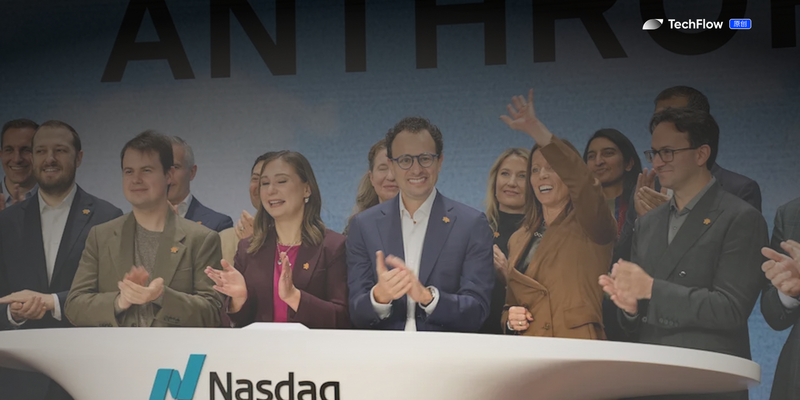
As Anthropic rang the Nasdaq bell at a $1.5 trillion valuation, capital from all corners was busy calculating its paper profits. Hidden within this shareholder register, brimming with sovereign wealth funds and major Wall Street megabanks, is a figure extremely familiar to Hollywood cinephiles: actor Ashton Kutcher, who once portrayed a young Steve Jobs in a biographical film. His co-founded Sound Ventures brought nearly $7 billion in paper holdings on the stock's first day of trading thanks to cumulative early-stage investments of $435 million in Anthropic. This means that Hollywood stars doing venture capital have long moved past the stage of being mere cosmetic endorsements. Leveraging unique cross-industry bridges and geek intuition, he has built a track record over the past fifteen years sufficient to make most top-tier Silicon Valley institutions envious.
In Silicon Valley's most sensational tech IPO party, the face of a top-tier Hollywood hunk made an appearance.
In Anthropic's world-record-breaking IPO filing documents, various institutions are dividing up paper profits from investments totaling up to $860 billion. Standing alongside those veteran VC firms and cloud tech giants, there is a venture capital firm named Sound Ventures.
The firm initially broke into Anthropic with a $35 million check in 2023, followed by continuous additions across multiple rounds, accumulating approximately $435 million in total. Converting based on the $83 per share price on the first day of trading, this roughly 0.5% stake skyrocketed to a paper value of nearly $7 billion, representing a profit multiplier of over 16x on a single investment.
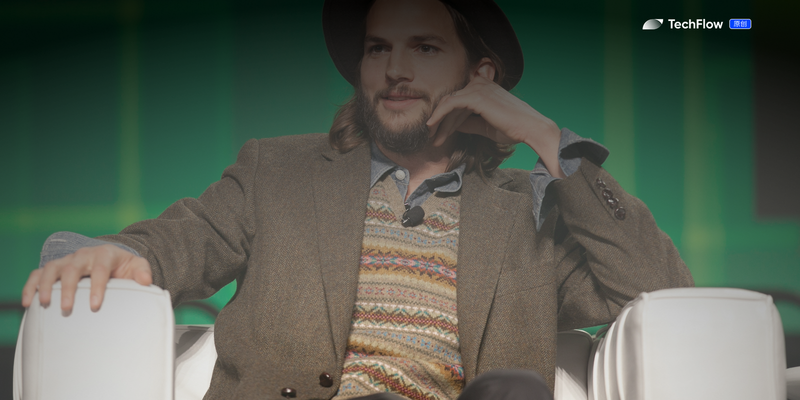
The co-founder of this fund is none other than the actor Ashton Kutcher.
For Chinese audiences, remembering him usually comes down to two things:
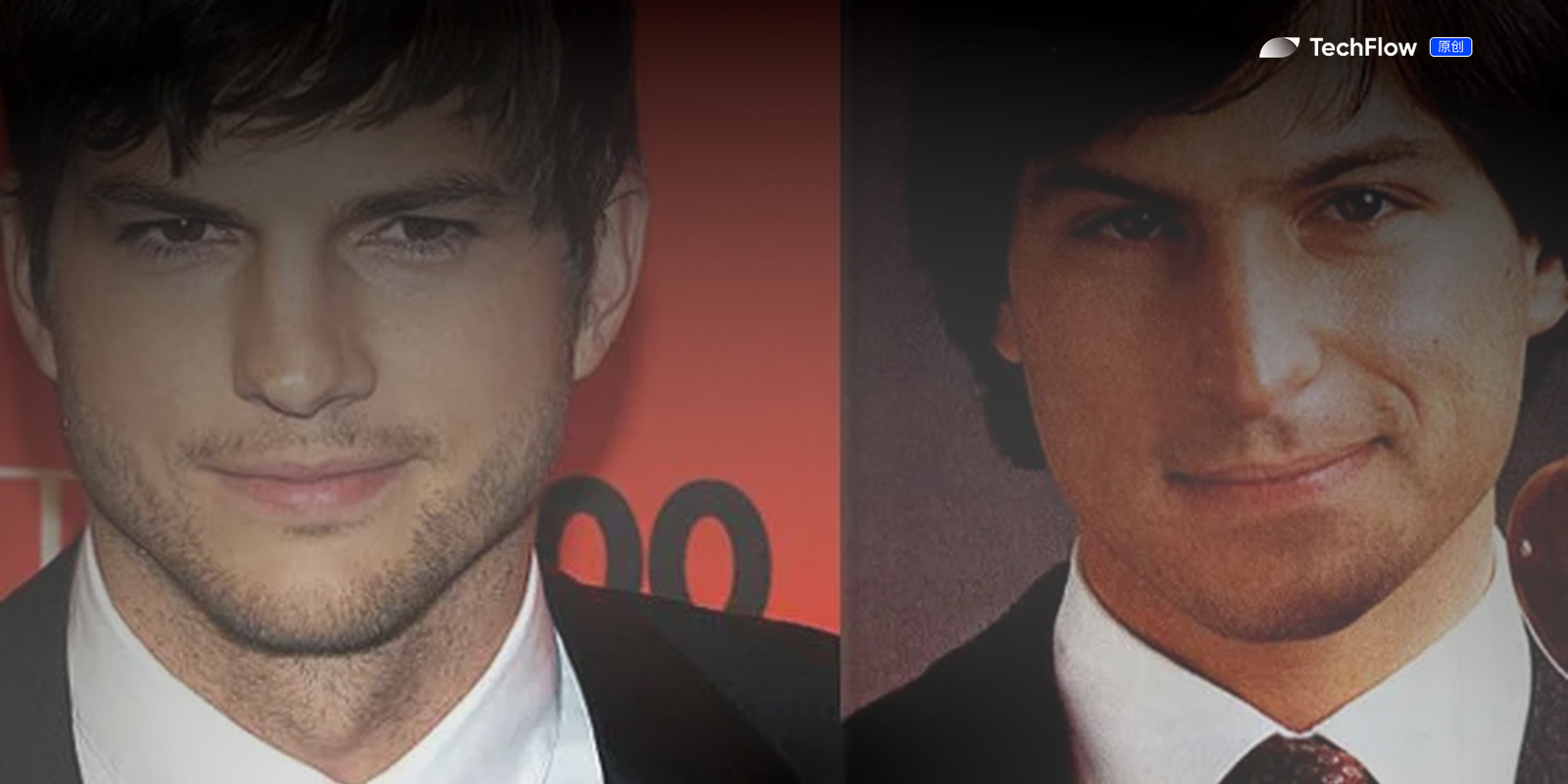
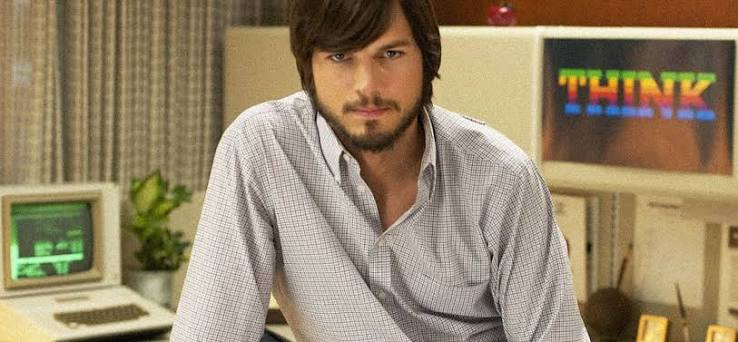
One is the classic sci-fi thriller *The Butterfly Effect*, and the other is the 2013 biographical film *Jobs*. In that movie, sporting a beard, he brought to life the young geek who founded Apple in a garage.
But reality is often more dramatic than the silver screen.
Playing Jobs was just a paycheck to him, but in the fifteen years off-screen, he bet on investments to transform himself into one of Silicon Valley’s top unicorn hunters.
Fifteen Years of Shattering Stereotypes
In Silicon Valley's venture capital circle, Hollywood celebrities have long occupied the bottom of the prestige chain. Most stars dabbling in venture capital simply use their fame to grab a consultant title, or act as cheerleaders and exit liquidity providers for projects at the peak of primary market bubbles.
But Kutcher chose a completely different path from day one.
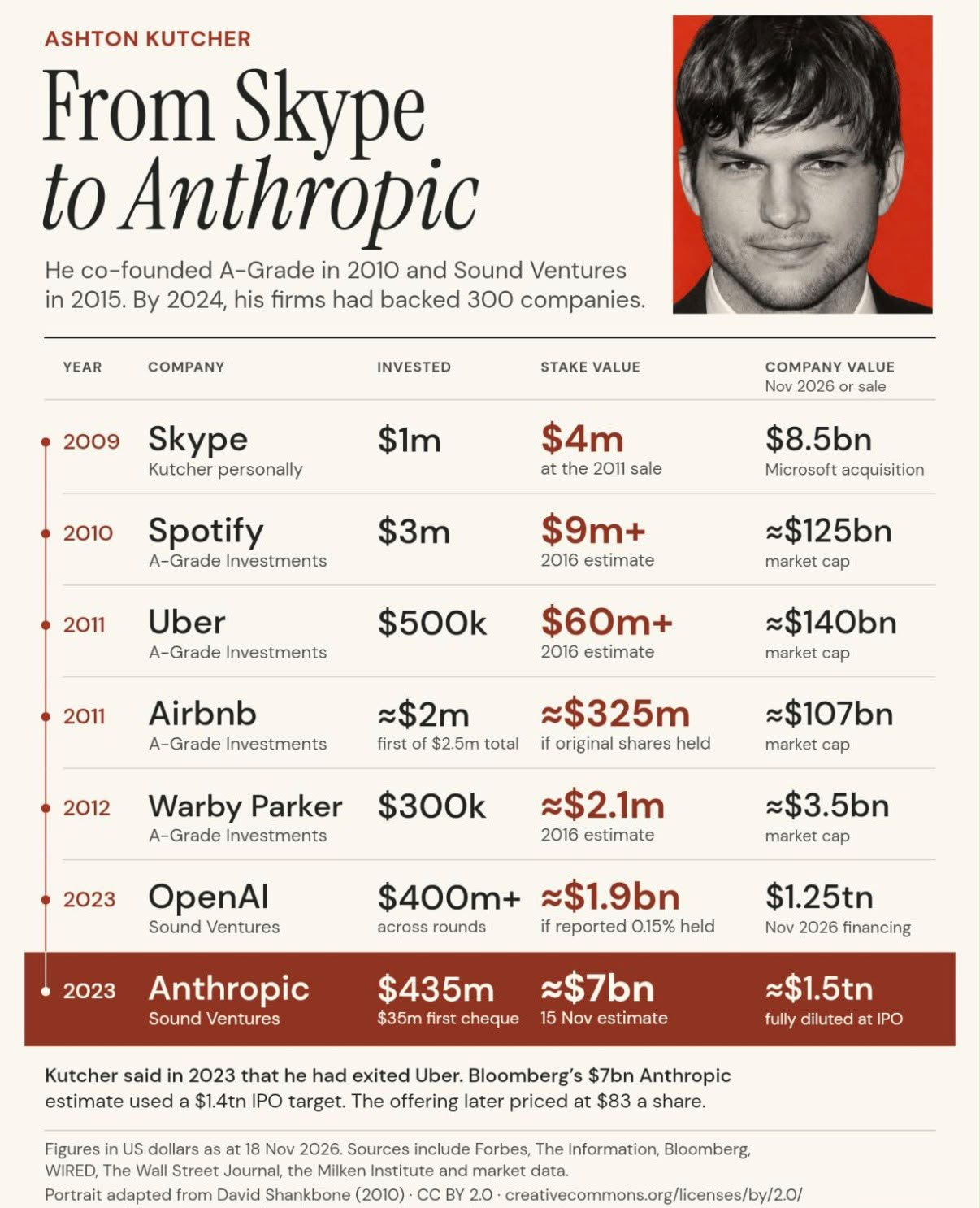
His investment career began in 2009. At the time, he was in a long-distance relationship with actress Demi Moore and heavily relied on newly emerging VoIP software daily. Sensing how internet calling would disrupt traditional telecom giants, he personally invested $1 million into Skype. Two years later, Microsoft acquired Skype for a staggering $8.5 billion, earning Kutcher $4 million and securing his first home run in investing.
Kutcher didn't stop after tasting success. In 2010, he brought in Madonna's top manager Guy Oseary and billionaire Ron Burkle to formally establish his first investment vehicle, A-Grade Investments.
What followed became a classic case of wealth creation in the early mobile internet era:
When streaming music was just taking off, he invested $3 million in Spotify; in 2011, before mainstream VCs had fully grasped the sharing economy, he cut a $500,000 check for Uber and led an initial $2 million investment in Airbnb.
Based on subsequent valuations and exit milestones, the Uber investment yielded returns of over 120x, while the potential multiple for Airbnb reached 160x. Using merely about $30 million in principal, A-Grade leveraged an asset portfolio exceeding $250 million within just a few years.
From ride-hailing and short-term rentals to music streaming, behind that wave of explosive supergiants in the mobile internet era, this Hollywood actor almost invariably squeezed his way onto the earliest core shareholder registers.
(Image source: X user @gdalmiathinks)
The Precise Alignment of Celebrities and Capital
Top-tier startups in Silicon Valley have never lacked money. Whether it was Uber back then or Anthropic today, top funds like Sequoia and a16z waiting outside always offered sky-high valuations.
Why would founders allocate such precious early-stage equity to a movie star?
The answer lies in a highly pragmatic mechanism of commercial exchange.
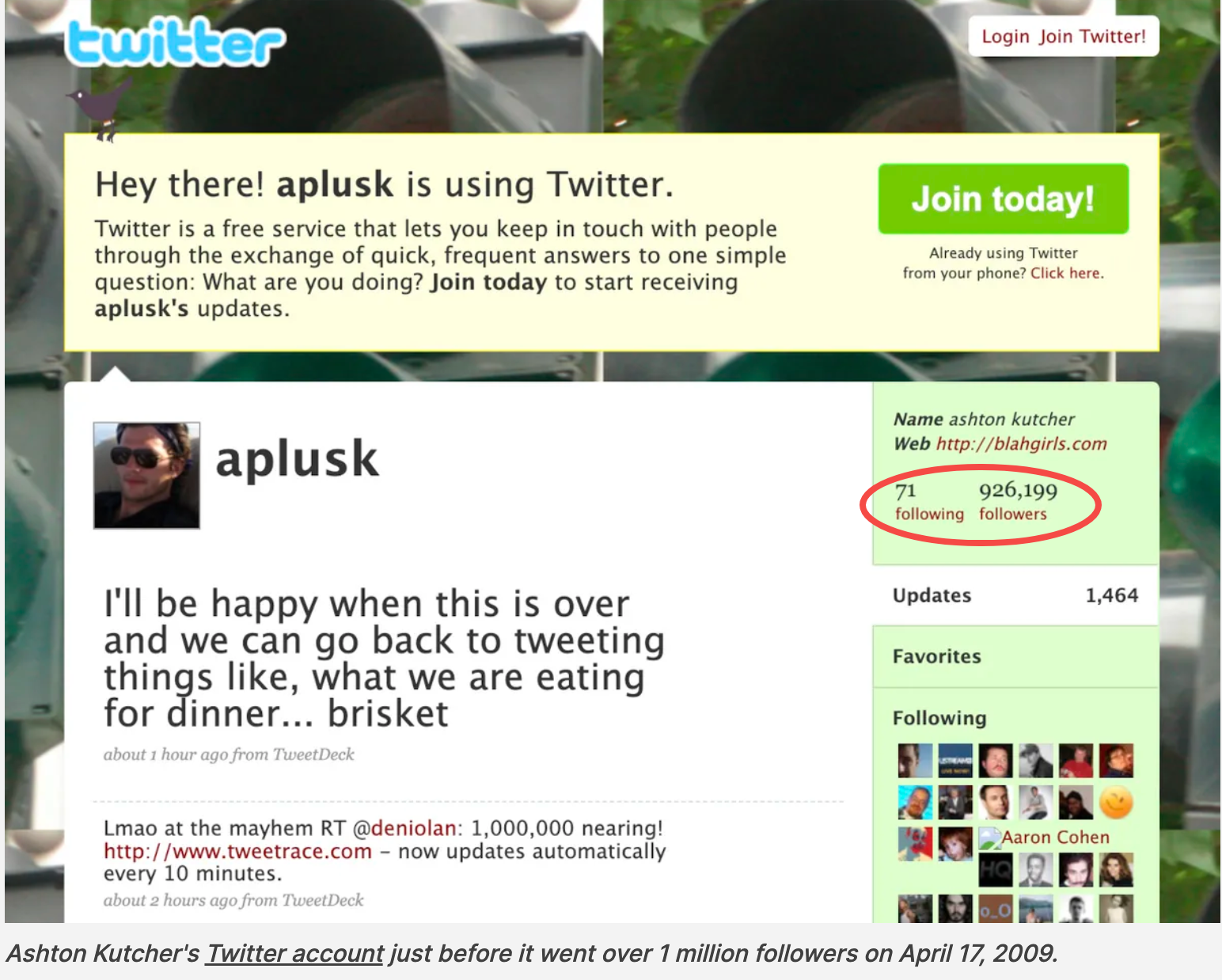
First, there is an irreplicable cold-start traffic channel. In 2009, Kutcher became the first globally to surpass 1 million followers on Twitter, with influence that temporarily overshadowed mainstream news networks.
During the early days of the mobile internet when customer acquisition costs were soaring, his recommendation on a talk show or a casual post on social platforms generated real downloads and brand credibility for Uber and Airbnb far more effectively than the multi-million dollar checks traditional VCs would hand over.
Second, he serves as the key to bridging entertainment and consumer circles.
Behind Kutcher, partner Guy Oseary controls access to the top entertainment and media networks in North America and Europe. Together, they formed a commercial machine with extremely precise division of labor: Kutcher handles public relations and product experience, Oseary facilitates introductions to top-tier celebrities and commercial brands, and professionally hired operators handle strict risk control and exits. For tech companies aiming to break into mass consumer markets, this provides a unique leverage that purely financial investors cannot offer.
More importantly, Kutcher himself is no amateur waiting for agents to feed him opportunities.
As early as around 2008, public reports indicated that he spent much of his free time in San Francisco outside of filming, mixing with a16z co-founder Marc Andreessen and others to study product interfaces, retention rates, and underlying architectures.
He has openly stated in interviews that when everyone thought the idea of strangers staying in your home was crazy, he firmly believed that by leveraging social graphs and rating systems to solve trust mechanisms, empty rooms constituted the world's largest hotel network. This extremely sharp product intuition earned him rare respect within the geek community.
After Investing in OpenAI, He Sought Altman's Consent Before Backing Anthropic
Entering the artificial intelligence cycle, Kutcher's institutionalized approach revealed a more seasoned side.
In 2015, he and Oseary founded the larger Sound Ventures, managing assets that exceeded $1 billion. When the large model wave surged in early 2023, they raised a dedicated $240 million AI fund in an unusually rapid five weeks, concentrating all firepower on the foundational layer of large models.
Amid this fierce AI arms race, Sound Ventures pulled off a classic maneuver capturing both sides.
As early as 2023, the fund had already taken a heavy position in OpenAI, accumulating over $400 million in investments. But when Anthropic, the most threatening competitor in the market, began fundraising, Kutcher demonstrated remarkably high EQ and awareness of professional boundaries.
Instead of quietly co-investing behind the scenes, his co-founder engaged in candid discussions with OpenAI CEO Sam Altman. After explicitly securing the other party's understanding and permission, they formally wrote the first check to Anthropic.
Subsequently, Sound Ventures continued adding investments in later rounds, ultimately pushing the total commitment to $435 million. This maneuver not only preserved strategic trust with OpenAI but also allowed the fund to simultaneously lock in original shares of the world's two top foundational AI model companies.
With the realization of Anthropic's $7 billion paper wealth, Kutcher's results in the AI wave now surpass those of most veteran Silicon Valley funds.
Stepping Back After Success, Betting the Next Stop on AI's Physical World
Yet just as everyone assumed he would cash in on Anthropic's listing dividends, this Hollywood hunter made another unexpected pivot.
Between May and July of this year, right on the eve of Anthropic's preparations to go public, Kutcher officially stepped down as Managing Partner of Sound Ventures, retaining only a Senior Advisor role. Although the bulk of the fund's $7 billion in paper profits belongs to the limited partners (LPs), the management carry he is entitled to is sufficient to cement his immense fortune.
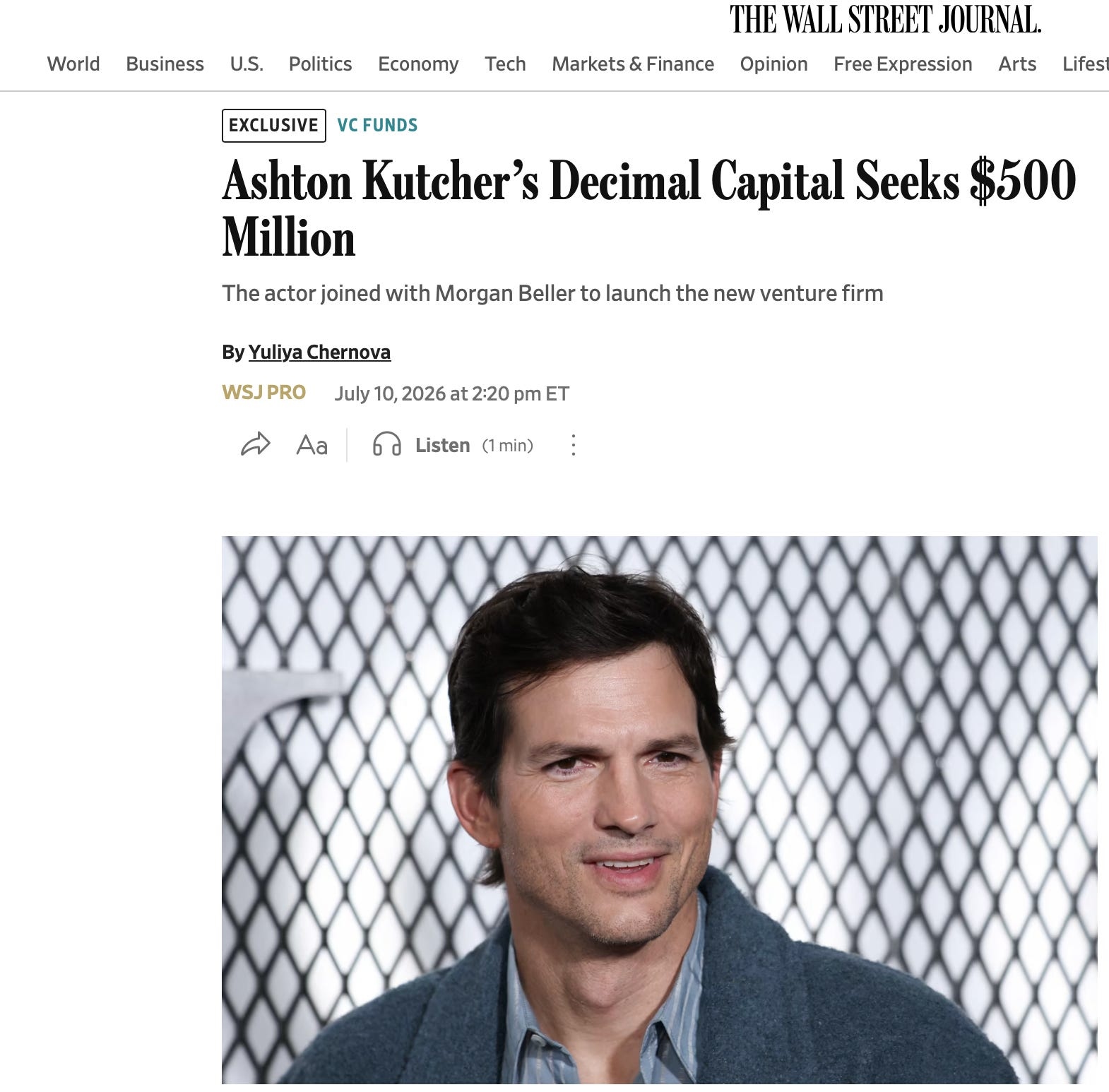
Instead of stopping to enjoy his spoils, he teamed up with Morgan Beller, former co-sponsor of Meta's cryptocurrency project Libra and ex-NFX partner, to quickly launch a new fund called Decimal Capital, planning to raise $500 million.
This pivot reflects his fresh assessment of industry cycles.
After securing stakes in both giants in the foundational large model space, Kutcher shifted his gaze directly away from the costly pure algorithm and model layers. The core investment direction of Decimal Capital is clearly defined as data centers, power energy, computing chips, and deep tech—the physical foundation that powers artificial intelligence.
From Skype and Uber's consumer internet era, to the large model competition between OpenAI and Anthropic, and now to his early positioning in AI energy and infrastructure, this actor on the silver screen has completed his lurking and leapfrogging before every industry carnival arrives.
Playing Jobs might just be a flashy acting credit on his resume, but in the real-world chess game of capital, he has long sharpened himself into a Silicon Valley connoisseur who doesn't wear suits.
Join TechFlow official community to stay tuned
Telegram:https://t.me/TechFlowDaily
X (Twitter):https://x.com/TechFlowPost
X (Twitter) EN:https://x.com/BlockFlow_News
 深潮TechFlow