After NVIDIA Nearly Went Bankrupt, Jensen Huang Learned the Most Important Lesson of Entrepreneurship
TechFlow Selected TechFlow Selected
After NVIDIA Nearly Went Bankrupt, Jensen Huang Learned the Most Important Lesson of Entrepreneurship
Physical AI and robots will be NVIDIA's next $100 billion-level incremental market.
 Navigating Web3 tides with focused insights
By Bu Shuqing, WallstreetCN
In an era where AI is reshaping the computer industry, what capabilities do entrepreneurs need most? Jensen Huang's answer is not programming, but systems thinking, resilience, and the courage to venture into the unknown.
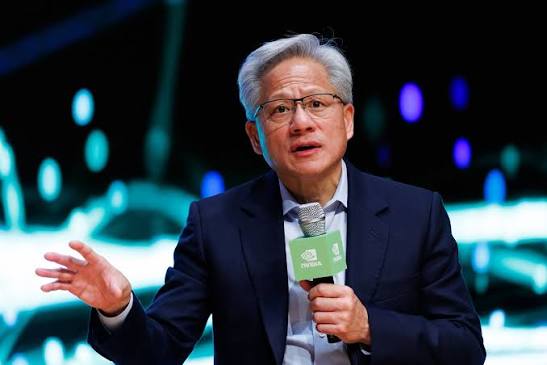
Recently, in a public interview aimed at early-stage entrepreneurs (Startup School), Jensen Huang engaged in a nearly hour-long conversation with YC CEO Garry Tan, sharing his latest insights on next-generation entrepreneurial opportunities surrounding startups, AI industry transformation, corporate management, and personal growth.
As the computer industry is completely reset, Nvidia CEO Jensen Huang clearly pointed out that systems thinking will become the core skill of the future, while Physical AI and robotics will be Nvidia's next hundred-billion-dollar incremental market.
Currently, the market is closely watching where Nvidia's future growth potential lies after breaking through a trillion-dollar market cap. In response, Huang gave a clear answer in the interview: from AI Agents to Physical AI, the reset of the tech industry has just begun.
Physical AI and Robotics: The Next Hundred-Billion-Dollar Explosion Point
Beyond large language models, what the capital market is most concerned about is the commercial deployment milestone of embodied intelligence and robotics. Huang raised an extremely counter-intuitive point during the conversation: "I want to say that the robot's 'ChatGPT moment' already happened a few years ago."
He recalled that when Nvidia internally successfully generated a video of a finger moving and a hand picking up a glass for the first time, he realized that AI in the physical world was about to breakthrough. "If I can generate a video of a finger moving, why can't I make a robot do the same thing? At that moment I realized that flexible movement of robot joints was about to be realized."
Regarding future business guidance, Huang outlined a vast Physical AI business landscape to the market for the first time. He pointed out that autonomous driving is currently the only robot application scenario with a market large enough, relatively standardized technology, real economic value, and the ability to get the data flywheel spinning.
"We are in Tesla's cars, in Mercedes-Benz's data centers and cars, and we even open-sourced our self-developed autonomous driving stack because agriculture, mail delivery, and warehouse logistics all need it." Huang revealed a shocking figure: "Our Physical AI business, including autonomous driving, is currently nearing a scale of approximately $10 billion. This is very likely to become one of the largest industries in the world; it doesn't take two or three years, but it doesn't take ten years either. This will be our next hundred-billion-dollar business."
AI Agents (Agents): New Software Form and Controllability Challenges
On the evolution of the software ecosystem, Huang asserted, "Agents are the new software." He revealed that Nvidia is already using various AI Agents on a large scale internally to accelerate the R&D process. "We let hundreds of flowers bloom simultaneously, letting everyone freely choose tools. Cloud computing code runs autonomously in Nvidia's internal sandbox, which is amazing."
But he also pointed out the core bottleneck currently faced by Agent technology—fine-grained control (Controllability).
"Whether using RAG (Retrieval-Augmented Generation) or prompts, current output control is still too coarse. The biggest breakthrough will be whether we can exert extremely fine-grained control over Agents."
Huang emphasized, "As long as we change one word in a plan file, it can produce specific differences, such as changing only one pixel, one polygon, one component in a CAD file, and then regenerating everything else. This level of control and collaboration with Agents will be game-changing."
Will AI Take Away Jobs? "This Narrative Is Completely Backwards"
With the leap in AI capabilities, market concerns about "AI replacing humans" are intensifying. Huang not only denied this but also provided a unique judgment from a highly economic perspective.
"The narrative about AI destroying employment is completely confusing cause and effect (exactly backwards). AI will indeed eliminate certain specific 'tasks', but it will never eliminate 'jobs'."
He used specific data and industry status to demonstrate this logic: "The 'task' of programming is being automated, but the number of software engineer positions is growing at 10% annually; the task of reading radiology films is being automated, but radiologist jobs have increased by over 20% in the past few years. Why? Because the backlog of demand is too huge."
Huang pointed out that due to amazing backlogs of creativity, ambition, cases, and patients, when AI takes over tedious underlying work, companies actually need to hire more people to accomplish more ambitious things. "Productivity improvements bring growth, growth drives more employment; this is the underlying rule."
Survival Rules of the Era: Systems Thinking and "Founder Mode"
Facing the classic question "What should young people learn now," Huang gave very hardcore advice. He stated plainly that "simple work" like sitting in front of a computer hand-writing code will definitely be automated, even the "long division" learned by the older generation was eliminated long ago.
"Underlying things will be completed by Agents in the future. Therefore, you must possess abstract 'Systems thinking' (Systems thinking) capabilities. Systems thinking will be the new programming of the future." Huang suggested that in this reset computer era, young people should return to "hard sciences": "Physics, chemistry, biology, computer engineering, and interdisciplinary subjects; these sciences that solve extremely difficult problems will never be obsolete."
At the end of the interview, Huang shared his highly personal management philosophy. He strongly advocates the "Founder Mode (Founder Mode)" recently hotly discussed in Silicon Valley.
In the early years, because the wrong 3D graphics algorithm was chosen, Nvidia nearly went bankrupt; he saved the company again by relying on three textbooks about OpenGL bought from a bookstore. This experience made him understand that facing rapidly changing technology, traditional management dogmas are meaningless.
"You are building an F1 car that you are going to race, so you must build it according to how you can drive it. You should make the car adapt to you."
Facing the question "What if you leave the company if you don't use traditional management techniques," Huang responded extremely openly: "I told them, wait until one day I die at my post, they just need to reshape the company for the next CEO. To achieve our mission, whatever adjustments need to be made to the organization to adapt to you, that's what you should do."
To entrepreneurs of today, Huang issued the strongest call: "This is the best entrepreneurial opportunity in the past 60 years. The entire computer industry has been completely reset. As long as you always keep one sentence in your heart 'How hard can it be (How hard can it be)?', let the hardships come bit by bit, you will eventually reach your own Nvidia moment."
Join TechFlow official community to stay tuned
Telegram:https://t.me/TechFlowDaily
X (Twitter):https://x.com/TechFlowPost
X (Twitter) EN:https://x.com/BlockFlow_News