Jensen Huang Trimmed His NVIDIA Position by 60% Before the Incident—What Did Duan Yongping Sense in Advance?
Author: Ku Li, TechFlow
TechFlow Guide:
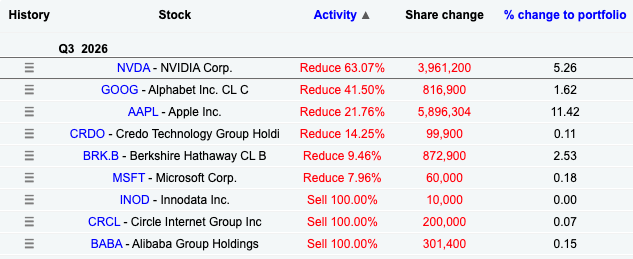
The 13F filings disclosed on November 16 show that Duan Yongping’s fund significantly reduced its Nvidia position by 63.07% in Q3 2026, dropping its portfolio weight to 3.08%, with a cumulative reduction of nearly 70% over three quarters.
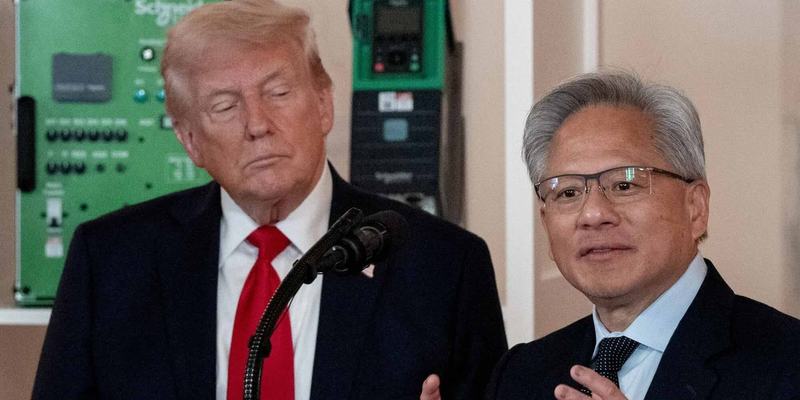
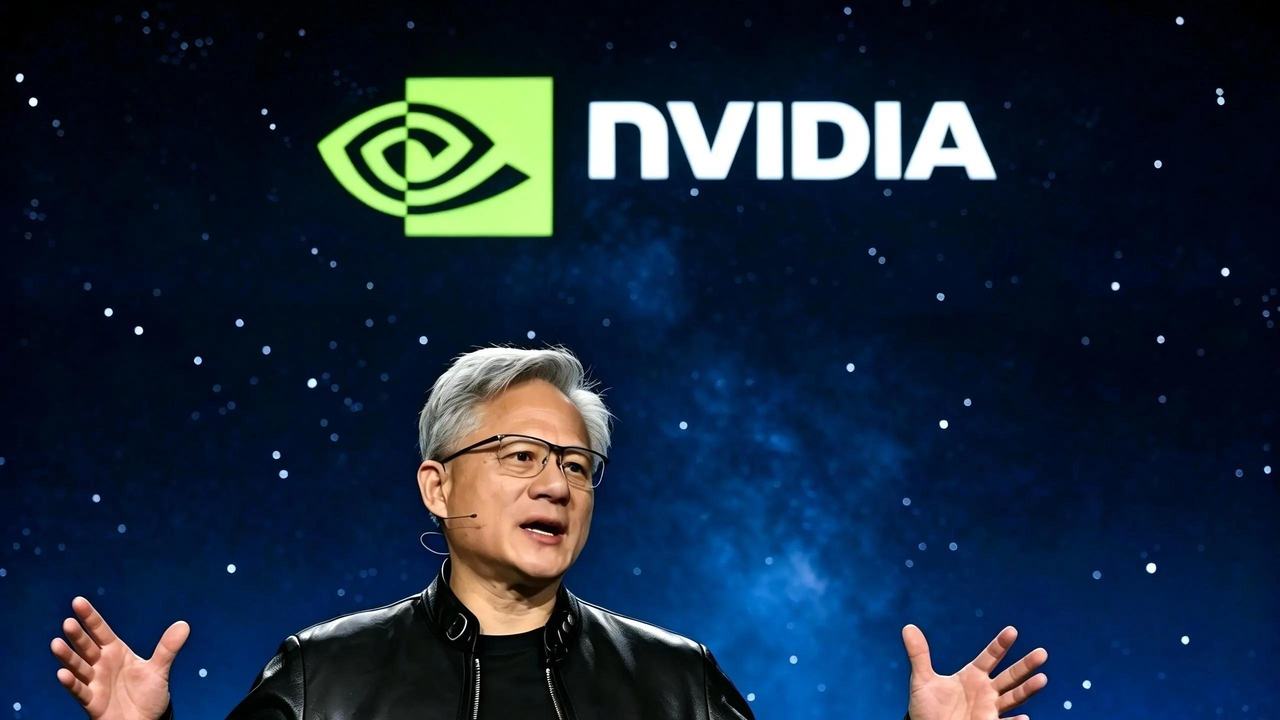
Coincidentally, just over a month after the third quarter ended, Nvidia plummeted more than 31% following Jensen Huang's sudden resignation and an external investigation. Facing market speculation that he “precisely timed an exit ahead of insiders,” Duan Yongping’s actual moves on social media revealed a different logic: passively handing over positions at highs to lock in profits, and instead of fleeing after the crash, quietly selling put options to prepare for buying back at lower levels.
If you look at Duan Yongping’s latest US stock holdings, you might think he truly possesses clairvoyance.
According to the 13F filings disclosed by the U.S. Securities and Exchange Commission on November 16, H&H International Investment, managed by Duan Yongping, aggressively trimmed positions in the third quarter. The most striking move was precisely in Nvidia, this year’s core computing powerhouse not just across the US stock market, but globally:
He directly slashed 3.9612 million shares in a single quarter, a reduction of 63.07%, dropping the portfolio weight from 6.58% at the end of Q2 to 3.08%.
Looking at a longer timeframe, this retreat began even earlier. At the end of 2025, he held 7.23 million shares; driven by the AI boom, he increased his position to 13.84 million shares in Q1, making it the third-largest holding in his portfolio. He then cut it in half to 6.28 million shares in Q2, and slashed another 60% in Q3. In just three quarters, his cumulative reduction reached 67.95%.
This round of heavy-selling by Duan Yongping was fully executed before the close of Q3 on September 30. Just over a month later, on November 11, Nvidia faced a black swan event with Jensen Huang’s sudden resignation, sending its stock price tumbling more than 31% through the fourth quarter.
Flipping nearly 70% of his chips at the peak of the mania perfectly dodged the most brutal founder crisis for tech giants in decades. Many people’s first reaction was: Did Duan Yongping hear something leaking from Silicon Valley in advance?
Passive Settlement and Cold-Blooded Defense
Attributing this major high-level retreat to insider information likely underestimates the discipline of seasoned investors.
Those familiar with Duan Yongping know that when managing billions, or even tens of billions, of dollars in the US stock market, he relies heavily on one strategy: writing covered calls (Covered Call), meaning continuously selling call options above his long equity positions to collect premiums.
During the frenzied period when Nvidia repeatedly set new historical highs in Q3, the most direct consequence of this strategy was assignment. As the stock price climbed, the call options placed at higher strikes would be densely assigned by counterparties, effectively forcing his shares to be sold off at the predetermined strike prices.
Duan Yongping had previously revealed on Xueqiu that he wasn’t actively bearish across the board, and some of his positions were indeed taken away by assignment.
But if you think this was purely accidental, you’re naive. The moment a call option is sold, it essentially represents a clear verdict on valuation boundaries. His willingness to hand over shares at this level indicates that, by commercial common sense, Nvidia’s stock price at the time had already overdrawn far too much future computing power narrative.
Rather than a prophet with clairvoyance, it’s better understood as a businessman highly sensitive to cycles who, at the market’s most frenzied moment, used mechanical derivatives rules to forcibly arm himself with a bulletproof vest.
The old money’s retreat isn’t a desperate flight; it’s shifting chips to safer havens. Meanwhile, the 13F disclosure reveals several other capital flows often ignored by the public.
In Q3, Duan Yongping didn’t just trim Nvidia. Google was reduced by 41.5%, Apple by 21.76%, Microsoft saw a minor cut, and he even liquidated his entire stake in Alibaba and stablecoin giant Circle (CRCL).
So where did that massive cash, extracted from the frenzied tech stocks, flow to?
The answer is Pinduoduo and Tesla.
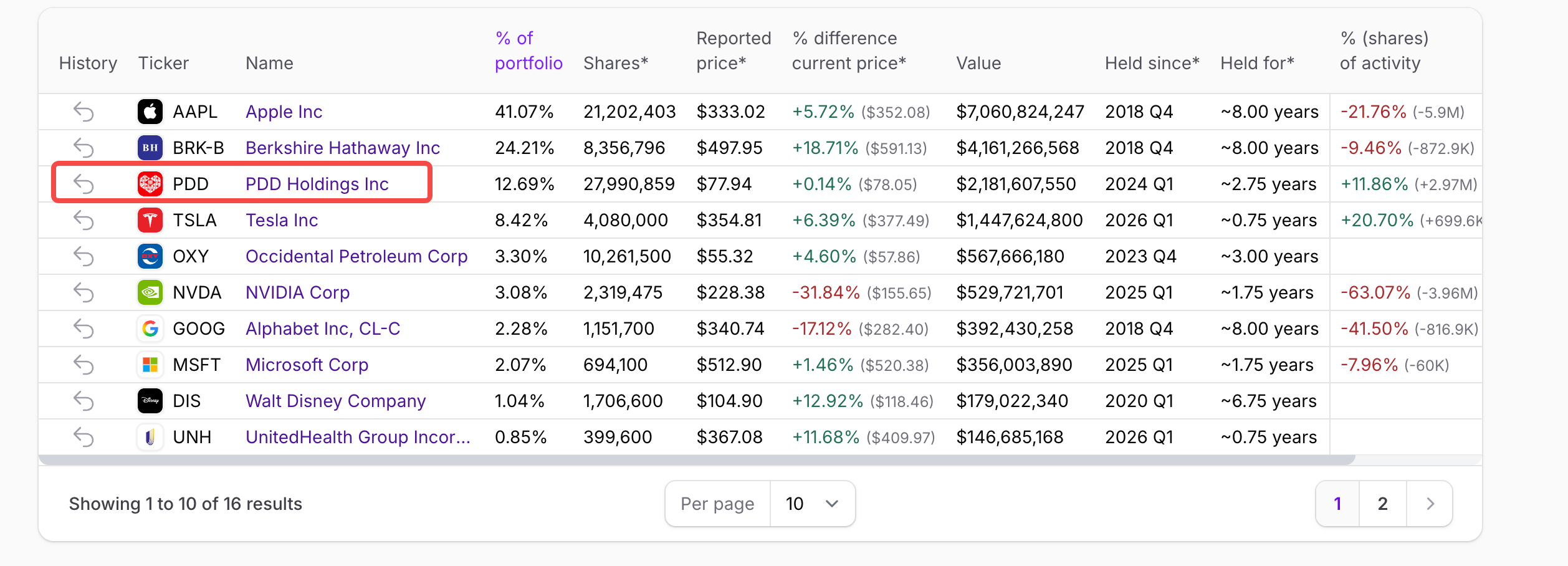
In Q3, he significantly increased his Pinduoduo position by nearly 2.97 million shares, pushing its portfolio weight to 12.69% and making it the third-largest holding overall. Tesla was added to by nearly 700,000 shares, raising its weight to 8.42%; meanwhile, he also opened a historic first position in Musk’s SpaceX.
Understanding this portfolio rotation reveals the true logic behind the old money.
Facing sky-high valuations in compute hardware, he chose to realize gains at the top; while facing Pinduoduo—a value-oriented consumer giant trampled by the market yet boasting extremely strong cash flows—and Musk’s ecosystem, which holds exclusive barriers in robotics and aerospace, he decisively doubled down.
Apple and Berkshire still steadfastly account for over 60% of his base holdings. His entire portfolio structure is a highly typical rebalancing: selling the pickaxe sellers that have rallied the hardest and have the fullest expectations, and buying those whose valuations have been unfairly punished, or which possess irreplaceable hard moats for the next decade.
Selling Puts After the Crash Instead of Fleeing: A Top Hunter Waits for the Next Cycle
The most ironic contrast unfolded at the chaotic scene following Jensen Huang’s resignation.
On November 12, news of Huang’s resignation dropped, triggering panic selling among holders network-wide, as retail investors rushed to cut losses and exit. Yet Duan Yongping, whom outsiders assumed had successfully timed the top, made two highly significant statements on social media.
In one statement, he publicly remarked that Jensen Huang’s sudden departure was indeed incomprehensible, noting short-term impact on Nvidia’s business would be minimal, but it will take years to see if a good CEO can be found. Immediately after, when asked whether he would liquidate his remaining 2.31 million shares, his answer directly overturned conventional wisdom: he said he wouldn’t sell now, adding that he had actually sold quite a few Puts (put options) that day.
On November 16, he added another remark: “I believe most of my reasons for buying NVDA are still intact, it’s just that Huang is gone. That has already been reflected in the price. I’m very interested to see whether this company can navigate through this crisis, so I don’t want to rush to flee.”
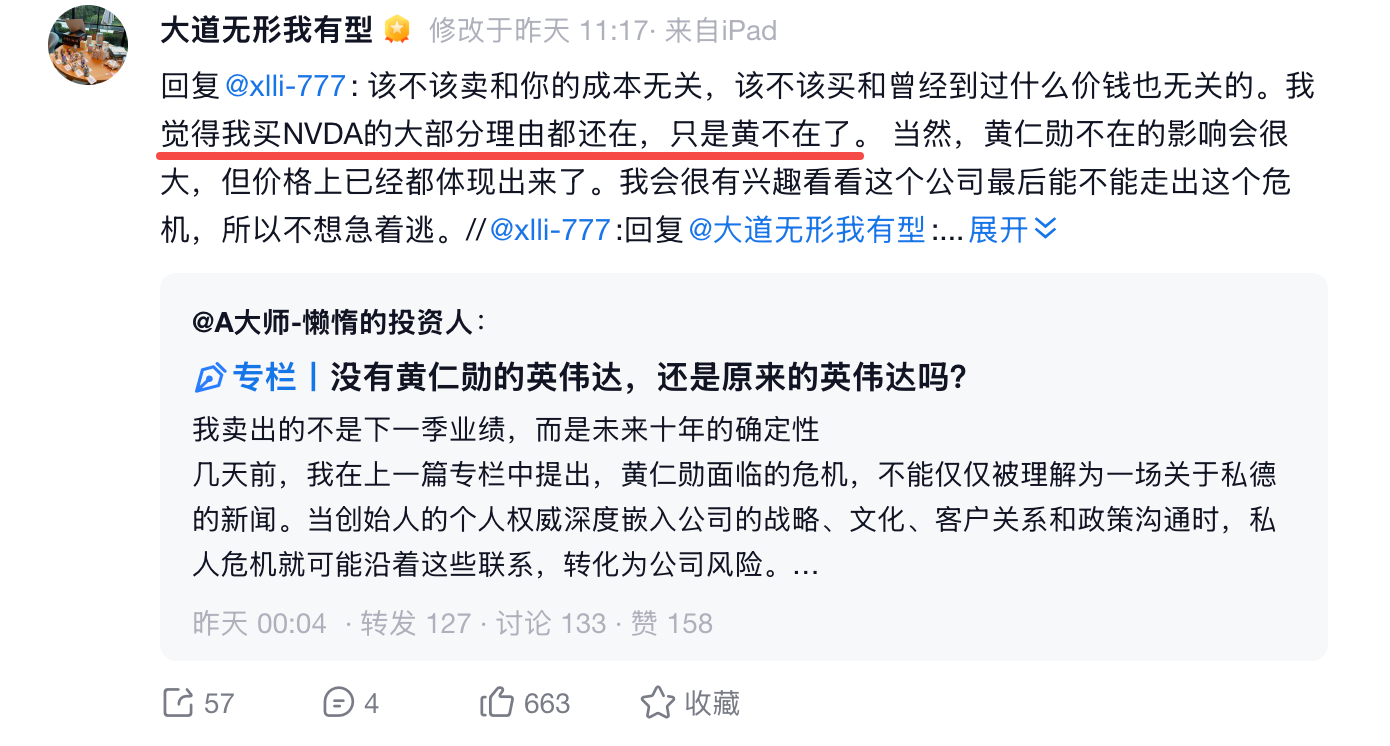
When prices surge, sell Calls, passively handing over shares at the top to lock in profits and let others celebrate; when prices crash, sell Puts, using premium collection to prepare for catching shares back at lower levels as everyone scrambles to dump them.
The business world doesn’t have many divine omniscient eyes; what exists is absolute adherence to business models and common sense.
Retail investors constantly seek insider crystal balls to predict disasters in advance, but in Duan Yongping’s 13F report card, the only real insider secret is this: when everyone believes the tree can grow to the sky, old money is already preparing to secure their gains;
and when disaster truly smashes shares into a massive abyss, the sacks in their hands are already wide open.
Join TechFlow official community to stay tuned
Telegram:https://t.me/TechFlowDaily
X (Twitter):https://x.com/TechFlowPost
X (Twitter) EN:https://x.com/BlockFlow_News
 深潮TechFlow