What Jensen Huang Worried About Has Happened: Chinese Open-Source Models Are Taking Over Enterprise AI
TechFlow Selected TechFlow Selected
What Jensen Huang Worried About Has Happened: Chinese Open-Source Models Are Taking Over Enterprise AI
This is not a technology competition; it is a reshuffling of AI power.
 Navigating Web3 tides with focused insights
Author: Michael Spencer
Compiled by: TechFlow
TechFlow Editor's Note: Following the release of Moonshot AI's Kimi K3, US companies are flocking to Chinese open-source models to cut token costs, shaking the IPO stories of OpenAI and Anthropic. While US hyperscalers burn cash building data centers, Chinese models achieve the same or better results with less compute—this isn't just technical competition, it's a reshuffling of AI power.
Geopolitics Clashes Head-On with AI🔥
As you know, Chinese company Moonshot AI released a new version of its Kimi model, Kimi K3, prompting a significant shift of enterprise AI towards open-weight models. This could be one of the most significant AI events of 2026. With the war in Iran over the Strait of Hormuz hanging in the balance and the tech-heavy Nasdaq 100 plummeting, this is evolving into a geopolitical dilemma for the Trump administration. In both war and AI, there are clearly no clear solutions.
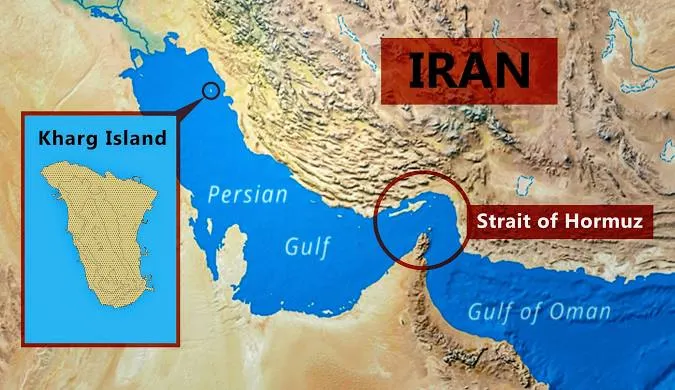
Figure: US geopolitics triggers market turmoil again. A highly unpopular and costly war.
Generative AI models are evolving, but may be dragging down revenue growth for AI giants OpenAI and Anthropic. US hyperscalers are approaching negative free cash flow through staggering AI capital expenditure and data center investments, making one wonder if it's all worth it—if Chinese models are becoming larger and more efficient, capable of replicating equivalent performance while drastically reducing costs. This could evolve into an AI crisis in the stock market, even as the semiconductor boom seems to have entered a bear market correction phase, just after South Korean HBM leader SK Hynix listed in the US. South Korea (KOSPI) has now become a leading indicator.
With Chinese DRAM manufacturer CXMT about to list in Shanghai, this constitutes a high-pressure standoff for the future of AI between China and the US. DeepSeek's remarkable funding round, along with IPO plans for DeepSeek, Moonshot AI, and OpenAI in 2027,注定 make next year another extraordinary year. DeepSeek raised approximately $7.4 billion last month in June. We must assume Databricks is also one of the beneficiaries of this enterprise AI shift towards routing and cheaper tokens for open-source models—Databricks announced a new funding round with a valuation of $188 billion.
Google's Gemini 3.5 Pro was critically delayed at the worst possible moment. The release of SpaceXAI's new model Grok 4.5 was completely overshadowed by the Kimi K3 moment. The turmoil surrounding Anthropic Fable 5 marks the ultimate return of the DeepSeek moment from January 2025 in China. OpenAI's own GPT 5.6 Sol release was also almost completely eclipsed.
The Trump administration quickly restricted Mythos-level models, but faces a serious problem: what if Chinese models can approximate those same capabilities with open-weight models—capabilities originally thought to be months away? The Trump administration is showing signs of potentially banning Chinese frontier models and taking aggressive measures to curb China's AI rise. I thought they wouldn't regulate the AI industry. So much for global free-market capitalism.
Brave New World of Token Efficiency Looks Very Chinese
The seven major hyperscalers, including Microsoft, Amazon, Meta, and even Google, have lost some AI influence and credibility in this cycle. Mishandling of Mythos-level models by the government, combined with the rise of Kimi K3-like models, is a perfect storm, causing many enterprise companies to shift towards more rational, much more cost-efficient token usage.
While Open-Router cannot represent the whole picture, it is an interesting data point for the overall macro trend: cheaper open-weight models from China appear to be winning market share.
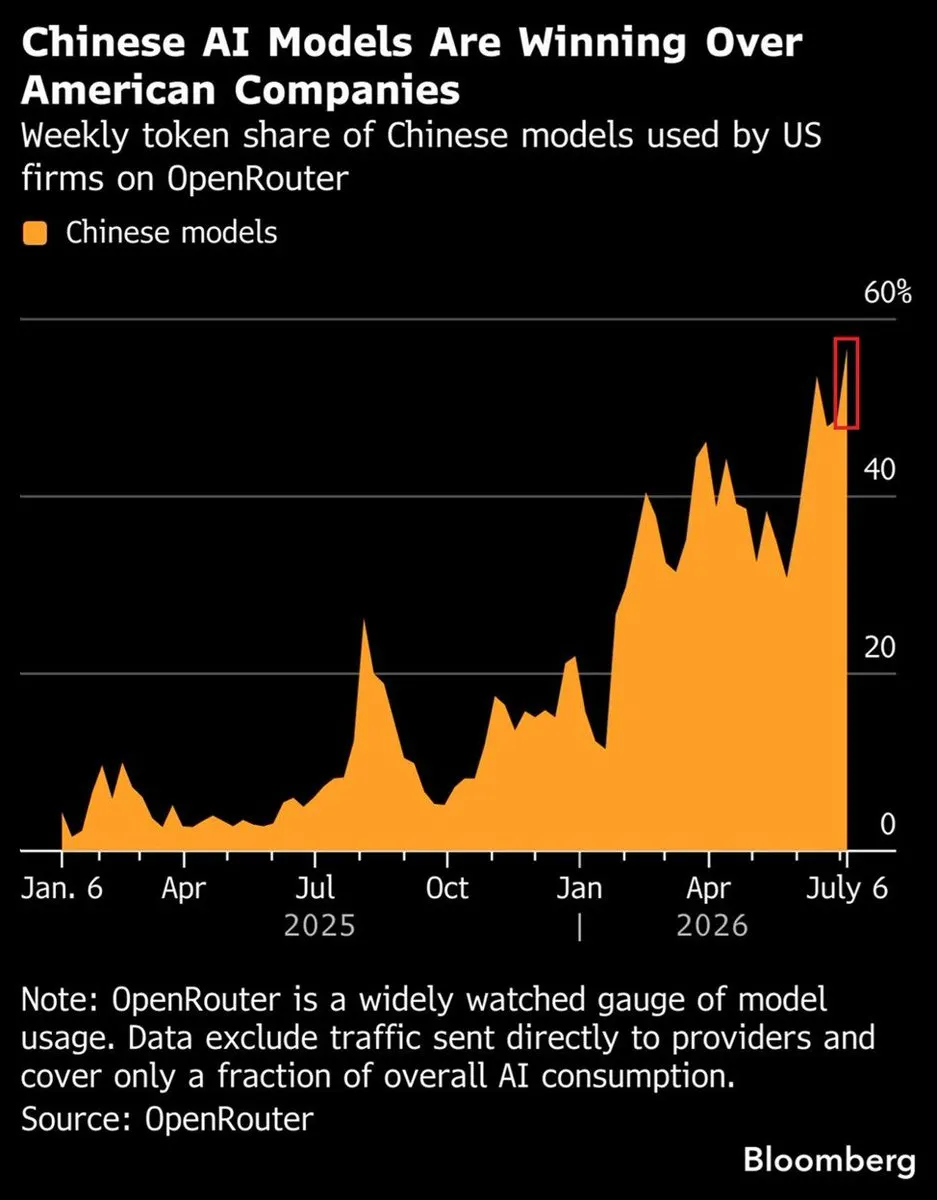
Figure: The era of prompting has given way to the reality of routing and token efficiency
In my opinion, some of the best open-weight models from the US are Thinking Machines' Inkling (released about a week ago), and anything Reflection might launch soon. NVIDIA's Nemotron is often cited as a substitute for Meta's previous leadership. The problem is that the US truly lacks leadership in the open-source AI field. For the US, this is a potential disaster for its leadership in models, tokens, and enterprise adoption of frontier AI.
More peculiarly, Chinese President Xi Jinping's most important recent speech on artificial intelligence was delivered via keynote at the World Artificial Intelligence Conference (WAIC). President Xi attended the opening of the 2026 WAIC in Shanghai and delivered a keynote speech titled "Working Together to Build a Just and Fair Global AI Governance System". China appears more advanced than the US in AI governance and regulatory leadership, actively building global cooperation around the theme.
Alibaba's own Qwen 3.8 Max (Preview) will also have an open-weight component, paired with an aggressive international token pricing plan. Kimi K3 is not aimed at amateur developers, but at enterprise customers, to boost ARR before they also IPO in about six months. The competition between the US and China on models, even when there are few application-layer products, is exaggerating the demand for compute, while China has both cheaper token generation and more abundant energy. At a moment when the Trump administration's key mission seems to be maintaining the stock market AI boom for financial elites and the business class. Meanwhile, everyone from Anthropic to Moonshot AI is adjusting their position to maximize IPO hype and revenue sales momentum.
Do Model Rankings Still Matter?
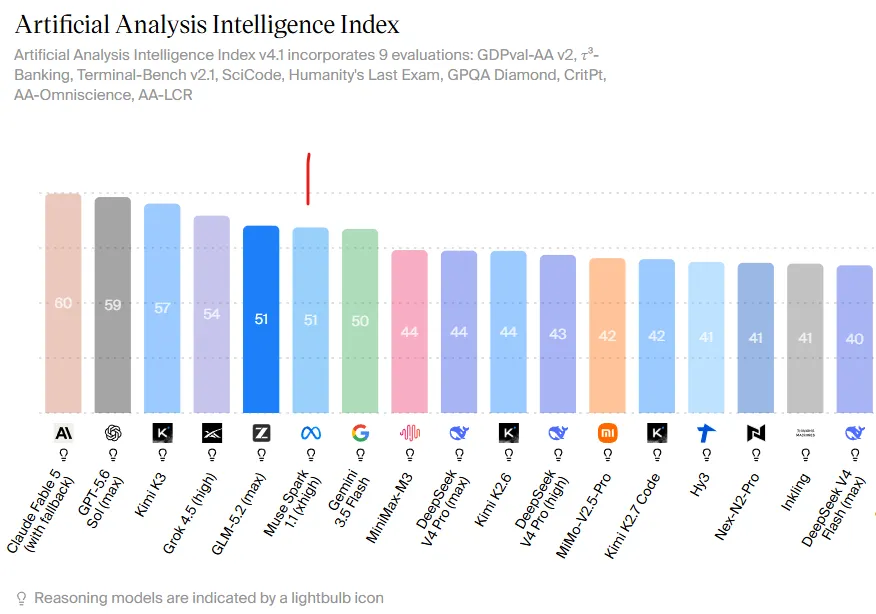
If ranked by Artificial Analysis Intelligence Index, and by smartest model, the ranking is as follows:
The state of current peak model performance is roughly as follows:
- Anthropic – Claude Fable 5
- OpenAI – GPT 5.6 Sol
- Moonshot AI – Kimi K3 (Open Weight*)
- SpaceXAI – Grok 4.5
- Zhipu AI (Z.ai) – GLM 5.2 (Open Weight)
These lists and the benchmarks they trained on are quite artificial, likely to change next week, and certainly next month.
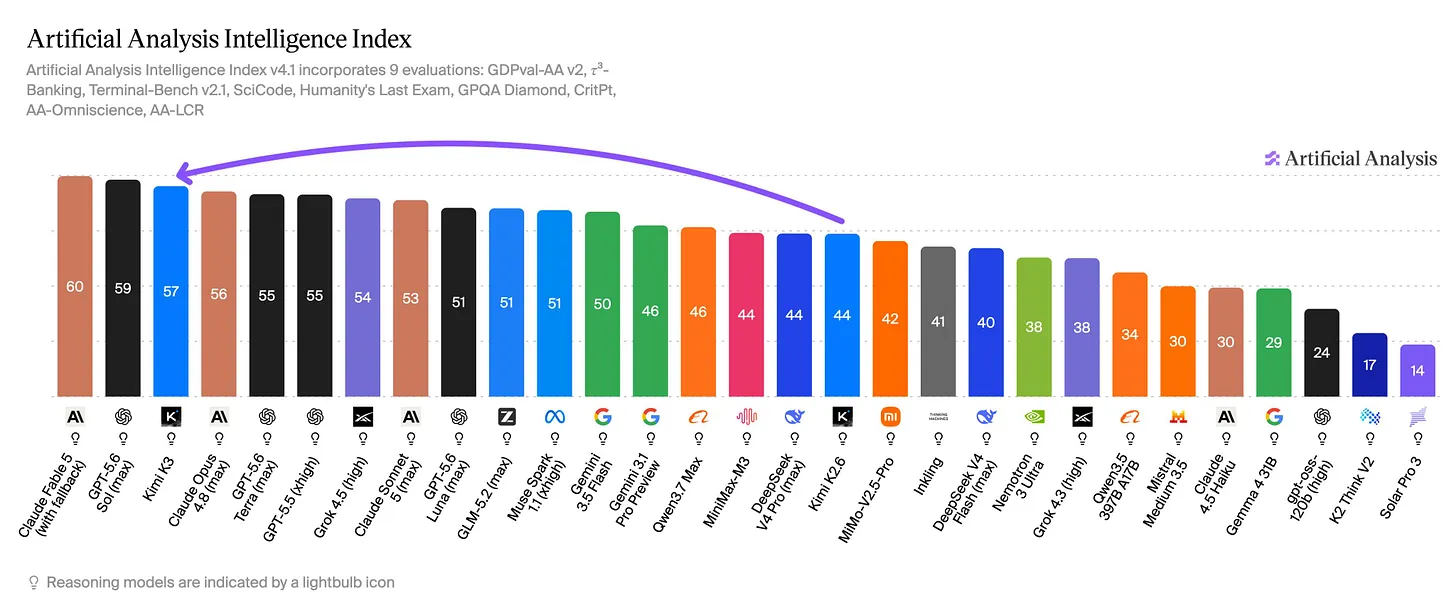
Figure: Is comparing LLMs (Large Language Models) still the right way to measure AI progress? Artificial Analysis
"AI Disconnect" Is Worsening🔎
Chinese open-weight models have always been cheaper, but in 2026 they are becoming much more capable. This means US companies are starting to adopt them for daily tasks to reduce token budgets that are spiraling out of control due to Fable 5 and Mythos 5-level pricing. If every new Chinese model has the potential to enter the top five best models by intelligence ranking, this is a big problem for the US AI industrial complex. China's problem for the US in AI not only exists, but is worsening.
I have great respect for the founders of DeepSeek, Moonshot AI, and Zhipu AI, because you can feel they have true idealism, not just incredible AI talent and business acumen. Under their compute and capital constraints, their model capabilities demonstrate sophisticated innovation and incredible business acumen. You don't feel the same thing from executives at Meta, Google, or Microsoft, there is a quite obvious disconnect. Relative to Big Tech's capital expenditure, this is starting to look really bad. Big Tech's AI execution on generative AI models (and products) is surprisingly poor.
Over the past week, OpenAI's (new) Head of Strategic Future Dean Ball's viral tweet on X might best illustrate this. He said open-weight models are essentially decelerationist, and pondered that a world dominated by open-weight models could lead to thorough AI communism,进而 leading to a dystopian hellscape.
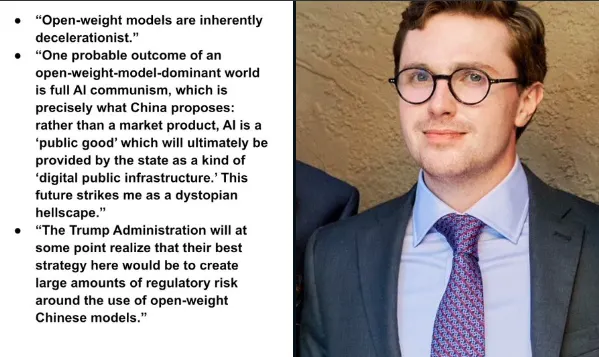
Figure: In July 2026, panic surrounding open-source AI reached a new height. The rhetoric about China is already wearying.
Obviously, capital-intensive closed-source model companies are worried about these recent developments, full of anti-China sentiment and national defense arguments regarding distillation and cybersecurity issues. While Anthropic's Mythos-level models are impressive on paper, we don't know their most advanced capabilities because they have been restricted from public access. In the US, the line between AI future strategists and lobbyists looks quite blurred. Just as capital expenditure in the enterprise AI token price war looks quite poor from an ROI perspective.
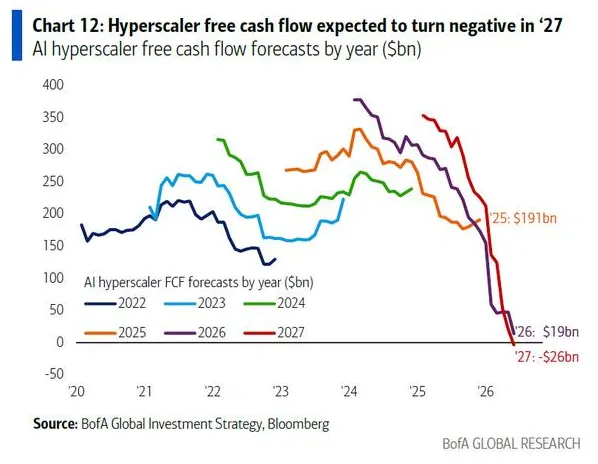
Figure: Big Tech's capital expenditure plans look bleak for 2027. — Bank of America
What we know about US protectionism is that what they cannot compete with in the global market, they will certainly try to ban and restrict domestically. But enterprise companies shifting to open-weight models is already the dominant story of 2026, it might be too late, and in doing so they might be setting up an open-source AI race for US companies. This is the strange persuasive dilemma of open-source AI on costs in 2026. If generative AI technology really brought reliable ROI, this wouldn't be a problem, but this is an emerging technology, and there aren't many good AI products yet to leverage these incredible models.
The US Department of Commerce considered adding several Chinese AI labs to its "Entity List" last year, I'm sure this is now back on the table, as US companies struggle to compete in a world of rapidly improving token efficiency, where tools and routing are more important than ever, token costs are spiraling, and deciding which models to use for which tasks.
The US government restricting Anthropic's best models, its best closed-source company, might be a historic mistake, allowing this painful situation to happen. The Kimi K3 moment is made even more dramatic by a comedy of errors just months away from Anthropic's own high-profile AI IPO, with Semianalysis publication analyzing Anthropic's incredible operating profits. You have to assume shifting to open-weight models and government hijacking of Mythos has slowed down top US AI companies. Semianalysis believes Anthropic is expected to reach over $1 billion in GAAP EBIT (about 6% margin) by Q3 2026, making it one of the first major frontier AI labs to achieve sustained quarterly profitability. All these recent events make OpenAI, Meta, and SpaceXAI the biggest losers. Even if Meta's Muse Spark 1.1 isn't such a bad model.
If the Trump administration restricts Chinese open-weight models, NVIDIA, Thinking Machines, Meta, and Reflection (models not yet released) could become big winners for enterprise customers seeking US-based open-weight token solutions.
The macro AI narrative for mid-2026 is becoming more interesting. The level of customization for open-source AI is upgrading. Token efficiency and routing have become more important. AI capital expenditure in the market is under increasing scrutiny.
Many Stories of DeepSeek Moments
Open-weight model AI hegemony is not AI communism or a nuclear threat, cheaper tokens benefit the Jevons paradox and what companies, developers, and consumers can do with AI. For the past five years, the entire generative AI model training paradigm has been a multi-strand distillation hijacking of the world based on language data. The demand for compute will not slow down because enterprises choose cheaper models, in fact it will accelerate. This is the dilemma of the entire macro AI situation.
If capital and monopoly capitalism are their moat, the US is a troubled nation. The AI future will require new types of innovation, not just a better venture capital system. There is clearly some narrative abuse here, business consolidation and geopolitics will resolve themselves as usual. As DeepSeek raises more funds and rushes to IPO, DeepSeek moments keep piling up. Their flagship model DeepSeek-R2 was never released, raising questions about China's future most advanced models. Liang Wenfeng holds 78% to 84% of DeepSeek's shares, and they are also developing their own chips.
Roaring 20s IPO Race
A world where both Anthropic and Moonshot AI are constrained by compute capacity, Google becomes an LLM laggard, and Meta and SpaceXAI remain on the margins. A world where OpenAI's IPO looks less attractive every quarter. A world where we are tired of waiting for IPOs from Databricks, Crusoe, Anduril, Stripe, etc., even as Chinese Physical AI, AI chip, and memory giants rush to list. Reportedly, Chinese chip manufacturer CXMT's $8.6 billion IPO was oversubscribed by institutional investors more than 500 times.
I predict a ChatGPT moment in robotics in 2027 (now also known as Physical AI), as rumors say Anthropic is negotiating to acquire Physical Intelligence. Even though AI pioneer Yann LeCun warns that these humanoid robots will be very incompetent now and for a long time to come. Silicon Valley and Wall Street will be eager to find new narratives to support AI concept stocks, they might exaggerate again.
This is happening during a period when the US market severely lacks pure-play robotics or robotics software listed companies. China, struggling to recover from an epic real estate collapse, seems to be leading in the IPO race. Although Moonshot AI, Zhipu AI, Minimax, or smaller Chinese AI labs are impressive, what really fascinates me is the macro momentum of the open-source vs. closed-source debate. In many ways this is a contest between capital and talent.
>"Such a future looks like a dystopian hellscape to me, but I have never met an open-weight model advocate who doesn't eventually admit things will head this way," Dean Ball, or perhaps ironically, OpenAI stated.
"Such a future looks like a dystopian hellscape to me, but I have never met an open-weight model advocate who doesn't eventually admit things will head this way," Dean Ball, or perhaps ironically, OpenAI stated.
With Big Tech earnings reports due this week, we will get more answers. The story of capital expenditure vs. ROI has never been so grim. Any failure in earnings execution will be punished by the market, valuations of some growth companies have been corrected in recent weeks, SpaceX fell 25.5%, and Grok 4.5 again failed to make an impact (the bar is high). With the high-priced acquisition of Cursor, SpaceX AI still seems to be categorized in the AI loser camp.
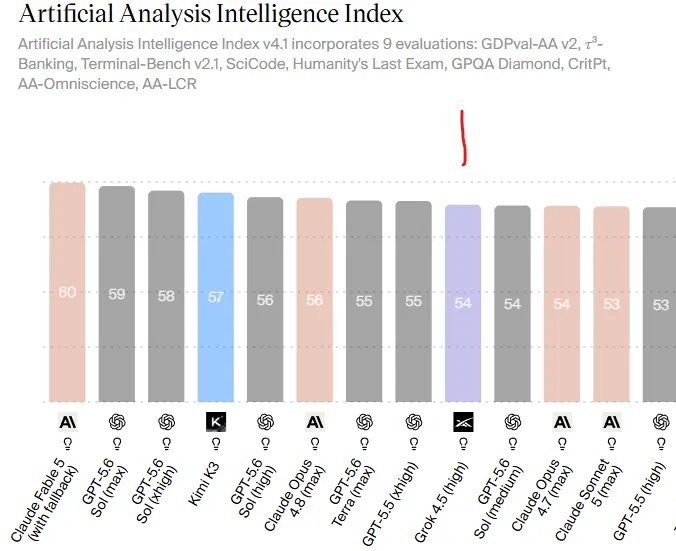
Moonshot AI launched Kimi K3 on July 16, a large model with up to 2.8 trillion parameters, comparable in benchmarks to top US systems like Claude and GPT, and plans to fully open weights for low-cost self-hosting by July 27.
By 2027 we will know how strong Anthropic's IPO will be, its fastest ARR growth in software technology history is being challenged by macro AI headwinds and government intervention. Will US protectionism protect it, or will the market pick winners? This tension will spread unprecedentedly into a robotics race covering space, AI, and defense.
Robotics' GPT Moment Approaches
If Anthropic really acquires Physical Intelligence, the robotics GPT moment I mentioned multiple times might be just around the corner. Unitree Robotics' Chinese IPO is already a significant moment for the future of Physical AI. It will raise 4.2 billion CNY ($619.4 million), while recently reducing the price of entry-level quadruped robots by over 90%.
Due to China's natural advantages in robotics, this part of the AI race is an area where the US is frantically catching up, with multiple large-scale VC funding rounds in this field in 2026. The US seems to be leading in world models and software brain startups dedicated to making robots more practical, while China has more humanoid robot (robots with human form) startups and experiments with drones and new robot hardware forms.
Unitree Robotics should list later this month, about three months before the critical Anthropic IPO. Unitree Robotics is rapidly becoming the de facto key standard hardware platform for global AI researchers and robotics labs, the humanoid robot race might heat up so quickly that Tesla must merge with SpaceX in the near future. I think this could happen in early 2028. If the generative AI boom falls from highs (as many analysts expect), I think we can expect the robotics race to replace it as the next major US tech narrative.
Ultimately, competition between China and the US in AI is beneficial for global developers, consumers, and enterprises gaining more real-world utility. As for whether generative AI models or robots will bring actual value soon, compared to the scale of investment, is another question. Accelerated startup timelines and significantly increased funding rounds are noteworthy, although the urgency to accelerate AI commercial applications is also increasing. Competition is heating up, 2027 will become more intense, laying a huge foundation for technological competition in the 2030s. China's abundant energy and US semiconductor dominance keep the situation suspenseful.
Join TechFlow official community to stay tuned
Telegram:https://t.me/TechFlowDaily
X (Twitter):https://x.com/TechFlowPost
X (Twitter) EN:https://x.com/BlockFlow_News