Viewing the Stablecoin War Through Open USD: The Dilemma of Fragmentation, and the Next-Generation "USD Account"
Written by: Lacie Zhang, Researcher at Bitget Wallet
Introduction
Issuing stablecoins is arguably one of the most "money-printer"-like yet far less profitable businesses in today's financial industry.
On one hand, it resembles a printing press: you collect users' dollars, convert them into U.S. Treasuries, and pocket the interest, while users receive zero yield. It’s a lucrative business that can scale infinitely, which explains why nearly everyone from traditional banks to tech giants wants to issue their own "digital dollar."
Yet paradoxically, it hardly generates massive profits: Circle, the issuer of the world’s second-largest dollar stablecoin USDC, reported $1.68 billion in revenue for 2024, but its net profit margin was only around 9%. Wall Street’s consensus estimate for its 2026 net margin sits at roughly 7% as well. What looks like a machine capable of conjuring money out of thin air and scaling profits indefinitely ultimately yields single-digit profit margins.
So where does the disappearing profit go? A news announcement on June 30, 2026, brought the answer to light. An independent entity called Open Standard, alongside over 140 companies including Visa, Mastercard, American Express, Stripe, BlackRock, BNY Mellon, Standard Chartered, Coinbase, Ripple, Google, and Shopify, launched a new dollar stablecoin called Open USD (OUSD).
Its operational rules are almost the inverse of existing stablecoins: zero fees for minting and redemption, no issuance caps, and after deducting an administrative fee, nearly all interest generated by reserve assets is returned to participating distribution partners.
Upon the news breaking, Circle’s stock (NYSE: CRCL) plummeted approximately 16% that same day. A stablecoin that has not even officially launched managed to erase roughly $3.6 billion in market capitalization from the industry runner-up, solely based on a partner list. To understand this seismic shift, we must first address a counterintuitive question: If issuing stablecoins isn’t particularly profitable, why are these 140 corporate giants joining forces to do it?
I. The Truth Behind the "Money Printer": Where Does Reserve Revenue Go?
Stablecoins are often described as legal printing presses: you take a user’s $1, mint a token pegged to $1, park that dollar in safe assets like short-term Treasuries, and earn 4%–5% interest. The stablecoins in users’ hands yield nothing, while all returns from reserve assets accrue to the issuer.
This mechanism is nothing new; it corresponds to an ancient concept: seigniorage. Whoever holds the right to issue currency gains additional revenue from its circulation. Today, regulations have even reinforced this to some extent. The U.S. GENIUS Act passed in 2025 explicitly prohibits payment stablecoin issuers from paying interest to token holders.
The problem, however, is that this slice of the pie rarely stays entirely with the issuer. The issue doesn’t lie with any single company, but rather with the business model’s structure: for a stablecoin to be adopted, it must be distributed, and distribution capabilities are typically controlled by a handful of channels holding direct access to end users.
Take Circle, the industry’s most transparent issuer, as an example. Its business model is essentially a bank’s net interest margin play: when users exchange dollars for USDC, they provide Circle with low-cost, or even zero-cost, capital. Circle then deploys these reserves into short-term Treasuries and other assets to capture the spread. In 2025, Circle’s annual revenue reached approximately $2.75 billion, with reserve interest income alone accounting for $733 million in the fourth quarter—over 95% of its total revenue. It is practically a company that "lives exclusively off interest rates."
Furthermore, USDC distribution relies heavily on Coinbase. According to Circle’s prospectus and financial reports, Coinbase keeps 100% of all USDC reserve revenue generated on its platform, and splits revenue generated outside the platform evenly. In 2024 alone, Circle paid Coinbase $908 million in distribution fees, representing roughly 54% of its total revenue. In other words, for every dollar Circle earns, more than half goes to Coinbase.
Coinbase does not issue USDC, nor does it bear responsibilities for reserve management, redemptions, or compliance. Yet, leveraging its user access and trading venues, it captures the juiciest share of the value chain. Even worse, Circle cannot easily alter this agreement. Disclosures reveal it is not unilaterally terminable by Circle and auto-renews every three years. As the issuer, Circle lacks leverage in negotiations with its largest distribution partner.
Therefore, stablecoin reserve revenue, while nominally belonging to the issuer, increasingly functions as a "toll fee" that must be paid to distribution channels. Issuers shoulder the heavy-asset, high-responsibility burdens of compliance, reserve management, redemption, and regulatory oversight, while channels controlling user access grab the lion’s share of profits. What the market is fundamentally re-pricing is the issuer’s long-term ability to retain this revenue.
II. Why Tether Makes $10 Billion: Two Stablecoins, Two Worlds
One might object: If stablecoin issuers truly have such weak bargaining power, why did Tether net over $10 billion in 2025, making it one of the highest-profit companies per employee globally?
This highlights the crux of the matter: while Circle and Tether both appear to issue dollar stablecoins, they are actually running two completely different businesses.
Over 90% of demand for Tether’s $185 billion+ USDT comes from emerging markets like Argentina, Turkey, Nigeria, and Southeast Asia—regions characterized by high inflation, strict foreign exchange controls, and weak banking systems. In these places, USDT is not merely a "crypto trading pair"; it functions more like "digital dollar cash." This demand is real and rigid: users need dollars, merchants need settlement rails, and SMEs need cross-border payment solutions, making USDT the easiest-to-obtain and circulate alternative. Consequently, Tether does not need to pay exorbitant distribution fees to a single super-channel. It retains most of the revenue generated by its reserve assets and continues to accumulate over $120 billion in Treasuries, $17 billion in gold, and $8 billion in Bitcoin.
Circle’s USDC operates in a different world: driven by U.S. compliance, institutional adoption, and exchange integration. This ecosystem is more expensive but builds a distinct moat—USDC is already the world’s leading compliant dollar stablecoin, establishing trust among institutional capital, trading platforms, and regulation-friendly environments that USDT struggles to replace.
Both issue dollar stablecoins, yet Tether collects seigniorage while Circle effectively pays rent to distribution channels. This isn’t a matter of strength versus weakness, but rather the outcome of two distinct demand structures and market positions. The difference lies not in the act of "issuance" itself, but in who controls the underlying demand: whoever masters real, sticky distribution scenarios captures the profit. Issuance is merely the visible maneuver; distribution is the decisive move beneath the surface.
Once this layer is understood, the logic behind Open USD’s seemingly radical design becomes clear.
III. Open USD’s "Ambition": Abandoning Seigniorage, Betting on Stablecoin Standards
Open USD undertook a move that appears highly counterintuitive to traditional issuers: it cedes almost entirely the "seigniorage"—or reserve revenue—that issuers traditionally enjoy. Some refer to this mechanism as a stablecoin version of "Treasury rebates": whoever drives trading volume or deposits settlement balances earns a share of Treasury interest according to predefined rules.
Building on the previous logic, this is easy to grasp. Reserve revenue was never meant to stay fully with the issuer anyway; it will inevitably flow to distributors in various forms over time. Since the money must eventually leave, Open USD simply puts it upfront from day one: instead of treating reserve revenue as profit, it uses it as a budget to acquire distribution networks.
This is the core of its design. For platforms like Stripe, Shopify, and Visa that control merchant networks, payment scenarios, and transaction entry points, the question was never simply "can we integrate a stablecoin?" Technical integration is abundant; what’s truly scarce is the "default entry point": which asset gets prioritized during settlement, which stablecoin defaults to sitting in merchant balances, and which standard takes precedence in cross-border payment routing. Open USD aims to rewrite this decision-making logic. Previously, platforms chose stablecoins primarily based on compliance, liquidity, and settlement efficiency. Now they face a more direct question: Who should I funnel traffic and balances to, and who will redirect reserve revenue back to me?
This is essentially an economic incentive targeted at distributors. Consequently, Circle may not—and likely won’t need to—follow suit: it requires reserve revenue to sustain its P&L and fund ongoing investments, while still honoring its revenue-sharing agreement with Coinbase. Both models entail trade-offs. While OUSD’s near-total revenue concession could indeed secure broader distribution, a pressing unresolved question remains: if the issuer barely retains any profit, who will long-term fund the heavy investments required for compliance, market making, liquidity, and ecosystem development?
Open USD positions itself as the "base currency layer for the internet economy," focusing on large-scale capital flows like corporate payments and cross-border remittances. Its goal is not to launch another stablecoin, but to become the underlying standard governing stablecoin circulation. But goals do not equal reality. Standards are never written in whitepapers; they are forged through actual trading volume. What matters most regarding OUSD is not the list of 140 partners, but which entity has the capacity to drive it into real payment, merchant, and settlement use cases—a role that currently falls largely to Stripe.
Zach Abrams, interim CEO of Open Standard, is also a co-founder of Bridge. Stripe acquired Bridge for $1.1 billion in 2024 as a stablecoin infrastructure company that already featured an Open Issuance product, designed to help enterprises issue stablecoins while sharing reserve revenue with them. OUSD represents a scaled replication of this product logic: instead of helping each company mint its own isolated stablecoin, it enables all participants to collaborate around a unified revenue-sharing and clearing standard.
As such, OUSD’s bid to become a standard relies not just on the narrative of a "140-company alliance," but on attempting to funnel real merchants, genuine transactions, and actual balance deposits through high-frequency payment gateways like Stripe. Standards rarely form because everyone agrees upfront; rather, they emerge when a dominant high-frequency gateway adopts something first, gradually compelling other participants to ensure compatibility and follow suit.
Zooming out to a broader framework, OUSD is attempting to redefine the value hierarchy within the stablecoin value chain:
The first tier is the reserve tier, representing the superficial seigniorage. Reserve interest appears to be the most tempting profit stream, but as noted, it rarely stays put. As long as stablecoins require channel distribution, this money will inevitably flow to entry-point holders via revenue shares, subsidies, commissions, or partnership fees. It functions more like a working budget for issuers rather than the final prize.
The second tier is the distribution tier. Whoever controls user access, transaction scenarios, and balance accumulation can redistribute reserve revenue. The relationship between Circle and Coinbase proves this: while USDC reserve revenue nominally belongs to Circle, as long as Coinbase controls key distribution scenarios, the channel commands the bulk of the profits.
The third tier is the network tier, encompassing clearing rules, asset standards, and interoperability frameworks. At this level, competition shifts away from individual stablecoins toward whichever entity becomes the foundational standard collectively adopted by payment platforms, merchant networks, and financial applications. Whoever stands at this tier no longer depends on a single issuer and becomes significantly harder to commoditize.
Stacking these three tiers clarifies the divergence in strategies: Circle firmly occupies the first tier, maintains deep ties with Coinbase at the second tier, and is simultaneously extending toward the third tier via initiatives like the Circle Payments Network (CPN) and its proprietary public blockchain, Arc. Conversely, Open USD chooses to voluntarily cede the first tier, leveraging reserve revenue to incentivize distributors and network participants.
This encapsulates Open USD’s strategy: transforming the structural reality that "issuers struggle to retain profits" into leverage for competing in distribution and standards setting. However, as of publication, OUSD has not yet officially launched. The list of 140 participants largely demonstrates the interest of payment giants and financial institutions in new clearing networks, but falls short of proving that OUSD has achieved genuine network effects.
IV. From Names to Adoption: Challenges Facing OUSD Implementation
Network effects remain the steepest hurdle for all new stablecoins. Neither broader distribution radii nor novel clearing standards are announced on paper; they are built incrementally through actual trading volume, real balances, and genuine usage scenarios. History has already provided the answer: since the rise of USDT and USDC, very few new stablecoins have achieved mass adoption. PayPal’s PYUSD hovers around a $2.7 billion market cap, and Paxos-led consortium stablecoin USDG reached merely ~$3 billion after three years of operation. Compared to the multi-hundred-billion-dollar scales of USDT and USDC, they lag by one to two orders of magnitude. A stablecoin’s true moat lies not in "who issues it," but in liquidity and user habit inertia—factors that cannot be quickly substituted by a partnership list.
For OUSD, the real challenge similarly lies in adoption depth. Adding an "OUSD" option to a company’s settlement system is entirely different from actually designating OUSD as the default settlement asset and funnelling merchant balances and transaction volume toward it. How the consortium governs itself and whether partners carry binding obligations will determine the actual worth of this "open alliance."
Sustainability presents another concern. While distributing nearly all reserve revenue effectively incentivizes distributors, it also means the issuer retains virtually zero profit. Long-term sustainability requires continuous cash burn for infrastructure building across compliance, auditing, market making, liquidity provision, global expansion, and ecosystem integration. Who ultimately foots this bill remains an unanswered question for OUSD.
Migration costs pose an even greater difficulty. Getting members to genuinely adopt OUSD essentially demands migrating their existing payment, clearing, and treasury management workflows onto a new stablecoin. This entails systemic adjustments across finance, risk management, compliance, technical integration, and user habits, requiring substantial ramp-up time.
Therefore, what OUSD delivers resembles more of a "re-pricing" than an imminent "replacement." It forces the market to reconsider whether stablecoin reserve revenue rightfully belongs to issuers, channels, or participants in shared standards. Nevertheless, it will not overnight rewrite the existing stablecoin landscape, nor will it naturally unify on-chain dollars.
V. The Real Battleground: Not Issuing the "Dollar," but Defining How the "Dollar" Flows
We can now return to the opening question. The 140 participants have never sought the marginal profits from stablecoin reserve revenue distribution itself; rather, they seek the gatekeeping privilege that stablecoins represent: access to next-generation financial clearing networks.
Recent industry moves make this crystal clear. JPMorgan launched deposit token JPMD, PayPal issued PYUSD, and Apple, Google, and Walmart are all exploring stablecoin integrations. According to The Wall Street Journal, JPMorgan, Citigroup, Bank of America, and Wells Fargo plan to roll out a joint tokenized deposit network in the first half of 2027 via their jointly owned clearing house, The Clearing House. None of these players are chasing Treasury yields; they are targeting three deeper objectives: bypass legacy clearing rails, lock down accounts and data, and shape next-generation payment standards.
For payment processors and banks, stablecoins function less as a new business line and more as a ticket to play. Cross-border remittances previously routed through correspondent banking networks, taking days and stacking fees; stablecoins compress this pipeline into seconds at near-zero cost. Interchange fees, FX spreads, and interest differentials once served as the payment industry’s core revenue pillars, but stablecoins are dismantling them one by one. Whether participating in OUSD, issuing PYUSD, or building bank consortium deposit networks, these moves are fundamentally both offensive and defensive: rather than letting others rewrite payment rules with stablecoins, it is wiser to secure a seat at the table first.
But when everyone wants a seat, another issue emerges: there are simply too many "dollars" at the table.
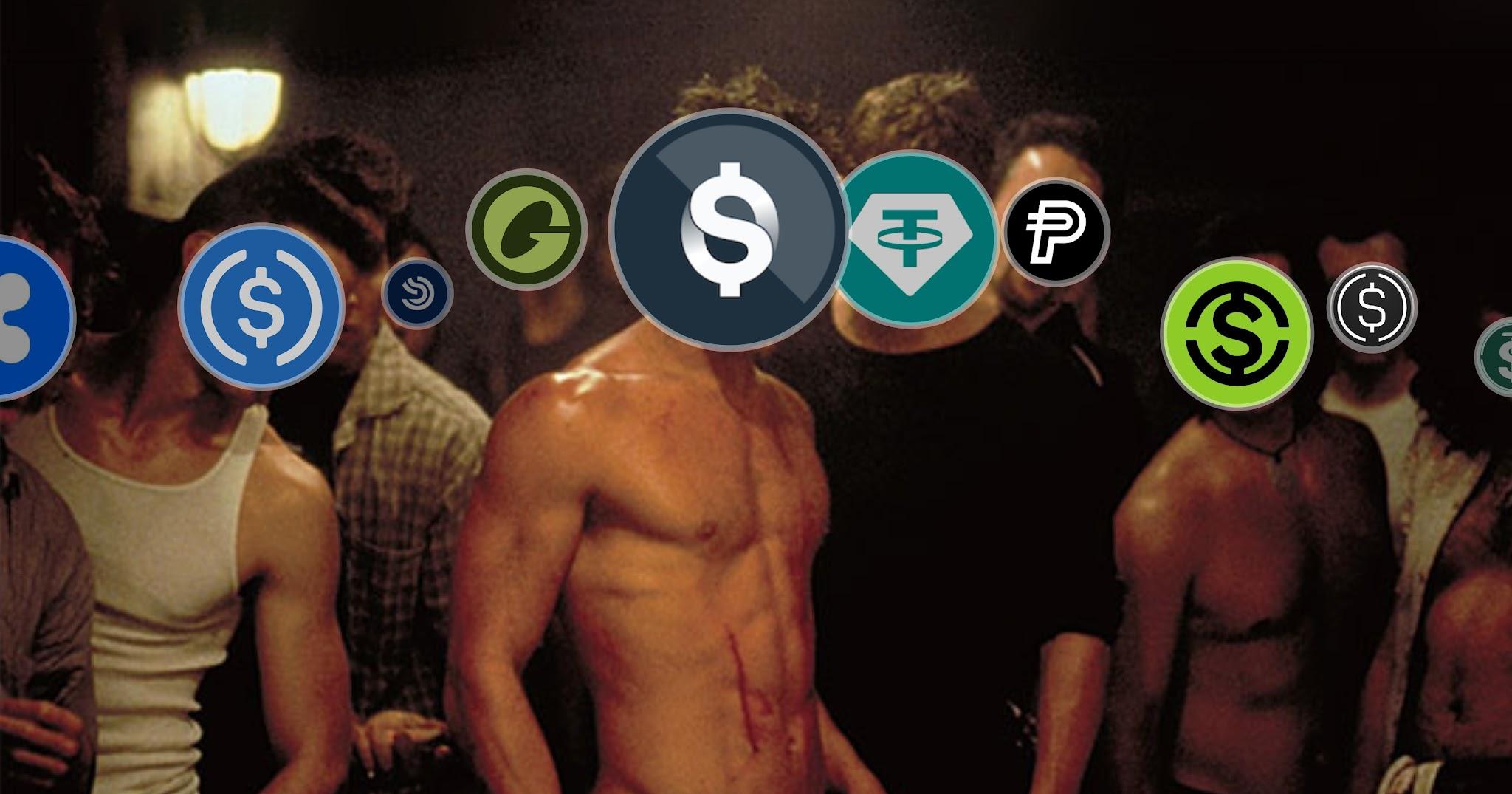
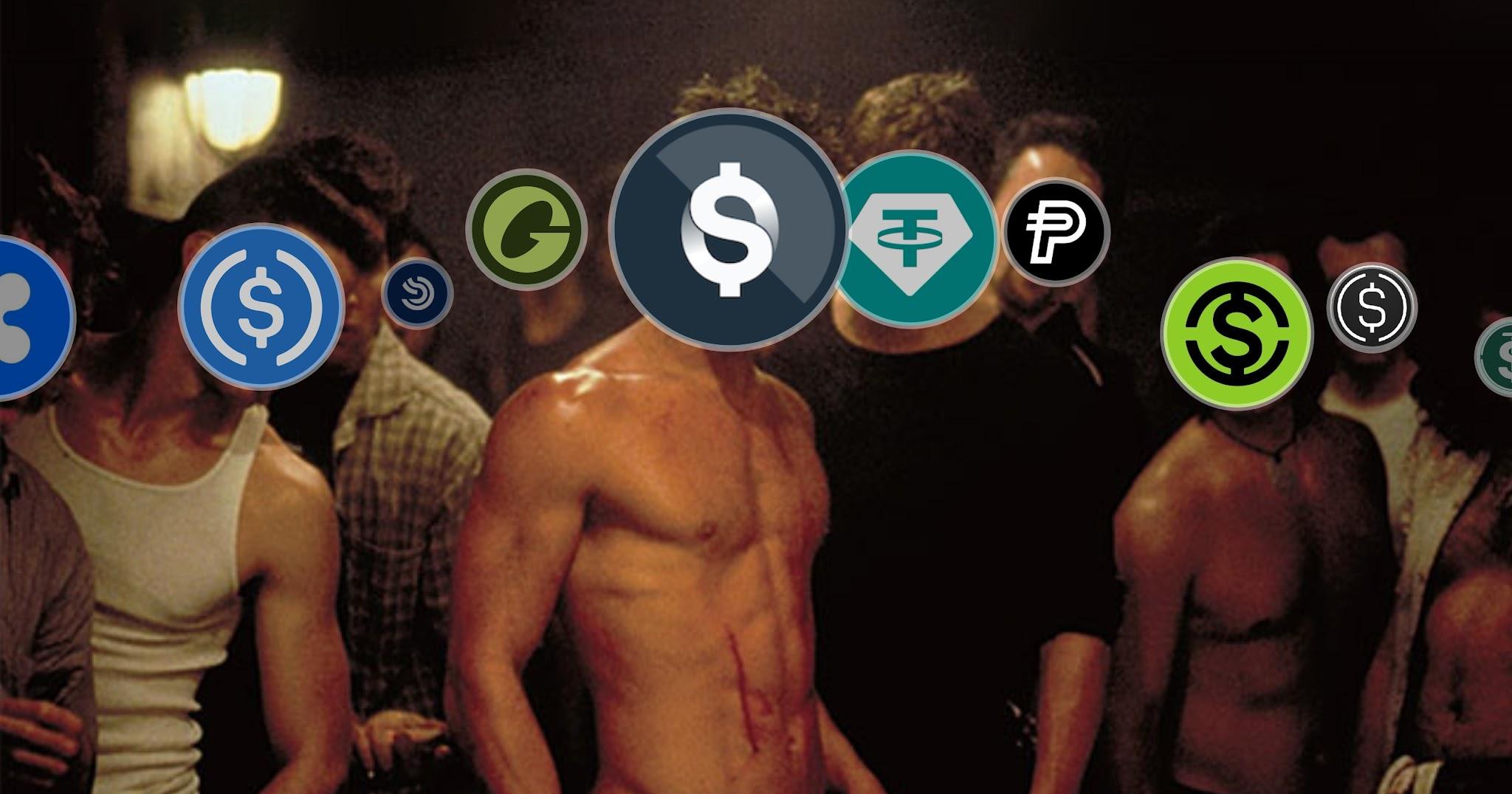
Today, on-chain dollars are no longer a single asset. USDT, USDC, OUSD, PYUSD, USDG, JPMD, and future bank consortium deposit tokens are all competing for their own usage scenarios; meanwhile, each stablecoin may simultaneously exist across multiple blockchains like Solana, Base, Polygon, and Ethereum. The same "dollar" is fragmented into dozens of tokens, scattered across different chains, accounts, and liquidity pools.
This poses a highly practical problem for retail users and enterprises: Which dollar should I actually hold? Can the dollar I possess settle a payment with someone who only accepts a different dollar?
Thus, as stablecoin competition matures, what becomes truly scarce is neither issuance capability nor any single-point channel, but rather the layer that enables cross-dollar interchangeability, usability, and settlement—the liquidity layer of aggregation, routing, and clearing.
This represents an even larger opportunity beyond OUSD. The more stablecoins proliferate, the deeper the fragmentation; the greater the fragmentation, the more users demand an account interface that abstracts complexity behind the scenes. Just as mobile wallet users today rarely care which bank underlies their WeChat Pay or Alipay balances, future on-chain dollar users should never be forced to manually track whether they hold USDT, USDC, OUSD, or a wrapped variant on a specific chain.
This is precisely the layer closest to on-chain wallets and user accounts.
A wallet capable of holding, swapping, routing, and settling multiple dollar assets can abstract fragmented issuer competition into a singular "one dollar" experience for users. Fragmentation spells war for issuers, but opportunity for account layers: whoever can consolidate dollars scattered across disparate chains, stablecoins, and liquidity pools, while continuously minimizing slippage, gas volatility, and routing costs during swaps, cross-chain transfers, and settlements, secures the closest and hardest-to-bypass entry point to consumers.
Guided by this insight, Bitget Wallet is exploring a "dollar account" product direction: enabling users to hold and utilize dollars across chains and currencies within a single self-custodial wallet, without needing to worry about which specific stablecoin backs their funds.
As a member of Open Standard, the Bitget Wallet Research Institute observes this transformation with a focus not on whether OUSD will become the next mainstream stablecoin, but on a more enduring question: as issuer names grow increasingly irrelevant, who will become the default account for users entering the on-chain dollar ecosystem?
Conclusion
Over the past decade, the core narrative of stablecoins has been: who can legally and credibly bring dollars on-chain.
Now, as 140 companies willingly align around a unified standard to redistribute stablecoins' most enticing reserve revenue, this story is turning a page. Issuing digital dollars is no longer a business that guarantees monopolized profits; instead, it functions more like an admission ticket. It grants players entry into next-generation financial clearing networks, but the true value does not necessarily remain in the issuers' pockets.
The new battleground lies in how dollars flow, settle, and are utilized by end users. Whoever defines the standards, controls the clearing routes, and successfully aggregates dollars scattered across divergent chains, stablecoins, and liquidity pools back into a cohesive "one dollar" for users, will come closest to becoming the next-generation financial gateway.
When issuing dollars is no longer sufficiently profitable, who truly holds the power over the dollar? Is it the printer, the network facilitating its circulation, or the account that reconstructs fragmented dollars back into "one dollar"?
This answer may no longer reside on any issuer’s balance sheet. Instead, it will be embedded in networks, within accounts, and reflected in every default choice users make.
Join TechFlow official community to stay tuned
Telegram:https://t.me/TechFlowDaily
X (Twitter):https://x.com/TechFlowPost
X (Twitter) EN:https://x.com/BlockFlow_News
 @BitgetWallet