Restructuring Financial Infrastructure: How Stablecoins Are Quietly Reshaping Global Value Flows?
TechFlow Selected TechFlow Selected
Restructuring Financial Infrastructure: How Stablecoins Are Quietly Reshaping Global Value Flows?
Stablecoins are more than just a payment tool—they represent the foundational layer for redefining how value flows, settles, and grows in the digital world.
 Navigating Web3 tides with focused insights
Author: Alec Goh
In the digital age, financial infrastructure is being quietly rewritten—block by block, line by line. At the heart of this transformation lies stablecoins—cryptocurrencies pegged to fiat currencies like the U.S. dollar—that are evolving from speculative instruments into key enablers of cross-border transactions, liquidity access, and programmable finance.
Once confined to niche use cases within crypto exchanges, stablecoins now power remittances, trade finance, and even payroll in regions facing inflation or capital controls. As highlighted in the HTX Ventures report titled "The On-Chain Extension of the Dollar: Stablecoins, Shadow Banking, and the Rebalancing of Global Payment Power", stablecoins have become a "lifeline" in markets such as Turkey, Argentina, Lebanon, and Nigeria—not for speculation, but for value preservation, settling cross-border payments, and accessing dollar liquidity.
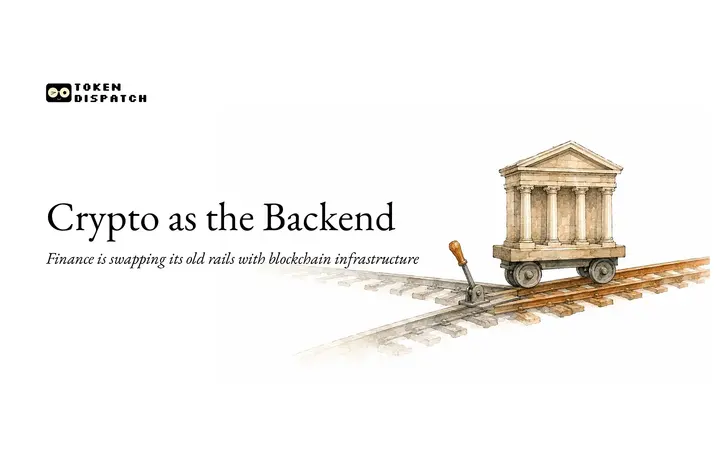
This shift is not merely behavioral—it's architectural. As capital flows move on-chain, the very infrastructure of money is being restructured. Processes once handled through correspondent banks and SWIFT are now executed via smart contracts and decentralized protocols, reducing costs, shortening settlement times, and increasing transparency.
Programmable Value and Financial Synergy
Beyond speed and cost, programmability is redefining financial logic. Stablecoins can be embedded into smart contracts to automate compliance, escrow, and interest payments—unlocking new mechanisms of financial synergy. For small and medium enterprises (SMEs) and startups, this means access to financial tools previously available only to large institutions.
Platforms such as Aave, Compound, and Curve have evolved into decentralized money markets, enabling lending and swapping of stablecoins without intermediaries. This disintermediation enhances efficiency while also creating demand for new trust mechanisms—spurring the rise of on-chain proof, reserve attestations, and real-time audits.
The Rise of “Shadow Money” and Systemic Risk
As stablecoin volumes grow, they introduce “shadow liquidity” into the global system—dollars that exist outside traditional banking, circulating via wallets, protocols, and APIs, yet backed by real-world assets (RWA) such as short-term sovereign bonds. Increasingly used as collateral, yield-generating instruments, or re-staked assets, stablecoins create a layered risk structure akin to shadow banking systems—albeit with greater transparency.
Yet transparency does not equal immunity. Risks such as over-collateralization, smart contract exploits, and cascading liquidations persist—and are often amplified by protocol composability. For stablecoins to achieve utility at global scale, systemic safeguards must evolve in parallel. These include standardized audits, circuit breakers, and insurance mechanisms designed to contain shocks under extreme conditions.
HTX Ventures also notes that despite improved visibility from smart contracts, complex interdependencies across cross-chain bridges and DeFi protocols introduce new systemic risks. These structures require protections equivalent to those in traditional financial markets—but built in a new language: code.
A Patchwork of Global Regulation
The regulatory landscape remains fragmented. In the United States, the recently proposed GENIUS Act aims to establish a clear, unified framework for stablecoin issuance. The bill mandates 1:1 backing by cash or short-term U.S. Treasuries, real-time audit disclosures, and restrictions on algorithmic or uncollateralized stablecoins—marking a significant step toward integrating stablecoins into the formal financial system.
Meanwhile, Europe’s MiCA framework requires capital buffers and full 100% reserve backing, along with enhanced oversight and thresholds for “significant” tokens. Approaches across Asia vary widely. Singapore has introduced a licensing regime for stablecoin issuers, focusing on reserve audits and redemption rights. Hong Kong is developing regulatory sandboxes, while Japan mandates that stablecoins be issued through licensed banks or trust companies. By contrast, Nigeria has issued strong warnings against stablecoin usage, citing financial sovereignty concerns.
For builders and investors, this patchwork presents both regulatory risk and first-mover opportunities. Projects that proactively align with emerging standards may gain favor with institutional players and payment service providers.
Stablecoins: The Wedge for Real-World Utility
As value flows become increasingly digital, stablecoins uniquely combine crypto-native features with real-world utility. From dollar settlements in emerging markets to tokenized U.S. Treasury access for global investors, their use cases are rapidly expanding across industries and continents.
A notable signal of mainstream adoption is Circle—the issuer of USDC—going public on the New York Stock Exchange. As the first major stablecoin issuer to list publicly, Circle brings greater visibility and credibility to the space, helping bridge the gap between regulatory compliance and institutional adoption. This milestone reinforces USDC’s positioning as a transparent and regulated stablecoin—commonly used in corporate settlements, fintech platforms, and increasingly as a conduit for tokenized assets.
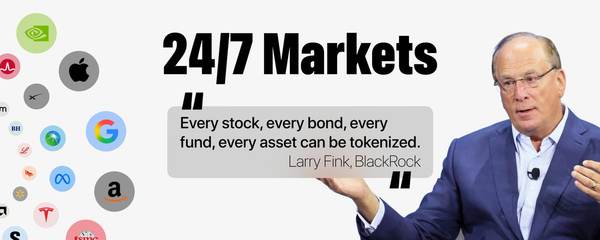
This expansion does not occur in isolation. It is part of a broader trend toward “decentralized infrastructure equipped with institutional-grade safeguards.” With the growth of RWA integration, central bank engagement, and compliance-focused centralized-decentralized finance (CeDeFi), stablecoins are becoming the connective tissue linking traditional and decentralized economies.
The future will be shaped not just by code, but by those who can navigate policy, build trust, and design systems capable of responsible scaling. In this sense, stablecoins are more than just payment tools—they represent the foundational layer for how value moves, settles, and grows in a digital world.
About the Author:
Alec Goh is Head of HTX Ventures, the international investment arm of HTX, one of the world’s leading cryptocurrency exchanges. Alec leads strategic investments in high-potential digital asset projects, with a focus on infrastructure, compliance-first DeFi, and the stablecoin ecosystem. He oversees M&A and investment initiatives at HTX Ventures, driving global expansion and execution of several high-profile industry projects. With a background in global finance and deep expertise in structured transactions, Alec is dedicated to bridging institutional capital with next-generation Web3 innovation.
Join TechFlow official community to stay tuned
Telegram:https://t.me/TechFlowDaily
X (Twitter):https://x.com/TechFlowPost
X (Twitter) EN:https://x.com/BlockFlow_News
 @Ventures_HTX