
Anthropic breaks IPO price on debut, global stock markets plunge through key levels, is the rate-hiking cycle really coming?
Author: Capital Flows, Macro Hedge Researcher
Translated by: TechFlow
TechFlow Insights:The highly anticipated AI unicorn Anthropic officially debuted on US stock exchanges. However, its first-day trade below the issue price and further heavy decline in after-hours trading unexpectedly served as the spark that ignited a global sell-off of risk assets. With the S&P 500 index breaking through the critical inflection point of 7,400, AI-themed stocks have suffered a wave of institutional deleveraging and cascade liquidation.
A well-known macro hedge research firm, Capital Flows, issued a warning indicating that the current sell-off is primarily driven by pressure on tech stocks, with cross-asset hedging yet to fully unfold. Should runaway long-end US Treasury yields force the Federal Reserve to restart its hiking cycle, a surge in bond volatility will push US equities into a deeper abyss of another wave of sharp declines.
Anthropic Debut Below Issue Price, S&P Breaches Critical 7,400 Turning Point
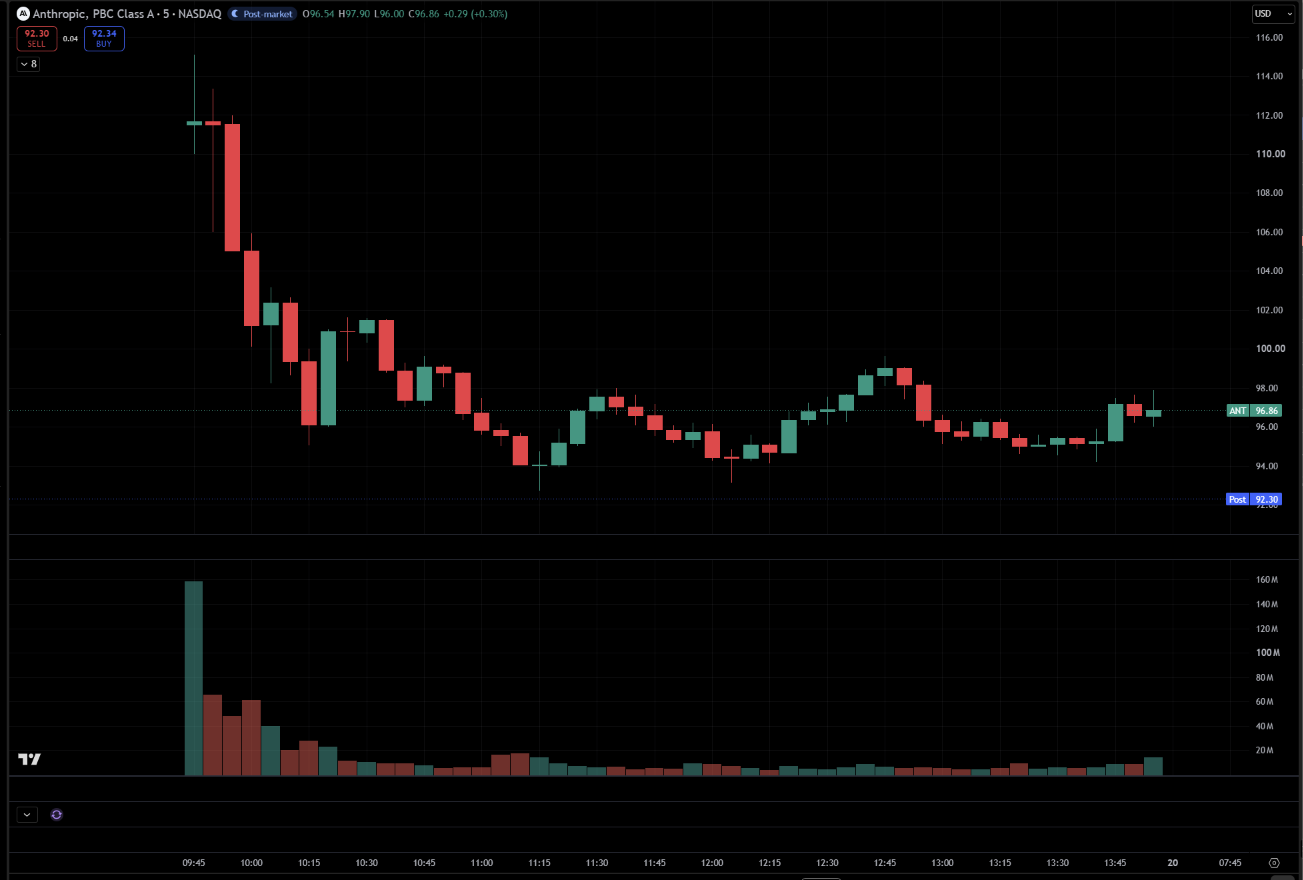
The highly awaited IPO of Anthropic officially launched today. However, rather than injecting fresh momentum into bulls, it has injected significant turbulence into global financial markets against a backdrop of accumulating deep systemic risks. Trading under the ticker ANT, the stock faced immediate heavy selling shortly after the open, falling below its opening price, and plunged further during after-hours trading:
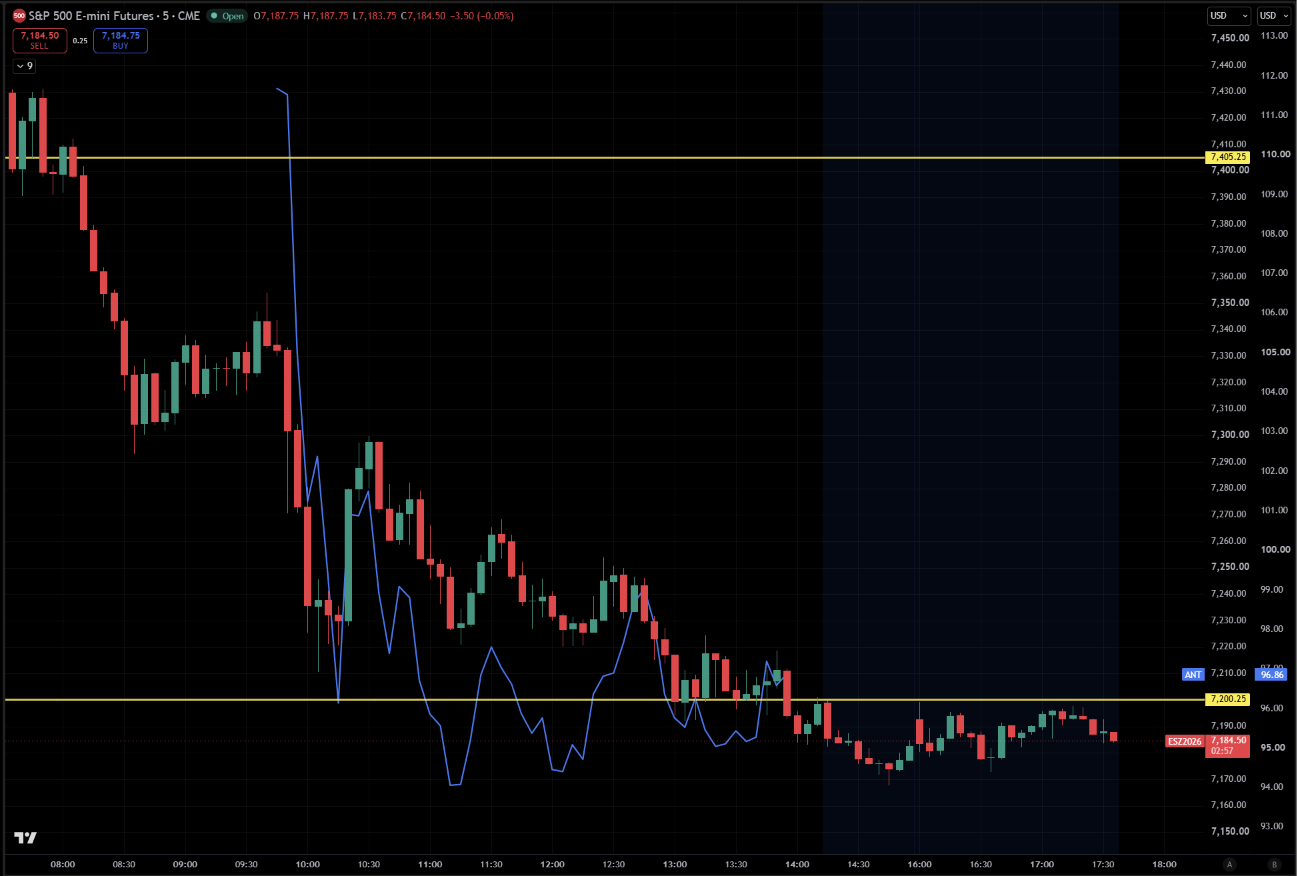
Dragging indices down, the S&P 500 futures (ES) have already effectively broken below the critical watershed level of 7,400 points that I specifically highlighted earlier this week. This major IPO has evolved into the fuse triggering a chain reaction of stampede-style liquidations, directly driving global stock markets lower and beginning to systematically shatter key technical support levels across the broader equity market:
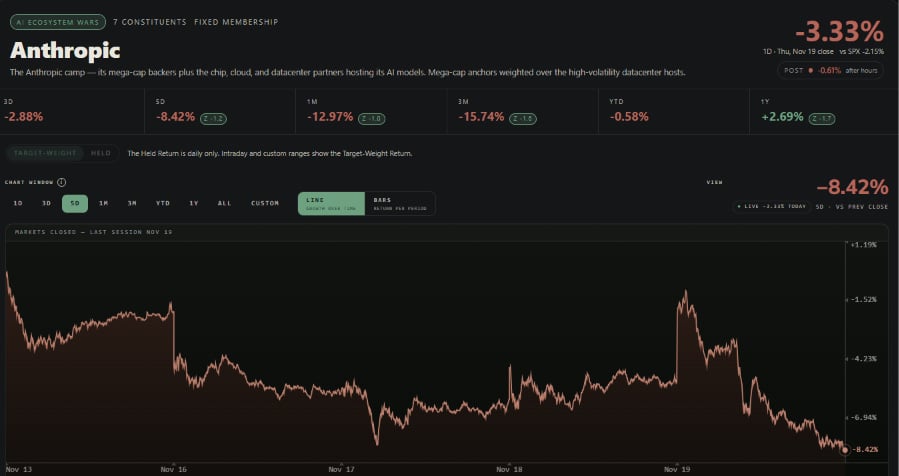
More critically, all supply chain conceptual stocks related to Anthropic (Anthropic Factors) suffered a comprehensive collapse during today's IPO process. This market action clearly validates a systematic de-risking operation surrounding the fundamental outlook of the AI industry: this highly anticipated IPO has essentially functioned as a brutal liquidity clearing event, forcing numerous hedge fund managers to further unwind their long positions.
Feeble Capital Flight to Safety, Cross-Asset Contagion Storm Lurks
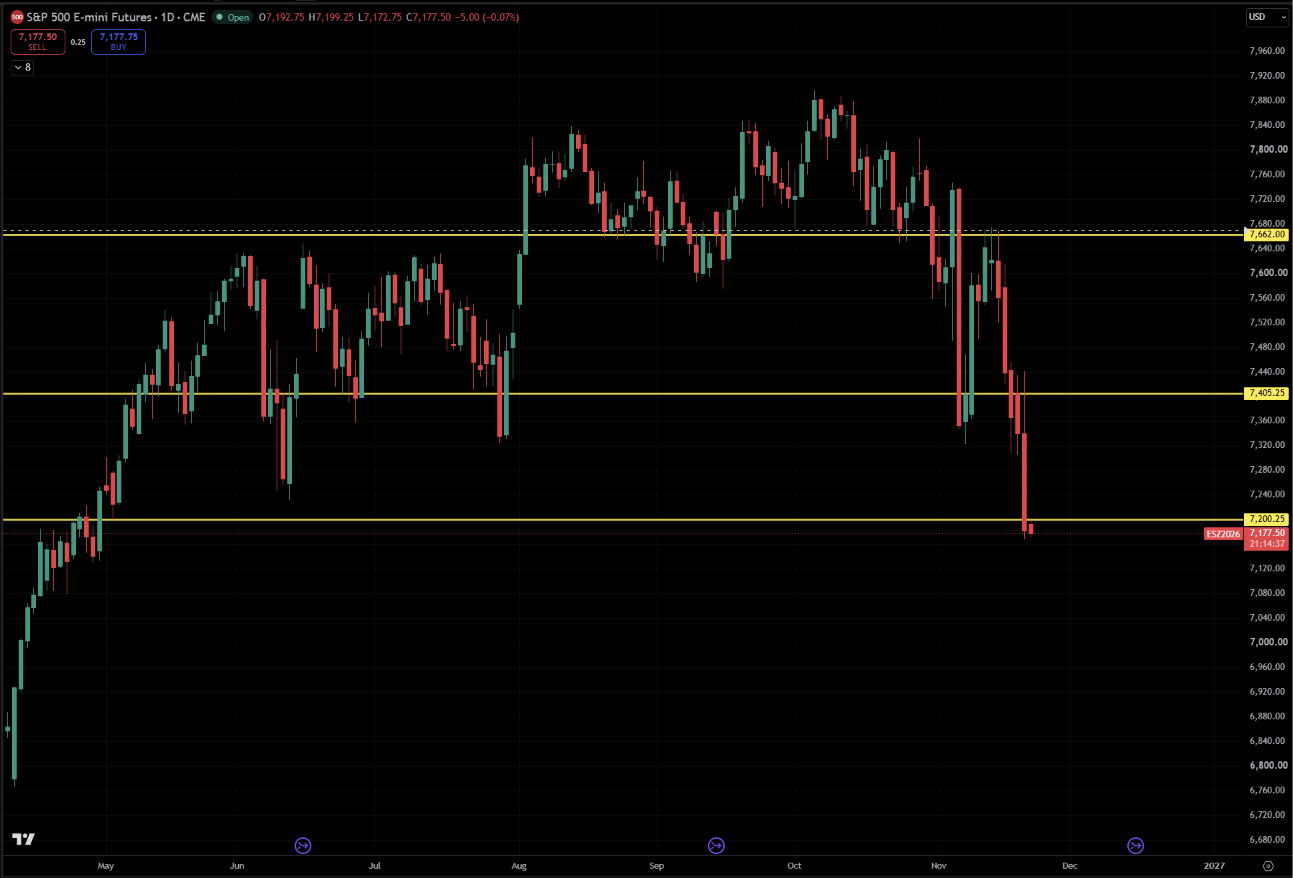
Now is precisely the critical moment to zoom out and examine the deep macro landscape. As I clearly deduced in my previous in-depth report: tactically, once the S&P index loses hold of 7,400, short-term logic immediately shifts entirely to bearish dominance. The market has already moved far away from the 7,400 threshold, and the probability of completely recovering all losses before Friday's close is extremely low:
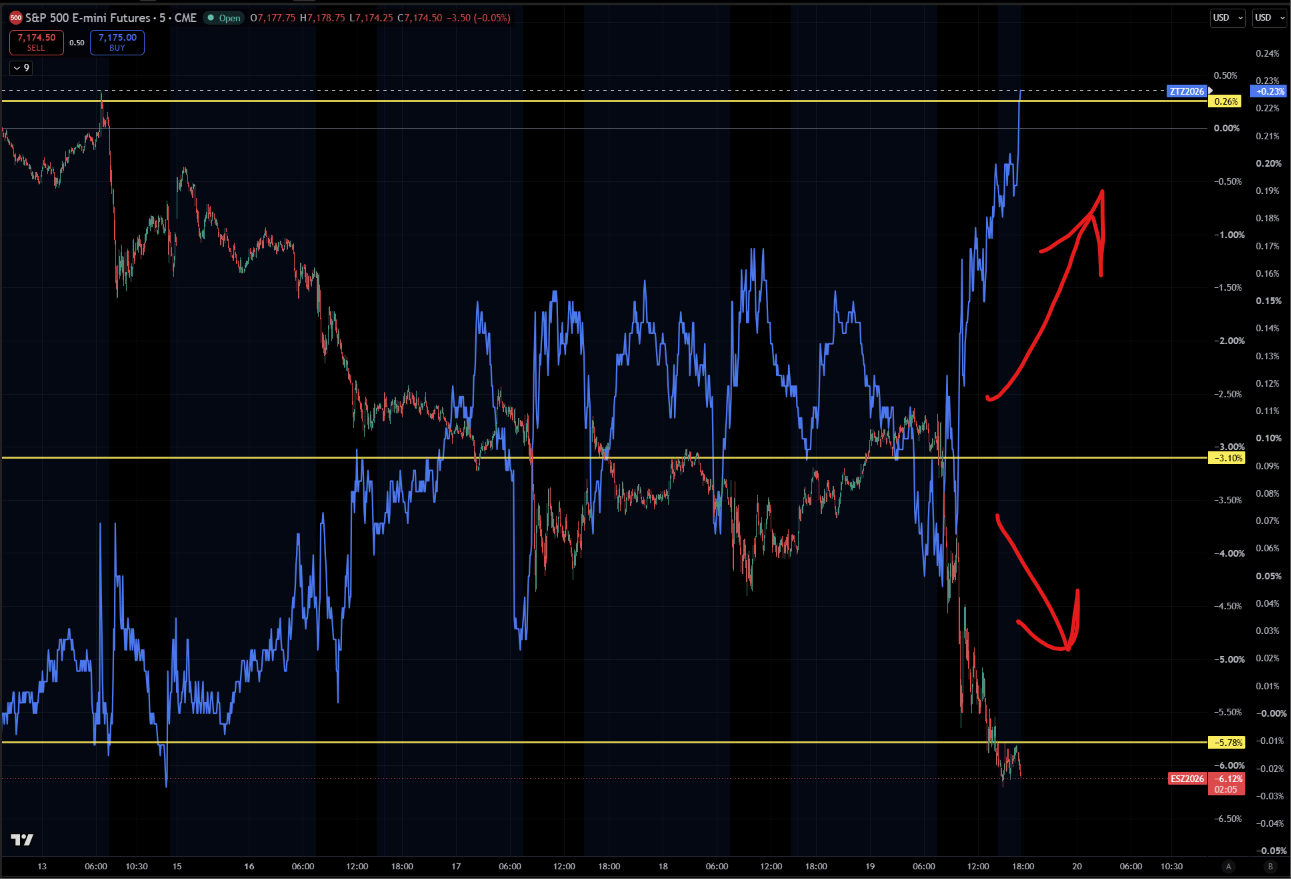
However, for macro capital flows, a more severe core issue lies herein: while S&P 500 futures (ES) face fierce selling pressure, two-year Treasury futures (ZT) are seeing only a modest rebound with exceptionally weak gains. This uneventful response reflects a dangerous signal: the rotation of capital into traditional safe-haven assets and hedging buy orders remain exceedingly thin, gradually bringing deeper macroeconomic crises within the entire financial system to the forefront:
Core Deduction: An Inevitably Restarted Hiking Cycle and Fiscal Noose
The core macro theme running consistently through my recent videos is unequivocal: we are entering a brutal new cycle of forced monetary tightening. The Federal Reserve will inevitably be forced to raise the benchmark rate again; otherwise, it will watch helplessly as long-end Treasury yields spiral completely out of control. A breakdown in long-end rate management would inflict an unbearable, fatal blow on dollar creditworthiness and the sovereign fiscal framework.
The fatal deadlock currently lies in this: today's massive selloff in US equities was almost entirely driven by isolated pressure on mega-cap tech stocks. Cross-asset contagion has not yet fully erupted in the bond or foreign exchange (FX) markets. This implies that if we truly experience a hard landing into a new hiking cycle while global equities remain at these elevated valuation levels, the downside potential for equity assets in the future will be enormous.
Cross-Asset Volatility Divergence: Calm Before the Storm
Please closely monitor the anomaly revealed in the chart below: volatility in the forex market has shown almost no movement, while the equity market's fear gauge, the VIX, has already spiked prematurely:
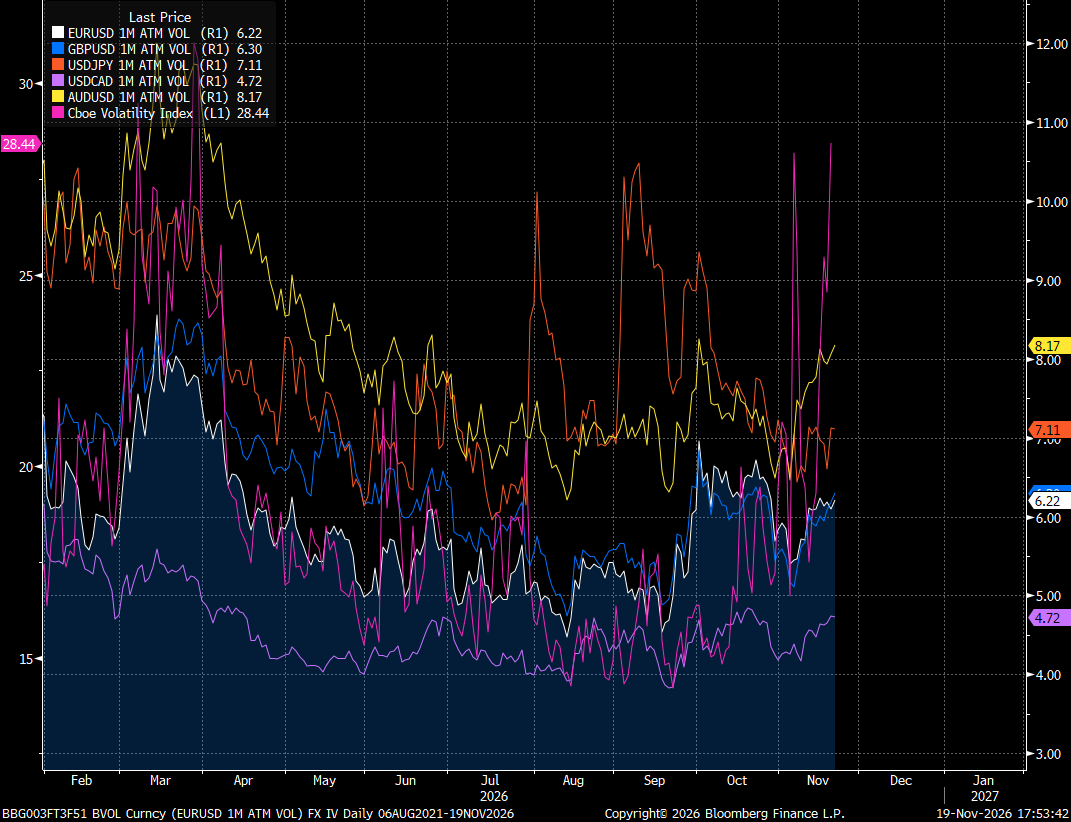
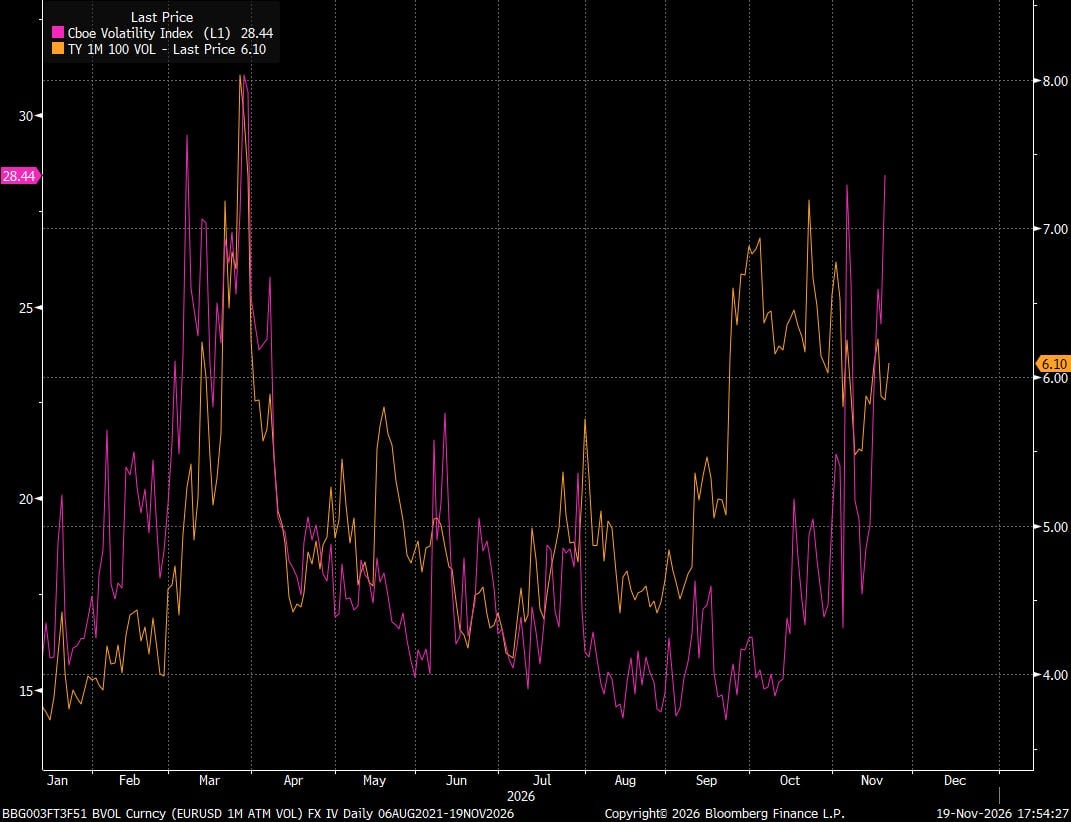
Meanwhile, bond market volatility is currently showing only a mild uptick, likely because rate traders have soberly realized that the consolidation range interest rates may reach in the future is vastly wider than what the Fed's short-term policy fine-tuning presents. The deduction from this deeper logic is: once the Fed is eventually cornered by inflation and fiscal deficits and forced to initiate substantive rate hikes, bond market volatility will explode completely out of control. At that point, it will undoubtedly drag equities into another, much deeper wave of breakdown-driven crashes:
Macro Response: Hoard Cash, Wait for Valuation Extremes
In light of the continuously mounting deep imbalances throughout the macro system, on longer-cycle timeframes, I have maintained a neutral-to-defensive stance on equities for quite some time. As early as this summer, I fully shifted to defense, ceasing bets that the credit cycle would drive asset bubbles higher irrationally.
Currently, I personally hold a massive cash reserve, exercising absolute restraint while waiting for long-end rates to genuinely form a long-term hard ceiling, or for market sentiment to be stretched to extremes with grim pessimism, prompting industrial capital with true long-term perspectives to step in and accumulate cheap chips. The core issue is: our current market position remains far from a truly safe absolute valuation floor. Unless the Fed suddenly pivots to an ultra-dovish stance, or the macro economy inexplicably slips into a flawless Goldilocks economic state (both scenarios carry extremely low probabilities), as long as the S&P index remains suppressed below 7,400, the market's core skew will always remain firmly locked into a bearish bias:
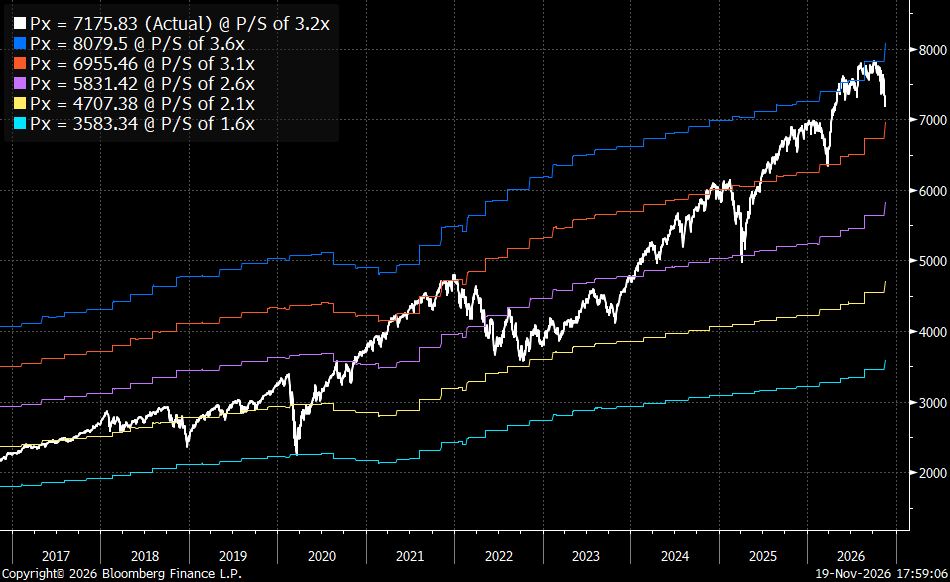
Core Conclusion: This is evidently a high-risk environment characterized by severe volatility swings, where even minor catalysts can instantly and completely rewrite the market's technical landscape. We must soberly recognize that on the deep dimensions of macro cycles, equities as a whole lack offensive win rates and face heavy headwind erosion. Once volatility in the rate market begins to catch up and erupt broadly, it will push the equity market's risk skew toward a more extreme bearish abyss; and the sole lingering question is simply this: before the rate storm fully encircles everything, whether the fundamentals of the AI supply chain itself can achieve miraculous improvement within this fragile window of time.
Join TechFlow official community to stay tuned
Telegram:https://t.me/TechFlowDaily
X (Twitter):https://x.com/TechFlowPost
X (Twitter) EN:https://x.com/BlockFlow_News
 @Globalflows