Polkadot Moves Beyond TVL: 97% Vote Approves Strategic Pivot, Betting on Social Payments and DOT Value Inflow
Author: TechFlow
On November 20 Beijing Time, the on-chain governance body of Polkadot, DOT DAO, officially passed Referendum 1954, approving the new strategy submitted by the Polkadot Community Foundation (PCF) with a 97% support rate. The proposal establishes integrating everyday users into a privacy-protecting, login-free product platform as its core direction, and explicitly states that the actual value created by products must directly flow back to the native DOT token.
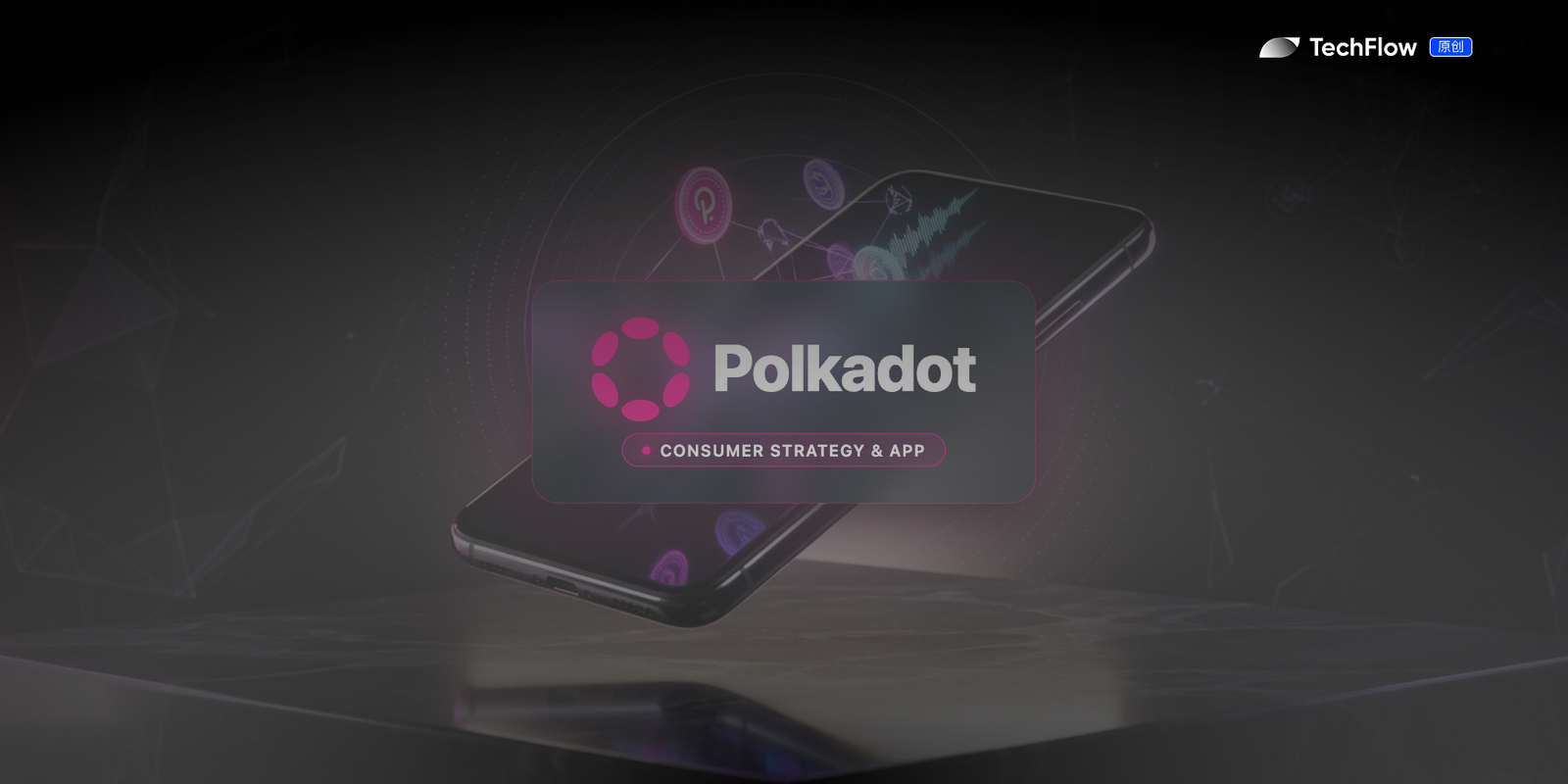
According to the official press release, the Polkadot Community Foundation will deploy the first mobile-first application for its product platform, Polkadot App, based on this. This strategic adjustment simultaneously requires all related entities that have received ecosystem funding from the Polkadot Treasury to fully align their business objectives and development roadmaps with this consumer-grade strategy.
Abandoning Locked Value Metrics, Evaluations Shift to Real Everyday Users
For a long time, public chain ecosystems have commonly used Total Value Locked (TVL) and technical infrastructure scale as core standards for measuring development effectiveness. Polkadot Referendum 1954 clearly reverses this evaluation system, prioritizing direct acquisition of real users over traditional on-chain capital metrics and moving away from purely pursuing capital accumulation scales.
Under the new strategic plan, Polkadot’s future core evaluation metrics will completely shift to the number of active users who regularly and genuinely use the network and its product platforms. This means ecological resources will be significantly redirected from redundant construction of underlying protocols toward consumer-grade front-end applications with high-frequency interaction attributes, thereby addressing the long-standing pain point of public chains lacking mass-market application entry points.
Mobile-First Entry and Frictionless Digital Identity System
To implement the consumer-grade strategy, the Polkadot Community Foundation has announced the launch of the mobile-first Polkadot App as the platform's first core product. The application will be marketed globally to the general public, with its initial phase integrating two high-frequency features: end-to-end encrypted messaging and digital cash payments, attempting to enter daily social and payment scenarios using lightweight tools.
At the account architecture level, the new platform abandons the traditional Web2 account-and-password registration model, promoting a "no-login-required" mechanism where users maintain full control over their data. Users only need one portable decentralized digital identity to seamlessly access various services within the platform, eliminating the need to repeatedly open accounts and transfer private data across different applications.
dotUSD Stablecoin Loopback and Token Value Flow-Back
In its tokenomics design, the new strategy attempts to establish a value transmission path between consumer scenarios and the native DOT token. According to details disclosed in Referendum 1944, Polkadot will introduce a permissionless stable-value token system called dotStables, which is over-collateralized by DOT, with the first launched asset being USD-pegged dotUSD.
This mechanism aims to expand circulation demand for dotUSD through daily consumption and digital cash payment scenarios, thereby driving the real locking and usage expenditure of the underlying collateral DOT in reverse. By tying payment clearing to underlying assets, Polkadot seeks to overcome the past dilemma of governance tokens lacking actual cash flow capture capabilities, establishing a closed loop where product revenues feed back into the token.
Mandatory Treasury Alignment and Ecosystem De-siloing
Beyond restructuring products and token mechanisms, Referendum 1954 also imposes strict constraints on funding allocation rules within the Polkadot ecosystem. The resolution requires all project teams and entities that apply for and receive ecosystem funding to remain aligned with the platform strategy centered on user growth, thereby curbing the dispersal of funds into technical experiments lacking tangible user conversion.
By coordinating the rollout of a unified-entry mobile application, native stablecoins, and identity standards, Polkadot is breaking the siloed state of its parachains. Its focus is extending from pure financial trading to daily payments and communications, attempting to establish a direct commercial accumulation mechanism between genuine user retention and token value flow-back.
Join TechFlow official community to stay tuned
Telegram:https://t.me/TechFlowDaily
X (Twitter):https://x.com/TechFlowPost
X (Twitter) EN:https://x.com/BlockFlow_News
 深潮TechFlow