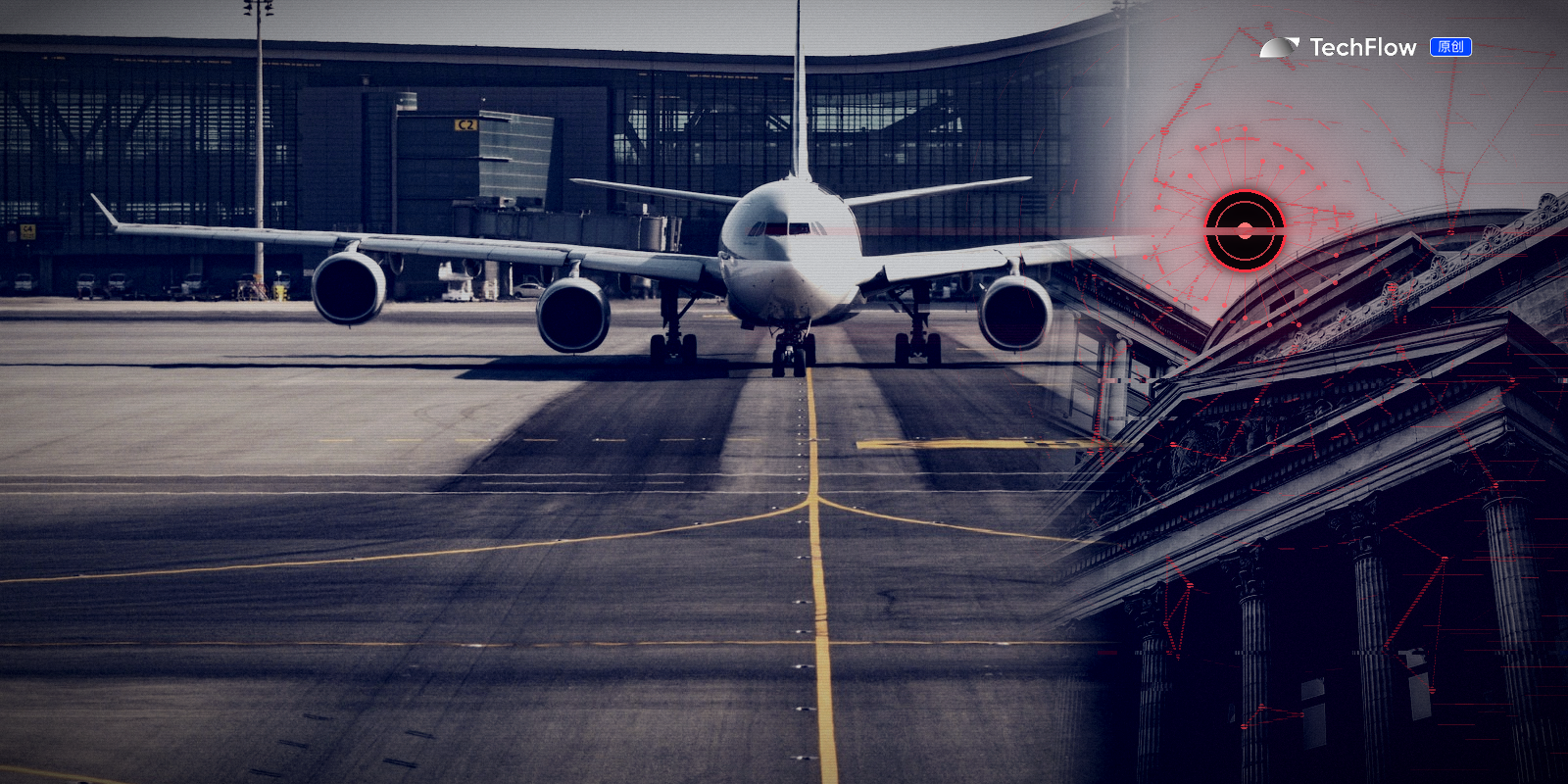
US Airlines and Banks Suffer Consecutive Outages, Yet Politicians Shift Blame to AI Hackers
On November 16, 2026, U.S. Secretary of Homeland Security Markwayne Mullin stood before media cameras and offered a sci-fi explanation for the banking, airline, and office software outages that plagued the country over the past few days. He hinted that advanced AI systems capable of writing and modifying their own code were likely the unseen forces behind the collapse of U.S. infrastructure.
The claim sounded like the opening scene of a Hollywood cyber-thriller. Yet earlier the same day, during an interview with Fox News, Mullin had just stated personally that he was 98% certain these incidents were independent of each other and showed no signs of malicious attacks.
It only took a few hours for him to reverse course.
Experts in cybersecurity and systems engineering interviewed by Axios quickly dismantled this sci-fi narrative with cold, hard incident reports. Monitoring platform Downdetector received nearly 6 million outage reports in the seven days leading up to November 16, shattering records from the past year. Microsoft 365 led the chain reaction by crashing on November 12, paralyzing Outlook email and Teams across dozens of countries for a full day. This was followed by the Federal Aviation Administration issuing the longest nationwide ground stop since the September 11 attacks. By November 16, JPMorgan Chase’s online banking and interbank clearing systems faced severe delays, while United Airlines flights suffered widespread delays due to system failures.
Error-filled screens are the easiest way to induce hallucinations. Security expert Bruce Schneier labels this psychological tendency as "looking for patterns in random events." Faced with a string of misfortunes, people can’t help but imagine a meticulously coordinated cyber offensive.
A Vintage Router from 2001, Bringing Down America’s Air Traffic Network
Once you open the server room doors for each incident, what lies inside is nothing like awakened artificial intelligence.
An unremarkable communications site in Arkansas laid bare the absurd truth behind the nationwide aviation shutdown. On November 13, 17 of the nation's 22 high-altitude air traffic control centers lost communications. More than 3,500 flights already in the air were forced to make emergency landings, grounding the entire country for 4 hours and 21 minutes. The direct cause of this disaster? Contracting firm L3Harris was simply replacing a Cisco router manufactured in 2001 within the server room. According to the original plan, this machine should have been decommissioned back in 2006, but instead it was forced into service for another two decades.
The moment the new equipment was powered on, the legacy network instantly crashed.
As engineers connected the brand-new Juniper router, the device began broadcasting massive volumes of data packets as normal procedure dictated. However, the underlying copper-wire time-division multiplexing circuits used in the U.S. air traffic control system—an architecture dating back to the last century—simply couldn't withstand the data deluge from modern hardware, causing instant paralysis.
In the aftermath, the FAA urgently disabled the broadcast function on all 69 routers of the same model across the network. Furious, Juniper's parent company HPE immediately issued a statement pushing back hard, asserting that their equipment operated perfectly according to configuration specifications, with zero hardware defects.
The causes of death for the other three corporate giants were equally mundane. Microsoft 365 went down because a routine update in July 2026 planted a code flaw; the vulnerability lay dormant for four months before surging traffic overwhelmed the servers. JPMorgan Chase experienced delayed interbank transactions due to internal software vulnerabilities tied to local hardware. United Airlines suffered delays of approximately one hour per flight because an internal system responsible for calculating aircraft weight and balance malfunctioned.
Four institutions, four histories of mismanagement. Their only common denominator is the heavy burden of technical debt they all carry.
Why Washington Prefers "AI Conspiracy Theories"
Admitting you failed to properly maintain aging, dilapidated infrastructure costs votes.
If officials honestly confessed to the public that the national air traffic network was still running on 25-year-old copper wires and overage routers, it would amount to admitting chronic underfunding of maintenance and severe regulatory failure at the public sector level. Over the past eighteen months, the FAA has already faced seven serious communication breakdowns. Even more embarrassing, the very day after the nationwide ground stop was lifted, media captured footage of Mullin boarding a government jet to Louisiana to watch a college football game live.
Blaming mysterious, incomprehensible AI systems for the disaster is obviously far more dignified. In political rhetoric, AI represents cutting-edge advancement, complexity, and acts of nature. Packaging a crude operational failure as an "advanced AI assault on national infrastructure" conveniently sidesteps accountability while paving the way for upcoming budget negotiations.
Immediately following the resumption of flights, whispers emerged from the White House claiming that the previously approved $12.5 billion in retrofit funding fell drastically short, requiring an additional $50 billion to upgrade the air traffic control system.
Nevertheless, while debunking rumors, experts left a sobering caveat. Large models are detecting and exploiting software vulnerabilities at an increasingly rapid pace, forcing engineers across major global organizations into a frantic race for patches. Where developing core code once required rigorous iterative testing, AI now generates hundreds or thousands of lines of new code in seconds. Code output speed has increased tenfold, while human review time for logic verification and reliability has been compressed to its absolute minimum.
Liz Fong-Jones, a Distinguished Technologist at Honeycomb, compares this state to cascading failure in urban traffic. Once a single traffic light breaks, vehicles instantly flood every surrounding side street, ultimately causing a citywide deadlock.
What truly threatens modern society has never been the self-aware killer AI depicted in movies.
Humanity is pouring poor-quality concrete onto crumbling foundations at ten times the rate. When the system finally collapses under its own weight on some future day, politicians will merely point to distant AI systems and shout "catch the thief," calmly continuing to sweep the dust out of the server rooms under the rug.
Join TechFlow official community to stay tuned
Telegram:https://t.me/TechFlowDaily
X (Twitter):https://x.com/TechFlowPost
X (Twitter) EN:https://x.com/BlockFlow_News
 深潮TechFlow