From "Casino" to "Financial Data Infrastructure": Do Prediction Markets Actually Have Real Value?
Author: Ryan Yoon (Tiger Research)
Compiled by: TechFlow
TechFlow Summary: As Polymarket and Kalshi shine in global mainstream elections and economic events, are prediction markets merely "new casinos" disguised as decentralization, or "next-generation financial data infrastructure" with genuine utility? In this in-depth research report, Tiger Research systematically traces the nearly 40-year development history of prediction markets. Through rigorous data analysis and empirical comparison, it reveals that prediction markets, leveraging four core mechanisms—skin in the game, real-time continuous updates, full-domain probability distributions, and objective ex-post verification—comprehensively outperform traditional static polls and expert surveys in tracking election trends, inflation and rate cut expectations, public health early warnings, and even corporate decision-making. Prediction markets are reshaping the global information pricing system, becoming an indispensable high-frequency monitoring foundation for institutions and policymakers.

Core Insights
• Driven by real financial "skin in the game," prediction markets deliver precise probability distributions through dynamic real-time updates, with accuracy consistently matching or even surpassing traditional polls, expert surveys, and economic forecasts.
• Prediction markets have transcended simple sports and election forecasting, evolving into critical macroeconomic and geopolitical data infrastructure, widely adopted by mainstream financial media, central bank researchers, and institutional-level market platforms.
• To establish prediction market data as a trusted global decision-making infrastructure, major platforms must deepen liquidity to resist market manipulation, actively engage with regulators to reposition prediction markets as monitoring tools, and maintain open, transparent data supported by independent research communities.
From Wagering to High-Value Data
The first report explored the definition and operating mechanisms of prediction markets, while the second reviewed significant regulatory developments. The core argument of both reports is that prediction markets are fundamentally high-value data sources, not merely venues for wagering.
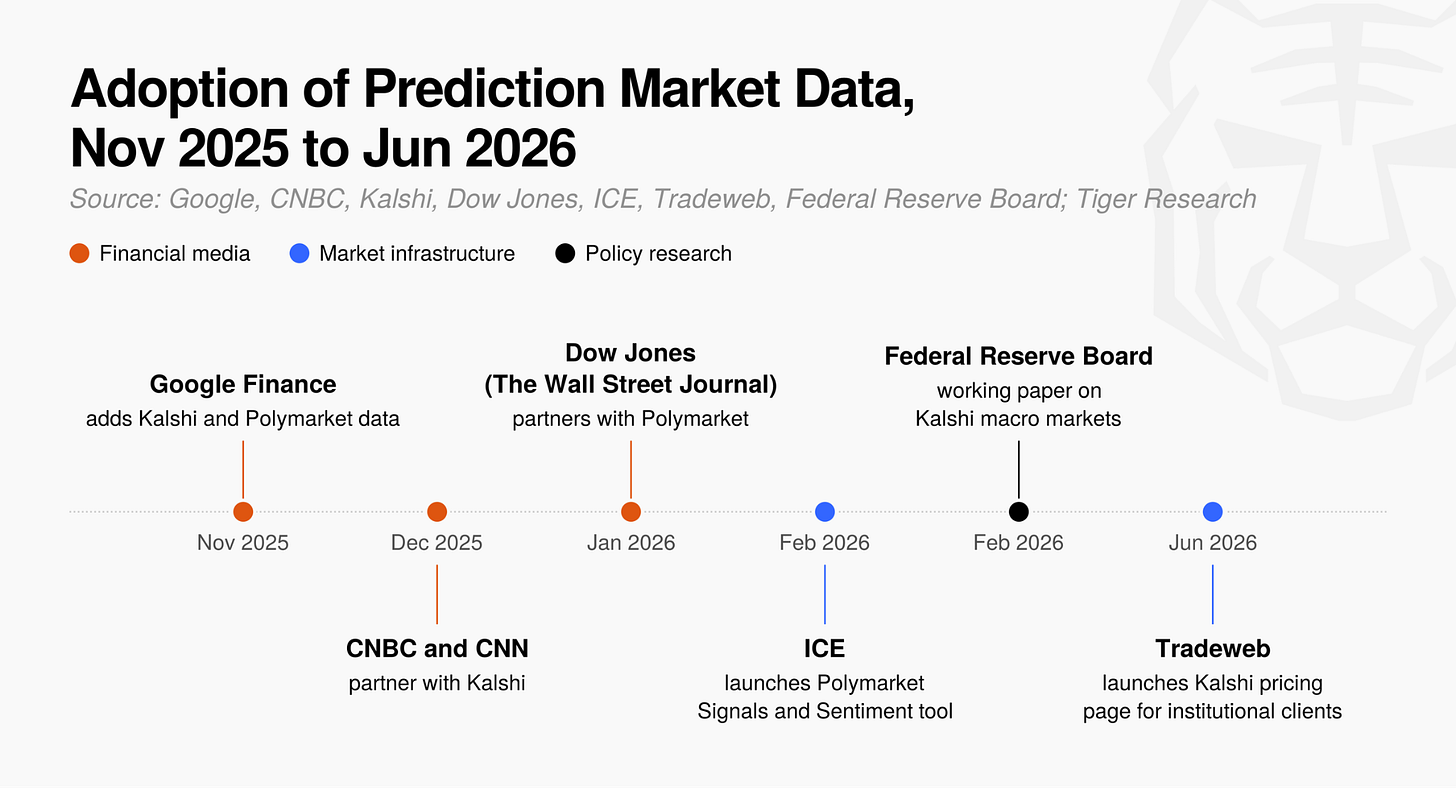
Figure 1: Prediction markets are evolving from simple betting platforms into high-value financial data infrastructure.
Mainstream financial media and financial market infrastructure providers have begun extensively incorporating prediction market data, fully demonstrating its core value.
Google Finance, CNBC, CNN, and The Wall Street Journal (WSJ) now display win probabilities from prediction markets; Intercontinental Exchange (ICE), parent company of the New York Stock Exchange, and electronic trading platform Tradeweb for bonds and other assets, currently distribute prediction market data alongside their existing market data to institutional clients.
A Federal Reserve Board working paper similarly describes prediction market data as benchmark indicators for macroeconomic expectations such as interest rate decisions, inflation, unemployment rates, and GDP growth.
Federal Reserve economists and co-authors define Kalshi’s prediction market odds data as “a high-frequency, continuously updated, and richly distributed data benchmark that holds immense value for both researchers and policymakers” (Diercks, Katz and Wright, 2026). Consequently, prediction markets are gradually being viewed by mainstream entities as rigorous data sources rather than mere gambling websites.
The entire industry has fully recognized the value of prediction market data and put it into practice. As the concluding research report in the prediction market series, this report will delve into the actual utility of this data by addressing three core questions:
• How do prediction market prices transform into high-value data?
• In what specific domains are prediction market data applied?
• Are current prediction markets genuinely producing such high-quality data?
How Prediction Market Prices Transform Into High-Value Data
As stated in the first report, the core mechanism of prediction markets is the binary contract, which typically pays $1 or $0 based on whether a specific event occurs. For example, if a “will rain tomorrow” contract trades at $0.62, it implies that market participants estimate a 62% probability of the event occurring.
Therefore, the prediction market price ($0.62) intuitively serves as a measure of the future event’s probability (62%). Four structural characteristics explain why these prices constitute high-value data relied upon by global financial institutions and media in actual decision-making, rather than inconsequential odds figures:
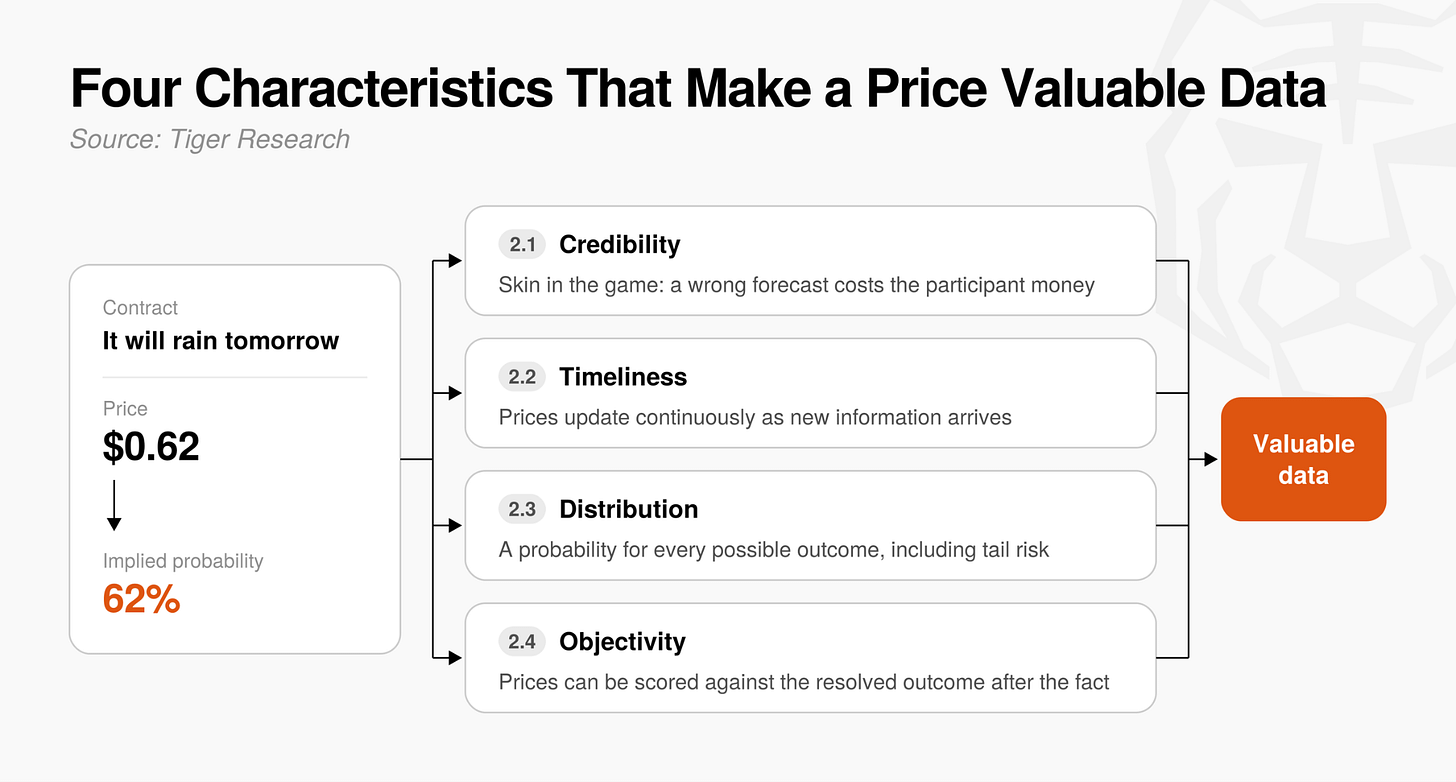
Figure 2: Four core characteristics of how prediction market prices transform into high-value data: skin in the game, real-time updates, probability distribution, and ex-post verification.
Credibility From Skin in the Game
Some view wagers on prediction markets as pure gambling, but putting actual money on the line grants participants genuine "skin in the game."
"Skin in the game" means participants must bear real risk and responsibility for their decisions. Unlike verbal statements that come at no cost, an incorrect forecast results in tangible financial loss for the participant, meaning they will only incorporate carefully vetted information and true convictions into their quotes.
When numerous individual predictions with skin in the game are aggregated, and provided the market has sufficient liquidity, prediction market prices evolve into highly reliable probability data.
Timeliness From Continuous Real-Time Updates
Traditional polls and expert surveys only provide static snapshots of sentiment at the time of the survey, making it difficult to capture rapidly evolving market shifts. For instance, if an external economic shock or emergency policy announcement occurs today on the eve of tomorrow’s central bank interest rate decision, polls completed days earlier or expert surveys updated monthly simply cannot reflect this change.
In stark contrast, prediction market prices react instantaneously the moment new information enters the market. Whenever breaking news, unexpected events, or regulatory announcements occur, participants quickly rebalance their positions, driving uninterrupted real-time price updates.
Thus, prediction market prices are far from stagnant historical probabilities; they are highly timely, dynamic data that evolves in real-time alongside unfolding developments.
Probability Distributions Covering All Outcomes
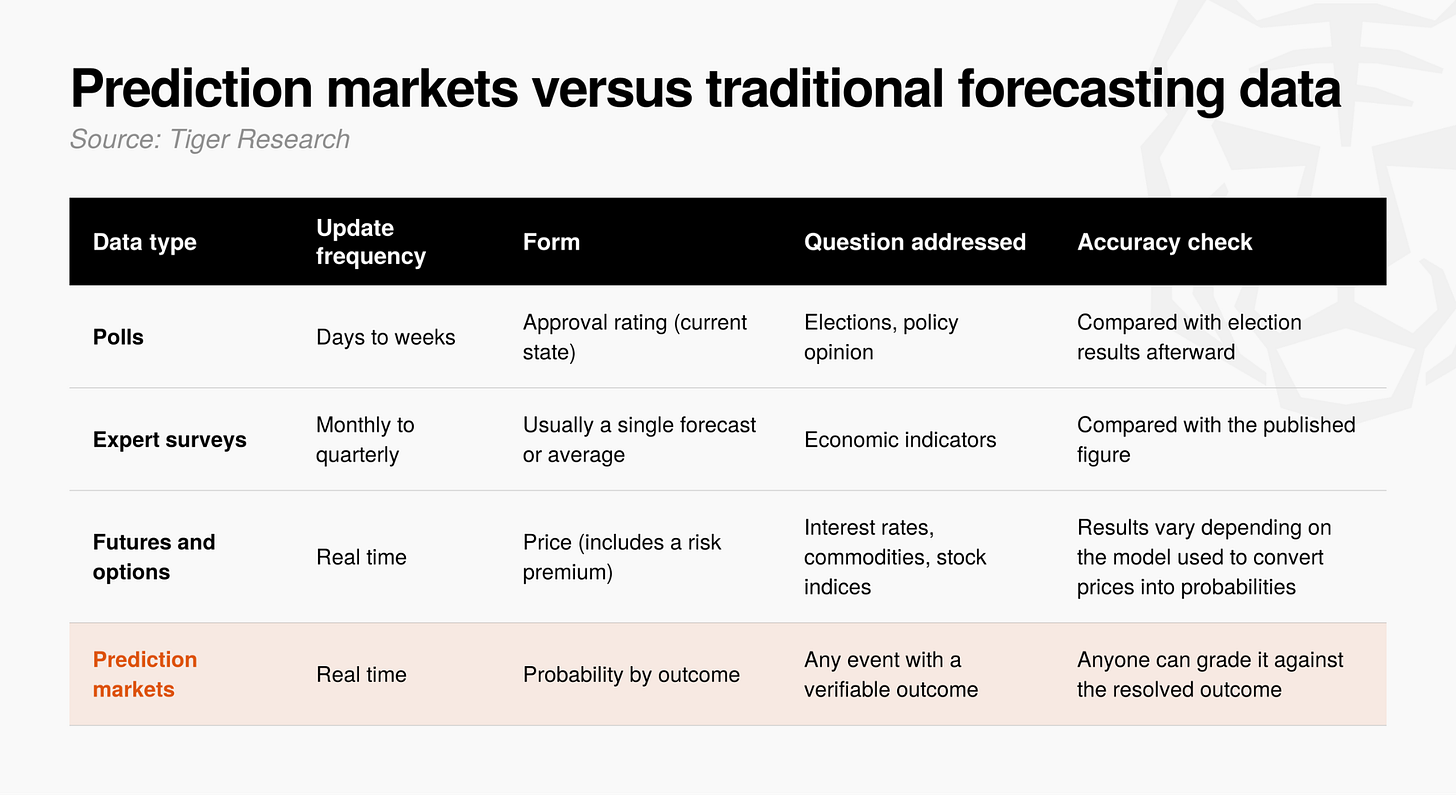
Figure 3: Illustration comparing point-estimate predictions with full-domain probability distributions (covering all scenarios and tail risks).
Traditional metrics focusing on single averages or peak values often sacrifice substantial information by forcibly compressing diverse, complex viewpoints into one isolated number. For example, when forecasting central bank rate cuts, conventional expert surveys typically yield only a single average expectation (e.g., “25 basis points”), failing to capture probability distributions across various scenarios contingent on subtle shifts in committee members’ rhetoric.
Conversely, prediction markets generate complete probability distributions for every possible outcome. These distributions simultaneously display the probability of all potential scenarios (e.g., 20% hold steady, 70% cut by 25 bps, 10% cut by 50 bps) and manifest as continuous time series.
This enables prediction markets to not only measure the most likely baseline scenario but also effectively quantify tail risks—events with extremely low probabilities that would cause severe impact if they occurred. Therefore, what prediction markets offer extends far beyond a single-point forecast; their full-domain probability distributions provide comprehensive quantitative support for assessing future market volatility and potential risks.
Objectivity From Ex-Post Verification
The cornerstone of prediction market data earning deep trust in academia and global financial markets lies in the fact that its outcomes are fully and objectively verifiable ex-post.
While conventional expert forecasts and surveys can verify accuracy once outcomes materialize, the evaluation process usually allows for significant subjective interpretation, with institutions tending to selectively cite favorable track records. In contrast, prediction market data is fully recorded as clear quantitative prices (probabilities) and settles definitively at either 0 or 1 upon expiration. Consequently, its accuracy assessment adheres to strict mathematical precision, leaving no room for subjective embellishment.
Anyone can transparently and accurately cross-reference historical price trajectories with actual realized outcomes. Because this objective record cannot be altered by anyone and is publicly accessible at any time, prediction market prices completely transcend subjective speculation: professional data teams and authoritative institutions can rigorously validate their historical accuracy, providing the most compelling foundation for adopting them as core decision-making references.
Where Is Prediction Market Data Applied?
Although prediction market data has only recently garnered widespread public attention, its origins trace back to the Iowa Electronic Markets (IEM) in the 1980s. Historically, its most renowned application has been election forecasting; however, as prediction markets have expanded into broader macroeconomic domains in recent years, their practical utility has become increasingly apparent.
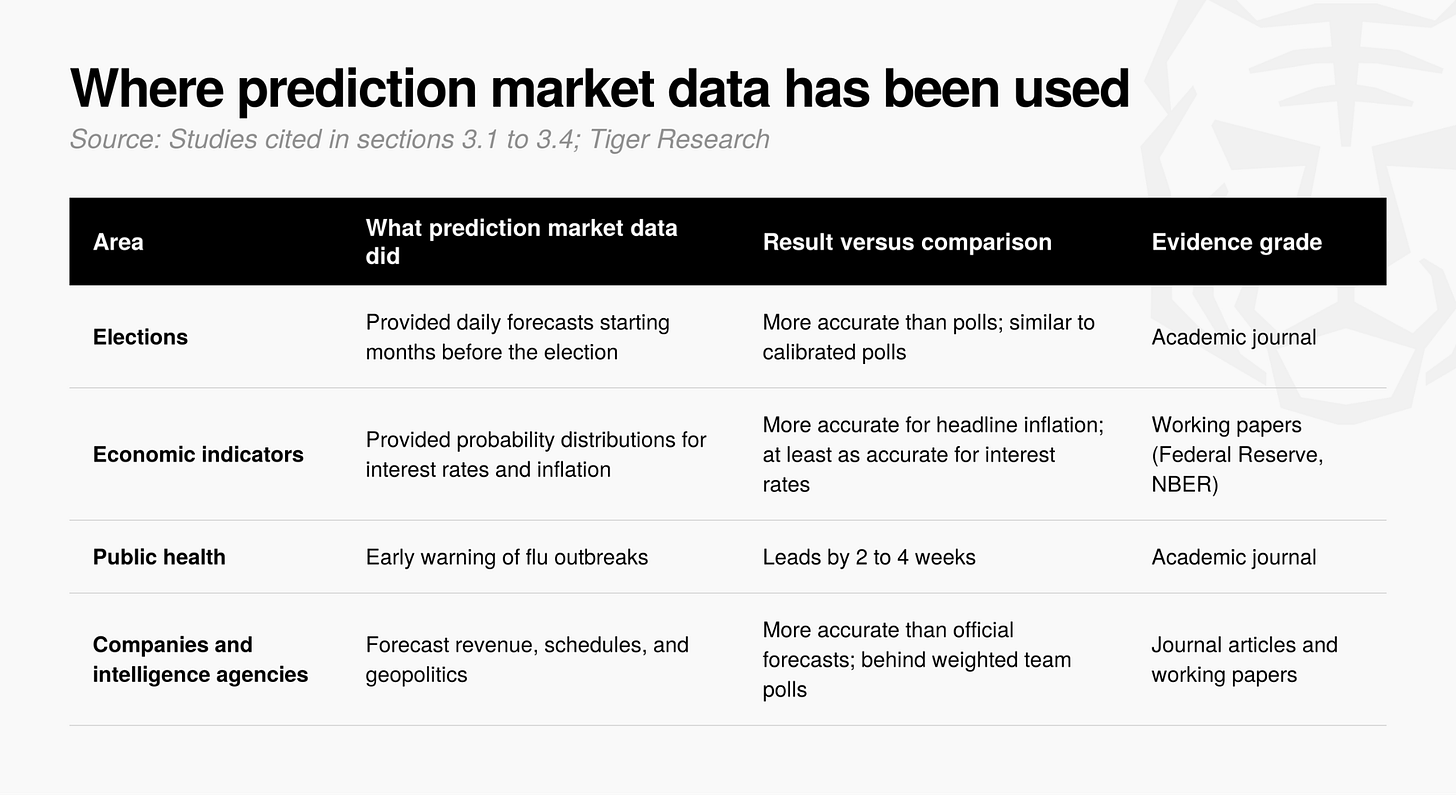
Figure 4: Broad application scope of prediction market data across elections, macroeconomics, public health, and corporate intelligence.
Elections: Earlier and More Accurate Than Polls
The classic case first demonstrating the immense potential of prediction markets is the aforementioned Iowa Electronic Markets (IEM). Researchers systematically compared IEM’s performance across five U.S. presidential elections from 1988 to 2004 against 964 traditional poll results, finding that IEM’s predictive accuracy significantly outperformed contemporaneous polls in 74% of cases (Berg, Nelson and Rietz, 2008).
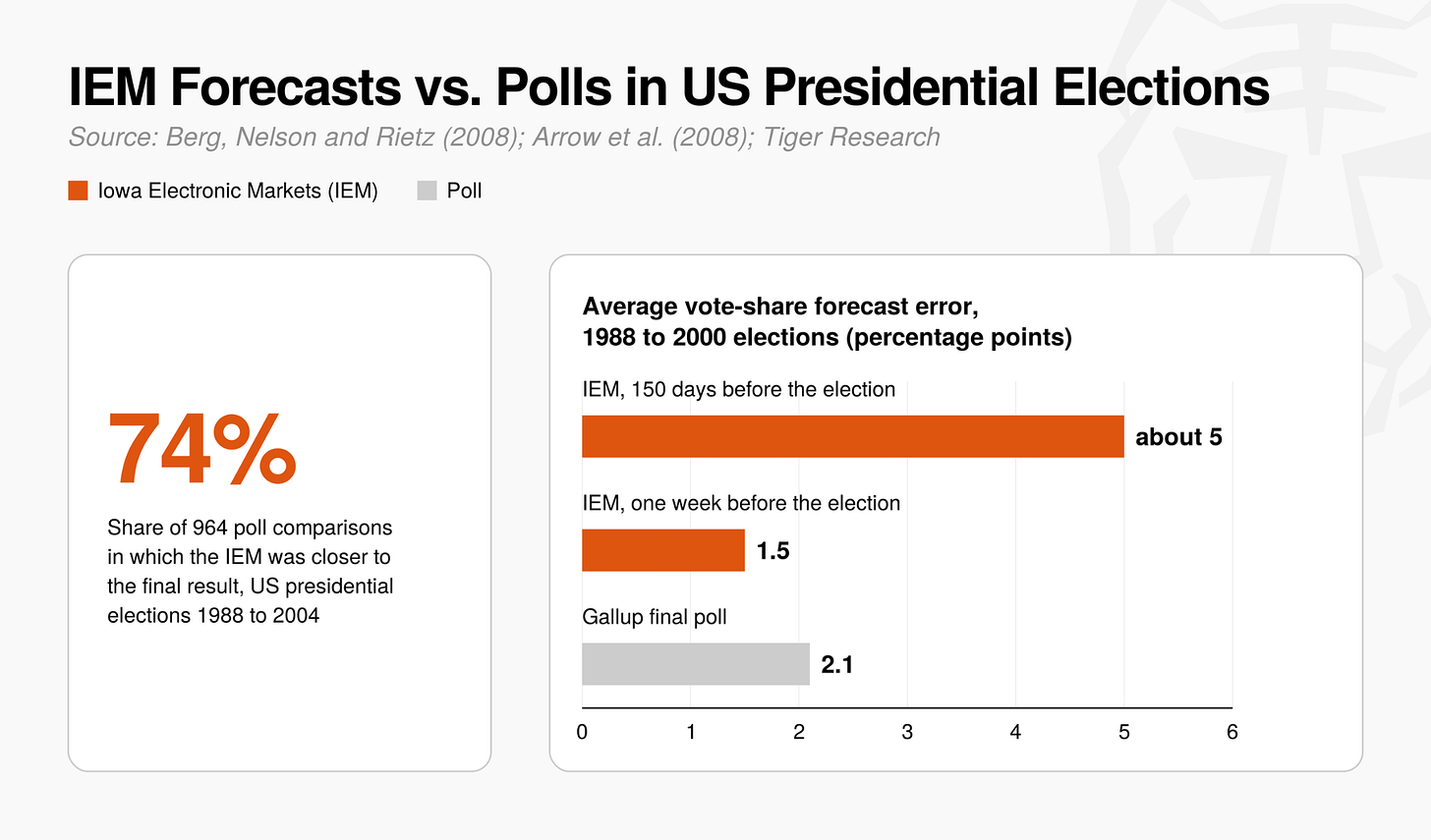
Figure 5: Iowa Electronic Markets (IEM) demonstrates significantly higher predictive accuracy than traditional polls across past U.S. presidential elections.
This predictive advantage is not limited to the immediate run-up to elections. Data analysis of the 1988 to 2000 elections shows that one week before voting, IEM’s vote share prediction error (deviation from actual results) averaged only 1.5 percentage points, lower than Gallup’s final poll error of 2.1 percentage points; even during early stages 150 days out, the average prediction error remained around 5 percentage points (Arrow et al., 2008).
However, the two cannot be directly equated in terms of metric nature. Polls function as contemporaneous state indicators asking “who would you vote for if voting today?”; whereas prediction market prices serve as forward-looking indicators pricing “who will ultimately win on election day.”
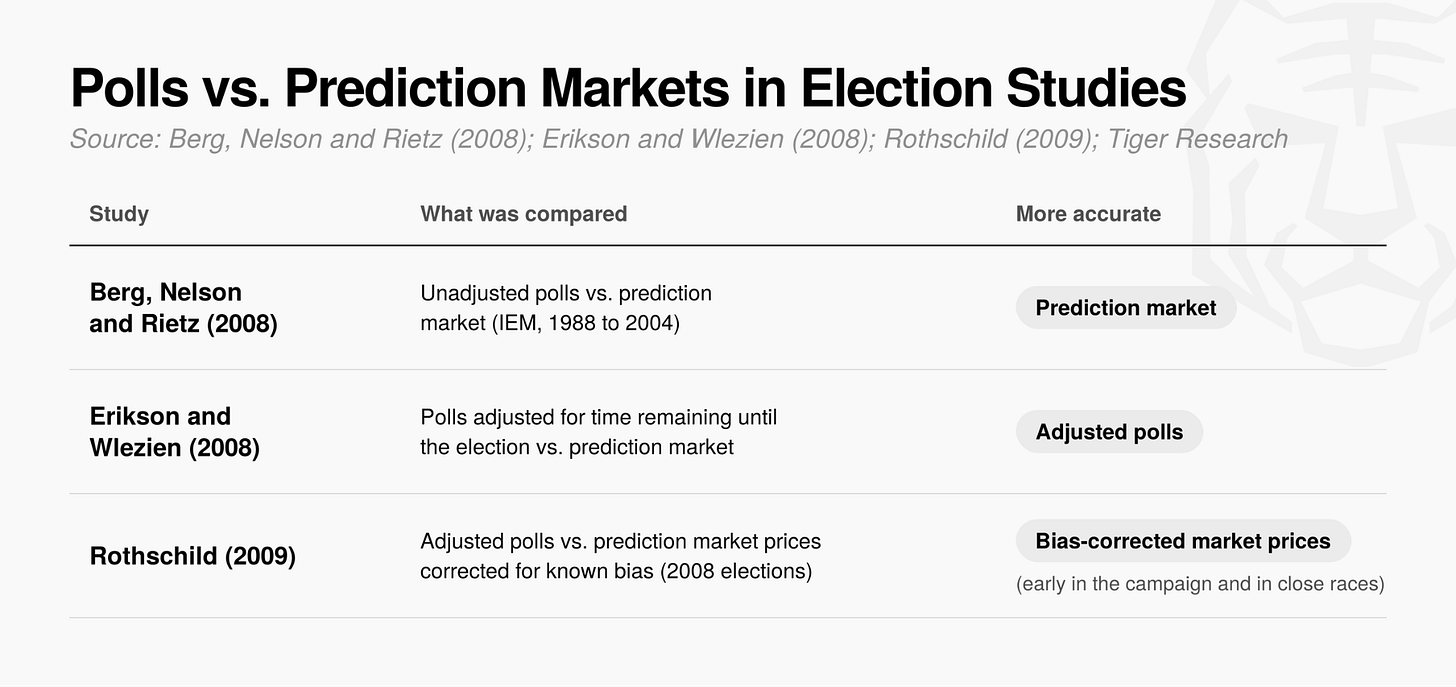
Figure 6: Comparison between the contemporaneous sentiment snapshot of polls and the forward-looking expectation pricing mechanism of prediction markets.
In fact, one study found that when poll data is temporally adjusted based on days remaining until the election, its accuracy slightly surpasses that of prediction markets (Erikson and Wlezien, 2008). However, another in-depth analysis of the 2008 election noted that once known structural biases in prediction markets are calibrated, their predictive power remains comprehensively superior to adjusted polls during early campaign phases and intensely close matchups (Rothschild, 2009).
Therefore, the precision of prediction market prices not only significantly exceeds unadjusted traditional polls but can also hold its own against highly calibrated advanced poll models. More importantly, prediction markets provide daily high-frequency forward-looking expectations starting months before the election, generating incremental value that traditional surveys cannot match.
Economy: Real-Time Insight Into Macroeconomic Expectations
For macroeconomic indicators like interest rates, inflation, and employment, accurately gauging market expectation levels prior to official releases holds immense practical significance.
Historically, market expectations have primarily been measured through expert surveys or traditional financial derivatives prices. However, surveys are typically updated only every few weeks, severely lacking timeliness; futures prices offer only a single point estimate, while option-implied distributions exist only for a limited set of instruments like interest rates and headline inflation. Conversely, prediction markets directly generate full-dimensional real-time probability distributions by pricing each potential outcome separately.
This quantifiable practical value was well-documented as early as the economic derivatives markets between 2002 and 2005. Analysis of binary options trading tied to indicator release values such as non-farm payrolls, retail sales, and initial jobless claims showed that market-implied forecasts matched or even surpassed the average accuracy of expert surveys, with market-implied probability distributions closely aligning with actual event frequencies (Gürkaynak and Wolfers, 2006).
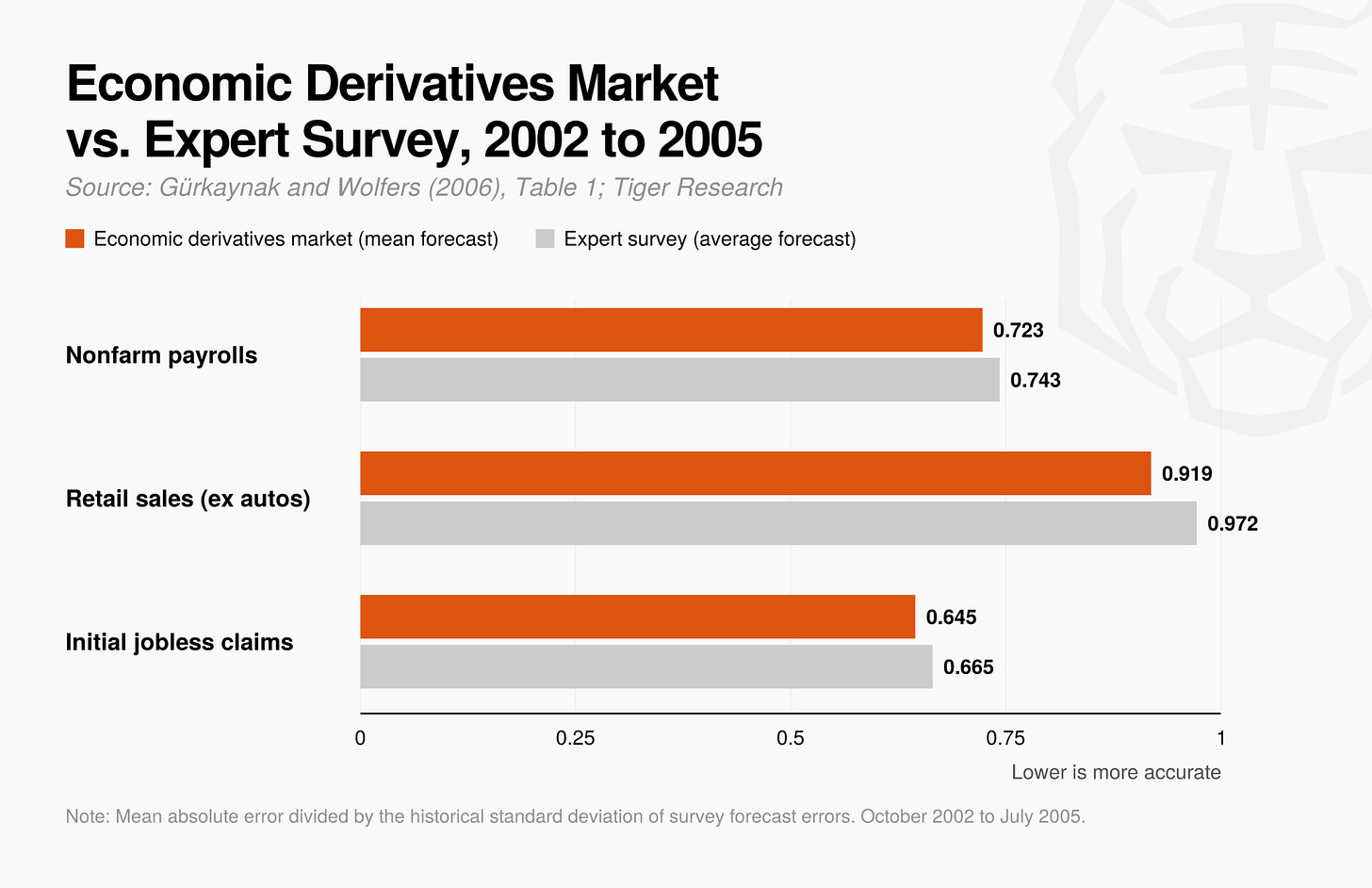
Figure 7: Forecasting performance of the economic derivatives market jointly operated by Deutsche Bank and Goldman Sachs on non-farm payroll and retail data.
A recent Federal Reserve Board working paper (Diercks, Katz and Wright, 2026) thoroughly evaluated prediction market performance against existing benchmarks. The authors found that Kalshi’s median and mode predictions for the federal funds rate achieved perfect predictive accuracy one day before FOMC meetings, significantly outperforming federal funds futures over this timeframe. Compared to Bloomberg consensus estimates, Kalshi demonstrated significantly higher accuracy in forecasting headline CPI inflation, while performing statistically comparably on core CPI and unemployment rates. This indicates that prediction markets have already surpassed traditional benchmarks on certain key indicators and possess equivalent capabilities across other domains.
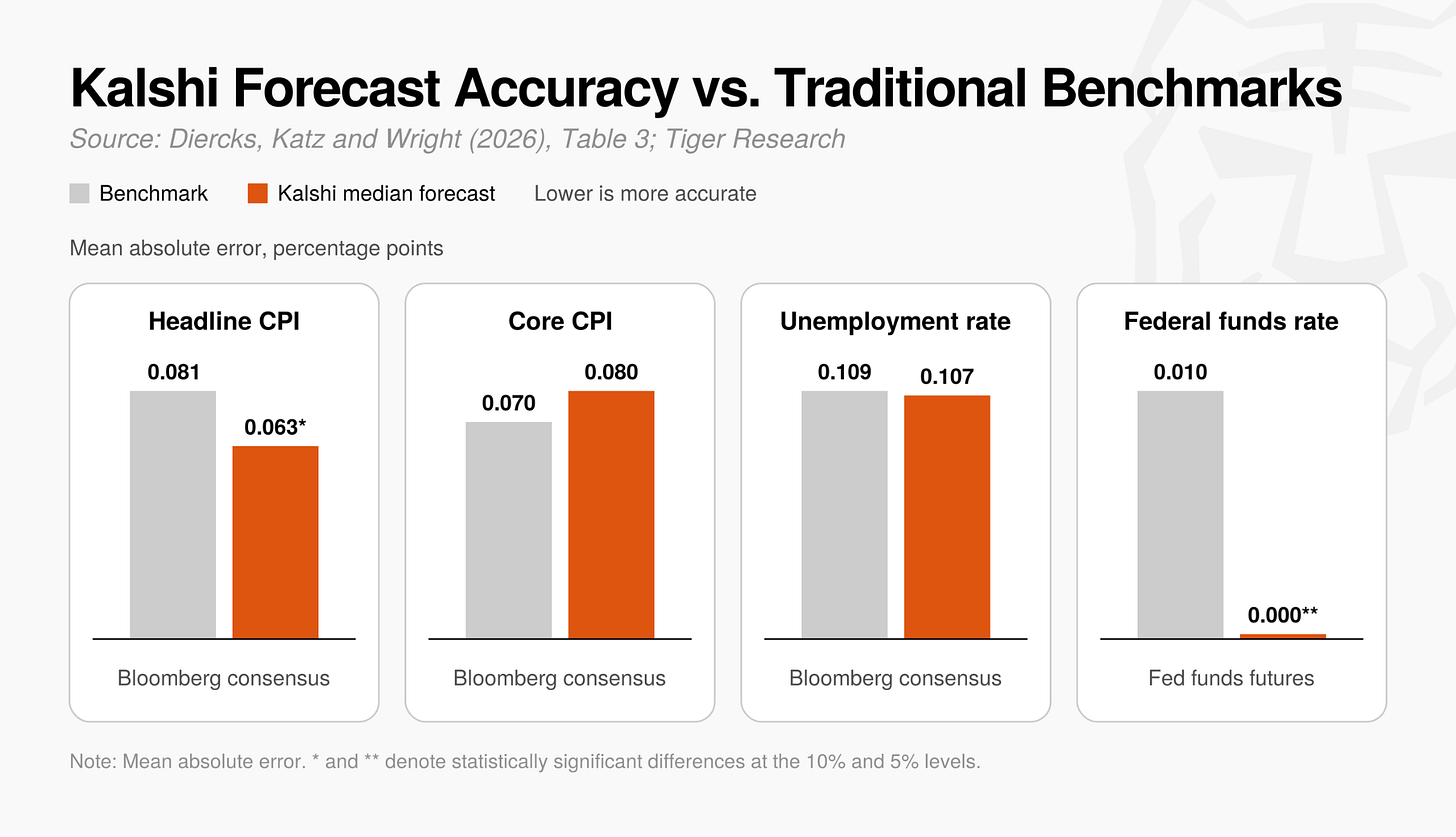
Figure 8: Fed working paper indicates Kalshi prediction market forecasts for the federal funds rate outperform futures markets on the eve of monetary policy meetings.
The study further notes that beyond predictive accuracy, prediction markets offer broader practical applications. Previously, core macroeconomic data such as real GDP growth, core inflation rates, unemployment rates, and non-farm payrolls lacked derivative instruments with sufficient liquidity. By providing real-time market-driven expectations and granular probability distributions backed by real capital allocation, prediction markets have entirely broken this constraint, offering scholars and macro policymakers a highly valuable new data benchmark.
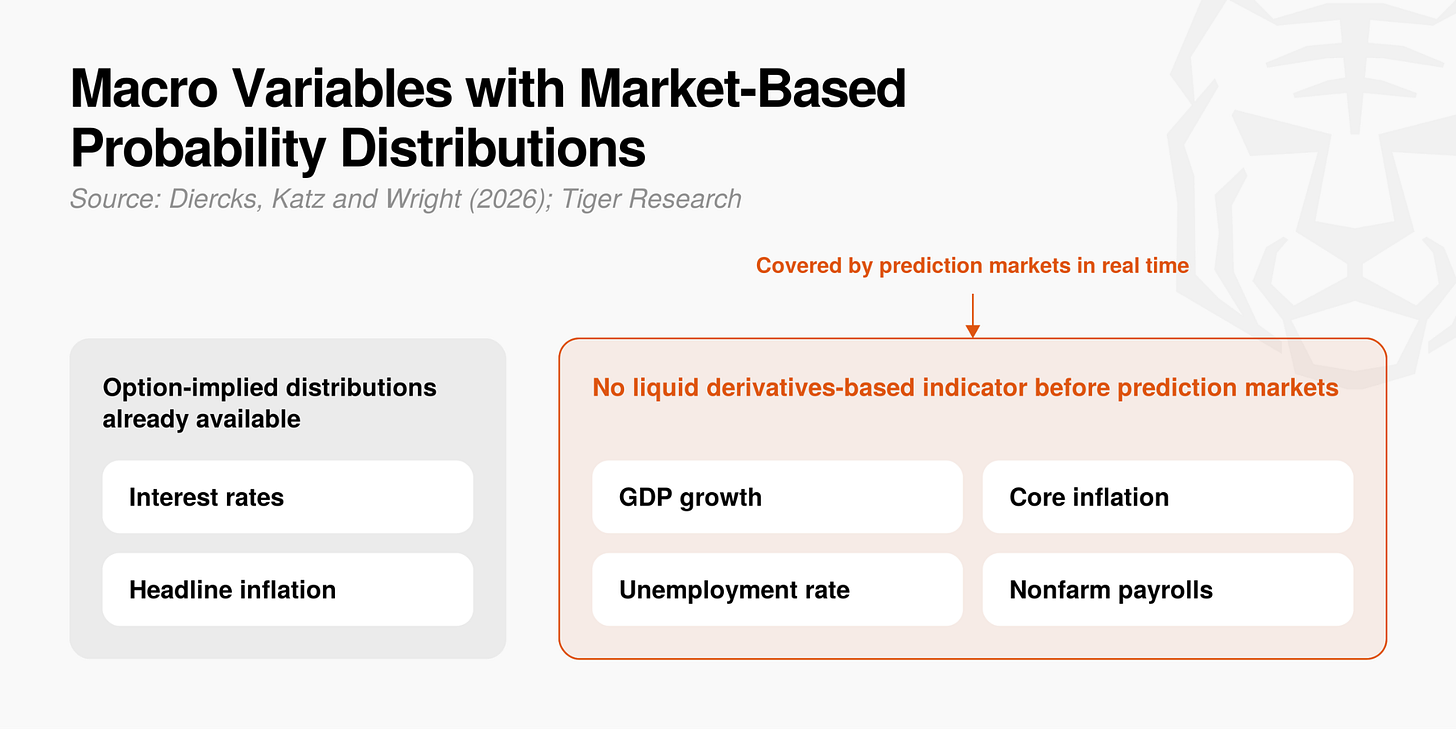
Figure 9: Prediction markets provide continuous probability benchmarks for GDP, core inflation, and unemployment rates, which previously lacked liquid derivative instruments.
Prediction markets prove more accurate on headline CPI than traditional indicators, equally precise on interest rate decisions, and clearly present broad macroeconomic expectations never covered by traditional financial markets in the form of real-time probability distributions, establishing them as highly actionable and efficient information sources.
Public Health: Alerting Flu Trends 2 to 4 Weeks Early
The U.S. Centers for Disease Control and Prevention (CDC) regularly publishes official influenza statistics weekly, inevitably introducing a time lag when tracking the actual spread trends of the virus.
To address this lag, researchers at the University of Iowa piloted a flu prediction market involving medical professionals. This market effectively aggregated frontline clinical observations voluntarily provided by participants, successfully and accurately forecasting the spread trajectory of flu activity statewide 2 to 4 weeks in advance (Polgreen, Nelson, and Neumann, 2007).
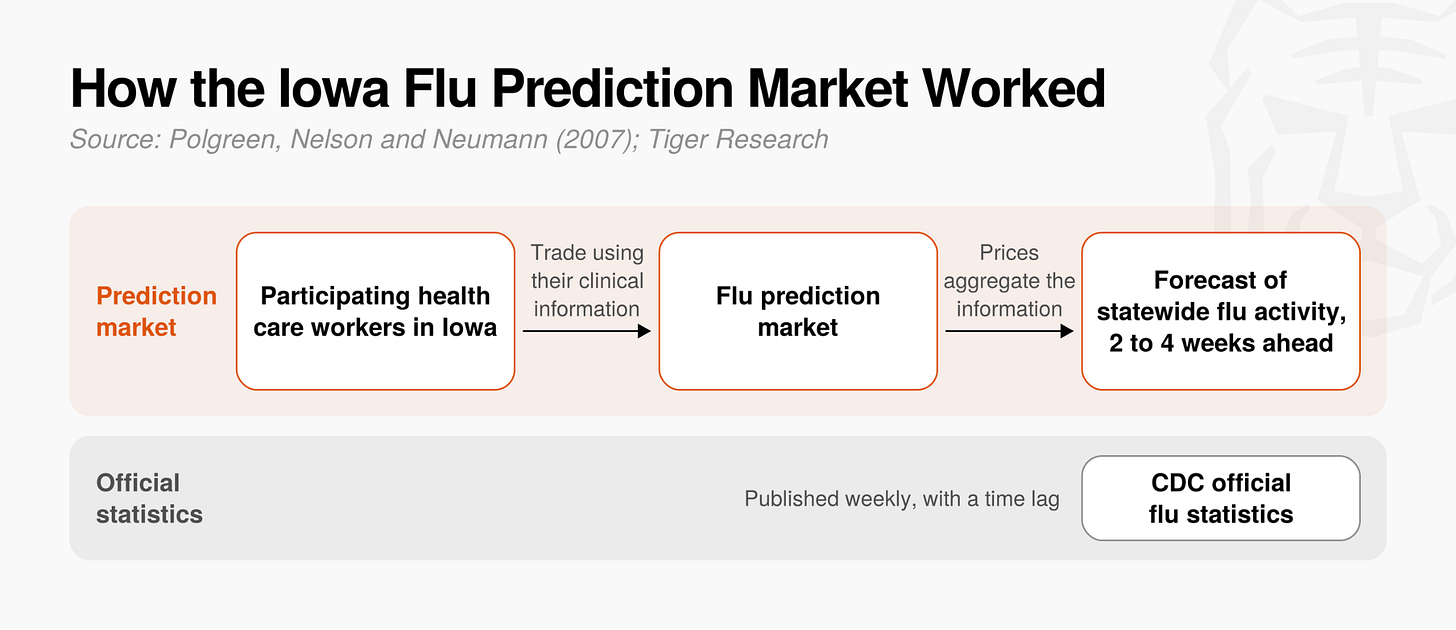
Figure 10: University of Iowa flu prediction market forecasted flu transmission trends statewide 2 to 4 weeks in advance.
Such forward-looking forecasts secure a crucial window period for clinical treatment, early prevention, and public health policymaking. This practice fully demonstrates prediction markets’ capacity to provide robust decision-support for public health emergencies, though the study at the time remained confined to Iowa’s pilot scope.
Corporations & Intelligence Agencies: Efficient Information Bypassing Hierarchical Reporting
In traditional corporate organizational structures, negative news and uncertain business outlooks are often progressively diluted or softened during hierarchical reporting. Conversely, internal prediction markets allow employees to directly wager on the success of internal matters such as revenue targets, new product launch milestones, and key hires, offering explicit rewards for accurate forecasts. This mechanism effectively bypasses rigid administrative reporting chains, rapidly consolidating frontline employees’ most authentic and candid assessments into market prices.
• HP: In an internal sales prediction market with 20 to 26 active employees, its predictive accuracy outperformed management’s official forecasts in 6 out of 8 comparable cases, and correctly predicted the direction of deviation in all 8 instances (Chen and Plott, 2002).
• Intel: Of 979 internal prediction markets operating between 2006 and 2013, over half yielded results more precise than the company’s official expectations (Gillen, Plott and Shum, 2017).
• Ford: In 2011, Ford decisively canceled plans to include branded bicycle racks and car vacuums in future models based on trading trends from its internal product feature prediction market (Cowgill and Zitzewitz, 2015).
• Google: An executive openly admitted at an all-hands meeting that the company had missed a senior hiring target for six consecutive quarters, while the internal prediction market had accurately anticipated this setback well in advance (Cowgill and Zitzewitz, 2015).
• Siemens: For a software engineering project where traditional schedules still indicated on-time delivery, the internal prediction market issued an early warning of a 2 to 3-week delay, ultimately resulting in the project being delivered 13 days late (Ortner, 1998).
Prediction markets have also played a vital role in national security and geopolitical analysis. In the Geopolitical Forecasting Competition hosted by the U.S. Intelligence Advanced Research Projects Authority (IARPA) from 2011 to 2015, researchers systematically compared prediction market performance against traditional forecasting polls (surveys of expert forecasters) across two consecutive seasons.
Across forecasts submitted by over 2,400 participants covering 261 major geopolitical events, prediction market prices significantly outperformed the simple average of poll questionnaires in both seasons. Although their performance did not fully surpass elite team polls adjusted with statistical weighting based on historical win rates, this result strongly demonstrates that prediction markets inherently possess exceptional information aggregation capabilities without requiring cumbersome post-hoc statistical corrections (Atanasov et al., 2017).
Within corporations, numerous cases prove prediction markets effectively capture critical information overlooked by official forecasts and hierarchical reporting; in intelligence exercises, they also comprehensively surpass the simple averages of conventional polls. However, they have yet to exceed deeply historically calibrated expert team models, and participation scales in some internal corporate markets (such as HP and Siemens) ranged only from 20 to 60 individuals, limiting sample breadth.
Are Current Prediction Markets Producing High-Value Data?
Do currently active on-chain prediction markets possess the capability to generate such high-value data? To answer this, we analyzed their market type coverage and predictive accuracy using public API data from the on-chain prediction market platform Limitless as of October 2026.
Diversity of Market Types
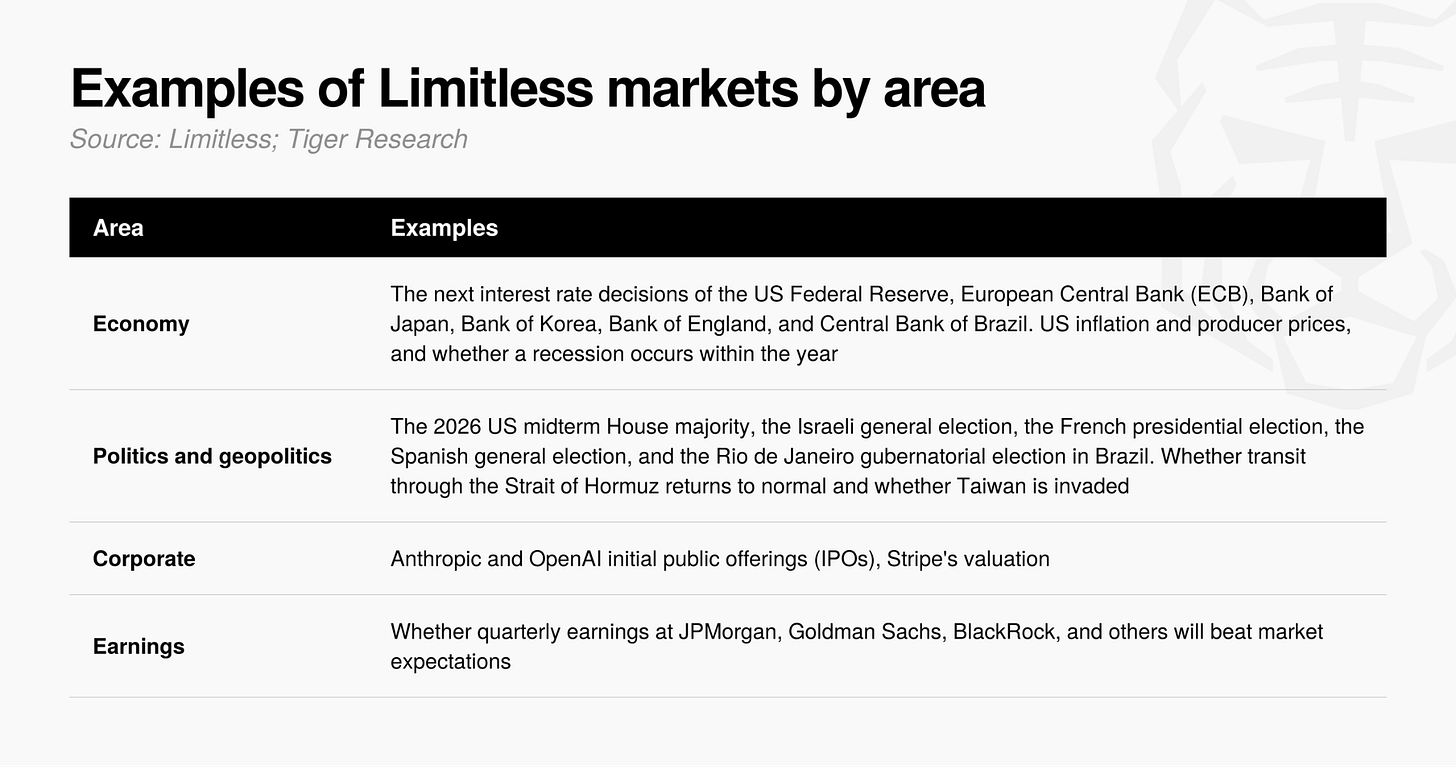
Figure 11: Topic distribution of various prediction markets on the Limitless platform (covering macroeconomics, political/economic events, and tech corporate dynamics).
During the sampling period, there were 556 active markets on the platform. Their scope extends far beyond simple sports events or entertainment incidents, comprehensively covering policy and macroeconomic indicators, including interest rate decisions by major central banks, pivotal elections and geopolitical variables, as well as IPO processes and quarterly earnings of prominent tech companies.
Prediction markets have evolved from being historically confined to a few discrete events to comprehensively covering macroeconomic indicators and policy variables. This indicates that the practical efficacy verified earlier (high precision, high timeliness, and ex-post verifiability) is extending from specialized domains to broader global economic and macro-decision-making scenarios.
Uncertainties and potential future fluctuations that traditional financial systems and static polls struggle to adequately capture are now being quantified into highly reliable probability data, providing market participants and policymakers with highly actionable decision levers.
Predictive Accuracy
To test to what extent these odds prices truly reflect the actual probability of events occurring, we filtered 2,681 settled event markets from our collected sample (approximately 85% sports-related) and rigorously compared each market’s price one day prior to its scheduled settlement against the final realized outcome.
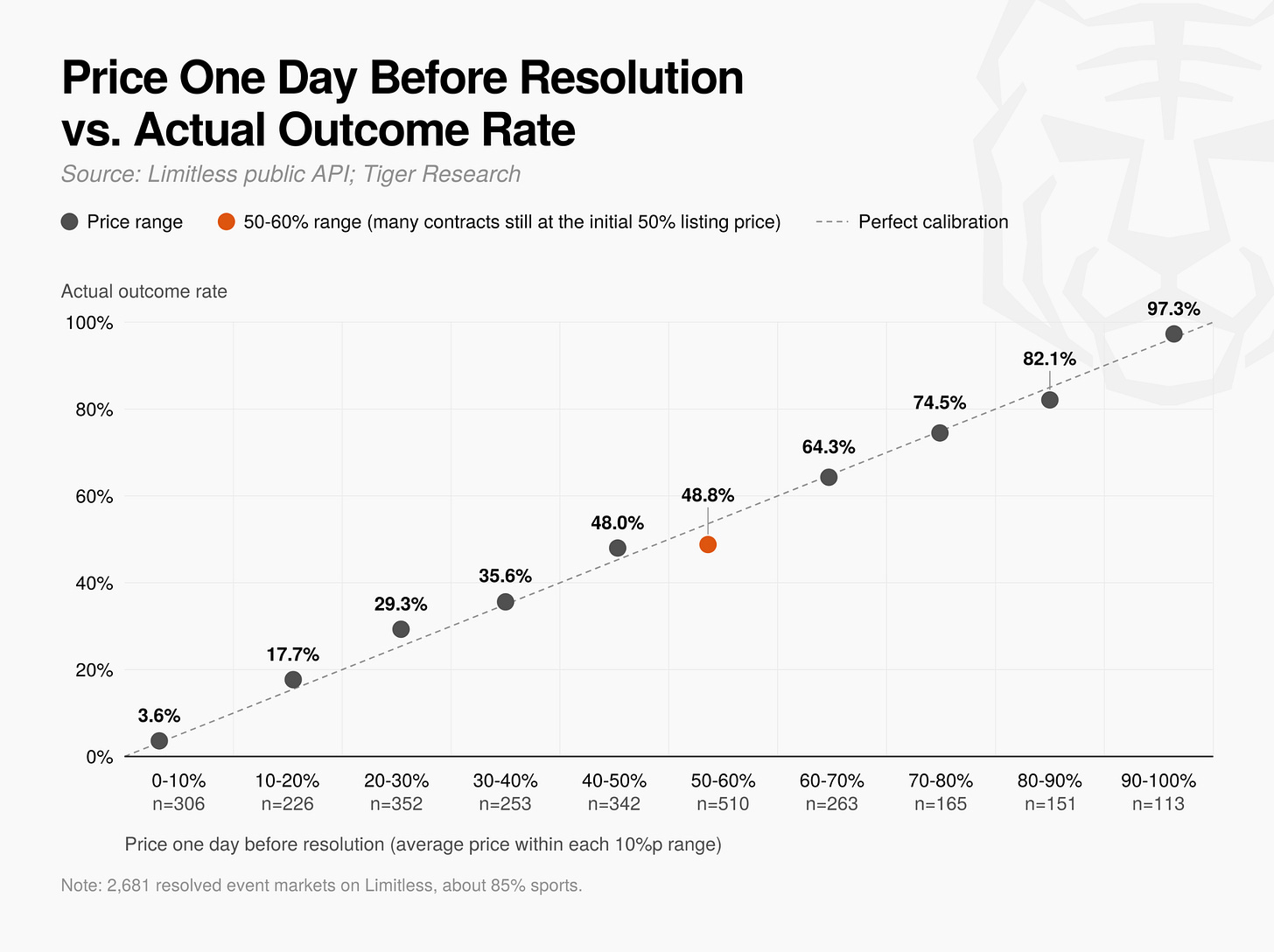
Figure 12: Calibration curve of prediction market prices versus actual event occurrence probabilities (errors within 4 percentage points across 9 price intervals).
Out of all 10 price bracket intervals, the deviation between actual occurrence ratios and odds prices was tightly controlled within 4 percentage points for 9 of them. For example, among 165 contracts priced between 70% and 80% one day before settlement, 74.5% actually occurred; while among 113 contracts priced at 90% and above, the actual payout rate reached 97.3%.
The only interval showing significant statistical error was the 50% to 60% bracket (actual occurrence rate of only 48.8%), primarily because approximately one-third of contracts in this range (mostly niche sports markets) remained stuck at their initial 50% listing price just one day from settlement due to insufficient trading activity.
Excluding these illiquid niche markets, prediction market pricing overwhelmingly maps the actual probability of event occurrence with exceptionally high precision.
Responsiveness to New Information
Exceptional timeliness is the core pillar supporting prediction market precision. To test whether market prices can instantly absorb new information upon its emergence, we conducted full tracking of the time series for Fed rate decision odds prices.
Whenever new economic data or policy variables are released, the win probability in the Fed rate decision market immediately undergoes adaptive adjustment. In mid-August, market expectations hovered around a ~70% probability of holding rates steady; however, as several key macro indicators rolled in from late August to early September, this probability swiftly dropped below 50%;
Following the official release of inflation data on September 11, the probability of holding rates steady plummeted to roughly 20%, eventually bottoming out near 10% on the eve of the decision. Conversely, probability expectations for a 25-basis-point rate cut surged rapidly to 86%–89% on decision day, almost perfectly aligning with the ~90% probability implied by federal funds futures on CME FedWatch (Diercks, Katz and Wright, 2026; Daiwa Capital Markets, 2026). Prices formed on Limitless ahead of other major central bank decisions also demonstrated equally robust real-time response sensitivity.
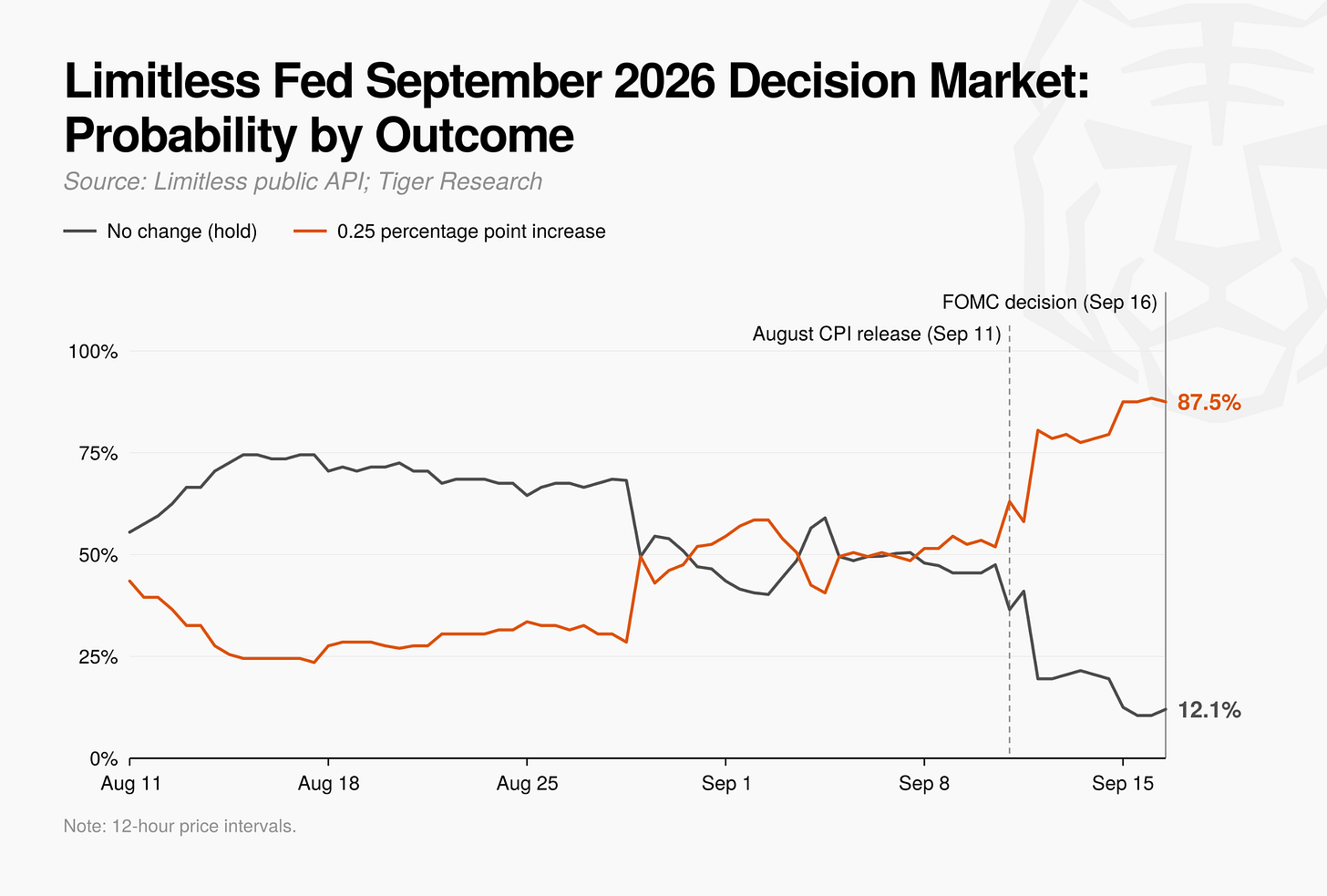
Figure 13: Real-time dynamic evolution of Fed rate cut expectations during key inflation data releases and policy narrative buildup.
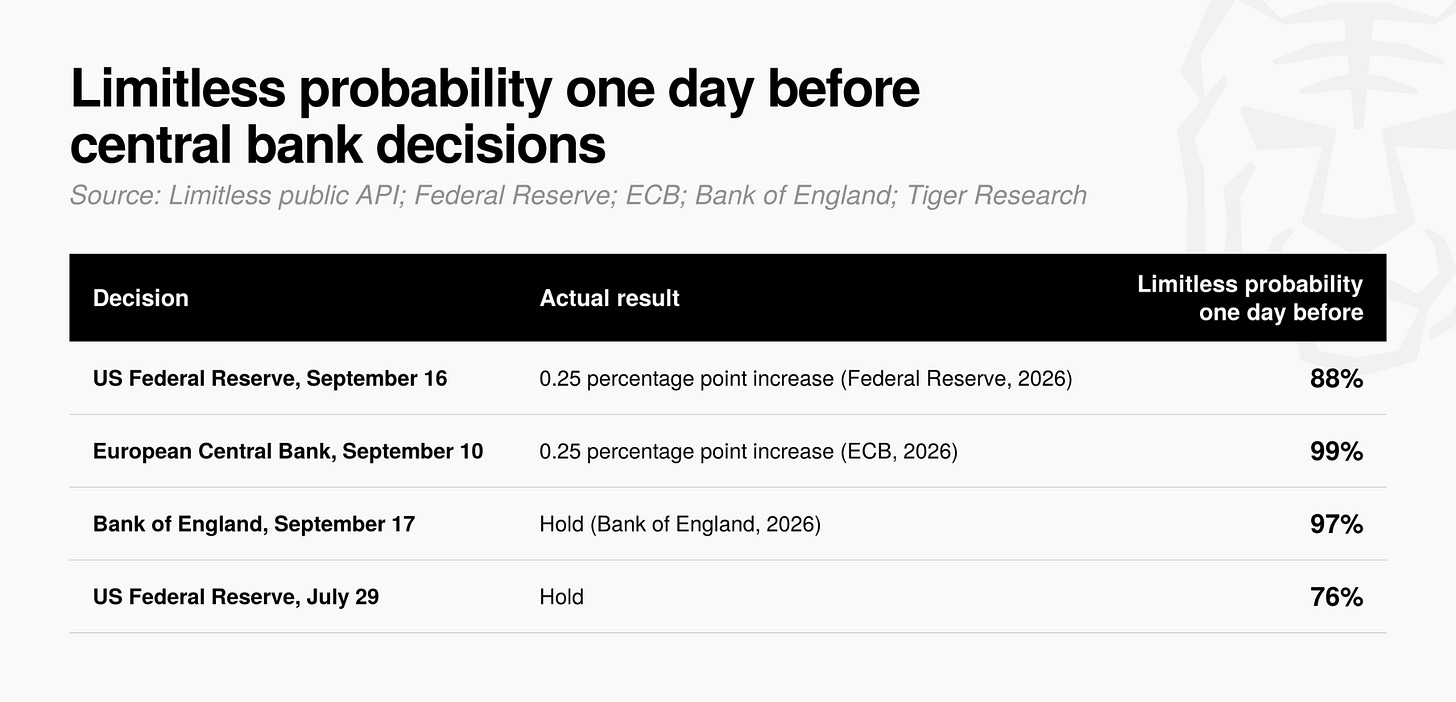
Figure 14: On-chain prediction markets’ speed of absorbing new information and instantaneous pricing response capabilities to major breaking events.
It is evident that today’s active on-chain prediction market platforms practically fulfill both core requirements of high-value data established earlier: timeliness and accuracy. The aforementioned empirical cases sufficiently demonstrate that prediction market prices can fully and instantly absorb incoming incremental information from external sources, continuously outputting highly precise probability benchmarks.
Does Prediction Market Deliver Genuine Utility?
As comprehensively argued throughout this research report, the core value of prediction markets does not merely lie in short-term speculative trading or arbitrage gains. Decades of accumulated academic literature, aligned with the empirical calculations presented herein, consistently demonstrate that in critical areas such as election dynamics, macroeconomic indicator trends, and corporate operational foresight, the probability data generated by prediction markets surpasses or effectively complements traditional surveys and expert qualitative forecasts in both precision and timeliness. The sequential adoption of prediction market data as real-time indicators by global mainstream financial media and core financial market infrastructure precisely relies on this irreplaceable practical utility.
In major Asian nations and many other regions, prediction markets are still often narrowly labeled as gambling in public perception. However, this empirical evidence shows that even if trading in some niche markets currently appears thin, platforms like Limitless have actually established diverse odds around a series of significant regional economic policy issues, including interest rate decisions by the Bank of Korea and the Bank of Japan.
To drive prediction market data to evolve into a widely recognized and authoritative decision-making infrastructure globally, including Asia, the industry must continue to cultivate depth across the following three dimensions:
First, continuous effort must be exerted at the mechanism design level to reduce price distortions and eradicate market manipulation. Platforms must strive to enhance the overall liquidity depth of odds surrounding macroeconomic and major geopolitical events, cultivate healthier and more diversified participant bases, and ensure that small-scale capital or speculative manipulation forces cannot deliberately undermine fair pricing.
Second, proactive and pragmatic Government Relations (GR) engagement is required to reshape the inherent perceptions of prediction markets among regulatory decision-makers. The industry should proactively establish normalized, constructive communication and collaboration frameworks with policy authorities in key regions like Asia, urging regulators to recognize that prediction markets are far from mere speculative vehicles requiring suppression; instead, they are powerful auxiliary monitoring tools capable of aggregating collective wisdom and providing forward-looking guidance for macro governance.
Third, unwavering commitment to transparent, end-to-end data publication mechanisms is essential to foster a healthy independent third-party research ecosystem. Major platforms should proactively and regularly open-source accuracy evaluation metrics and long-cycle historical time-series datasets, support and encourage independent evaluations by professional research think tanks like Limitless Research, and enable academic institutions, mainstream media, and regulatory bodies to access data without barriers, thereby building enduring trust based on solid, reproducible empirical evidence.
Prediction market platforms now stand at a critical juncture in transitioning from mere matchmaking venues for single transactions to next-generation financial data infrastructure. If they can continuously and stably provide and transparently verify real-time probability data that closely tracks the pulse of global policies and economies, prediction markets will undoubtedly become the most objectively persuasive and powerful tool for humanity to make scientific decisions amid future uncertainties.
Join TechFlow official community to stay tuned
Telegram:https://t.me/TechFlowDaily
X (Twitter):https://x.com/TechFlowPost
X (Twitter) EN:https://x.com/BlockFlow_News
 @tiger_research