Market Maturity: Q4 2026 Reflections on Crypto Asset Liquidity
Author: Alana Levin (Partner at Variant)
Translated by: TechFlow
TechFlow Summary: As the crypto market completes its critical bottoming out over the summer of 2026, investors' core questions have shifted from "when will it hit bottom?" to "where will the bull market momentum come from?" Variant Partner Alana Levin points out that the market is currently forming a profound institutional consensus: marginal dollars will mainly flow into two camps—assets that themselves serve as currency/value stores (with Bitcoin as the core anchor) and protocols with genuine profitability. Meanwhile, regarding the third category of narrative-driven projects chasing AI concepts, investors should be wary of arbitrage traps where tokens are decoupled from equity returns. More importantly, the astonishing resilience of high-quality projects over past cycles indicates that the crypto market is bidding farewell to brutal crashes exceeding 90% in the past, and shifting toward gentler drawdowns of 10% to 30%, similar to mature traditional financial markets. This article provides an in-depth analysis of the crypto liquidity market in Q4 2026.
The Market Bottom Is Established, Shifting the Core Questioning Paradigm
When thinking about market trends, my usual habit is to start by identifying the most central question at hand.
Throughout the summer, the most compelling central question surrounding the crypto market was: when exactly will the market hit bottom? In early July, I wrote an article pointing out that with Bitcoin at $59,000, Ethereum at $1,600, and Zcash at $420, the market bottom was already within reach.
Today, this question has received a clear answer: the bottom has most likely been established, and it indeed occurred at some point this July. Therefore, the primary focus in investors' minds has completely shifted. The core proposition currently most worthy of deep reflection is:
• Is this bull market truly setting sail, or is it a highly deceptive pump fake?
• If we are in the initial stages of a comprehensive bull market, which types of projects are best positioned to capture excess alpha?
Around the first issue, the market naturally extends many follow-up questions: how long can the bull market last? What is the underlying driving force supporting the rally? And what potential black swans could pop the bubble? I will elaborate on these issues in subsequent dedicated articles. For now, let us first establish a baseline assumption: we are indeed in the early stages of a new crypto bull market.
The Two Core Reservoirs for Marginal Incremental Capital
The market is currently reaching a broader consensus: assets most capable of attracting every incoming marginal dollar are primarily concentrated in two distinct categories:
• Assets that are money themselves (Protocols that ARE money, such as digital value stores represented by Bitcoin).
• Protocols that actually make money (Protocols that MAKE money, featuring genuine business cash flows and fee revenues).
These two categories of assets are widely recognized as the core reservoirs most likely to capture subsequent capital inflows. The next-order thinking that follows is: what second-order effects will the market produce when all participants across the board firmly believe that only these two categories of assets are must-hold core targets?
In-Depth Consideration of Second-Order Effects: Value Anchoring and the Scrutiny of Revenue Quality
For assets that "are money themselves": Bitcoin is unquestionably the undisputed king of digital value storage (Store of Value, SOV) today. Any competing asset attempting to vie for digital reserve currency status will inevitably have to undergo valuation comparisons relative to Bitcoin, meaning: what percentage does the asset's total market cap represent of Bitcoin's market cap, and how does that ratio evolve over time? Pure value store assets theoretically have unlimited upside potential (because their addressable TAM is essentially the entire world's monetary base), thus providing "market cap share relative to Bitcoin" as the most solid horizontal anchoring benchmark for investors.
For protocols that "make money", the investor's scrutiny dimension is entirely different. Specifically, I expect secondary market investors to begin scrutinizing the true quality of protocol revenue with extreme rigor:
• Is the revenue entirely dependent on highly speculative, purely crypto-native environments (such as pumps), or does it deeply benefit from tailwinds across broader traditional financial activities (such as high-frequency financial infrastructure like Hyperliquid)?
• Once the overarching crypto bull market tide recedes, does the protocol's business model possess sufficient retention resilience?
• What exactly are the protocol's unit economics and real profit margin profiles?
In other words, the inquiries posed by crypto investors today are highly converging with the stringent requirements traditionally demanded by the US public equity markets for listed companies.
Divergence in Valuation Premiums and Speculative Traps in Traditional Enterprise-Analog Assets
Different answers to the aforementioned quality questions will directly lead to significant premium divergence in protocol valuation multiples. Projects simultaneously possessing the following three characteristics are best positioned to enjoy higher revenue and P/E valuation premiums:
1. Business deeply exposed to the continuous expansion of Real World Assets (RWA) and stablecoins, rather than merely relying on crypto-native involutionary speculation;
2. Clear, explicit visions for institutional-level user adoption and compliance pathways;
3. Have fully weathered the trials of the previous brutal bear market, and continue to be steered by visionary founders and CEOs.
Furthermore, there exists a third category of assets in the market not encompassed by the two aforementioned mainstream classifications: projects mapping traditional non-crypto business models on-chain. These assets will most likely devolve purely into narrative-driven swing trades. I must strongly emphasize: the vast majority of these targets are only suitable as short-term trading chips, not as value investments for long-term holding.
The theoretical appeal of such projects lies in the fact that investors can easily point to mature valuations in non-crypto traditional sectors and ask: "If this on-chain version were to achieve a comparable scale, how massive would the upside potential be?"
The most typical representatives currently are projects attempting to benchmark against various tiers of the AI industry tech stack: including routing protocols, decentralized inference, GPU compute networks, data collection, and interactive frontends. Frankly, I harbor great skepticism about whether the vast majority of such businesses truly require blockchain. More fatally, these projects often suffer from highly suspicious "token versus equity split" problems: the core commercial value legally and naturally resides in the equity of the physical company, while the project team only nominally takes meager profits to casually repurchase tokens in the secondary market. A project generating revenue absolutely does not equal that its token can capture value! This is an ancient trope repeated countless times in the crypto industry. While they may still serve as decent gaming chips during periods of frenzy, I personally view them as a reverse indicator for exiting at the top: once you see such projects rallying across the board and outperforming the broader market, it often signifies that the entire market's rational self-discipline has collapsed, and peak risks are rapidly approaching.
The Deeper Significance of the Three-Dimensional Classification Framework: Drawdown Paradigms of Mature Markets
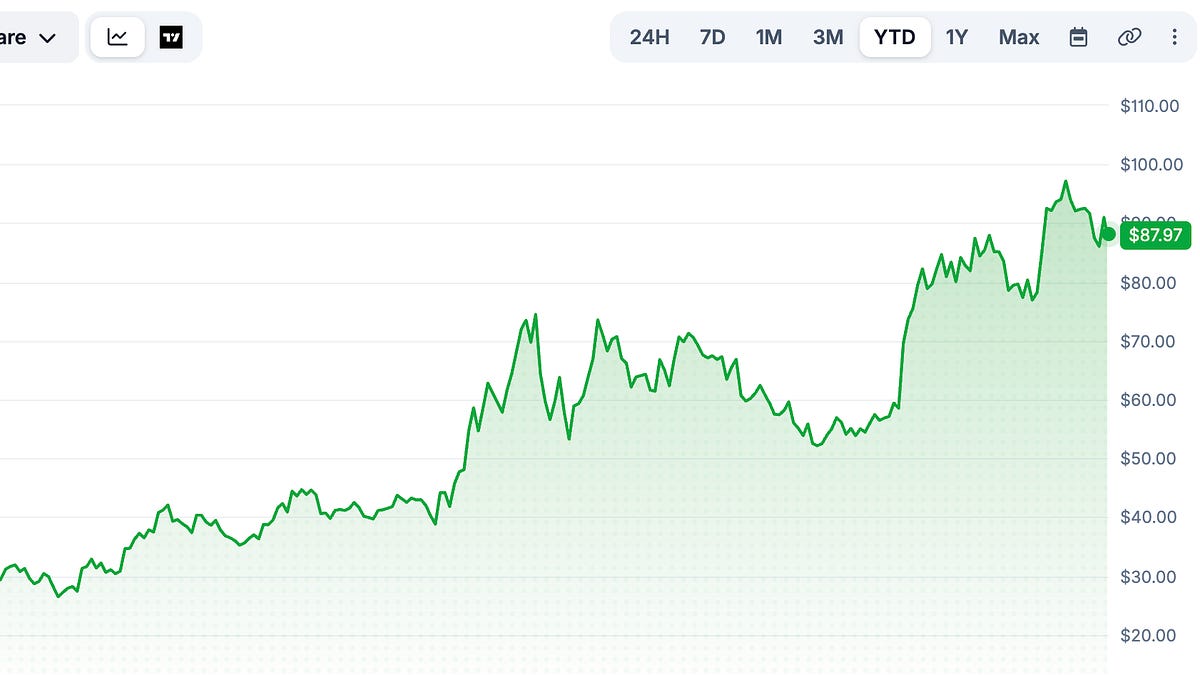
The crypto market has always been highly cyclical. Over the past decade plus, the entire industry largely followed relatively regular four-year bull-bear cycles. But in this cycle, an unprecedented structural change has quietly taken place: some core assets with solid fundamentals never even fell into a deep bear market; instead, under continuously strengthening underlying data support, they have continued to compound incrementally.
I firmly believe that future institutional-grade capital will increasingly coalesce around these targets that truly possess self-generating capabilities. Although they too will experience cyclical market adjustments, I anticipate their drawdown magnitude will begin to highly converge with traditional mature financial markets (typically ranging between 10% and 30%), rather than the devastating crash scenarios of dropping over 90% seen in prior brutal cycles.
Ultimately, these positive shifts are thrilling evidence of crypto finance moving toward genuine maturity.
Join TechFlow official community to stay tuned
Telegram:https://t.me/TechFlowDaily
X (Twitter):https://x.com/TechFlowPost
X (Twitter) EN:https://x.com/BlockFlow_News
 @AlanaDLevin