GMA AI & Gaming Nexus Singapore Successfully Held: Focusing on the Future of AI and Gaming
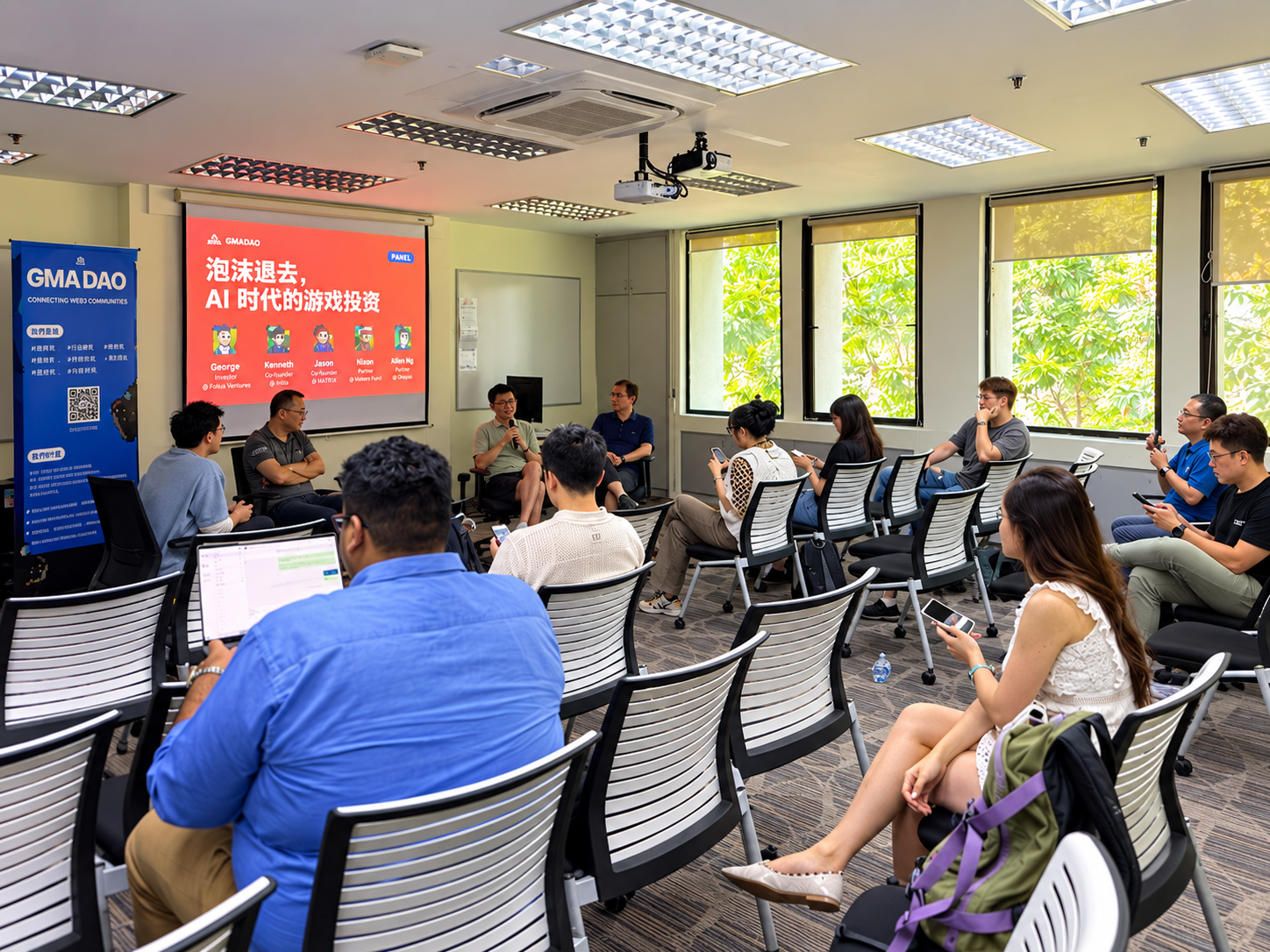
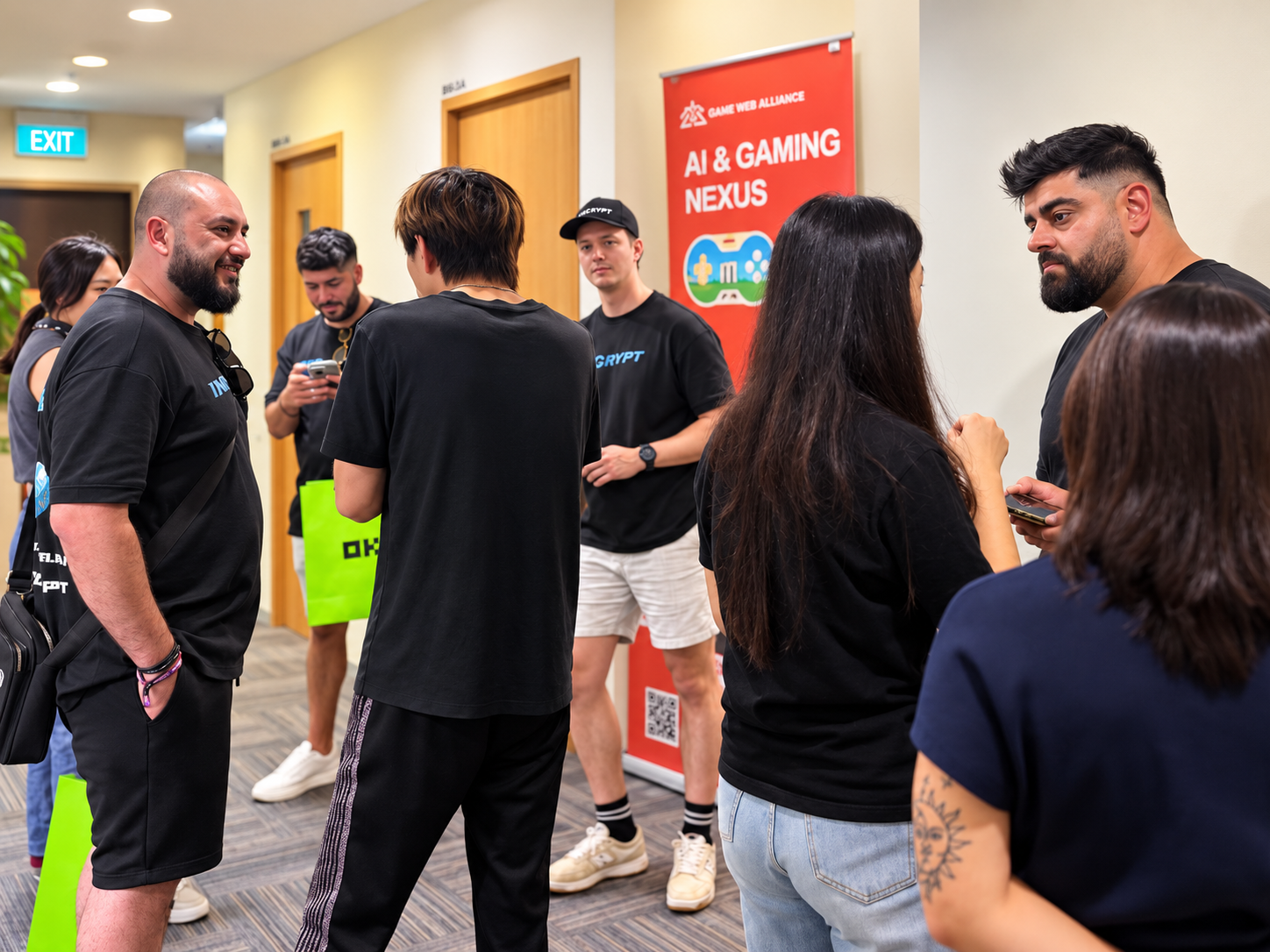
On October 6, AI & Gaming Nexus, co-hosted by Game Mine Alliance (GMA) and TechFlow, was held in Singapore. The event gathered practitioners from the fields of AI, gaming, Web3, investment, and entrepreneurship to discuss “how AI is transforming game production, experience, and business models.” Online registration for the summit exceeded 600 attendees. It received support from institutions including PumpSnake, the9bit, 0G, Waterdrip Capital, IOSG, AZverse,
Miuro.AI, Cddjap, Bifire Investment, and various other organizations, as well as media partners such as Foresight News, TechFlow, and PANews.
Positioned as a DAO organization in the Web3 gaming and AI sectors, GMA continues to deeply cultivate the gaming ecosystem, carrying out multi-level cooperative partnerships with high-quality games and upstream and downstream projects.
Discussions on-site focused respectively on “After the Bubble Bursts, Gaming Investment in the AI Era” and “How Projects Survive in the AI Era.” Drawing from investment logic, product experience, community, and economic models, participants reached a consensus: AI is significantly lowering the barriers to game development and content creation, but the core competition in gaming still returns to playability, user retention, distribution efficiency, and long-term relationships.

After the Bubble Bursts, Gaming Investment Returns to Fundamentals
In previous market cycles, Web3 games experienced rapid growth due to strong narratives, tokenomics, and high valuations, yet numerous projects failed to validate their products and commercial viability. During the panel discussions, several guests noted that market enthusiasm for “AI + gaming” cannot replace answers to fundamental questions: What value does the product actually create for users? Are users willing to keep using it? Can the project establish a sustainable revenue stream?
The most direct impact of AI is cost compression. Tasks that previously required dozens of people can now potentially be completed by smaller teams leveraging AI. However, increased supply does not mean demand grows at the same pace. Players still have limited time each day, and attention remains scarce.
Therefore, for gaming projects in the AI era, the focus of competition is shifting from “whether it can be built” to “whether it’s worth playing continuously.” Gameplay, retention, community, publishing, and distribution capabilities are becoming more critical evaluation metrics.

AI Is More Than a Tool; It May Also Become a New Character in Games
During the roundtable on “How Projects Survive in the AI Era,” the discussion extended further from production efficiency to the experience and economic relationships within the games themselves.
In the future, AI NPCs may no longer be characters that simply follow fixed scripts, but rather participants in the game capable of long-term interaction, collaboration, and even mutual growth with players. Players training their own AI characters, endowing them with abilities, and having them participate in in-game quests, tournaments, or economic activities could emerge as new gameplay directions.
Such changes imply that the player’s identity may no longer be solely that of a consumer. Through the integration of AI and Web3, players could simultaneously engage in creation, production, community collaboration, and value distribution. In-game assets, time investments, and community relationships also have the potential to foster deeper, long-term connections.
From “Content Oversupply” to “Relationship Scarcity”
Toward the end of the event, discussions from both roundtables converged on a deeper question: When AI makes content creation easier, what is truly scarce?
The answer may not be more content, but more valuable relationships.
For gaming projects, a moat is no longer just technological capability; it also includes whether the project can retain players, encourage creators to co-create, build trust within the community, and align its business model with genuine demand. AI can enhance productivity, but it cannot automatically deliver playability, community recognition, or long-term operational capability.
AI & Gaming Nexus aims to continuously connect builders, creators, and investors across the AI, gaming, and Web3 sectors. Amid rapidly evolving technology, the gaming industry still needs to return to the most fundamental question: How do we build products that people genuinely want to play, want to stay for, and want to participate in together?
Join TechFlow official community to stay tuned
Telegram:https://t.me/TechFlowDaily
X (Twitter):https://x.com/TechFlowPost
X (Twitter) EN:https://x.com/BlockFlow_News
 @GMA_DAO