On-Chain Perpetual Contracts: An Evolutionary Study of Design Choices and Growth Catalysts
Author: Castle Labs
Compiled by: TechFlow
TechFlow Overview: Perpetual futures trading volume has already reached 4.7 times that of spot, yet decentralized exchanges only account for a 13% share. Hyperliquid dominates this sector with 56% of open interest, and its true killer feature is not technology, but the ability to trade crude oil over weekends. This report breaks down the design philosophy competition from dYdX and GMX to the new generation of players, which is crucial for understanding the next growth driver for on-chain derivatives.

The following content is excerpted from our research report on the perpetual futures trading ecosystem map, focusing on comparing the differences in design, market promotion, and microstructure across various perpetual futures venues. It highlights the key growth drivers in the perpetual futures ecosystem, the underlying architectures supporting these protocols, and their respective market strategies.
At most major trading venues, perpetual futures trading volume is 4.7 times that of spot, accounting for over 82% of the total crypto market volume in the past 30 days.

Perpetual futures have become one of the most important products in crypto because they allow users to maintain continuous (leveraged) price exposure without needing to hold the underlying asset.
For highly liquid crypto assets like BTC and ETH, perpetual futures trading has long demonstrated its power. Today, as more asset categories begin to trade on-chain, the value of this product is further amplified.
Perpetual futures trading currently still primarily occurs on centralized exchanges, with over $4.56 trillion in volume over the past 30 days, compared to just $614.5 billion on decentralized exchanges. This gap is even wider than in the spot market, as DEX trading structures remain more spot-oriented.

In this article, we will dive into on-chain perpetual futures and provide additional context for the development of the entire sector.
The early landscape of perpetual futures was dominated by players like dYdX and GMX.
Each product has distinct features, which remain clearly visible today despite subsequent adjustments.
Built on the Cosmos SDK, dYdX was one of the first to recognize the value of vertical integration, choosing to become an application chain featuring a central limit order book.
dYdX migrated from StarkEx to its own Cosmos app chain. Strategically, this made sense for the team, as the app chain granted greater control, higher decentralization, and self-sovereign infrastructure. However, for traders, this choice introduced additional friction in cross-chain bridging, fund management complexity, and onboarding. Cross-chain migration seems inevitable today, but it was not at the time.
Furthermore, the transition to an app chain was not without technical challenges, including downtime and validator delays. Decentralized governance also slowed product iteration and led to decisions that eroded community trust, such as closing the token cross-chain bridge while holders still had active liquidity and assets.
GMX V1 pioneered the GLP model: a dynamic pool of assets composed of ETH, BTC, stablecoins, and others, acting as the counterparty to all trades on the platform.
GLP provided a decent solution for cold-starting perpetual futures liquidity early on, but it is not a clean long-term market structure. It consolidates assets into a single pool, forcing liquidity providers to act as counterparties to traders while paying them fees. The cost is that LPs bear traders' P&L, asset exposure, and inventory imbalance risks.
Simply put, the GLP model is difficult to scale and bundles too much risk into a single product. Every new market adds risk to the same liquidity pool, meaning that open interest caps, funding rates, oracle designs, and pool composition collectively restrict the expansion of long-tail assets. GLP was never designed to cover long-tail assets; it only works for mainstream and large-cap assets. This, in turn, limits demand for the assets offered, as low capital efficiency compresses demand amid intensifying competition.
GLP V1 also suffered a $40 million hack in 2025 due to a reentrancy vulnerability, further shaking depositor confidence.
GMX eventually abandoned GLP in favor of V2 and the GLV model, offering greater flexibility and capital efficiency. Due to its inherent design limitations, pool-based models are naturally less flexible than orderbook models when launching new markets or expanding horizontally.
Nevertheless, other projects have refined and adopted this model: Hyperliquid utilizes the Hyperliquidity Provider (HLP), while Variational uses the Omni Liquidity Provider (OLP).
The total addressable market for perpetual futures has always been large. However, early models failed to scale liquidity effectively, leaving them unable to compete with centralized exchanges. Most users still choose to trade perpetuals on CEXs.
This landscape remains largely unchanged today, but the DEX perpetual trading share has grown from 4% in 2024 to over 13%.

The current peak occurred in December 2025, when DEX perpetual trading volume temporarily accounted for over 14.25% of total volume.

This macro perspective only tells half the story and may even seem disappointing. But zooming into the perpetual futures sector reveals sustained growth, particularly throughout 2025.
While multiple catalysts drove this growth, the chart above shows volume began climbing toward the end of 2024, aligning perfectly with Hyperliquid's launch and ascent. We will detail this in the next section.
The latest wave of growth since 2026 can be attributed to a combination of factors: the rise of Real World Assets (RWAs) enabling trading via perpetuals, and the emergence of numerous venues such as Lighter, Variational, Extended, Entropy, and many others mentioned in this report. In fact, since Hyperliquid's debut, over 261 perpetual DEXs have launched.

As of now, Hyperliquid remains far ahead in the perpetual DEX market, capturing over 56% of total open interest share, followed by Aster (9.7%), Variational (6.2%), and Lighter (5.7%).

As mentioned earlier, this sector was initially led by dYdX, followed by GMX. Since Hyperliquid went live, it has maintained its market share leadership, with only a brief period in November 2025 when Lighter temporarily took the top spot.
Late 2025 remains the historical peak for monthly perpetual trading volume, which cooled off upon entering 2026.

The shifting of top positions reflects broader transformations in the perpetual sector, particularly regarding the listing and trading support of RWAs.
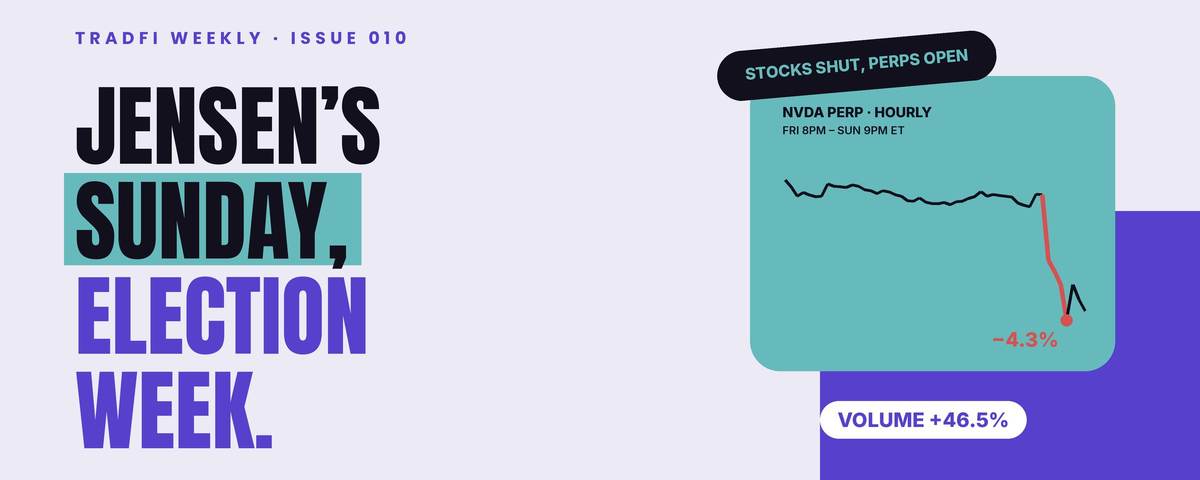
One of Hyperliquid's most distinctive features, and the reason for its widespread attention beyond the crypto circle, is the role Tradexyz plays in driving asset listings. Tradexyz enables assets previously untradeable on-chain to be traded 7x24 hours; at peak times, this segment accounted for 50% of the platform's total volume.
A prime example is crude oil (CL). During the Iran crisis, the US launched strikes over a weekend when traditional venues were closed. Tradexyz became the only place where crude oil could be traded.
We authored a complete microstructure analysis comparing Tradexyz with the CL market on CME. Within three weeks, CL evolved from a novel market into a mature trading venue where traditional finance participants could hedge their exposures.
To us, this is one of the clearest ways to demonstrate the utility of on-chain RWA trading and drive adoption. Consequently, many funds, such as Abraxas, have become loyal adherents to RWA trading on Tradexyz.
Part of Tradexyz's success lies in its boundary discovery mechanism that allows RWAs to trade around the clock. These mechanisms cap price volatility during non-trading sessions within a baseline of ±(1/max leverage) relative to the reference price.
In the first few weeks of testing boundaries, the CL market actually hit the 5% threshold, causing trading to halt over weekends. Today, this approach has been battle-tested. Tradexyz employs rebalancing to ensure continuous price discovery: once an asset price hits a trigger condition (e.g., approaching the boundary), it can re-anchor and set a new boundary using that price.

Beyond granting retail investors access to previously unreachable assets, RWAs also offer traditional financial institutions an intriguing alternative.
This becomes evident when examining the top ten perpetual futures assets by volume as of September 10, 2026. Seven of the top ten are RWAs, led by the Nasdaq 100 Index and gold, which together generated over $1.4 billion in 24-hour volume and exceeded $850 million in open contracts.

Therefore, we believe perpetuals have evolved from venues providing leveraged exposure to base assets into platforms offering price exposure to previously inaccessible assets. As a result, RWAs have become a key component of perpetual marketing strategies, which we will elaborate on in dedicated sections.
The Boost Effect of Hyperliquid
One of the primary catalysts for perpetual futures is the rise of Hyperliquid. Its airdrop-style TGE strategy, along with its transformation from a perpetual exchange to a full-fledged ecosystem aiming to become the "AWS of liquidity," reignited the demand to build these primitives and created a blueprint for others to emulate.
It is not just Hyperliquid's volume growth that matters. It fundamentally changed the positioning of on-chain perpetual venues. Before Hyperliquid, perpetual DEXs were mostly understood as frontend trading interfaces: on-chain versions of CEX perpetuals with lower custody risk, but worse execution, weaker UX, and thinner liquidity.
Post-Hyperliquid, this category expanded into something much closer to a complete trading platform.
Hyperliquid altered traders' expectations for on-chain perpetual venues, integrating what were previously dispersed modules into one cohesive system:
HyperCore, a high-performance trading layer for both spot and perpetual markets.
HyperEVM, a native developer environment built around the venue.
HIP-3, allowing developers to deploy new perpetual markets, pushing listing mechanisms toward permissionless marketplace models.
HIP-4, introducing outcome markets suitable for prediction markets and options-like instruments.
Builder Codes, enabling external frontends to route order flow to Hyperliquid and monetize these distribution channels.
HLP, Hyperliquid's liquidity provider vault, allowing passive capital to participate in market making.
RWA Frontends (such as TradeXYZ), leveraging Hyperliquid's infrastructure to bring equities and other off-chain exposures into the same trading environment.
Each element contributes to Hyperliquid's success; collectively, they position HYPE at the core of these growth vectors, elevating the platform beyond previous perpetual solutions.
HyperCore delivers a core exchange experience for traders: orderbook trading, fast execution, deep liquidity, and a streamlined interface. HLP provides native liquidity primitives for the platform. HyperEVM offers developers an ecosystem to build upon. HIP-3 turns market creation into a product and revenue stream. HIP-4 incorporates outcome markets. Builder Codes turn wallets and apps into distribution partners. TradeXYZ demonstrates how to integrate traditional financial assets into a unified trading interface using this tech stack.
Together, these modules enable users to maintain portfolio margin across the entire platform, facilitating more complex strategies such as simultaneously holding spot and perpetual exposure to crypto and RWA assets, depositing liquidity, and hedging event risk. Last week, Hyperliquid also launched manual lending functionality, allowing anyone to supply HYPE or BTC to borrow USDC and USDT.
In its early growth phase, Hyperliquid followed a pattern similar to past perpetual platforms: running point campaigns and large-scale airdrops to reward users with skin in the game, helping to establish an initial base of loyal traders.
However, unlike many projects, the TGE merely marks the beginning of Hyperliquid's growth trajectory.
Its core lies in the high alignment across all levels of the protocol and ecosystem.

This is reflected in its cumulative revenue exceeding $1.24 billion.
Contrary to popular belief, not all revenue comes from perpetuals. In fact, spot markets, auctions, priority burns, and HyperEVM gas fees all contribute to revenue, with $HYPE consistently remaining at the center of growth.
Here is how each module contributes.
Initially, HLP held strategic importance for the multi-dimensional cold start of HyperCore. HLP serves as Hyperliquid's market-making vault, allowing users to deposit funds and run passive strategies.
It played a crucial role in kickstarting early market liquidity and provided an additional retention loop for users who prefer passive strategies over active trading.
HLP provided an initial native liquidity layer, meaning Hyperliquid did not need to rely on external market makers or outside capital.
Across multiple dimensions, HLP differs from GMX's GLP model. The former is more active than a static basket of pooled liquidity, reinforcing Hyperliquid's positioning as a frontend where users can execute diverse strategies.
Ultimately, HyperCore and market-making activities grew to such an extent that HLP ceased to be a foundational component and was gradually phased out, although it appeared to rebound after mid-August 2026, with plans to move idle HLP USDC into lending to avoid capital stagnation.
Utilizing HLP was not without challenges. One notable instance was the March 2025 JELLY incident, where a trader attempted to short squeeze the Hyperliquid market by pumping the spot token price while holding simultaneous short and long positions for that asset. We will discuss this event in greater detail in upcoming sections.

Take HIP-3 markets as an example. Hyperliquid is no longer the sole arbiter of which markets matter; developers can purchase trading codes through an auction system to deploy perpetual markets within the protocol framework, with fees flowing to the token.
Furthermore, Builder Codes mean Hyperliquid does not have to focus solely on user acquisition; it can achieve horizontal expansion by offering its trading tech as a white-label solution, allowing others to skip building perpetual trading engines from scratch.
Builder Codes have been exceptionally successful, showcasing Hyperliquid's emphasis on backend infrastructure. They bring additional distribution channels to Hyperliquid, contributing over $40 billion in volume in the past 24 hours, accounting for 7.4% of the total. Wallets like Phantom and MetaMask did not build perpetual trading infrastructure from scratch but integrated Builder Codes, generating over $25 million in revenue for Phantom and over $10.5 million for MetaMask.

Recently, Hyperliquid announced the launch of HIP-4 markets, its binary outcome products, helping the platform expand into event markets, prediction markets, and options.
Facing this competition, perpetual platforms must operate and iterate faster than ever. Rolling out new features is not the challenge.
User acquisition is growing increasingly difficult. The number of active traders is limited, and they are becoming more profit-driven. A venue needs distribution channels, liquidity, product breadth, and compelling reasons to keep traders returning.
Hyperliquid's answer is to make the platform function simultaneously across multiple dimensions: trading on core venues, building on EVM, importing traffic via builder integrations, deploying markets via HIP-3, trading outcomes via HIP-4, or accessing new asset classes through external frontends.
Among these components, an implicit but critical fact stands out: there is strong alignment between platform success and the HYPE token. This is embodied in programmatic buybacks: 95% of all fees collected by the protocol are used for HYPE repurchases.
To date, the protocol has purchased over $1.26 billion worth of HYPE on the open market.
Whether through HIP-3, Builder Codes, or HIP-4, Hyperliquid heavily focuses on expanding distribution channels.
A venue can manufacture activity prior to a token launch. But maintaining that activity proves significantly harder once the obvious airdrop farming ends and profit-seeking capital departs.
For most exchanges, activity peaks before the airdrop because the product's value remains unknown. Studying Hyperliquid demonstrates how token alignment, execution, and proper distribution create a deeper flywheel, pushing the project narrative far beyond the TGE.
Many protocols are attempting to replicate this model, but whether they can catch up to Hyperliquid's trajectory remains uncertain.
Conclusion
On-chain perpetuals are expanding rapidly, with open interest at all-time highs. These venues have overcome multiple design challenges, ranging from insufficient blockchain throughput to support orderbooks, to scaling liquidity to accommodate institutional-grade volumes.
The on-chain perpetual ecosystem has evolved, with the majority of activity shifting from former leaders like DYDX and GMX to Hyperliquid, Variational, and Lighter. This evolution brings different architectural choices, exploring these markets and introducing a new growth lever: RWA perpetual trading.
Platforms like TradeXYZ not only introduce traditional financial assets but also enable 24/7 trading and dominate active price discovery when traditional markets close, as we observed earlier this year during the Iran strikes.
Much of this growth can be attributed to the boost from Hyperliquid, which commands over 56% of on-chain open interest and revitalizes the perpetual landscape by converting platform usage into broader token alignment and flywheel effects.
On-chain perpetuals are still in their early stages, but their growth is hard to ignore. Hyperliquid has proven that decentralized venues can nearly compete with centralized exchanges across virtually every metric. Furthermore, on-chain venues are focusing on increasing distribution, whether through consumer-facing apps or partnerships, making their expansion inevitable.
We have covered more content regarding different protocols and design methodologies in the perpetual space. We also produced a microstructure analysis comparing the execution quality of CEXs and DEXs. Please see the full report here.
Join TechFlow official community to stay tuned
Telegram:https://t.me/TechFlowDaily
X (Twitter):https://x.com/TechFlowPost
X (Twitter) EN:https://x.com/BlockFlow_News
 @castle_labs