From "Providing Products" to "Providing Capabilities": How OKX Makes Finance "Always Online"?
Author: TechFlow
Introduction
In recent years, what question have financial platforms been trying to answer?
Whether crypto platforms are extending from trading toward payments, RWA, and AI execution, or traditional finance platforms are exploring 7×24 hour trading, tokenization, and liquidity release starting from compliance and trust, the two paths moving in opposite directions actually point to the same direction:
Finance is becoming different from before. It is transforming from a system pieced together by different institutions, markets, accounts, and infrastructure into a more unified, real-time, programmable, and intelligent system.
And when change happens, who is accelerating the arrival of the new system?
On October 6, 2026, OKX founder and CEO Star took the stage at the OKX Global Product and Ecosystem Conference to outline his assessment:
From holding funds, payments, investing to wealth management, OKX is evolving into a broader-scope global fintech platform.
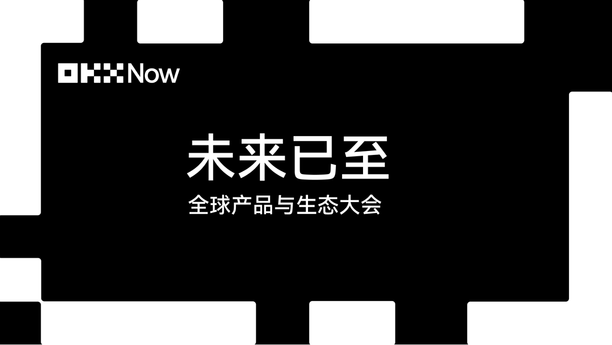
At this conference titled "OKX NOW," people understand "NOW" in two ways:
On one hand, through the conference, it provides a snapshot of current products and ecosystems, allowing the outside world to see what OKX is doing;
On the other hand, "NOW" is more like a declaration that, starting today, the future of finance has reached the milestone for formal implementation.
But more noteworthy than NOW is another keyword from the conference, "Always On," which also carries two interpretations:
One is a continuously online financial system where assets can be traded at any time, capital can flow anywhere, payments can be made in any corner of the world, and investments and wealth management can be tailored at will;
The other interpretation resembles a state of being, not only a summary of its past position in the financial ecosystem, but also a strategic foothold for the future.
So, with the "future of finance already here," how does OKX remain "continuously online"?
Stripping away products and data, perhaps this is what OKX truly wants to convey through this conference.

When Finance Becomes Everyday Life: The Surface is "Comprehensive," The Foundation is "Interconnected"
The exchange is our starting point, but not our destination.
In the newly defined positioning of "a broader-scope global fintech platform" shared by Star, the first keyword we grasp is "broad."
In today's crypto ecosystem striving for "external expansion," this is not a novel concept.
Why aim for "breadth"?
Simply put, users' financial needs themselves are becoming broader.
In the past, when a user entered an exchange, it was often for a very clear purpose: buying or selling a specific asset.
But today, a user's needs are hard to summarize with just the word "trading":
They might be interested in DeFi opportunities for crypto assets, want to participate in the US stock market to gain global asset allocation opportunities, need to make a smooth payment in a coastal city in Vietnam, or even in a future where AI increasingly permeates daily life, simply tell the AI their investment goals, let the AI handle information gathering and strategy analysis, and then execute trades within authorized limits.
When users' financial needs permeate every aspect of daily production and life, platforms can no longer remain stuck in the "exchange" narrative.
Then does breadth mean just adding features to products?
This has become a misconception for many platforms.
Fake breadth: Putting Crypto, stocks, commodities, DeFi, and AI lines all on the shelf.
It looks comprehensive, but there are equally many problems: different assets require different entry points, leaving the experience fragmented; trading is constrained by traditional finance rules, remaining highly frictional in terms of time and cost. The more functions, the longer the path, the more confused the user becomes. This doesn't attract customers; it drives them away.
True breadth tests the ability to "eliminate friction" even more:
A unified account system allows different assets and financial services to share a single set of user identities and fund relationships; unified underlying infrastructure eliminates the need for isolated systems for trading, on-chain interactions, payments, and other financial services; a unified asset and fund view enables users and AI to see, understand, analyze, and utilize the global financial state.
Ultimately, users perceive fewer switches, less friction, lower costs, and a more continuous financial experience.
From this perspective, breadth itself does not constitute competitiveness; the "underlying interconnectedness" behind breadth is the core.
And this is precisely the key content hidden behind the product demonstrations at OKX's Product and Ecosystem Conference that demands attention.
Four Product Lines, Truly "Interconnecting" the Financial Experience
Following the announcement of the new positioning as a "broader-scope global fintech platform," OKX presented four core product lines during the subsequent product demonstration segment:
- Trading
- Onchain
- AI
- Payments
In Star's presentation, users' financial needs were categorized into four parts: asset holding and management, investing, payments, and AI-driven wealth management and growth. OKX's four product lines closely align with these four segments, each following a logic of unity to deliver an "underlying interconnectedness" of the financial experience.
Trading remains one of OKX's most core capabilities, but the boundaries of trading are shifting.
Beyond Crypto spot, contracts, and options, OKX has currently launched products such as TradFi perpetual contracts, Pre-IPO perpetual contracts, and unified tokenized stock trading, incorporating more assets like tokenized stocks, precious metals, commodities, and Pre-IPO shares into its trading system.
This is OKX's most robust product line, as it not only directly answers "what users can buy," but also leverages cryptographic technology to provide all-weather operating infrastructure, programmable money, global settlement, and self-custody capabilities, aiming to eliminate the long-standing fragmentation in traditional finance:
Asset interconnection, enabling a single entry point for global asset allocation;
Time interconnection, breaking trading halt restrictions; currently, OKX's unified tokenized stocks and TradFi X-Perps already support 7x24 hour trading. In the future, the joint venture between OKX and ICE, OKXICE, plans to launch Tokenized Securities Venues (TSVs) under the SEC's Innovation Framework, covering over 60 US stocks including NVIDIA, Apple, and Microsoft. Each stock token is backed 1:1 by real shares, supporting 7x24 hour trading. Former New York Governor and OKX Board Director Andrew Cuomo referred to this initiative as "a milestone toward a truly globalized, 24-hour Wall Street";
Account system interconnection, with unified accounts sharing margin and position management, optimizing both efficiency and lowering thresholds.

Data has already validated genuine trading demand: according to official figures, the tokenized stocks and TradFi perpetual markets average about $3 billion in daily volume, peaking at $9 billion.
The conference also revealed that in the coming months, OKX will further roll out underlying options and proprietary tokenized stocks/xRWAs, allowing users to directly trade stocks from securities exchanges and share liquidity.
Thus, Trading serves as the asset entry point for OKX's "global fintech platform" ecosystem.
But getting assets into an account is just the first step.
If Trading brings panoramic asset access, then Onchain is dedicated to achieving an "on-chain global perspective":
How do you bring assets from trading scenarios into the open network and integrate them into more on-chain financial contexts?
As OKX's blockbuster product, the self-custodial multi-chain wallet OKX Wallet is the core entry point for users entering the on-chain ecosystem. Supporting 100+ public chains, it allows users to one-click generate/activate on-chain wallets directly from their OKX exchange accounts, lowering the barrier to entry.
Beyond the wallet, OKX is further connecting the discovery, research, trading, and utilization of on-chain assets.
The conference product demonstration heavily showcased a new DEX trading terminal, integrating hot token screening, on-chain fund flow tracking, social sentiment monitoring, and one-click instant trading aggregation, supporting customizable workspaces for users.
Sustaining all of this is X Layer. As OKX's self-developed EVM-compatible Layer 2, X Layer serves as the performance and ecological foundation for the entire Onchain product line, boasting high TPS and low fees. During the World Cup, 530,000 users participated across 104 matches with over 520 outcome options, with peak matching and automatic settlement occurring in under 100 milliseconds and 100% availability during testing.
Meanwhile, X Layer natively supports stablecoins, DeFi protocols, RWAs, etc., enabling assets to further enter lending, yield, and liquidity scenarios on-chain.
The data side has also fully demonstrated the vitality of on-chain finance: according to official data, the combined trading volume of decentralized perpetual and spot markets in the past 30 days exceeded $1 trillion; the scale of on-chain tokenized RWAs has grown from approximately $2 billion to nearly $40 billion; X Layer's DeFi TVL grew approximately 11 times this year, hitting an all-time high in September.
Payments serve as the "last mile" for assets heading toward real-world consumption scenarios
And OKX Money is the absolute protagonist on this product line.
At the conference, OKX officially announced the launch of the standalone app OKX Money, primarily revolving around four major scenarios: transfers, consumption, savings, and asset custody, providing financial services to groups including non-crypto-native users. Built on X Layer and utilizing self-custodial smart accounts, the app supports all-weather digital asset transfers and is currently live in over 30 countries.
In the live demonstration, a transfer from Singapore to Venezuela could be completed within seconds.
With the added integration of products like OKX Pay and OKX Card, stablecoins are no longer just settlement assets in trading accounts, but begin to truly function as everyday usable digital dollars.
Besides this, Pay Boost offered by OKX Money to the European market further connects "asset holding" with "consumption":
It supports funds earning interest continuously, deducting directly from interest-bearing balances upon user consumption, while the remaining funds continue to generate yields, allowing users to retain consumption flexibility while earning returns.

AI is the most unique among the four product lines:
It has the capability to fundamentally rewrite how users interact with the entire financial system, trigger a qualitative leap in user experience, and acts as a smart layer capable of running through the entire ecosystem.
The traditional financial service cost structure harbors an old problem: private banks only serve high-net-worth individuals because they can afford the cost of professionals helping to understand the system and process transactions.
AI changes this premise: it can better understand users' asset status, cash flow, risk appetite, and financial goals, while also solving the "last mile" execution problem at the operational level.
In building this capability suite, OKX has already launched a series of products.
Agent Trade Kit enables AI agents to connect to OKX data and execute trades; OnchainOS allows Agents to operate on-chain assets via natural language; Agentic Wallet permits users to allocate funds to Agents within preset permissions and boundaries; the AI Agent Market further turns professional strategies, signals, and agents into callable services.
During the conference, OKX AI capabilities were demonstrated using a highly typical scenario:
A user asked the AI to check their wallet. The AI discovered a forgotten DeFi position, analyzed its yields and risks, then generated proposals across different risk levels. The user selected a more conservative option offering 4.95%, confirmed it, and executed the trade.
What previously required users to spend hours collecting and comparing information is now compressed into minutes.
In the future, OKX revealed that the team is testing an AI Bot that allows users to generate trading strategies, backtest, and deploy via natural language; on the payment side, the team also anticipates allowing user-authorized AI Agents to create investment strategies and execute micro-trades within OKX Money.

A single account, one infrastructure stack, and an AI capability layer cover all user financial activities—from holding funds and making convenient payments to investing and wealth management—forming the most intuitive product-oriented expression of OKX's vision for a "broader-scope global fintech platform."
From "Providing Products" to "Providing Capabilities"
This might be another crucial signal at the OKX NOW conference, easily overshadowed by product launches:
No longer "head-down building alone," but rather decomposing underlying capabilities to allow different participants to easily invoke them based on their own needs.
ExchangeOS is the most direct manifestation of this shift.
As a developer-facing, permissionless modular trading infrastructure, ExchangeOS aims to enable anyone to use the same institutional-grade tech stack as OKX's centralised exchange to rapidly deploy their own trading marketplace.
In the past, to build an on-chain market, developers often had to build complete systems for matching, margin, clearing, risk control, etc. from scratch. ExchangeOS sinks these core capabilities down to the protocol layer, turning them into directly callable public services, allowing developers to focus solely on asset selection, user experience, compliance rules, and operational models.
In the future, OKX will also support developers in gradually accessing shared trading infrastructure and liquidity through the XIP-Exchange OS X Layer improvement proposal, enabling faster creation of on-chain markets.
If ExchangeOS targets developers and institutions, then OnchainOS targets the rapidly rising AI Agents.
The questions are equally fundamental:
In the past, for an Agent to enter the on-chain world, it needed to independently solve a series of issues involving wallets, data, trading, RPCs, different protocol interfaces, and permission management;
This meant Agents had intelligence, but lacked financial infrastructure.
Through OnchainOS, however, an Agent can enter the on-chain world via a natural language interface, fetch real-time data, query wallets, analyze addresses, discover trading opportunities, and execute on-chain operations within the scope of user authorization.
Once this layer of infrastructure matures, AI will no longer just be a "tool for giving advice," but will truly possess the capability to enter the financial world and execute financial actions.
These two key initiatives are driving OKX through a fundamental role transformation:
Pushing from a "Closed Platform" to a "Callable Public Layer"
The former involves going in-house, serving its own users, where platform boundaries depend on how many products it can build itself;
The latter involves handing out tools to serve those who want to build markets but cannot afford entire systems, causing platform boundaries to explode with growth as more builders join.
In many people's eyes, this is also a deeper meaning of OKX's "Always On" theme for this conference:
Not only is OKX itself continuously online, but OKX's financial capabilities are also beginning to stay continuously online outwardly.
When Capital Starts Mutual Selection: What is OKX Connecting?
At the final moment, we attempt to step outside the conference's product content to evaluate more off-product information.
On the day of the conference, OKX announced the completion of a new funding round at a $25 billion valuation, with participation from Standard Chartered's SC Ventures, Ripple, Circle, and QRT, though the amount was not disclosed. This financing rounds out the March 2026 funding round, when NYSE parent company ICE invested approximately $200 million in OKX at the same valuation.

When confirming this funding round on X, Star specifically emphasized one sentence: OKX did not introduce investors this time out of a need for capital.
The nuance worth savoring in this statement lies in:
In most cases, the purpose of fundraising is to raise money. Under the premise of "not a capital need," what exactly is OKX raising?
Looking closely at this participation list now, you will find it almost covers every critical node of what OKX calls "capital flowing at internet speed":
- Circle brings stablecoin issuance and compliance networks;
- Ripple brings cross-border payment channels and expertise;
- Behind SC Ventures are Standard Chartered's settlement capabilities, institutional clients, and regulatory relationships;
- QRT brings market-making and liquidity supply;
- ICE brings exchange operational experience and potential securities trading channels…
Compared to a mere funding round, this looks more like a consortium roster:
In other words, while OKX competes for a passport to the new financial system, these institutions are simultaneously betting on tickets to enter new markets.
This mutual dependence largely paves the way for subsequent product cooperation, regulatory communication, and institutional integration. From this angle, looking at any institutional name appearing at this conference, whether DBS, JPMorgan Chase, or Mastercard, in a sense, it transcends the simplicity of merely "attending an event":
The consensus formed from discussions on compliance, predictions on who will build the next generation of financial systems, analyses on where all-weather market liquidity comes from, and forecasts on the future of digital asset banks will likely become OKX's product directions in the future.

Of course, a conference can showcase products, and a funding round can showcase capital, but verification must ultimately be left to the market.
After all, financial history has never lacked passports; what's missing are companies that truly turn these passports into infrastructure.
And regarding OKX's journey toward becoming a "global fintech platform," whether it's the upcoming tokenized securities venue or further testing of AI Bot features, it cannot yet be called a completed building, but rather a construction site in progress.
From trading, on-chain, payments to AI, exactly how much of this will become infrastructure truly used by the financial world?
The upcoming phase for OKX may have already entered the most crowded and critical period for "delivering on answers."
Join TechFlow official community to stay tuned
Telegram:https://t.me/TechFlowDaily
X (Twitter):https://x.com/TechFlowPost
X (Twitter) EN:https://x.com/BlockFlow_News
 深潮TechFlow