Bringing Zcash-Style Privacy to the Bitcoin Mainnet? This Paper Leaves the On/Off Ramps Unaddressed
Author: Will Owens
Translated by: TechFlow
TechFlow Summary: The crypto research team [[alloc] init] has released Shielded Bitcoin, aiming to turn Zcash’s shielded pool architecture—encrypted notes, public nullifiers, and zero-knowledge proofs—into a meta-protocol that only publishes data on the Bitcoin mainnet, without relying on soft forks or sidechains. This week, ZEC surged to around $1,600, entering the top ten by market cap, with Galaxy noting that the privacy narrative is stronger than in past cycles. However, the paper leaves peg-in/peg-out for later, making on-ramps/off-ramps the biggest unresolved risk.

On Thursday, cryptography researchers [[alloc] init]’s Clara Shikhelman, Mikhail Komarov, and Aleksei Moskvin published "Shielded Bitcoin." It is a protocol for privacy-preserving BTC transactions directly on Bitcoin Layer 1 (L1), requiring no soft fork and no sidechain. In short, it adopts Zcash’s shielded pool design—encrypted notes, public nullifiers, and zero-knowledge proofs—and runs it as a meta-protocol where Bitcoin merely serves to publish data on-chain.
Value is held in the form of "encrypted notes." Transactions are data envelopes published via OP_RETURN: each envelope contains an encrypted note for the recipient, along with proof that the sender owns the inputs and has not created new supply. Indexers monitor Shielded Bitcoin transactions on the Bitcoin chain, replay every envelope in block order, and discard invalid ones.
Unlike the closest prior proposal, Shielded CSV, all data here remains on-chain, meaning wallets can recover funds using only seed phrases. The abstract also explicitly states: peg-ins and peg-outs (how BTC enters this system) are outside the scope of this paper.
This paper arrives right at the heart of what might be the strongest cycle of privacy-focused trading in crypto history.
ZEC reached a high of approximately $1,600 this week, ranking #9 among cryptocurrencies with a market cap of about $26 billion; it has risen roughly 90% over the past 30 days and nearly 2,500% over the past year. Multiple catalysts drove this. Grayscale's Zcash ETF (ZCSH) launched on August 25, recording net inflows exceeding $250 million since. On September 16, Paradigm co-founder Matt Huang disclosed his firm holds ZEC, describing Zcash as a "privacy complement" to Bitcoin—adding yet another crypto fund publicly backing ZEC as a clear play on privacy trading (Multicoin made similar moves earlier this year). Shielded Bitcoin aims to bring this privacy directly onto Bitcoin itself. Currently, users seeking private digital transactions must still resort to other chains like Ethereum, Monero, Solana, or Zcash.
The day before the paper's release, Citrea, a Bitcoin L2 backed by Galaxy Ventures, acquired the privacy Bitcoin wallet Crest. Citrea stated the acquisition was intended to "bring Zcash-style privacy to Bitcoin."
This same wave of privacy demand has also hit NEAR: it recently announced default confidential perpetual contracts and confidential limit orders. NEAR has surged over 150% in the past month. The narratives surrounding Zcash and NEAR are reinforcing each other—Zcash wallet ZODL has already become one of the largest referral sources on NEAR Intents.
Our Take
For most of last year and this year, Bitcoin maximalists dismissed ZEC's rally, commonly calling it a "coordinated pump destined to dump." They've been saying this since it traded between $200–$300, yet the token has risen roughly fivefold in value since then. Shielded Bitcoin gives these skeptics something concrete to lean on: the design is clever and directly targets the "Bitcoin privacy complement" narrative, which has already partially priced into ZEC—precisely because it relies solely on Bitcoin.
The hardest part of the design likely isn't in this paper. Peg-ins and peg-outs—the mechanisms for locking and releasing real BTC—are deferred to the subsequent PIPEs v2 paper. (Here, PIPEs stands for Polynomial Inner Product Encryption, not the kind of funding pipeline used by DAOs.) The authors explicitly decline to claim that the inbound/outbound paths are trustless or censorship-resistant, which is indeed crucial. Cross-chain bridges have consistently been the most attacked vector in crypto: Ronin, Wormhole, Nomad, KelpDAO, just to name a few. Novel ZK circuits also require battle-testing; Zcash's own Orchard pool survived four years of professional audits despite carrying a reliability vulnerability (developers later responded with the Ironwood upgrade).
Shielded Bitcoin's design also hinges on Bitcoin Core v30's more relaxed OP_RETURN relay policy—the exact change that many maximalists strongly opposed last year. Whichever architecture ultimately prevails, the underlying demand for privacy in crypto appears more resilient than in previous cycles. Part of the reason lies in how rapidly the threat model is evolving.
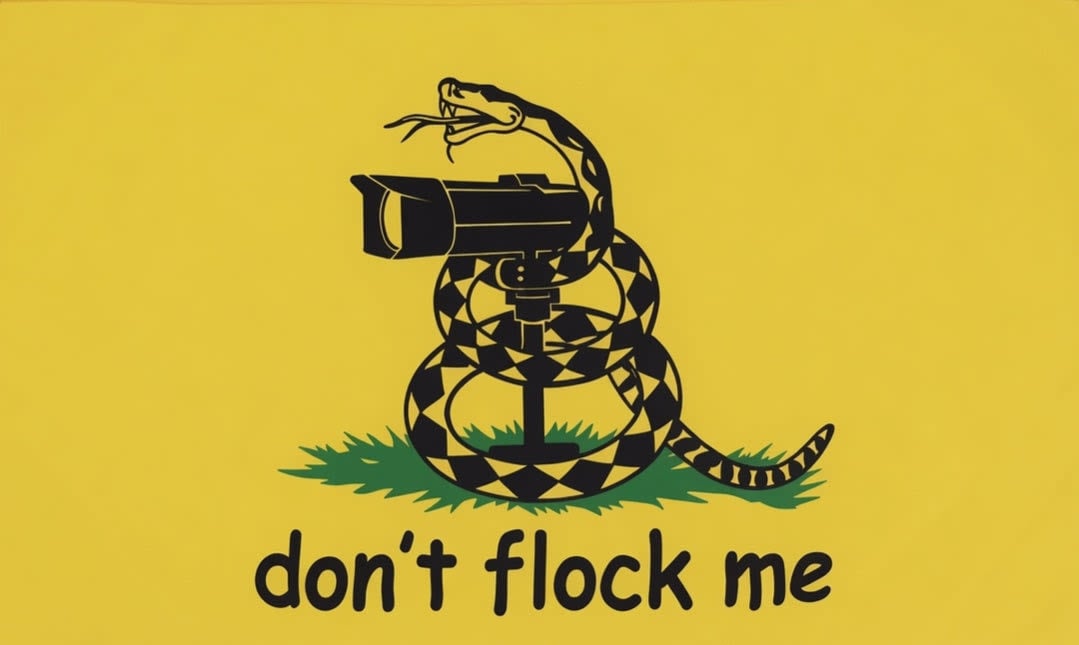
Flock Safety represents arguably the clearest real-world example of privacy concerns. The company operates approximately 120,000 AI-powered license plate cameras across the United States.
Critics argue the danger lies in the network itself: law enforcement can run algorithms across the entire grid, flagging movement patterns as "suspicious." After reports surfaced of officers misusing the system, the company reduced its default data retention period from 30 days to 7 days.
Transparent blockchains are global, permanent, and free for anyone to query. On-chain address clustering capabilities have matured for years. The real bottleneck has always been linking publicly visible on-chain addresses to real-world identities—and advancements in AI are very likely to dismantle that barrier.
Earlier this year, researchers from ETH Zurich and Anthropic demonstrated that large language model agents could re-identify pseudonymous users on Hacker News with high accuracy using only personal profiles.
It is reasonable to expect that future AI could reconstruct an individual's entire on-chain activity history using nothing more than a transaction hash from a single tweet or a withdrawal from a KYC-compliant exchange. Blockchains never forget.
Grayscale made the same argument when launching ZCSH: as AI transforms how financial activity is monitored, the need for genuine financial privacy will only grow. Privacy transactions are a response to increasingly automated and permanent surveillance. We will continue monitoring this trend closely.
Join TechFlow official community to stay tuned
Telegram:https://t.me/TechFlowDaily
X (Twitter):https://x.com/TechFlowPost
X (Twitter) EN:https://x.com/BlockFlow_News
 @galaxyhq