Zcash $125 Million Treasury Sparks Controversy: Community Proposes Four Reform Initiatives to Cancel 8% Block Reward Subsidy
Author: TechFlow

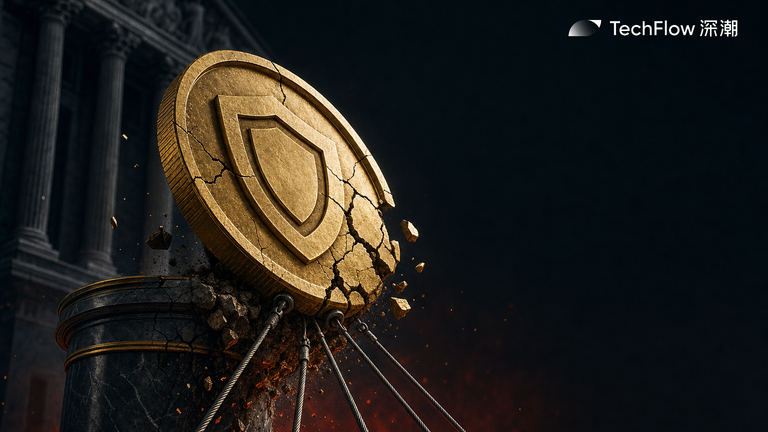
TechFlow Preview: With the token price recovering, the scale of the Zcash grant fund has seen dramatic expansion. The net assets of the ZCG treasury, responsible for funding the ecosystem, recently surged to $125 million, far exceeding daily development expenditure needs. Block rewards originally intended to incubate innovation are now evolving into a governance burden of idle funds.
This inversion of fund oversupply and token inflation has triggered intense backlash from the core development team and the community. Multiple members, including co-founder Sean Bowe, have successively proposed reform plans, with their core demand directly targeting the termination of the current 8% block reward allocation and pushing for a complete restructuring of the funding mechanism.
The community has currently crystallized four radically different approaches in a fierce debate, ranging from immediately cutting off subsidies to completely abolishing the development fund, with positions hardening on all sides. This is not just about who controls over $100 million in funds, but fundamentally addresses how decentralized networks can balance long-term maintenance with inflation dilution.
$125 Million Treasury Sparks Controversy: Continuous Subsidies Lead to Capital Stranding
As the crypto market rebounds, the treasury scale of the Zcash Grant Program (ZCG) continues to rise steadily. According to a Bankless in-depth review, the net funds held by this special fund have reached approximately $125 million, an amount that far exceeds current routine expenditure levels.
The source of ZCG's funding relies on a fixed blockchain mechanism. Under previously established rules, 8% of the rewards generated by each block on the Zcash network is automatically transferred to this fund. However, over the past several years, the approval and payout speed for actual funded projects has lagged far behind the automatic accumulation rate of block subsidies.
This blunt, continuous influx of funds has sparked widespread skepticism among token holders. A large number of community members criticize that despite the treasury's severe oversupply, the network continues to mechanically generate token inflation, which not only dilutes secondary market liquidity but also results in the long-term idling and inefficient stranding of valuable ecosystem assets.
Co-founder's Draft Takes Initial Action: Plans to Halt 8% Subsidy and Redirect to Reserve Mechanism
Amid escalating controversies, Zcash co-founder and current head of Tachyon, Sean Bowe, took the lead in taking action. He formally submitted an improvement proposal draft to the community, recommending the complete termination of the current 8% block reward allocated to ZCG during future network upgrades.
Sean Bowe proposes that during a transition period, this 8% subsidy be directly transferred to the Network Sustainable Mechanism (NSM). This move would reserve a long-term security budget without issuing additional tokens, preventing continuous dilution of the circulating supply. (For more details, we recommend reading "Redirecting 8% Block Subsidies to the Sustainable Mechanism: Zcash Restructures Token Distribution")
The draft simultaneously clarifies that existing ownership and independent approval rights over ZCG's reserve assets remain unchanged. Even if incremental subsidies are cut off in the future, the existing $125 million in assets is sufficient to support developers for several years. Therefore, this proposal both eliminates pointless inflation and leaves ample financial buffer for ecosystem innovation.
Four Proposals Clash: Community Engages in Fierce Battle Over Fund Destinies
Beyond Sean Bowe's plan, three additional radical governance drafts have continuously emerged within the community. The four proposals respectively point to different disposal paths: terminating ZCG grants, completely abolishing the entire development fund, gradually stepping down to zero, and transferring surplus funds to the community treasury pool.
The camp supporting subsidy reduction argues that the current development fund originated from early privileged designs, and ZCG is not directly constrained by votes from all token holders. After rising coin prices amplified the fund's scale, the unconstrained automatic printing mechanism violates the original intent of decentralization and must be corrected as soon as possible through a hard fork.
Opponents, meanwhile, have expressed deep concern for the protocol's future. They point out that if development funding is hastily canceled without establishing a comprehensive alternative incentive system, subsequent core protocol maintenance, zero-knowledge proof upgrades, and code audits may face discontinuation risks, thereby severely damaging the public chain's long-term vitality.
Inflation Suppression and Governance Breakthrough: Deep-Water Test for Decentralized Public Chains
The growing pains Zcash currently faces reveal the common dilemma of first-generation Proof-of-Work public chains in tokenomic design. As early reserved development subsidies expand infinitely alongside market cap growth, balancing developer incentives with holder rights has become an unavoidable exam question for all PoW projects.
The focus of community discussion has currently spread from simple fund oversupply to power restructuring. Token holders desire to reclaim fund allocation rights, core developers hope to ensure R&D proceeds without interference, and miners expect more block rewards to flow back into hashpower support. All parties' interests are clashing fiercely in the proposal discussion area.
All proposals are currently in the public review stage, without a final consensus yet formed. This roadmap battle surrounding the $125 million treasury will not only determine Zcash's future supply curve but also provide an observational sample for the entire Web3 industry exploring sustainable and decentralized public chain funding mechanisms.
Join TechFlow official community to stay tuned
Telegram:https://t.me/TechFlowDaily
X (Twitter):https://x.com/TechFlowPost
X (Twitter) EN:https://x.com/BlockFlow_News
 深潮TechFlow