Coinbase, Robinhood, and Circle: Three Major Issuers, One Distribution Challenge
Author: Alea Research
Compiled by: TechFlow
TechFlow Summary: Coinbase listed stock tokens, Robinhood built its own chain, and Circle launched Arc. All three giants are betting on "issuance," but what truly dictates success is asset accessibility. This article breaks down Jumper routing data to reveal how quickly a new chain captured nearly 8% of cross-chain volume in just 74 days, and how LI.FI quietly collects routing fees amid the issuer battle.
Coinbase listed stocks on Base, Robinhood built a chain, and Circle opened Arc on September 16. Each of them needs (more) reach.
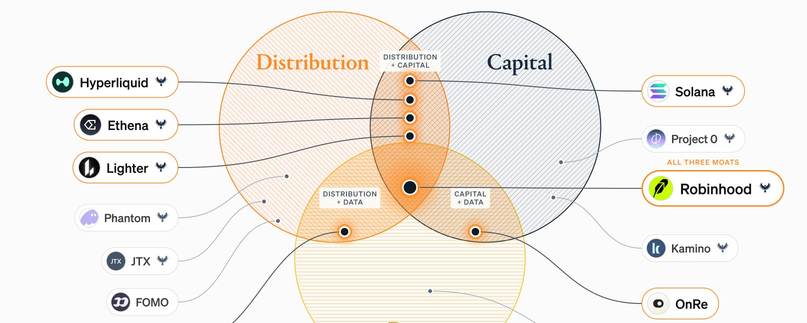
The major launches from Coinbase, Robinhood, and Circle have all had profound impacts on the crypto industry. Each launch shares a common thread: issuance. They all placed a bet this year (from tokenized stocks to stablecoins), and that bet only pays off when people can actually access the assets they issue. That is correct, distribution is key. Over the 30 days leading up to September 10, Jumper routed $934.6 million, a 40.3% month-over-month increase, with its fastest-growing destination being a chain that was only born 74 days ago.

LI.FI distributes tokenized stocks from xStocks, Ondo, Backpack, Robinhood, and Coinbase. A single integration reaches all issuers and brings them to over 1,000 apps and wallets.
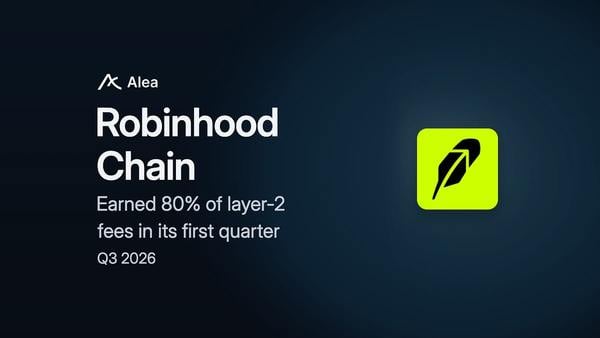
Starting from its first routed funds on June 28, Robinhood Chain went on to capture 7.9% of Jumper's 30-day volume, a 2.9 percentage point month-over-month increase, making it the largest gainer in destination share.
Intent-based execution allows users to start with USDG on one chain and instantly hold stock tokens on another without manual bridging or swapping.
Advance boosted the median transfer amount by 39.1% in its first month to $89.42.
Circle’s Arc mainnet opened on September 16, with LI.FI integrating for routing on day one, mirroring the same move Jumper made for Robinhood Chain in June.
Five Issuers, One Integration
Tokenized stocks welcomed their issuers in 2026. Coinbase natively listed stocks on Base in August, with LI.FI becoming one of the earliest routing systems to host them. Robinhood built an entire chain around them. Ondo, xStocks, and Backpack have already gone live. Centrifuge signed an agreement on August 31, and Circle’s Arc opened on September 16.
Each of them faced the same problem on launch day. If someone cannot access a tokenized stock from the wallet, chain, or asset they already hold, it is worthless to them. Issuance is only the easy half.
This is the service LI.FI sells. Jumper is the consumer-facing frontend running on top of it. This router captures 18.0% of the $5.14 billion cross-chain aggregator category, ranking second among 22 platforms, just behind the LI.FI routing API, which runs it and holds 23.2%. DefiLlama records both as separate protocols because Jumper’s transfers fall outside LI.FI’s data reporting lines rather than inside, allowing their shares to be additive. The LI.FI tech stack routed 41.2% of the category.

The median transfer is $91, with stablecoins accounting for roughly half of all receiving routes.
Averaged daily, this figure represents a combined average daily routing volume of $39.5 million across both endpoints. The busiest day this quarter was September 4, hitting $59.9 million. Growth has been accelerating since mid-August.

Robinhood Chain Goes from Zero to 7.9% in 74 Days
Robinhood Chain routed its first Jumper funds on June 28, 2026. Seventy-four days later, it accounted for 7.9% of Jumper’s 30-day volume, making it the fifth-largest destination after Ethereum, Arbitrum, Base, and Solana. That amounts to $73.4 million over 30 days and a cumulative $119.6 million since launch.

It also had the largest share growth among destinations, rising 2.9 percentage points month-over-month. Ethereum added 1.3 percentage points, Ink grew by 1.2 percentage points from a much smaller base, and Solana increased by 1.1 percentage points. No chain lost more than one percentage point. Capital flows are spreading toward recently opened networks rather than concentrating behind a single winner.

Dollars are one perspective, routing volume is another. Based on Jumper’s daily sampled routing share, Robinhood Chain accounts for nearly 26%, while its dollar share is only 7.9%. This chain is absorbing a high volume of small transfers rather than a few large ones, which is exactly what a healthy retail platform looks like.

Forty Tokenized Assets and the Routes to Access Them
Robinhood Chain is built around tokenized stocks, with Jumper serving as one of its capital routing solutions. Out of 280 settled transfers, 52.9% arrived in ETH and 36.1% in USDG.
Every asset listed by Robinhood requires dollars for trading, and Jumper serves as one of the routing paths bringing that liquidity.
Intent-based execution directly routes the purchase of stock tokens. Users start with USDG on one chain and end up holding SPCX on Robinhood Chain, with solvers competing to fulfill orders.

Apps do not need to build solver infrastructure in-house to access this routing; LI.FI has already deployed it to over 1,000 integrators, including Robinhood Wallet, MetaMask, and Phantom. Jumper also independently operates rwa.jumper.xyz, hosting approximately forty tokenized assets ranging from NVDA and SPY to gold and short-term Treasury bills.
Of the 120,000 routes generated through Jumper itself over four months, tokenized stocks accounted for only 34. Jumper’s native app is just one of several routing paths, and arguably the least likely to handle those transactions. Building distribution before demand arrives is exactly what matters here. The default entry point for an asset class is only worth securing at a low cost while the class is still small.

Fragmentation is worse than the demand metrics suggest, which is precisely why this layer can charge fees. One Tesla stock appears as eleven independent tokens in LI.FI’s proprietary registry, distributed across eight chains and minted by Coinbase, Backed, Ondo, xStocks, Robinhood, and smaller issuers. NVIDIA is also eleven. Holders of one cannot use it where another is quoted, so someone must make them interchangeable.

The Cost of Liquidity Flow
Jumper launched Advance during the first week of August: paper trading, smart slippage, large order splitting, and limit orders executed via CoW Swap and 1inch. August also added perpetual contracts and Solana quote simulation.
During its launch period, the median transfer rose from $64.30 to $89.42. The upper tail moved inversely. The 90th percentile dropped 10.8% to $2,116.34, and the share of transfers exceeding $10,000 fell from 4.2% to 3.7%.
Both trends hold true because Jumper achieved underlying volume growth. The time to accumulate 1,000 transfers decreased from 2.65 hours to 1.97 hours. The number of large transfers increased, from roughly 380 to 445 daily. Their growth rate lagged behind all other segments, which is why their share declined even as the raw count rose.

Gas fees per transaction remained nearly flat, while transfer sizes did not; the median gas fee for transfers under $100 was 0.077% of the transfer amount, whereas the same ratio for transfers over $10,000 fell below 0.001%. By transaction count, transfers under $100 dominate Jumper traffic, accounting for 589 out of every 1,000. Advance was built for the other side of the ledger.

During the same period, routing solution concentration increased. Based on rolling weekly averages, Relay’s share of Jumper routing rose from 13.9% in mid-May to 34.0% on September 9. The top six venues now account for roughly two-thirds of routing choices, compared to about half in May.
LI.FI’s proprietary Intents venue currently runs at a 6.2% share. LI.FI fully owns this venue.

Arc Opens on September 16
Circle’s Arc mainnet opened on September 16, with LI.FI launching on day one. A single integration enables on-chain trading on Arc, cross-chain bridging from all other supported ecosystems, and one-click deposits. This mirrors the exact move Jumper made for Robinhood Chain in June and Coinbase’s Base in August.
Earn serves as the configuration layer. It currently indexes 250 vaults across 26 protocols. Aave holds $16.8 billion of these, representing 45.7%. Composer allows access to 95.2% of these vaults in a single transaction. It added Compound, infinifi, and Apyx vaults in June, Plume’s Nest in July, and seven-day and thirty-day yield views plus insurance risk labels in August. It has now integrated into MetaMask’s Agent Wallet.

Users can currently earn yields ranging from 7.9% in USDC vaults to 24.4% at the top of the list.

Robinhood Chain took just 74 days to go from zero to capturing 7.9% of Jumper’s volume. Arc opened on September 16, and the same routing infrastructure is already in place. As new venues continually emerge, this position continues to compound, and 2026 certainly does not lack for new openings.
Join TechFlow official community to stay tuned
Telegram:https://t.me/TechFlowDaily
X (Twitter):https://x.com/TechFlowPost
X (Twitter) EN:https://x.com/BlockFlow_News
 @AleaResearch