Dissecting the Helium Short Squeeze: Surges 5.7x in Two Weeks, Yet Revenue Plunges 82% — Who’s Swimming Naked?
Author: 0xResearch
Compiled by: TechFlow
TechFlow Summary: The Helium token surged 5.7x from its bottom within two weeks. While surface catalysts include city partnerships and passed governance proposals, on-chain data shows revenue actually plummeted by 82%. This article dissects the true causes of the short squeeze, helping investors distinguish genuine demand from position squeezes to avoid buying into sentiment peaks.
Good morning, and happy Thursday!
Strong institutional ETF inflows, along with on-chain breakout activity by players on Robinhood Chain, continue to paint a constructive picture for on-chain fundamentals, capital flows, and price action.
Below, we dissect HNT's 5.7x rally, separating actual fundamental catalysts from the positional dynamics that escalated it into a short squeeze. The key question moving forward is whether operator data offloading burns can accelerate enough to outpace new issuance, thereby validating a valuation reset.

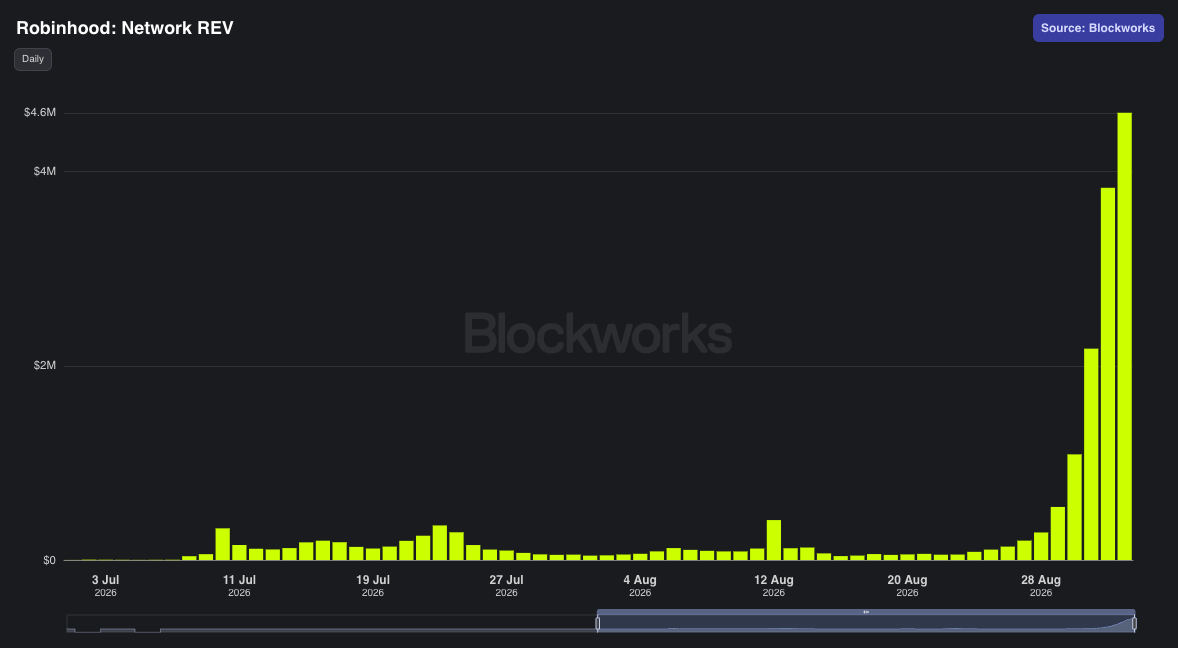
Block space demand on Robinhood Chain has rebounded, with REV breaking $4.6 million yesterday. This marks 11 consecutive days of growing network demand, pushing this young L2 to capture 97% of total L2 profits and 42% of all on-chain network revenue. It's hard not to annualize these figures and imagine greater impacts for HOOD stock and the applications on the network.
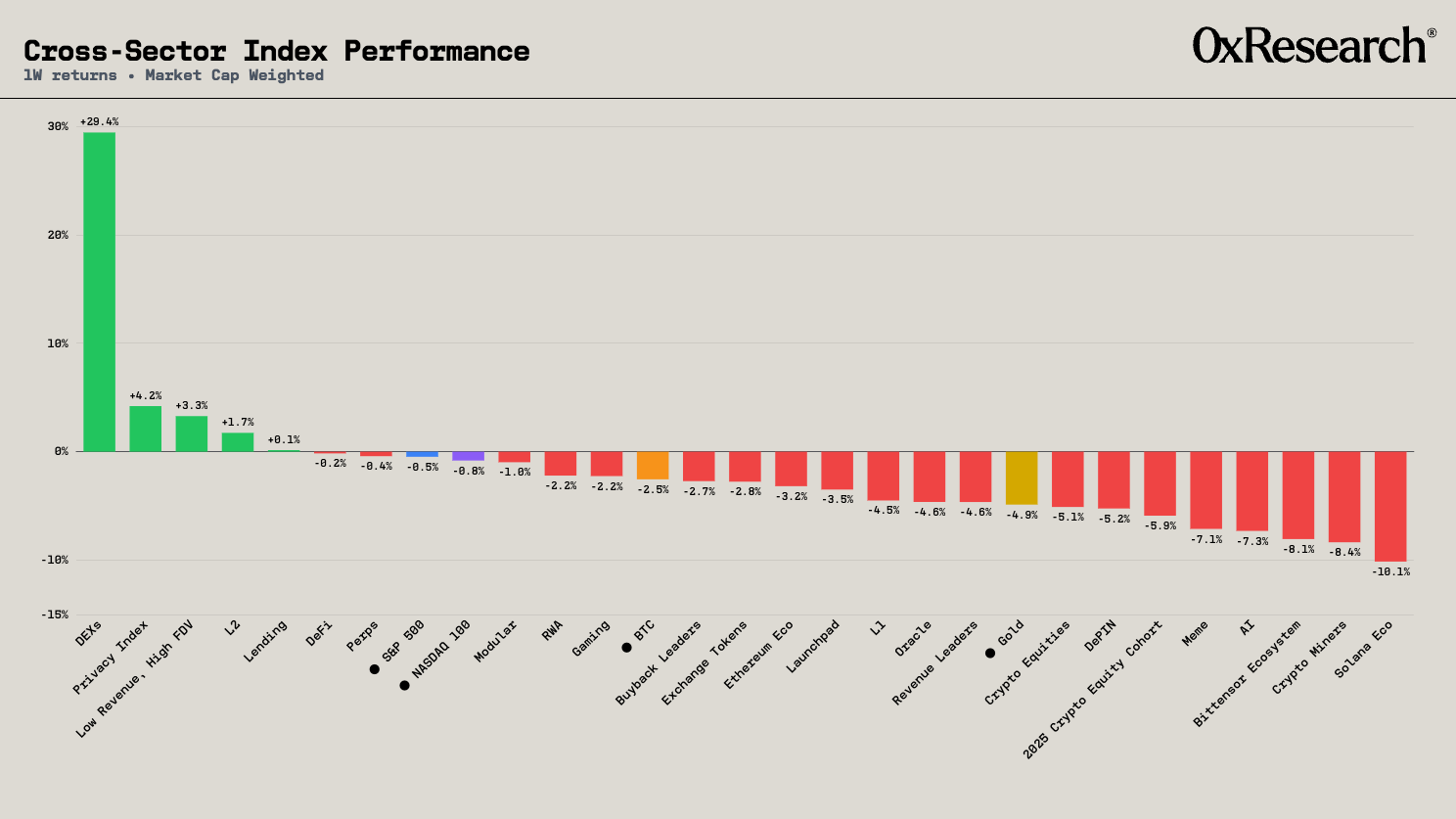
Uniswap is one such winner, serving as the largest DEX on Robinhood Chain. Recent adjustments to token incentives and its breakout deployment on Robinhood drove the token up 33% this week, leading indices despite flat major coins and a bearish stock market. Index data confirms this: the DEX sector rose 29% this week, significantly diverging from broader price action, with UNI driving the outperformance.
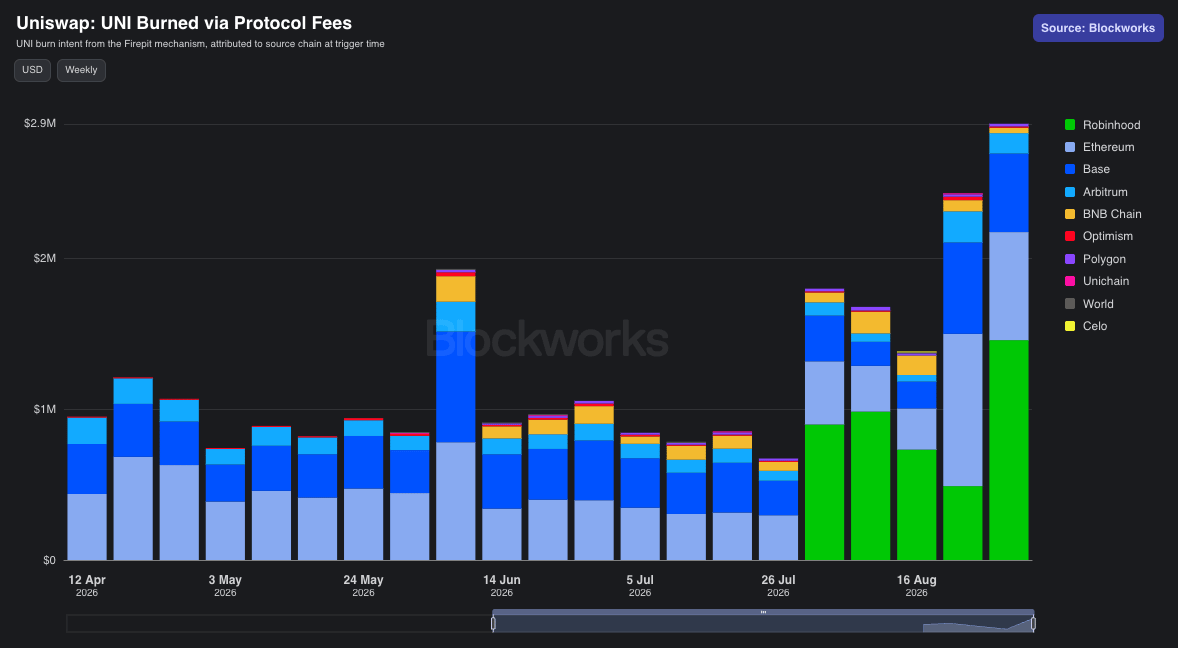
The launch of Robinhood Chain represents a "rising tide lifts all boats" scenario. Rather than siphoning volume from existing platforms, it brought incremental demand to the entire on-chain economy. For Uniswap, this is reflected in UNI burned through protocol fees, which hit weekly highs with over 50% of burns coming from Robinhood Chain. Similarly, over the past 30 days, Robinhood Chain accounted for over 50% of all on-chain Uniswap trading volume. Based on recent activity, deployments on Robinhood surpassed the combined activity of all other chains, including the ETH mainnet.
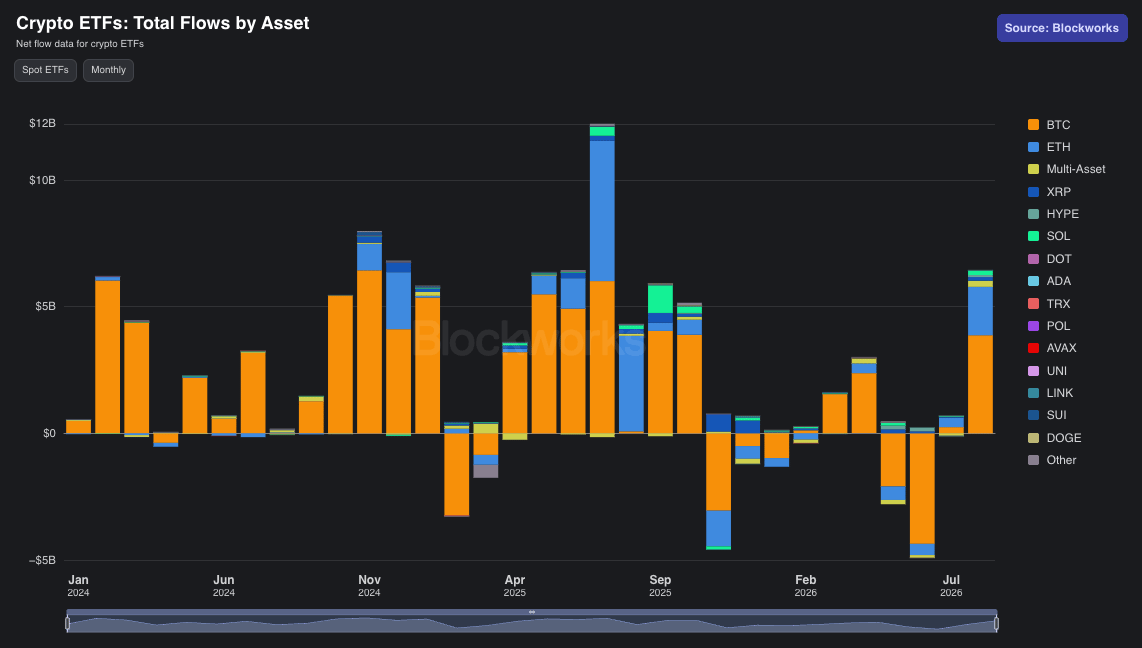
Beyond the on-chain battlefield, ETFs appear to be bottoming in terms of assets under management, suggesting major coins may be forming higher timeframe lows. In August, BTC ETFs saw new inflows of $3.871 billion, while ETH ETFs added $1.911 billion. SOL and HYPE products also attracted demand, but at levels far below their predecessors.
Taken together, capital flows, fundamentals, and price action support an optimistic outlook for year-end and beyond.
Anatomy of the Helium Short Squeeze
HNT hit a multi-year low of $0.167 on August 15, with a market cap nearing $31 million. Two weeks later, the token tapped $0.96 intraday, representing a 5.7x increase from trough to peak. As of this morning, it traded near $0.50, still up over 125% for the week, with a market cap of roughly $95 million. This rally warrants dissection because the catalysts were real, positions amplified them, and the on-chain record is more telling than any narrative.
The news unfolded in four steps. On August 21, Helium released HIP-150, proposing to direct Mobile subDAO emissions toward deployers carrying paid data traffic. On August 28, Helium announced that Celina, Texas, had transitioned its public Wi-Fi to operator coverage on the network. Shorts got rekt that weekend, and the community passed HIP-150 on August 31 with a 96.2% vote. Subsequently, Helium launched HeliumOS on Tuesday, a B2B platform that provides operators and MVNOs with tools to rent coverage rather than build it themselves.
The U.S. Census Bureau lists Celina as the fastest-growing U.S. city among those with populations over 20,000. The city stacked Helium's operator offloading onto its existing public library, senior center, and downtown shop Wi-Fi, with phones connecting via Passpoint credentials on their SIM cards. Helium's oracles show the entire mobile network transmitted 78,000 GB of data on the day of the announcement, with Celina accounting for roughly 0.1%.
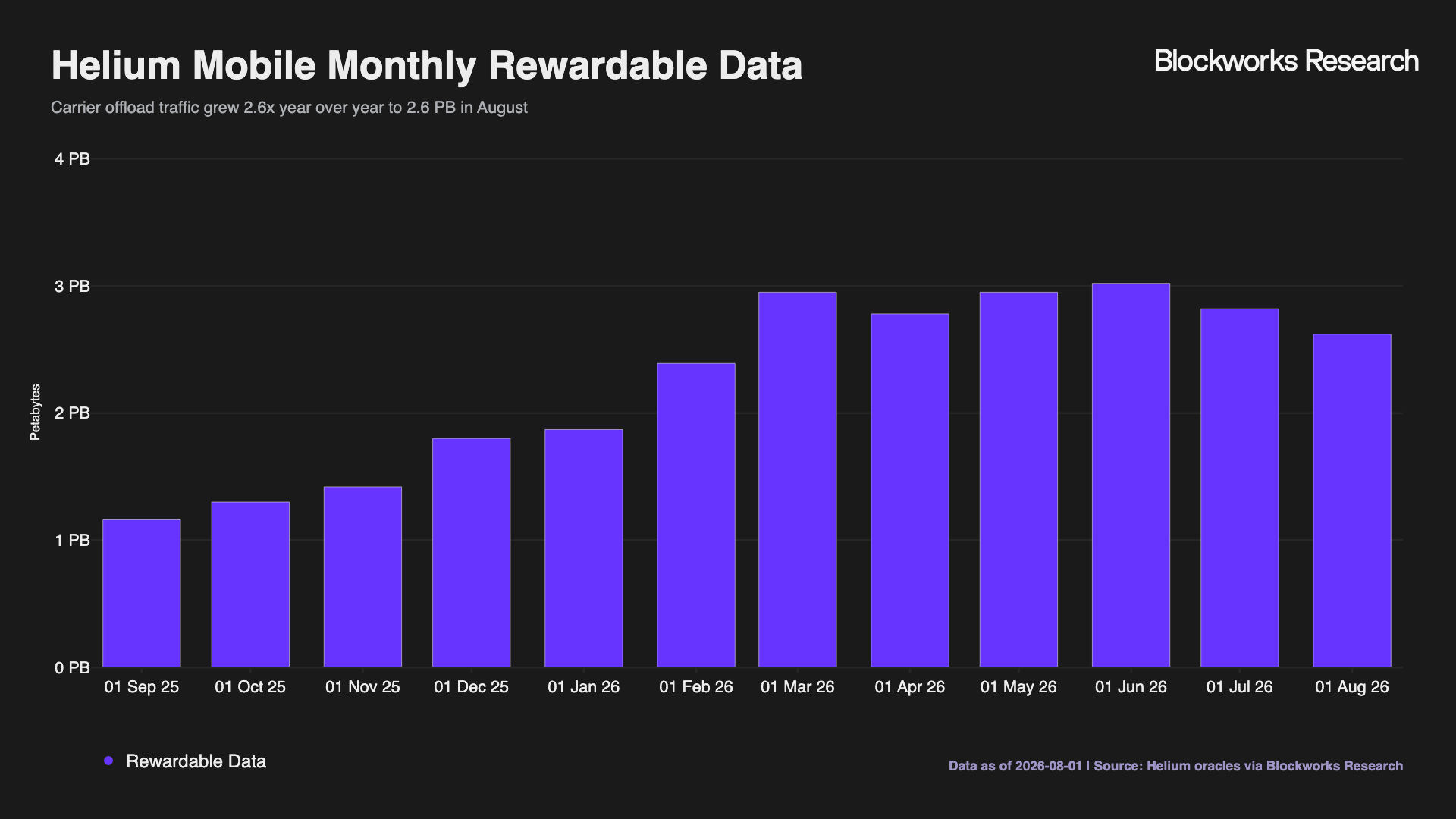
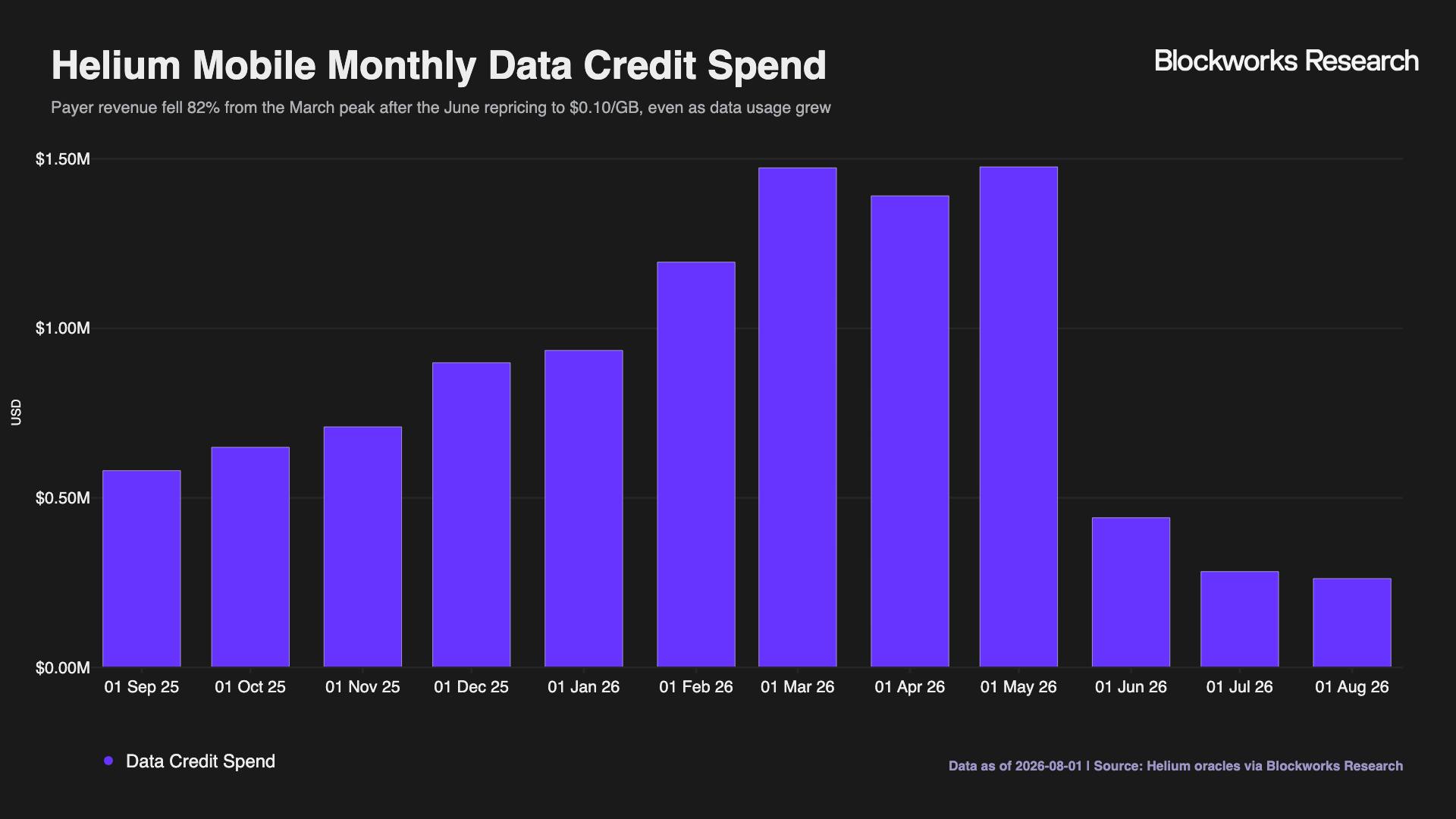
Zooming out, fundamentals are diverging in two directions. Usage looks robust, with rewardable operator offloaded data up 2.4x year-over-year, increasing from 1.26 PB in August 2025 to 3.06 PB last month, and daily traffic maintained an uptrend without inflection points during the rally. Revenue, however, tells the opposite story. In August, payers spent $263,000 worth of data credits on mobile traffic, down 82% from the March peak of $1.47 million.
As we reported in June, the $0.50/GB fee behind the peak was subsidized by Nova Labs, burning its own HNT as a stopgap, while operators negotiated location-based pricing ranging from zero in low-value areas to over $0.50 at airports. HIP-143 adjusted nominal rates to ~$0.10/GB, a level operators could accept at scale, and oracle data showed subsidies gradually phased out in June. The March peak measured both Nova's balance sheet and operator demand. August's DC burn represents the first clean read of organic operator spend.
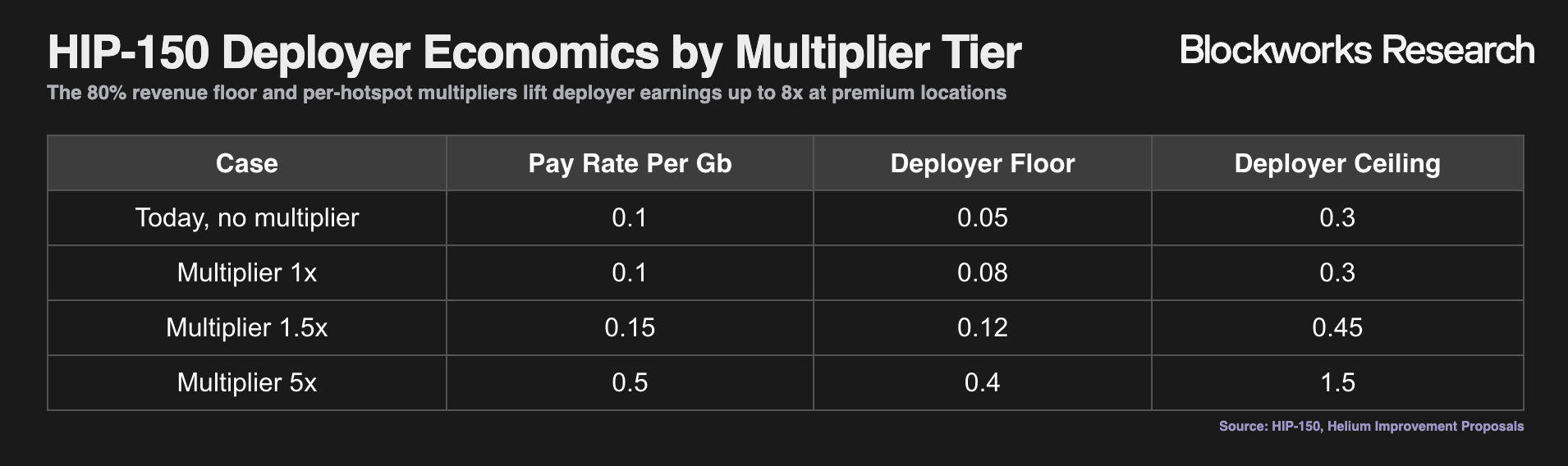
The removal of subsidies explains the urgency of HIP-150. HIP-149, passed in July, set the deployer floor price at 50% of the new operator rate, or $0.05/GB. The August proposal restored economic incentives, raising the floor to 80% ($0.08/GB) with multipliers up to 5x per hotspot, effectively onboarding location-based pricing previously negotiated off-chain. Backstop minting now redirects directly to the deployer data rewards pool, plugging the leakage where only 1.00 HNT reached deployers for every 1.60 HNT minted by the DAO. Nova Labs will sustain its service provider rewards through July 2027, increasing the Mobile data bucket's share of the subDAO from 70% to 94%.
The valuation math remains harsh. August's Data Credit spending annualizes to roughly $3.1 million against a $95 million market cap, roughly 30x payer revenue, while the supply side weighs against holders.
HIP-149's growth subsidy mints approximately 5.96 million HNT monthly into a Nova-managed treasury in the first year. This raises the effective maximum supply from 206 million to 347 million. Thus, at current rates, operator burns are less than one-tenth of monthly issuance.
Position structure filled the gap. HNT perpetual funding rates plunged below -1.2%, with weekend short liquidations hitting $1.6 million versus less than $200,000 for longs. Volume on August 30 reached $248 million, exceeding the entire market cap.
The tape describes a short squeeze fueled by a compelling narrative.
This squeeze re-priced HNT to a level where growth assumptions must be realized.
Nova sold its consumer business, terminated subsidies, and is now funding operator expansion via the HIP-149 treasury. Therefore, value accumulation hinges entirely on growth in operator offloading burns outpacing new issuance.
Management set its own target in June: an inflection point when traffic reaches 7 to 10 times current levels. At that point, Helium's roaming share with partner carriers hits double digits, flipping pricing leverage.
HIP-150 keeps deployers solvent until that milestone arrives. HeliumOS is the promised platform layer from Di Dio's roadmap. However, its launching customer, Affinity Ventures, owns Noble Mobile and recently acquired Helium Mobile.
Join TechFlow official community to stay tuned
Telegram:https://t.me/TechFlowDaily
X (Twitter):https://x.com/TechFlowPost
X (Twitter) EN:https://x.com/BlockFlow_News
 @0xResearch