Why Are Crypto Treasury Companies Buying Bitcoin and Ethereum Again?
Written by: Lockridge Okoth
Compiled by: Chopper, Foresight News
All three companies—Strive, BitMine, and Strategy—announced their latest cryptocurrency purchase records on Monday. Just these two Bitcoin treasury companies, Strive and Strategy, invested over $500 million in purchases within a single week.
Buying at high prices is inherently the core of their business model, not an operational misstep. These companies raise funds through equity offerings to purchase crypto assets; and when coin prices rise, their stock offerings typically perform best.
What did these three companies buy?
Strive, led by CEO Matt Cole, added 1,800 bitcoins to its portfolio at an average cost of $79,431 per bitcoin. Following this increase, its total bitcoin holdings reached 23,156, with a market value of approximately $1.83 billion on Monday.

Regulatory filings clearly disclose this funding mechanism: Strive issued 3,579,147 new Class A shares that week, increasing its cash reserves by $11.6 million despite purchasing a large volume of bitcoins, bringing total cash holdings to $183.5 million.
BitMine took a different approach. It acquired 53,501 ether this time, marking 65 consecutive weeks of uninterrupted purchases, a buying cycle that began as early as June 2025.
Yield generation is this company's core differentiator. BitMine has staked 86% of its ethereum holdings (totaling 5,067,309 ETH) through its U.S.-based validator network, MAVAN.
Chairman Tom Lee anticipates that this staking operation will generate annual returns between $335 million and $390 million. Currently, BitMine holds 4.9% of ethereum's total supply, still 133,888 ether away from its goal of capturing a 5% stake.
The third company to make a move was Strategy. It purchased an additional 4,603 bitcoins, ending a previously paused buying cycle that had lasted 10 weeks. Strategy disclosed its average cost basis per bitcoin, which currently stands at $75,412.
ETF capital flows turned earlier
The catalyst for this buying surge stemmed from a shift in fund capital flows. According to SoSoValue, U.S. spot Bitcoin ETFs absorbed over $3.3 billion in investments during August; in contrast, June saw massive outflows totaling $4.5 billion.
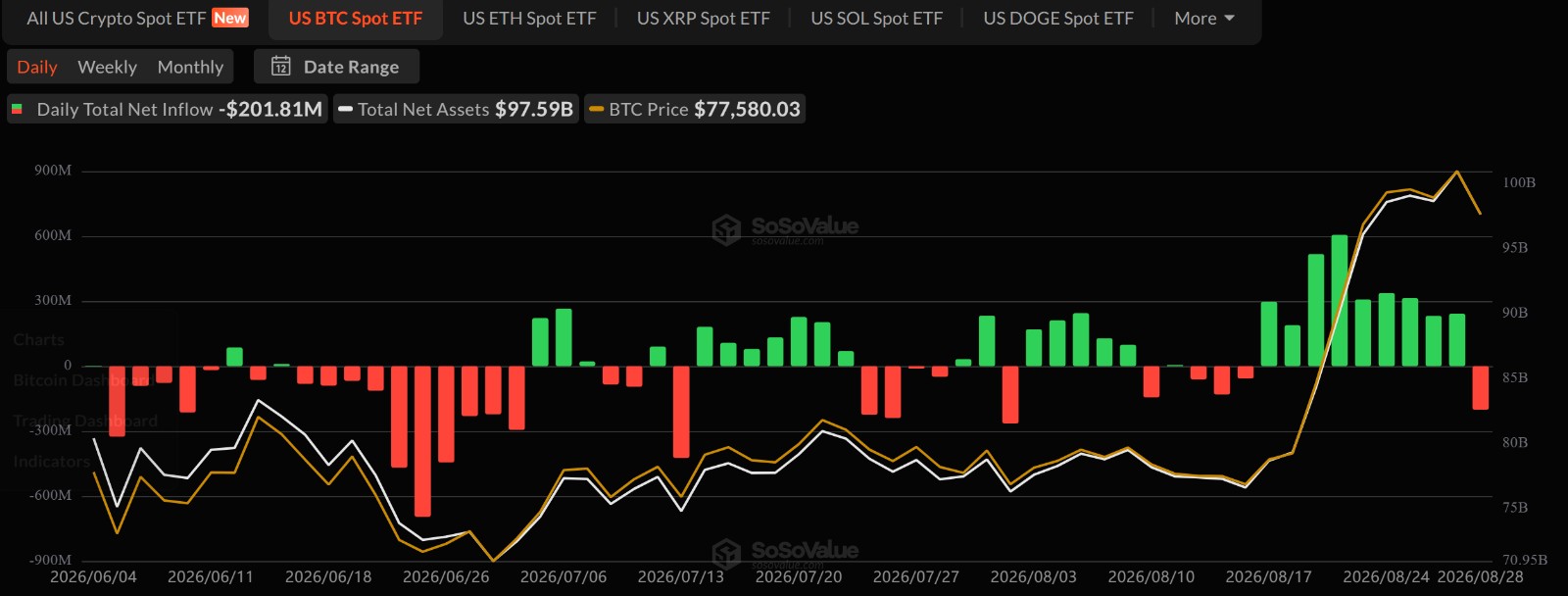
Ethereum ETFs saw a synchronized reversal; following previous outflows, net inflows reached approximately $1.75 billion, marking the strongest performance since October last year. Driven by this capital influx, Bitcoin and Ethereum prices rallied 33.3% during this period.
This complete transmission mechanism drives the current market cycle: institutional buying pushes up cryptocurrency prices, rising coin values boost the stock prices of these treasury-holding companies; these firms then finance further acquisitions through secondary stock offerings, using the proceeds to buy more crypto.
What changed in the August market environment?
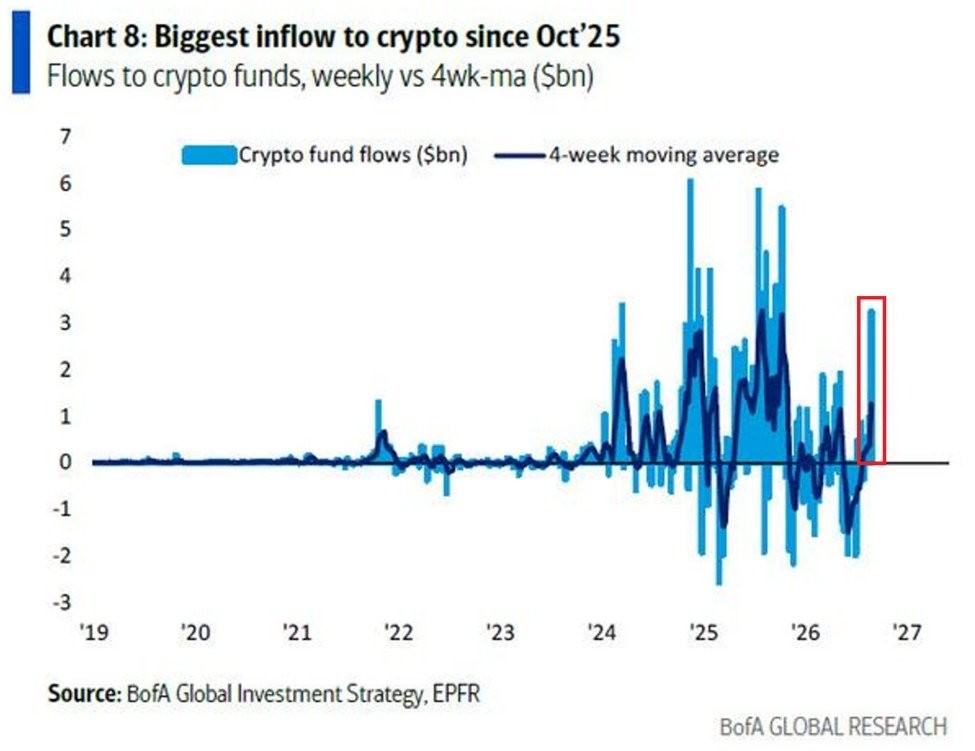
Data from Bank of America shows that crypto funds recorded a net inflow of $3.2 billion last week, setting a weekly record high since October 2025 and reflecting growing market optimism.
A prevailing market narrative suggests capital fled a cooling AI sector bubble into the crypto market, but the timeline does not support this conclusion. The selling pressure in the AI sector was concentrated in July: the Philadelphia Semiconductor Index fell 20.6% that month, and the Korea Composite Stock Price Index (KOSPI) retraced 22%. In contrast, the August market environment visibly recovered, with the Nasdaq 100 index rising 4.2%.
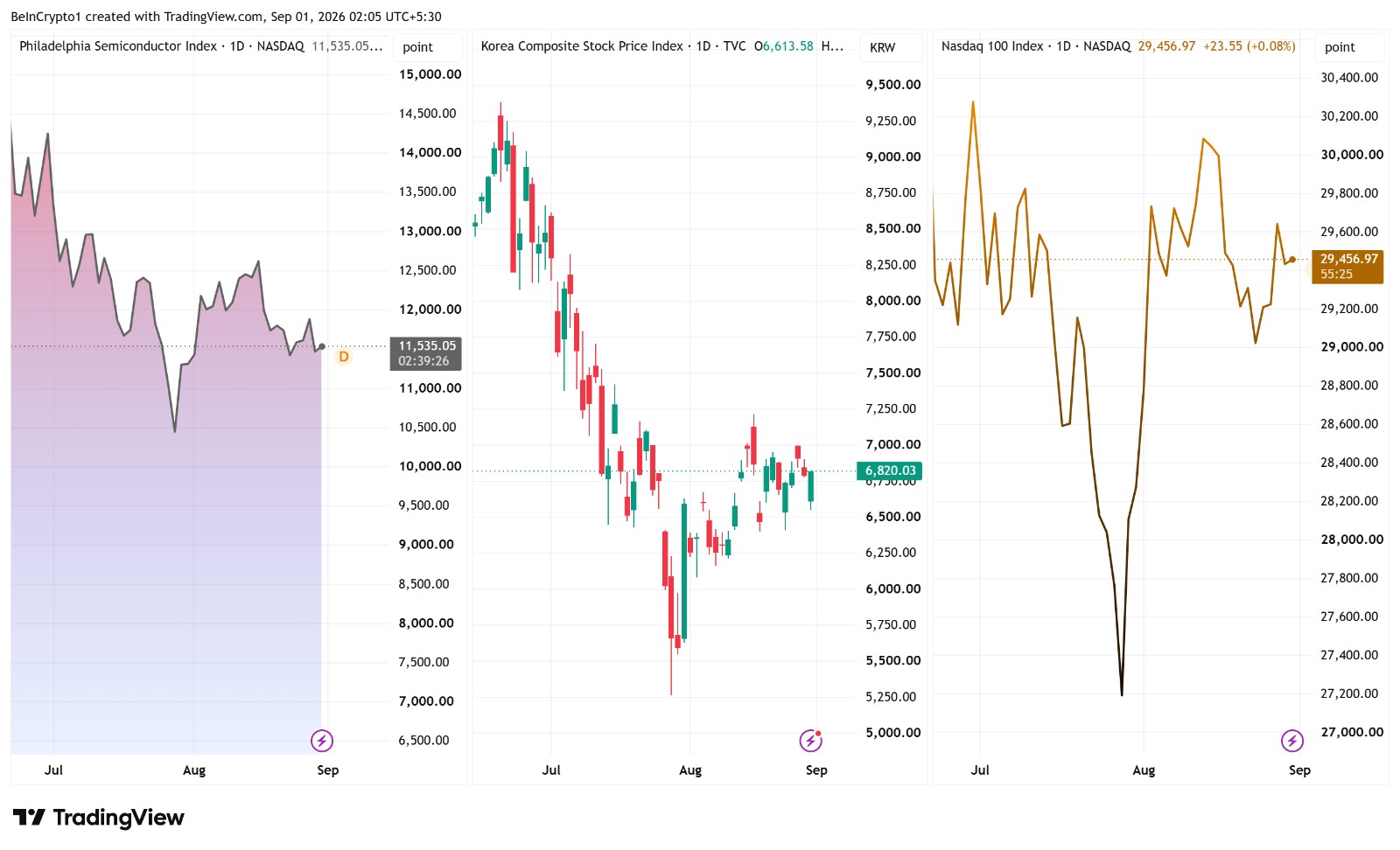
This capital rotation is also evident elsewhere: foreign investors withdrew 10.17 trillion Korean won from the Korean stock market in August, while trading volumes at South Korea's leading crypto exchange, Upbit, surged nearly eightfold.
U.S. policy developments also released positive signals. On August 19, U.S. President Trump urged Congress to advance the CLARITY Act, which is expected to come to a vote on September 15.
On the same day, the U.S. Treasury expanded its long-term bond repurchase scale, raising the cap for a single operation from $2 billion to at least $4 billion. This policy's easing effect was relatively limited; the 30-year U.S. Treasury yield briefly dipped to 5.19% before rebounding to 5.25%.
Bitcoin traded at approximately $78,800 on Monday. The factor that truly halts these companies' continuous cryptocurrency purchases has never been falling coin prices, but rather closed financing channels.
Join TechFlow official community to stay tuned
Telegram:https://t.me/TechFlowDaily
X (Twitter):https://x.com/TechFlowPost
X (Twitter) EN:https://x.com/BlockFlow_News
 @beincrypto