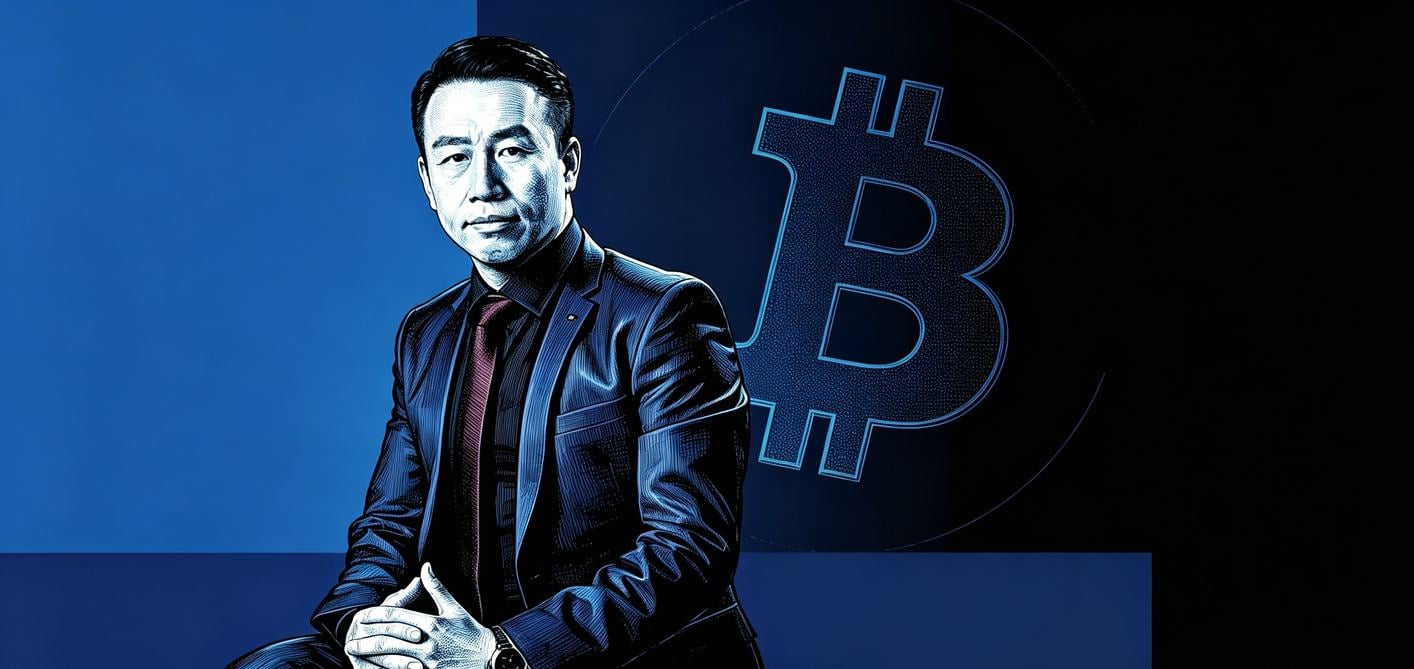
Interview with Cregis Founder Shawn: Entrepreneurship Is a Path of No Return; Finding the Right Value Is More Important Than Chasing Trends
Author: TechFlow
Entrepreneurship is a one-way street.
This resonates deeply with Cregis Founder and CEO Shawn Yan.
As a serial entrepreneur who has been navigating the trenches for over a decade, Shawn has experienced the success of his first venture and the pains of business transformation. He witnessed the 2017 market frenzy where companies could secure funding without even a whitepaper, and repeatedly resisted the temptation to "make a hundred million in a short time."
Over the past decade, the industry has undergone a dramatic clearing, evolving from its untamed early days to strict compliance. Shawn’s entrepreneurial path has mirrored this evolution, iterating from SaaS and FinTech to enterprise digital asset service platforms.
The era changes, product forms evolve, but one of Shawn’s core judgments remains unchanged:
Creating long-term value is more important than chasing every trend.
Today, as the leader of the enterprise-grade digital asset infrastructure platform Cregis, Shawn stands at a subtle crossroads:
On one hand, institutional adoption of Crypto, especially stablecoins, is growing; on the other, many practitioners who have lost faith in Crypto are choosing to leave.
With billions in client funds under management, the regulatory arbitrage era over, and compliance becoming the entry ticket, while the AI era demands higher standards for “understanding customer needs” and “enterprise service efficiency,” how can Cregis, this “shield of protection” composed of Crypto and Aegis, return to the most fundamental value creation of the business world, and continuously build trust with over 4,000 enterprises?
Around these questions, we had a serious conversation with Shawn Yan

Many Things Only Serious Entrepreneurs Know
TechFlow: Thank you for your time. To start, could you please give us a brief introduction?
Shawn:
Hello everyone, I’m Shawn, consider myself a serial entrepreneur.
I graduated from university in 2012 and started my first venture in 2013. Initially, we focused on SaaS services for WeChat merchants, later transitioned to FinTech, and now specialize in enterprise digital asset infrastructure. It’s been over a decade of pushing forward.
When I first started, I heard a saying: entrepreneurship is a one-way street. Later, I realized it was surprisingly accurate.
Once you truly commit to entrepreneurship, the things you deal with and how you think change. You’re no longer facing just a product idea, but an entire team, clients, and long-term responsibilities toward industry development. Everything is interconnected; you need continuous learning, adjustment, and decision-making, making it hard to pause.
TechFlow: For your first venture in 2013, you built a SaaS tool related to WeChat Official Accounts. Does that mean your first startup was a success?
Shawn:
Let’s say it wasn’t a failure. We built the product, acquired a batch of customers, and achieved profitability in the first year.
But we quickly realized that competition in this track was fierce. Since the technical barriers were low, it was easily copied, causing our profitability to drop significantly in the second year.
At the time, we judged that staying in service-oriented SaaS would make it hard to build long-term competitive barriers, so we began transitioning to financial SaaS.
However, the transition was far more difficult than imagined. Transformation requires sustained investment, and back then, whether in strategy, team, or talent pipeline, we weren’t fully prepared. On a personal level, it was a major setback early in my entrepreneurial journey.
But looking back now, that setback was relatively minor. With more experience, we gradually realized that change itself is the only constant. What entrepreneurs truly need to learn isn’t seeking stability, but adapting to change and achieving spiral growth amid fluctuations.
TechFlow: It feels like you analyze the industry more from a financial or tech development perspective rather than a “coin-flipping mindset.” Imagine two paths: one is making quick money through ICOs and snagging a hundred million in a short time, while the other is sticking to infrastructure building for 10 years to earn a hundred million. That temptation is genuinely hard to overcome. Why were you able to stick with your choice back then?
Shawn:
I don’t really trade coins myself. Rather than short-term price volatility, I believe in long-termism.
During the 2017 ICO boom, the entire industry fell into a strong FOMO mindset. Many approached us for collaborations. Given our technical foundation at the time, we could have easily jumped in and potentially reaped high returns in a short span.
But in the end, we chose the other path.
Looking back, what we’ve done has always revolved around one direction: from early trading systems, corporate wallets, and capital operation frameworks, to today’s relatively full-chain, enterprise-facing financial infrastructure that links broader commercial scenarios. Essentially, we’ve been tackling real foundational problems within the industry’s development.
Since the industry was still small back then, providing tech services barely scaled up. To outsiders, we might have seemed a bit naive, earning money too slowly.
But in reality, we possessed profitability sufficient to navigate bull and bear markets. Our business wasn’t built on market sentiment or single-asset cycles, but grew alongside genuine industry demand.
Frankly, we rarely dared to, nor were we willing to, chase money that held no real value:
On one hand, the company’s operations were healthy enough that we didn’t desperately need fast cash; on the other, if something inherently lacked value, we couldn’t convince ourselves, let alone commit to long-term persistence.
TechFlow: I’ve noticed an interesting phenomenon where many VCs now favor investors who are already wealthy, meaning those without funding pressure may prioritize long-term value more.
Shawn:
That’s absolutely true, especially for us running enterprise-grade wallets, where the responsibility is immense.
You’re essentially guarding a “mountain of gold.” The greatest challenge isn’t technical, but how to resist temptation, hold your boundaries, and never touch client funds. This fundamentally tests a person’s moral foundation and long-term values.
If someone lives under constant financial pressure or is accustomed to pursuing returns through high-risk, highly leveraged methods, they are statistically more likely to make different choices when faced with temptation.
We once dealt with a client who closely examined the management team’s attitude toward risk and assets when choosing a wallet partner. In his view, a team constantly focused on short-term gains and high-risk opportunities wouldn’t be suitable for managing long-term assets.
For us, consistently following our inner convictions matters. Looking back, taking the path of long-termism was both accidental and inevitable. Finding the right alignment between your psychological, technical, and market comfort zones creates the optimal state.
Bitcoin Is the Inevitable Product of Economic Globalization
TechFlow: Did you enter the crypto space because of Bitcoin? What prompted you to learn about it initially?
Shawn:
I first encountered Bitcoin during college.
I studied computer science, and my professor mentioned Bitcoin and mining in class. I’ve always been interested in new technologies and enjoy digging into their operational principles, so after class, I researched extensively, ran mining programs on my own PC, and at the time, some websites even gave away free Bitcoins.
Back then, I thought it was quite fascinating, but mostly viewed Bitcoin as a novel technology, unaware of the deeper financial value behind it.
Nevertheless, founding a startup around Bitcoin early on wasn’t easy. The ecosystem was tiny, infrastructure and application scenarios were immature, leaving limited commercial space to explore.
2017 marked a critical inflection point. As public chains, smart contracts, and other infrastructure matured, the industry shifted from single-asset narratives to richer application scenarios, giving rise to new startup opportunities.
Our later transition from SaaS to FinTech happened precisely during this period, as we gradually encountered the growing needs of enterprise clients and financial institutions.
Compared to ordinary users, entrepreneurs tend to observe technological shifts through the lens of commercial applications and infrastructure.
When FinTech clients began asking us to support digital asset capabilities, we realized this wasn’t just a new feature request, but the emergence of a new financial infrastructure paradigm. We started systematically diving deep into Crypto, gradually paving the way to where Cregis stands today.
TechFlow: Looking at Bitcoin these days, do you consider it a financial revolution?
Shawn:
If you look at it over a long timeline, human mediums of exchange have always been evolving.
From early cowrie shells and precious metals, to modern fiat currency systems, and today’s digital assets, it’s essentially a search for more efficient value-exchange mechanisms suited to societal development at each stage.
As global economic ties grow tighter, we naturally need value-transfer tools that transcend borders and disparate financial systems, enabling more efficient circulation.
Therefore, I believe Bitcoin is not a coincidence, but an inevitability resulting from a certain stage of economic globalization, even without Bitcoin, something with similar characteristics would eventually emerge. Of course, whether a specific form will dominate the future still requires long-term market validation.
TechFlow: From a settlement perspective, which of the three—Bitcoin, on-chain gold, or stablecoins—do you think will become the mainstream in the future?
Shawn:
I believe these three actually represent different directions.
On-chain gold has been discussed for years, but its circulation has remained limited. The reason is that gold is fundamentally a physical asset; its trading and circulation logic still follows traditional systems. There have been attempts to tokenize physical assets like tea or collectibles, but few have seen real-world application. The core issue is that they aren’t native on-chain assets, and simple digitization doesn’t generate new liquidity.
Stablecoins, however, currently align best with native on-chain logic. Aside from pegging to the US dollar value, nearly all their movement happens on-chain without complex intermediary steps, making the entire payment and settlement experience remarkably smooth. Hence, we see stablecoins developing quite well today.
As for Bitcoin, due to price volatility and transaction efficiency factors, it’s currently hard to position it as a daily payment tool. Instead, it resembles a value anchor, or perhaps a global store of value and ideological benchmark.
Cregis = WAAS + Rails + Custody
TechFlow: Let’s get back to Cregis. If you had to define Cregis in one sentence, how would you introduce it?
Shawn:
Today, Cregis is positioned as a comprehensive digital asset service platform designed for enterprise clients.
It currently consists of three main components:
- The first is WAAS (Wallet as a Service) enterprise-level wallet services: Helps enterprises quickly integrate and deploy encrypted wallet functionalities without building underlying wallet infrastructure from scratch. Suitable for exchanges, banks/financial service providers, OTC desks, and other businesses needing to embed digital asset wallet features into their products.
- The second is fund flow orchestration and payment infrastructure services, Rails: Focuses on orchestrating fund inflow, routing, settlement, and outflow to achieve efficient fund lifecycle management. Ideal for cross-border payments, stablecoin settlement, forex broker treasury management, e-commerce/merchant acquiring, and other entities requiring highly efficient fund dispatch and compliant payment infrastructure.
- The third is enterprise asset custody services, Custody: Aims to provide stronger control, auditing, and regulatory support tailored to institutional-grade asset custody and compliance needs. Suitable for regulated entities like banks, asset managers, exchanges, hedge funds, and sovereign wealth funds.
We believe digital assets will become a massive asset class in the future. Familiar names like Bitcoin, Ethereum, stablecoins, along with future digitized assets and even NFTs, all fall under this category.
As the scale of digital assets expands, how enterprises trade, manage, and store them will become an increasingly critical question. Therefore, we aim to provide a digital asset financial OS tailored for enterprises, enabling businesses to utilize assets more simply and securely.

TechFlow: WAAS, Rails, and Custody can be understood as three different layers. Which direction do you think holds the greatest growth potential?
Shawn:
For us, WAAS remains the core, as it fundamentally represents underlying capabilities and encompasses a broader business scope. In fact, both Custody and Rails could potentially merge into this larger WAAS framework.
As an underlying capability, the MPC security architecture is WAAS’s core technical advantage. By splitting private keys into multiple shards for distributed storage, it eliminates single points of failure while ensuring Cregis itself cannot access complete private keys, achieving true self-custody.
Secondly, WAAS offers standardized APIs and multi-language SDKs with high developer integration friendliness. Its digital asset business suite includes role-based access control, multi-signature approval workflows, intelligent risk management, real-time monitoring and alerts, team collaboration, and more, satisfying diverse needs across various scenarios.
Nowadays, an increasing number of our clients come from traditional finance, some with zero prior knowledge of Crypto. From their perspective, they care less about underlying technical modules and more about whether the solution ultimately solves their business problems.
WAAS provides an excellent option for them: enterprises can rapidly operate multi-chain assets while retaining full control over their holdings, without significant development costs or learning curves.
This is exactly what we do: encapsulate complex underlying capabilities, allowing clients to execute their business through simpler means.
TechFlow: Rails is positioned as a fund flow orchestration and payment infrastructure service. How will it achieve efficient fund lifecycle management? And why are payment institutions considered important partners for Cregis Rails?
Shawn:
Many people instinctively associate Rails with payments, but the problem it aims to solve is actually much broader than just payments.
Cregis Rails provides a fund flow orchestration capability that connects enterprise receivables, fund management, wallet transfers, and subsequent settlements. This automates the fund lifecycle, reduces manual intervention, and enables more efficient operations.
Payments are a highly significant application scenario within this, extending directly from genuine client demands:
In the beginning, we primarily offered wallet services to help enterprises manage digital assets. But in actual operations, many clients still needed to independently integrate third-party payment gateways for acquiring. This fragmented the fund chain, often led to loss of control over capital, and introduced numerous security risks.
As more clients requested related solutions, we decided to deepen our footprint in payments: enterprises no longer need to worry about complex intermediate linkages. They only need to focus on whether funds are received, if capital is secure, and if business runs smoothly. Simplifying this intermediate process allows more traditional enterprises to genuinely enter the digital asset space. This is one reason why many payment institutions are key partners for Cregis Rails.
TechFlow: Are there any specific cases that fully demonstrate how Rails helps clients complete this entire fund orchestration?
Shawn:
Global e-commerce is a fairly typical scenario.
For e-commerce enterprises targeting global markets, what they care about isn’t which assets users pay with, but whether the payment process is smooth and what final funds they receive.
But in a Crypto context, this isn’t straightforward. Users might pay with stablecoins on different chains, or even assets like BTC and ETH, while enterprises must grapple with multi-chain wallet management, gas fees, fund aggregation, and settlement challenges.
Through Cregis Rails, merchants simply configure the final fund type they wish to receive. After a user completes payment, the system automatically handles underlying wallet selection, chain conversion, fund aggregation, and subsequent processing. Enterprises don’t need to manage complex infrastructure; they only monitor how much capital is received, associated costs, and overall operational health.
Forex brokers face a similar scenario. Involving multiple accounts, channels, and partners, traditional methods often rely heavily on manual coordination.
With Cregis Rails, brokers can automate fund routing, allocation, and settlement based on business rules, making capital flows more transparent and traceable while reducing operational costs.
Essentially, Cregis Rails doesn’t replace existing enterprise systems but acts as underlying infrastructure for payment scenarios, connecting originally fragmented fund processes to allow digital assets to blend more naturally into daily business operations.
TechFlow: Compared to other platforms, what do you consider to be Cregis’s core advantages?
Shawn:
I’m actually not accustomed to defining other industry platforms as “competitors.” Different enterprises operate at varying stages, business models, and regulatory environments, making it nearly impossible for a single solution to suit all clients.
We focus more on what infrastructure best suits their business at their current stage of development.
In the current Asia-Pacific market, our biggest advantage is the self-custody model. Self-custody is naturally ideal for payment infrastructure.
The primary need in payment scenarios isn’t long-term asset custody, but high-frequency, bulk fund receiving and disbursing capabilities, lower costs, more flexible fund orchestration, and risk control systems closely aligned with business workflows. Self-custody wallets are extremely friendly to these requirements, and we currently have numerous payment clients strongly agreeing with this perspective.
Beyond that, Cregis’s core moat also includes:
First, solid product R&D capabilities and sustained investment; Second, nine years of industry accumulation and trust from over 4,000 clients; Third, operational service capabilities across multiple jurisdictions; Fourth, compliance expertise.
These four capabilities may have varying priority levels, but none can be omitted. Together, they form the foundation of Cregis’s long-term development.
TechFlow: You mentioned compliance capabilities. We understand Cregis already holds relevant licenses in Hong Kong, with a Dubai license soon to be approved. What are your future plans regarding licenses? Do you view licenses as a moat, or merely an entry ticket?
Shawn:
First, our current main business revolves around self-custody WAAS, positioning us more as a technology service provider. Under current policies, a financial license isn’t necessarily required.
We chose to layout proactively because we anticipate client needs will inevitably evolve.
On one hand, enterprises in the future may require comprehensive services beyond self-custody, including platform custody. We want to prepare in advance, giving clients more options.
On the other hand, licenses are a crucial component of market trust. Seeing regulatory credentials makes it easier for clients to establish confidence.
The era of regulatory arbitrage will definitely pass, and industry oversight will only become more rigorous going forward, so proactive planning is essential. Besides Hong Kong and Dubai, we are also closely monitoring North America, Latin America, and other markets, regularly assessing whether applying for licenses aligns with business needs.
However, I believe a license itself isn’t a moat; it’s more like an entry ticket, since no single license guarantees global dominance, nor does any guarantee innate global client trust.
TechFlow: More and more Crypto companies are emphasizing compliance now. How do you view this phenomenon?
Shawn:
In the early days of rampant Web3 hype, the flaws were obvious: Could your business actually stand on its own feet? Did it generate consistent profitability?
Without commercial value, you simply won’t reach the compliance stage anyway. Those who truly survive usually possess clear value propositions, whether as infrastructure providers, enterprise service enablers, security firms, auditors, etc., all resting on solid value foundations.
Overall, compliance is a positive force. It protects enterprises that genuinely create value, preventing bad money from driving out good.
TechFlow: We’ve also recently observed that many enterprises’ transactions no longer settle for merely receiving an on-chain address; instead, they demand complete payment vouchers, invoices, and financial proofs.
Shawn:
That is essentially compliant receiving.
Enterprises can no longer simply accept payments into personal wallets as before. They require an entire workflow meeting financial and audit standards, including formal receiving addresses, invoice payment vouchers, post-payment confirmation documents, complete fund transfer records, and auditable logs. To a large extent, this is exactly where the value of our service lies.
Going With the Flow: Growing Within Real Business Needs
TechFlow: Cregis currently serves over 4,000 enterprise clients. Which type of enterprise represents the largest share? Which industries or scenarios do you foresee driving primary client demand in the future?
Shawn:
Currently, institutional clients still hold the largest share.
Initially, our clients were mainly exchanges, gradually expanding to payment companies, banks, securities firms, insurance companies, and trading enterprises focused on forex and gold.
The biggest shift is that three to five years ago, many institutions maintained cautious attitudes toward digital assets. Now, widespread crypto-related demands from their users are forcing institutional adaptation. Traditional financial institutions no longer debate “whether to enter Web3”; they are already deeply utilizing digital assets, particularly stablecoins.
Of course, I believe institutional adoption is far from peaking. In the future, tens of thousands of traditional enterprises will join this cohort. Already, many consulting firms and traditional companies are proactively asking: Clients are demanding digital currency payments; what should we do?
Once this wave of enterprises truly integrates, the overall market size will witness new growth.

TechFlow: Cregis defines itself as “digital asset infrastructure grown from real business.” Currently, what business areas do you see Cregis capable of doing but hasn’t yet? Which ones promise future growth?
Shawn:
From the very beginning, Cregis’s development trajectory hasn’t been planned in an office; it stems from our long-term observation of industry evolution and the persistent problems emerging in clients’ actual businesses.
Initially, we entered through wallet infrastructure, as secure asset management is the foundational step for enterprises entering digital assets. As the industry evolved, we observed enterprise challenges shifting from “how to manage assets” to “how to manage fund flows,” prompting us to further build Cregis Rails.
As more institutions entered the market, compliance infrastructure and asset custody became vital parts of unified operational systems, leading to the birth of Cregis Custody.
What Cregis has always been doing is building complete solution sets tightly aligned with client business demands.
Naturally, this doesn’t mean we merely follow clients to build products. We believe densely recurring identical demands within the same timeframe largely reflect industry gaps. When increasingly more enterprises encounter similar challenges across different markets and business scenarios, we view this as an indicator of new infrastructure opportunities.
From this perspective, I believe Cregis’s development path actually mirrors the gradual maturation of enterprise-grade digital asset infrastructure: first solving asset security, then addressing fund operations, ultimately evolving into more comprehensive enterprise financial infrastructure.
Regarding next-stage growth, just as depositing funds into a bank doesn’t mean sitting idle, enterprises will subsequently require asset swapping, wealth management, cross-border remittances, and other financial services, continuously spawning new demands.
This is precisely the direction Cregis is continuously building toward, such as our recent launches of Marketplace, Swap, compliant wealth management products co-developed with third parties, and several global remittance features. These avenues will undoubtedly become integral pillars of Cregis’s long-term growth.
TechFlow: You consistently emphasize starting from user needs. Would the team develop a new feature or product specifically for a certain client’s request?
Shawn:
No.
In the B2B space, truly understanding demands requires thinking from the client’s business perspective. Therefore, we do maintain long-term, high-frequency communication with many clients.
But most often, a client’s initial ideas are immature or inadequately expressed.
For example, a client might tell you they want a “chicken,” but actually, they’re just hungry. What we need to understand is why they need that chicken and genuinely solve the “hunger” problem, rather than immediately baking a chicken.
This is why we don’t directly develop features upon a single client’s request. Instead, we assess the underlying commonality of the demand and evaluate whether it warrants long-term investment.
Another distinct shift is that advancements in AI are accelerating our demand validation efficiency.
In the past, validating a demand from research and design to producing a demo might take a month or even longer. Nowadays, in many cases, we can rapidly complete prototype validation within days. Many clients struggle to articulate exactly what they want, but when presented quickly with an interactive demo, they can clearly answer yes or no.
Under these circumstances, I believe understanding demand has become an even scarcer skill. While AI can offer increasing assistance on how to implement solutions, identifying the precise problems that need solving still relies on human judgment.
Accumulating Trust Through Time Remains the Industry’s Highest Barrier
TechFlow: Many traditional enterprises remain hesitant about “whether to embrace Web3,” while original Web3 practitioners are starting to leave crypto for AI or other sectors. If you could give each group one sentence of advice, what would you most want to say?
Shawn:
For those still hesitating about embracing Web3, I believe it often boils down to inherent biases against new things.
Many people ask: Why use Web3?
I’d rather turn it around and ask: Why not?
These are two radically different mindsets.
When cost assessments reveal minimal upfront investment coupled with a high probability of boosting efficiency and reducing expenses, why refrain from trying?
Crypto’s evolution to this point relies not merely on the faith of a few, but on the efficiency gains brought by technology and genuine market demands.
As for practitioners preparing to leave Crypto, I think if it’s time to go, just go.
But the premise is thorough evaluation: Do you truly possess long-term confidence in this industry? What underlying logic do you believe in? Is what you’re doing genuinely creating value?
If your value creation doesn’t belong here, then head to a place that better suits you.
Every track enjoys windfall dividends in its early stages, allowing rapid growth fueled by traffic, but ultimately, everything must return to genuine value creation.
Admittedly, some specialize in trend-chasing commerce. It’s a valid business model with no inherent right or wrong, but the difficulty lies in maintaining your position continuously atop those trends.
TechFlow: What will be Cregis’s next focal point?
Shawn:
For the next few years, our paramount objective remains continuing to ground and strengthen Cregis.
Headquartered in Hong Kong, Cregis originated in the APAC market, serving as our testing ground for product and business model validation. Today, our operations have expanded to the Middle East, Europe, Latin America, Africa, and the United States. We’ve established offices in Kuala Lumpur, Singapore, Dubai, and São Paulo, gradually building localized teams and regional service capabilities, yielding commendable results.
Taking the Middle East as an example, after two years of development, Cregis has secured over 200 long-term paying, stable clients there. Over the past year, we’ve also continuously advanced our footprint across key markets including Latin America, Africa, Europe, and the US. To us, globalization isn’t merely replicating a product; it’s comprehending local enterprise needs across diverse markets and establishing enduring service capabilities.
Meanwhile, the industry boasts many excellent peers, which I believe is highly positive. Much like the AI sector, diverse company explorations drive the continuous maturation of technology, products, and services, ultimately benefiting users and the entire industry ecosystem. I hope the digital asset infrastructure industry can foster similar virtuous development.

TechFlow: Finally, returning to the meaning behind the company name Cregis: Crypto (encrypted) + Aegis (shield of protection) = Cregis.
Standing at nearly a decade since the company’s founding, do you feel the shield protects something different today compared to day one? What do you hope it guards more of in the future?
Shawn:
Over the years, we’ve added numerous products and capabilities, expanding into more application scenarios, but our original aspiration has always been to help clients manage digital assets more securely and efficiently, earning their willingness to entrust us with their trust.
In this industry, a client willingly handing over their assets constitutes immense trust. We’ve always maintained reverence, striving to execute every task diligently and honor client expectations.
Today, Cregis serves thousands of enterprise clients and their downstream users. As our scale grows, what we protect transcends individual client asset security; it becomes the foundational trust within the digital asset infrastructure ecosystem.
Because for infrastructure enterprises, failures in underlying capabilities impact not just a single client, but shake the entire industry’s confidence in digital asset applications.
As for building this trust, I believe it hinges on two elements:
First, the product must genuinely solve client problems; that is the baseline.
Second is time. Trust isn’t forged through marketing; it’s accumulated incrementally through long-term practice. In our industry, withstanding the test of time is itself the highest barrier.
Join TechFlow official community to stay tuned
Telegram:https://t.me/TechFlowDaily
X (Twitter):https://x.com/TechFlowPost
X (Twitter) EN:https://x.com/BlockFlow_News
 深潮TechFlow