Franklin Templeton: AI Agents Are the Real "Killer App" of Blockchain
TechFlow Selected TechFlow Selected
Franklin Templeton: AI Agents Are the Real "Killer App" of Blockchain
Crypto assets may actually be the key to seizing the AI Agent opportunity.
 Navigating Web3 tides with focused insights
Author: Sandy Kaul, Head of Digital Assets and Innovation at Franklin Templeton
Compiled by: Jiahuan, ChainCatcher
AI Evolution is Dominating the Investment Narrative
AI has been evolving. Around the 2010s, early capabilities like machine learning, natural language processing, and predictive analytics ignited the era of "Big Data," allowing people to process structured and unstructured data at speeds and volumes previously unimaginable. Back then, AI was more like a tool assisting human work.
By the early 2020s, Generative AI emerged, marking a significant leap in its utility and role. AI transformed from an assistant to a "co-creator," capable of generating content, responding to various questions, and even completing parts of tasks on behalf of humans. The potential of Generative AI is far from fully realized; products are becoming stronger and penetrating more corners of daily life.
As its influence expands, AI's status as a central investment theme is indisputable.
On July 14, 2026, IBM's stock price plummeted 25.2% in a single day. Prior to this, it issued a warning: corporate technology budgets are increasingly directed toward AI infrastructure, while spending on traditional software and IT projects is being delayed or cut.
Today, the concentration of the S&P 500 Index is at its highest point since the tech bubble of the late 1990s. The top 10 stocks by market cap are all AI concept stocks, accounting for nearly 40% of the index's total market value. In comparison, this figure was only 25% during the internet bubble era and merely 15% in 1980.
Institutional investors especially view AI as a structural megatrend, heavily betting on AI infrastructure, data centers, and semiconductor stocks.
However, such positioning may not be sufficient to capture the dividends of AI's next round of evolution.
The Rise of Agent AI
Back then, Generative AI represented a leap in capability, effectiveness, and application scenarios compared to early AI tools. Today, as Agent AI matures and becomes widely adopted, its impact on daily life may be no less than, or even exceed, the former.
Agent AI advances the interaction model from a passive, conversational chatbot to an autonomous system capable of perceiving the environment, formulating plans itself, and executing multi-step tasks to achieve high-level goals without continuous human supervision.
Agents can directly interact with external software systems and code repositories, thereby redefining the role of AI. 38% of institutions indicate that by 2028, Agents will become team members like human colleagues, working together to enhance productivity and drive innovation.
Following this trend, tasks assigned to AI will become increasingly complex. Generative AI excels at gathering knowledge and organizing content; Agents will increasingly undertake "transactional" work, initiating, tracking, and completing tasks themselves, and managing final outcomes.
Some predictions suggest that by 2030, the scale of Agent commerce could reach as high as $3 trillion to $5 trillion.
For institutions, most of these transactions will occur within enterprise software. Predictions show that by 2028, 33% of enterprise software will have built-in Agent AI, and up to 15% of daily decisions will be handled by these Agents.
Software will pay small fees to other software for computing power, API calls, data usage, and various services. This is a completely new mode of interaction, capable of accounting and settling precisely per task.
Protocols Enabling "Software to Pay Software" are Emerging
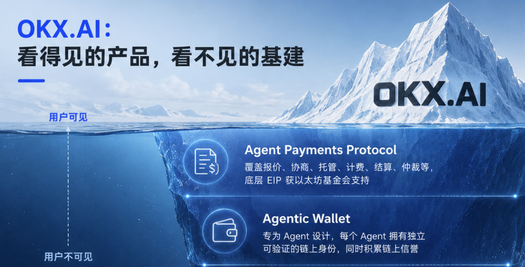
Protocols supporting these "machine-to-machine" transactions are emerging one after another. Stripe and Visa have already launched Machine Payment Protocols (MPP).
Open-source solutions are also heating up. In the early 1990s, when designers of the World Wide Web were establishing communication rules between browsers and servers, they specifically reserved a response code numbered "402," labeled as "Payment Required."
Coinbase built a set of "x402" protocols based on this, allowing Agents to initiate and complete such payment instructions, and subsequently handed over the relevant intellectual property to the Linux Foundation to make it an open industry standard.
Today, major credit card networks, Stripe, Shopify, Google, Amazon Web Services (AWS), and other Web2 giants, as well as a growing number of Web3 service providers, have integrated this payment standard. The goal is to enable "software to pay software" without human intervention throughout the process.
In the coming years, Agent payments are likely to reshape consumer interaction methods. Some predictions suggest that by 2030, Agents will contribute 15% to 25% of U.S. e-commerce sales.
Currently, ChatGPT processes 2.5 billion queries daily, of which 53 million are shopping-related queries initiated via AI platforms. OpenAI is also moving the checkout process into third-party ChatGPT applications, such as Target, DoorDash, and Instacart.
Blockchain: How to Support Transactions Between Machines
Supporting these "machine-to-machine" transactions requires a secure, autonomous, verifiable, and high-throughput accounting system.
Traditional credit card and banking systems are unsuitable for Agent micropayments in terms of fee structures. A standard credit card transaction averages a fee of 2% to 3%, plus a fixed fee of about $0.30; whereas an Agent buying 1 second of computing power or making 1 data query costs an average of only $0.001.
For Agent AI to operate, it will likely depend on cryptography and blockchain, as this underlying infrastructure is inherently suitable for such scenarios. In fact, by virtue of the following characteristics, blockchain and cryptographic technology are expected to become the underlying foundation for such transactions.
Automatic generation and execution of contracts. Payment Agents will generate tokens to complete purchases and settlements. Each token contains a set of transaction rules written within it: which merchants can accept this token, the maximum single spend amount, and the token's validity period. Once a purchase is completed, this one-time-use token will automatically become void. Blockchain can hold, send, and receive these tokens, and strictly execute according to the rules written in the token, like executing smart contracts.
Decentralized identity verification. Each Agent has a unique, cryptographically verifiable identity. Every token it generates carries its own credentials, which are required to sign blockchain transactions. The blockchain will verify these credentials when validating transactions; once an identity is deemed illegal, the consensus mechanism will block the transaction.
Fully auditable. Every decision, every transaction, and every data exchange made by an Agent on-chain can be recorded on an immutable ledger, accessible publicly by anyone via a blockchain explorer, thereby ensuring traceable accountability and transparent processes.
Access to decentralized computing power and data. Through blockchain, Agents can call upon distributed computing resources (such as GPU networks) and data, reducing reliance on centralized, private cloud infrastructure and helping to lower operating costs for high-frequency trading models.
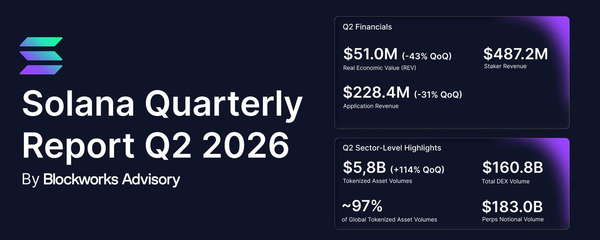
Speed and settlement. Bitcoin can process only about 7 transactions per second, Ethereum about 75, but newer high-speed public chains have pushed the peak higher: Aptos can reach up to 12,933 transactions per second (TPS), Solana at 6,284 TPS, and BNB Chain at 3,252 TPS.
This speed is comparable to the Visa network, which processes 1,700 to 10,000 transactions per second during normal operation. But even compared this way, it underestimates on-chain systems. Within that TPS time window, blockchain both records and completes settlement; whereas Visa only records the transaction, with actual settlement waiting 1 to 3 business days.
With these characteristics, blockchain will play a key role in the process of Agent AI landing in consumer-grade transactions. Conversely, the growth of Agent AI is also likely to become the "killer app" driving blockchain adoption.
How to Invest in the Agent AI Opportunity
Currently, to capture the dividends of AI growth, investors typically buy stocks of AI concept companies and related industry chains, or become LPs in private equity funds, or invest in energy providers and data centers supporting AI operations.
But to seize the Agent AI opportunity, these portfolios may need to extend exposure to native public chain tokens, as well as project tokens issued by on-chain applications and projects. The forces driving this shift are roughly as follows.
Cryptocurrency demand will rise. To record a transaction on a certain chain, an Agent must use that chain's native token to pay fees. For example, to record on Solana, one must pay SOL. As Agent payments increase, demand for the native tokens of public chains supporting these businesses may surge, thereby creating value for every token holder. Initially, this demand will likely come from machine-to-machine micropayments between enterprise software systems.
Blockchain ecosystems will expand. The more transactions on a chain and the stronger the demand for native tokens, the more money flows into that chain's treasury. Blockchain foundations will use these treasury funds to grant developers, encourage them to develop applications on-chain, issue "bug bounties" to developers who discover security vulnerabilities, and also incentivize those who verify transactions for the network. The more money available to distribute, the more likely the ecosystem is to grow and become more secure, thereby attracting more developers to build applications, issue their own tokens to finance projects, and share ownership of the applications.
Web3 applications will take share from Web2. As more applications go on-chain and development talent continues to pour in, the advantages of Web3 applications over Web2 will become increasingly apparent. This has already happened in Web3 gaming: the gaming industry is shifting from Web2's "single-player" model to Web3's "player-owned economy."
Tap-to-earn applications have already attracted hundreds of millions of users globally. Players can now trade and buy/sell game items (NFTs) on secondary markets and across platforms, truly owning and monetizing the assets they accumulate in games. Similar experiences and ownership revolutions may play out in a large batch of consumer-grade applications, which will also drive market interest in the tokens issued by these projects.
The flywheel effect will start turning. Protocols embedding Agent payments into blockchain applications already exist; they may bring a flywheel effect to these newly issued tokens. Users only need to instruct their Agents to handle transactions and payments, without needing to build wallets, buy coins, or manage various tokens and cryptocurrencies themselves.
For users, the experience of using a Web3 application looks no different from using a Web2 product. But because tokens here have both utility value and represent ownership, they can get more benefits within the Web3 ecosystem.
To some extent, this shift will be very similar to the transition from Web1 to Web2 back then: from Web1's web servers and static websites to Web2's cloud business and interactive applications. In both transitions, whether it was the underlying technology providers or the businesses built on these tracks, the main characters changed from the original old players to a batch of new players driving growth in the new era. This time, the baton will be passed to blockchain and various decentralized applications and projects.
Currently, investors haven't quite figured out "how to capture the value created by blockchain and its ecosystems." They are accustomed to a centralized, company-led business world: to share the value created by a company, one buys its stock.
But I believe what will become increasingly clear in the coming years is: to capture the value of decentralized networks and businesses, investors need to buy related crypto assets. Such assets are likely to become important holdings in investment portfolios, especially for those who want to seize the new opportunities of Agent AI.
Join TechFlow official community to stay tuned
Telegram:https://t.me/TechFlowDaily
X (Twitter):https://x.com/TechFlowPost
X (Twitter) EN:https://x.com/BlockFlow_News
 @FTI_DA