
Kalshi and Polymarket Founders Irreconcilable? This Business War Is Far More Brutal Than Imagined
TechFlow Selected TechFlow Selected
Kalshi and Polymarket Founders Irreconcilable? This Business War Is Far More Brutal Than Imagined
An industry business war that breaks the bottom line.
 Navigating Web3 tides with focused insights
By David Yaffe-Bellany, William K. Rashbaum, The New York Times
Compiled by: Luffy, Foresight News
One morning in November 2024, Polymarket founder Shayne Coplan woke up to unexpected guests at his home. Several FBI agents broke into his New York apartment with a battering ram, searching everywhere for evidence related to illegal gambling on the platform.
Coplan spoke out on social media, claiming the search was a crackdown initiated by the Biden administration for political purposes. But privately, he and his team advisors had another suspect in mind, attributing many of Polymarket's troubles to its biggest competitor — Tarek Mansour, CEO of the prediction market platform Kalshi.
Four informed sources revealed that months before the FBI showed up at his door, Kalshi's lawyers had gone to the U.S. Attorney's Office for the Southern District of Manhattan to report issues related to Polymarket, something never previously disclosed to the public. Informants said the lawyers detailed Polymarket's operational model to prosecutors, highlighting a key issue: the platform should have been banned in the U.S., but users could still access it normally.
This confrontation was just an extreme conflict erupting from long-standing grievances between Kalshi and Polymarket. The two are currently the hottest startups in the tech industry. Collisions of ambition among Silicon Valley founders are nothing new; industry fights triggered by ego are everywhere, just like Uber and Lyft fighting for the ride-hailing market; the public tearing between OpenAI's Sam Altman and Anthropic's Dario Amodei, both billionaires, has also become a highly watchable subplot in the artificial intelligence industry.
But the confrontation between 28-year-old Coplan and 30-year-old Mansour has long broken through the boundaries of normal business competition. Over forty insiders from both sides anonymously told reporters that both men are newly minted billionaires, determined to monopolize the prediction betting market covering all categories like sports, politics, and entertainment, and they extremely dislike each other. This opposing sentiment permeates almost all business dealings between the two companies.
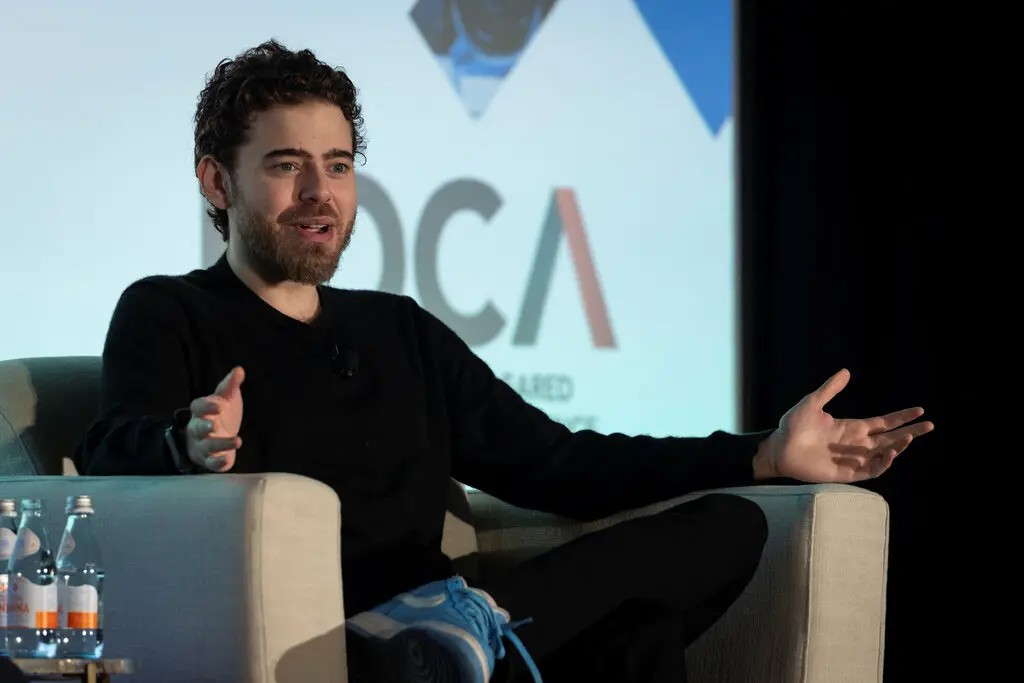
Shayne Coplan, Polymarket Founder
Dustin Gouker, who has long written columns on the prediction market industry, stated: "The grievances between the two sides are too deep; the struggle has long been mixed with personal grudges."
This struggle spread to internal corporate meetings and U.S. Congressional hearings, influencing the direction of Washington regulatory policies, sparking unprecedented industry attention and regulatory concerns. The two companies race to register trademarks against each other, fight for the same business collaborations, poach each other's talent, accuse each other across media, and directly attack each other personally on social platforms. Both established business collaborations with Donald Trump Jr., which is also a very common PR strategy within Washington circles during Trump's administration.
Noah Zingler-Sternig, a former Kalshi employee and prediction market investment fund manager, commented: "Both companies crossed the line on many things, which also makes it hard for the public to take these two platforms seriously."
The hostility between the two sides is not just a fight for market share; the deeper divergence lies in the bottom line of conduct and business ethics. Kalshi shapes the image of a compliance benchmark externally, insisting on obtaining U.S. regulatory permission before conducting domestic business; Polymarket has not obtained a domestic license, and its core platform has long operated offshore. Kalshi strictly enforces real-name authentication rules, blocking sensitive betting categories; Polymarket users can register without submitting personal information, and can even bet on events like the timing of Israeli missile attacks.
Although Coplan and Mansour have met over the years, nowadays they hardly interact, only disparaging each other from afar. Mansour graduated from MIT, calls himself a math enthusiast, and once compared the competition between the two to Tom Brady and Eli Manning. Two legendary quarterbacks in benign competition. But recently, he stated bluntly Polymarket's operational model "is illegal and unethical," and pointed out that its offshore platform is operated by a Panama entity.
In April this year, Mansour publicly stated at an industry conference in Washington: "I don't know what regulations Panama has regarding insider trading in prediction markets; most likely there are absolutely no relevant constraints."
Coplan dropped out of NYU, is good at roadshows and creating momentum, and rarely mentions Kalshi in public occasions. But two informed sources revealed that privately he calls Kalshi a simple copycat of the Polymarket model and believes Mansour has been trying to suppress him by all means. Coplan firmly believes his platform is the best solution in the industry, stating on the "60 Minutes" program last year: "This is the most accurate information tool humanity currently possesses."
Kalshi spokesperson Elisabeth Diana stated that the company learned about the FBI search only through news reports. She added that Kalshi routinely communicates with regulatory agencies regarding compliance issues and has also publicly pointed out that "there are enterprises harming user rights and damaging industry reputation."
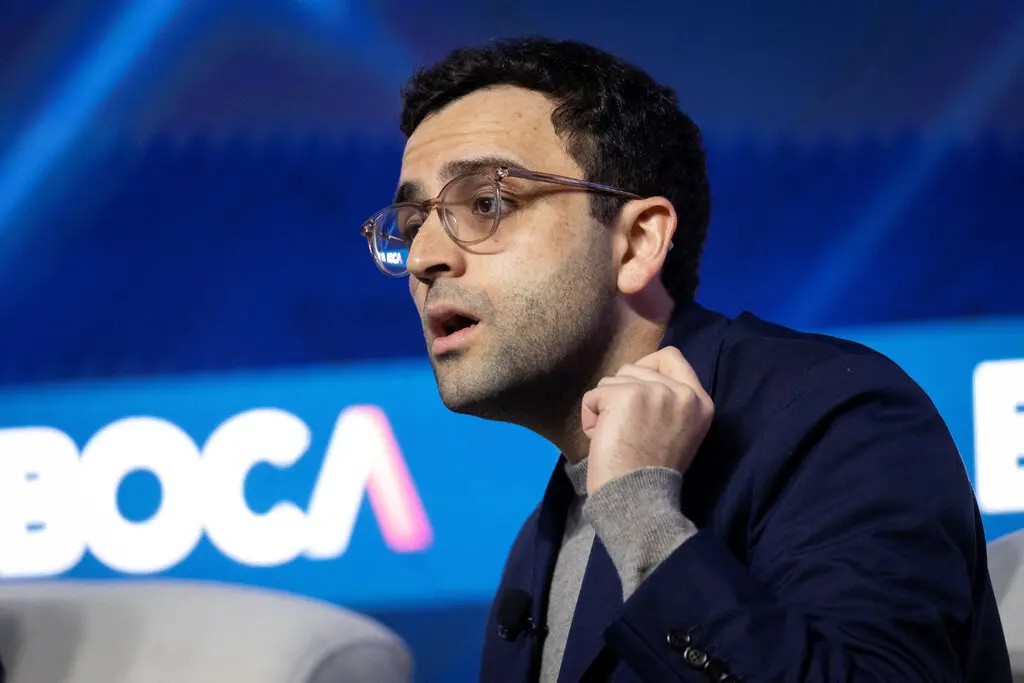
Tarek Mansour, Kalshi Co-founder
Diana said, "Mansour himself has no personal hostility towards Shayne; his only dissatisfaction is that Kalshi spent years promoting industry compliance, while the other party operates in the track with no bottom line."
A Polymarket spokesperson responded to Mansour by quoting a famous saying by Emerson: "Whoever claims to be of high moral character, we must watch their silver spoons." It also stated that the platform has built a perfect insider trading screening mechanism, handing over suspicious clues to law enforcement departments nearly a hundred times, and emphasized: "We are committed to building a precise, fair, and transparent trading market."
As prediction markets move from a niche track to public popularity, the regulatory pressure faced by the two companies continues to rise. Attorneys general in multiple states across the U.S. have successively sued the two platforms, accusing their sports betting businesses of violating gambling regulations; Polymarket is also under investigation by the U.S. Commodity Futures Trading Commission (CFTC).
Kalshi's reports against Polymarket are becoming more direct. In May, former CFTC commissioner and current Kalshi director Brian Quintenz posted on X platform, introducing Polymarket's user audit mechanism, and tagged the official account of the U.S. Attorney's Office for the Southern District of New York.
The History of Grievances Between the Two Opponents
Coplan is a native New Yorker who founded Polymarket in 2020, initially operating out of an apartment in Lower Manhattan, where the bathroom was temporarily converted into an office, and a laptop was the only equipment. At that time, he considered himself a new entrant in the industry, pioneering a completely non-mainstream new product.
He soon encountered a strong opponent. Mansour grew up in Lebanon, was formerly a Citadel trader, and co-founded Kalshi in 2018 with his MIT classmate and current Chief Operating Officer Luana Lopes Lara. Colleagues evaluate Mansour as intelligent, daring and spirited, with a slightly introverted personality; Coplan is easygoing, collects art, loves music, and carries the relaxed and uninhibited temperament of a New Yorker.
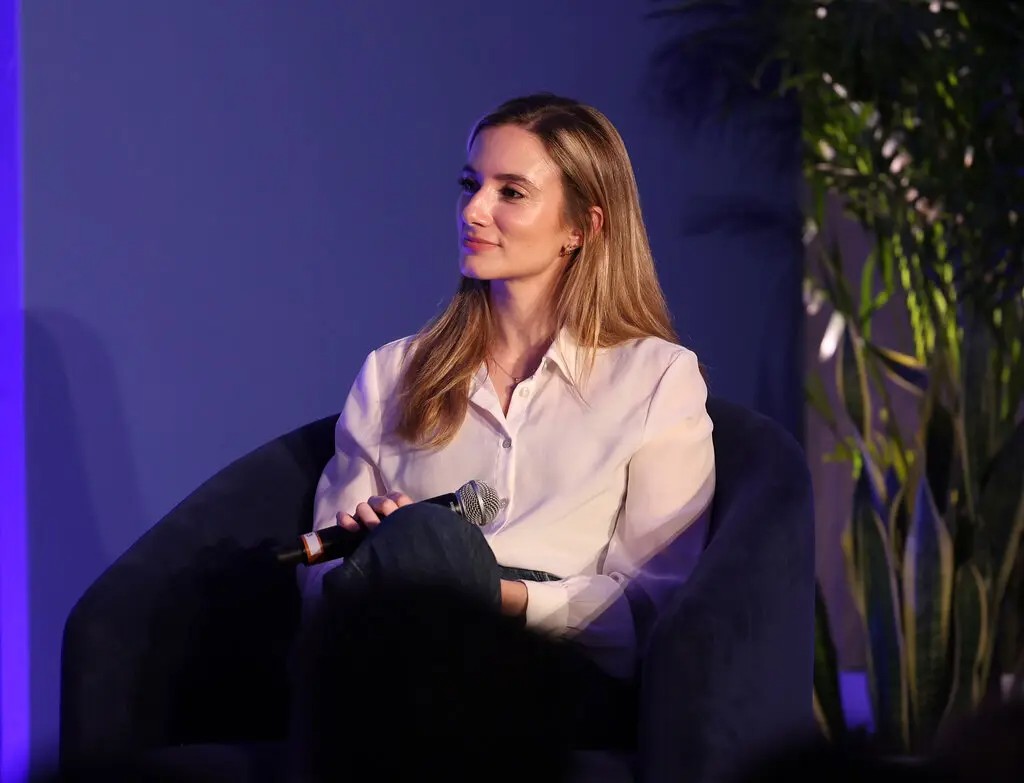
Luana Lopes Lara, Kalshi Co-founder
The relationship between the two has always been unfriendly. Informants recalled that in an awkward meeting early on, Coplan mentioned that both were raised by single mothers, which made Mansour very uncomfortable.
But the two share a consensus: prediction markets will reshape the financial and media industries, relying on "wisdom of the crowd" to produce extremely valuable information references. Both Polymarket and Kalshi bets are presented in the form of "Yes/No" questions, with betting targets covering weather, Super Bowl events, etc. The total amount users bet determines the odds for corresponding events.
Kalshi applied for a full operating license from the CFTC before launching betting business in 2021. Three informed sources revealed that as early as the initial communication stage with regulatory agencies, Kalshi had already reported compliance issues existing with Polymarket to the regulators.
The main contact was Kalshi strategic advisor Jeff Bandman, who repeatedly urged the CFTC to investigate Coplan's enterprise, pointing out that the platform could be used within the U.S. without permission. In January 2022, the regulatory agency fined Polymarket $1.4 million and ordered the platform to prohibit accepting bets from U.S. users.
This ban once gave Kalshi hope to monopolize the U.S. domestic market, but the enterprise still needed to game with regulators to fight for more relaxed operating rules. During the Biden administration, the CFTC prohibited election-related bets, and Kalshi sued the regulatory agency in court in 2023.
Just when Kalshi was deeply involved in legal litigation, even though prohibited from serving U.S. users, Polymarket still exploded in popularity. U.S. users only needed to use a Virtual Private Network to modify their location to access the offshore website. Before the 2024 presidential election, platform odds sparked heated discussion across the network, with its data showing Trump's probability of winning was significantly higher than traditional polls.
Mansour stated bluntly on a podcast in June: "They completely skipped the compliance process, launched the product directly, with no scruples."
On the eve of the election, Kalshi won the lawsuit in court, and licensed prediction markets were legally landed in the U.S. Polymarket still had no domestic operating qualifications, but platform traffic surged, and Coplan jumped to become an industry celebrity.
In 2024, the U.S. Attorney's Office for the Southern District of New York launched an investigation to verify whether Polymarket violated regulations by opening services to U.S. users. One week after Trump won the election, the FBI raided Coplan's Manhattan apartment and seized all electronic equipment.
Kalshi immediately seized the opportunity to create momentum. Tech media "Pirate Wires" exposed chat screenshots showing Kalshi employee Keaton Inglis contacting former NFL star Antonio Brown, instructing him to post on X platform that Coplan was "guilty."

Antonio Brown, Former NFL Star
Brown later posted an apology, saying he was having a business collaboration with Kalshi at the time and casually forwarded the relevant content. Mansour also came forward to apologize, stating on a podcast in December 2024: "Some of our team members were too emotionally agitated at the time."
The search event made Coplan and his team very suspicious, and relevant rumors quickly spread through the media. Four informed sources revealed that Polymarket internally privately guessed that Kalshi or its partners hired private detectives to track Coplan, and immediately tipped off the media after encountering the FBI showing up.
Kalshi spokesperson Diana refuted: "This is completely nonsense; the other party's imagination has reached an outrageous level."
Secretly Sabotaging Major Collaborations
Last July, Coplan went to the top-floor restaurant Manhatta in Manhattan for a key business dinner, the restaurant boasting a 60-story panoramic view. He dressed casually, carrying a bagel in a paper bag.
The other party at the dinner was billionaire Jeffrey Sprecher, founder of Intercontinental Exchange. This giant with a market value of $80 billion operates the New York Stock Exchange. The meeting between old and new track giants was also a key turning point in the competition between Polymarket and Kalshi.
For years, Kalshi held luxurious investors from top venture capitals like Sequoia Capital; Coplan previously repeatedly hit walls when docking with large institutions for financing. But both Coplan and Mansour were fighting for investment from Intercontinental Exchange, this giant intended to layout the prediction market track.
Coplan and Sprecher hit it off immediately. Intercontinental Exchange originally considered investing in Kalshi, but finally finalized the investment agreement with Polymarket last autumn.
Informed sources said Mansour was very angry after learning the news. Five informants revealed that before the collaboration announcement, Mansour and Kalshi investor a16z partner Alex Immerman separately interviewed Intercontinental Exchange executive teams.
Several informants described the conversation details differently, but three confirmed that the communication between Mansour and Immerman was essentially using every means to persuade Intercontinental Exchange to give up this investment.
Kalshi spokesperson Diana stated that the company itself "had no intention of pushing forward collaboration with Sprecher."
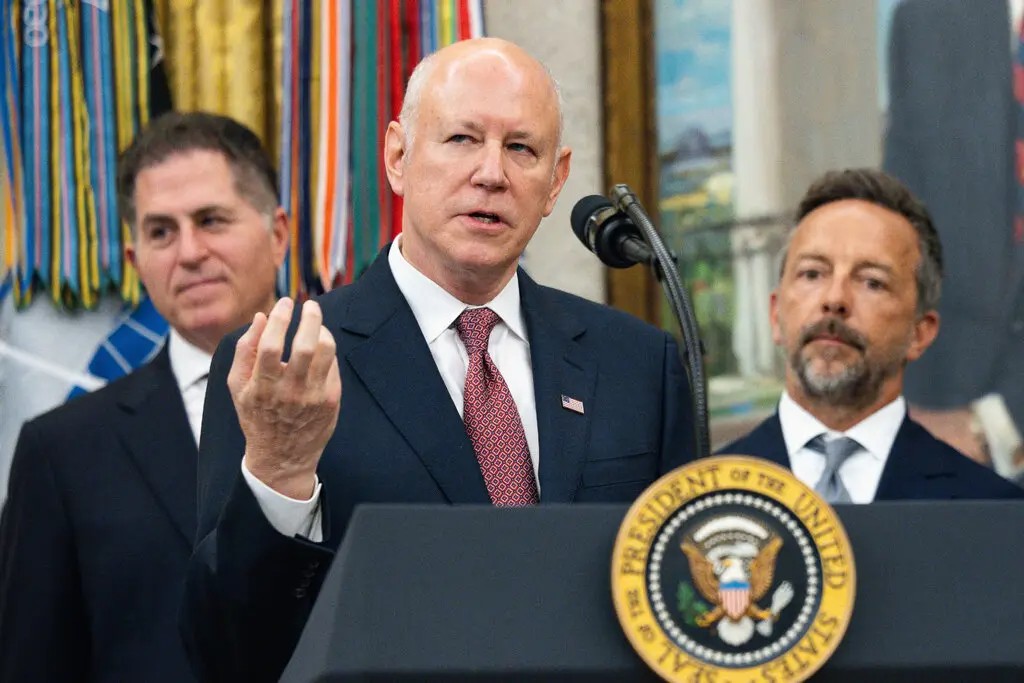
Jeffrey Sprecher, Founder of Intercontinental Exchange
Finally Sprecher chose to bet on Coplan, announcing in October a maximum of $2 billion investment in Polymarket. This was just one of the consecutive benefits Polymarket welcomed: last July the Trump administration tightened enforcement scales, the Southern District of New York withdrew the investigation against Coplan; in the same summer, Donald Trump Jr.'s venture capital 1789 Capital also announced investment in Polymarket.
Coplan stated on the "60 Minutes" program last year: "This administration vigorously supports innovation, the crypto industry, and especially supports Polymarket, which is very rare."
To seize policy dividends, Polymarket must obtain a U.S. domestic operating license. Coplan planned to acquire an enterprise that already held compliance qualifications.
He crashed into Kalshi's blocking again. Five informed sources revealed that rumors circulated that Coplan intended to acquire the niche prediction platform Railbird, and Mansour subsequently reported relevant hidden dangers regarding the acquisition target to CFTC high-level officials.
Kalshi's report did not work, and in June 2025 the CFTC approved Railbird's operating qualifications. Coplan finally spent $112 million to acquire another licensed enterprise QCX. Although the offshore main platform remained restricted, after acquiring QCX, Polymarket launched a U.S. domestic lightweight App, allowing it to reach a massive number of domestic users.
When announcing the acquisition in July, Coplan posted a U.S. flag image on social platforms with the caption: "I have waited too long for this day, Polymarket officially returns to the U.S. domestic market."
Deliberately Provocative Business Gaming
This spring the New York Knicks made it into the playoffs, Mansour published photos watching the game courtside at Madison Square Garden, wearing team-colored clothing, grinning broadly.
In the official narrative, this was a celebration of Kalshi reaching a new collaboration with the arena, the sixth-floor corridor of the arena was officially named Kalshi Corridor. But industry observers saw another layer of intention: a deliberate provocation.
Before Coplan became famous, he frequently shared Knicks related content on social platforms, appearing courtside at the arena multiple times during regular seasons. Informed sources revealed that before Kalshi finalized the collaboration, Polymarket had also negotiated similar sponsorships, but was unwilling to match the quote given by the other party.
This also marks that the industry struggle, originally limited to the crypto niche circle, has completely moved into the public view. In the first six months of this year, the total trading volume of the two platforms exceeded $150 billion, a 1200% increase, which undoubtedly intensified the fierce degree of competition.
From current data, Mansour is temporarily leading. After completing a new round of financing in May, Kalshi's valuation reached $22 billion, $7 billion higher than Polymarket. Data institution The Block statistics show that last month Kalshi's trading volume was $33 billion, twice that of Polymarket.
Diana denied that the collaboration with Madison Square Garden was intended to target Coplan: "We would not finalize a business collaboration to provoke opponents, this claim is very laughable."
The surge in prediction market popularity also attracted stricter regulatory scrutiny, with regulatory focus mostly falling on Polymarket. In April this year, a U.S. military special forces soldier was prosecuted; he used classified information, logged into Polymarket's offshore platform via VPN to bet on events related to Venezuelan President Maduro's arrest, illegally profiting over $400,000. Polymarket spokesperson stated the platform explicitly prohibits VPN access.
The two platforms' routes for controlling insider trading are completely different. Kalshi requires users to submit complete personal information before betting, and in some scenarios also need to fill out occupation; Polymarket all transactions are public on-chain, convenient for community users to self-check violation behaviors. U.S. domestic App users must real-name authenticate, but the offshore main platform still does not force users to disclose privacy information like name, work unit, etc.
Polymarket paid collaboration influencer Aj Pleasanton evaluated that this model is very common in the crypto industry, users generally prefer anonymous operations.
Privately, Mansour became increasingly dissatisfied with Polymarket's operational model, two informed sources revealed, he often called Polymarket Chief Legal Officer Neal Kumar to express anger.
Conflicts between the two sides occurred frequently. According to documents reviewed by informed sources and "The New York Times", in spring 2025, multiple influencers signed with Polymarket extensively spread news that Kalshi's collaboration with Elon Musk's xAI broke down.
In the same year, Polymarket hired Uber early employee Max Crowley as Vice President of Partnerships, less than two months after joining, Crowley jumped to Kalshi, this matter made Coplan extremely angry. Informants said during the job hop interval, Coplan sent a lawyer's letter threatening to sue to him with company board lawyer Alex Spiro, but ultimately did not file a case.
Even though there were common industry demands, the two enterprises absolutely would not collaborate. Kalshi formed an industry lobbying group, confronting prediction market restrictive regulations issued by various states, uniting multiple peers, exclusively excluding Polymarket.
The next month Kalshi suffered a loss in a state sports betting lawsuit, Polymarket immediately launched new betting targets, opening betting on the time of Kalshi Massachusetts sports business shutdown.
Join TechFlow official community to stay tuned
Telegram:https://t.me/TechFlowDaily
X (Twitter):https://x.com/TechFlowPost
X (Twitter) EN:https://x.com/BlockFlow_News
 @nytimes