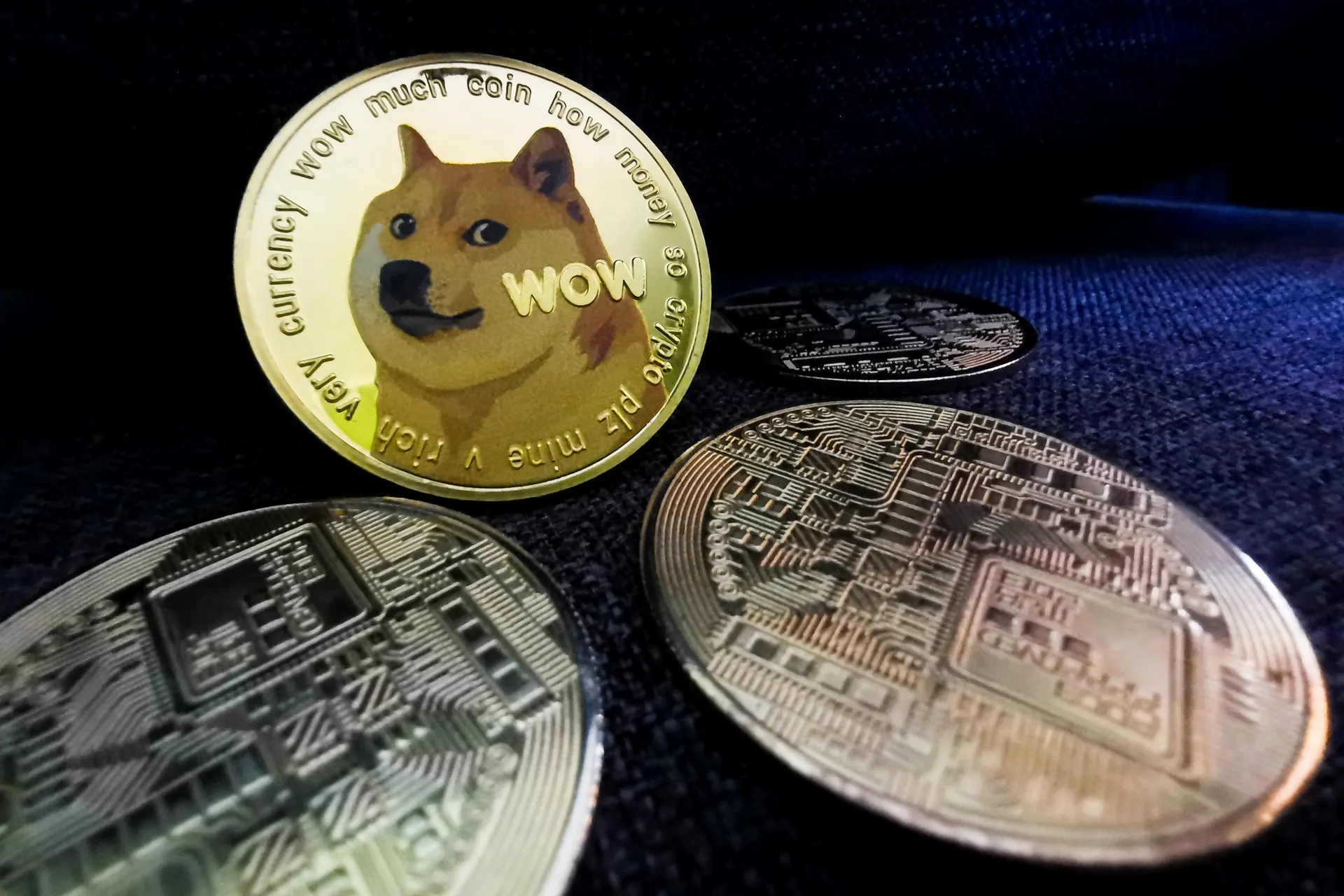
How to position altcoins in 2026?
TechFlow Selected TechFlow Selected
How to position altcoins in 2026?
Institutions favor real-yield projects, while retail speculation may struggle to recreate past glories.
 Navigating Web3 tides with focused insights
Written by: Forbes
Compiled by: AididiaoJP, Foresight News
Ethereum, BNB, XRP, Solana, and TRON, the top five altcoins by market cap, currently average prices still about 60% below their all-time highs. Over 740 million people globally now hold cryptocurrency, many of whom are continuing to accumulate. But no one knows whether the next altcoin surge will occur.
The persistence of Bitcoin dominance reflects increasing investor caution and significantly heightened market selectivity. Hyperliquid's HYPE token stands out due to its perpetual contract revenue, buyback, and burn mechanisms—the protocol's assistance fund has spent over $1.3 billion buying back HYPE on the open market.
Solana leads in meme coins, Real World Assets (RWA), stablecoins, and consumer applications, while Ethereum remains the core of smart contract platforms. Industry executives generally believe that rather than expecting another comprehensive "altseason," capital is more likely to concentrate on projects that generate real revenue, attract real users, and solve actual problems.
t54 Founder and CEO Chandler Fang is dedicated to building trust infrastructure for AI agents. He believes the next catalyst may come from outside the crypto industry. He expects a stock market correction in the second half of 2026, pushing liquidity back into digital assets, most of which will flow into major coins.
"While altcoins will benefit, they will not be the stars of the show," Fang said in a written response. His most favored opportunity is the combination of crypto and AI—autonomous agents capable of holding wallets and trading independently are naturally suited for blockchain infrastructure.
Nebula DeFi Tokenization Company CEO Jason Rindahl also expects the 2026 recovery to be uneven, depending on the order of capital rotation. "I expect capital to rotate selectively, first into Bitcoin, then into large-cap assets like Ethereum and Solana, before gradually spreading into higher-risk areas," he said.
When momentum returns, the first to rise are often the most speculative assets, such as tokens like Fartcoin or Unicorn Fart Dust. They have good liquidity, high volatility, and can quickly attract retail investors. Observing these corners of the market is an effective way to gauge whether risk appetite has surpassed Bitcoin.
Founders who persisted in building during the bear market have different focuses. Ethereum's Vitalik Buterin proposed creating a leaner Ethereum Foundation, reducing ETH sales, and prioritizing censorship resistance, openness, privacy, and security, positioning the network as a safe haven against centralized control. Solana's Anatoly Yakovenko focuses on execution, emphasizing the Alpenglow upgrade, which is expected to shorten transaction finality time to approximately 150 milliseconds in the third quarter.
Hyperliquid's Jeff Yan built a rare profit machine in 2026, utilizing perpetual contract revenue for aggressive buybacks and burns. Cardano's Charles Hoskinson is the most cautious, warning that as ADA prices hover near multi-year lows, a wave of ecosystem project failures may occur in the second half of 2026.
Stock-like Market: Three-Tier Differentiation Pattern
Bitget Exchange CEO Gracy Chen doubts whether a traditional altseason will occur in this cycle. "This may be an era of increasing divergence between winners and losers," she said. She expects Bitcoin dominance to remain in the short term, while the shakeout of inefficient projects will continue. Her boldest prediction points to 2030: by then, nearly 10% of global financial assets (including government bonds, money market funds, stocks, and private credit) will exist in tokenized form.
Eric Wade, editor of the Stansberry Research "Crypto Capital" newsletter, believes investors' biggest mistake is treating altcoins as a single asset class. He divides the market into three tiers. The first tier is infrastructure closely related to institutional demand—RWA tokenization, settlement, and on-chain private credit. This field has never stopped growing. The market cap of tokenized real-world assets has grown from about $5 billion in early 2025 to over $30 billion by mid-2026, while on-chain private credit yields continue to remain between 8% and 12%, far higher than government bond rates.
In June, open lending network Morpho raised $175 million from VCs like Paradigm and a16z, as well as traditional financial institutions like Apollo and VanEck, becoming the clearest signal. "This is exactly the key to changing the dialogue with government bonds and asset managers," said Dennis Bree, Head of Institutional Growth at Morpho, "They can finally deploy under familiar terms."
Wade pointed out that the second tier has largely disappeared: those projects with only stories, no revenue, no users, and often no active teams, many of which have fallen over 70% since 2025.
The third tier consists of community-driven projects ignored by most investors, which continue to build regardless of the macro environment. Wade believes the next generation of winners is being born here—Bitcoin and Ethereum originally came from this category as well.
Selective Recovery
If an altcoin recovery does arrive, it will hardly replicate the shape of previous bull markets. This market increasingly favors projects with revenue, adoption, and deep integration with traditional finance, leaving pure speculative projects behind. The momentum of RWA, stablecoins, AI infrastructure, and potential favorable regulatory developments may support the next phase of growth, but is unlikely to lift every token.
Avalanche Treasury Co. CEO Bart Smith's screening criteria are simple: "What is its purpose? What problem does it solve?" Those coins and chains that cannot provide answers will continue to struggle regardless of the macro environment. Projects that can provide answers are the ones he favors for recovery and appreciation.
The next altcoin cycle will less resemble a "rising tide" lifting all boats, and more like the stock market, requiring traders and investors to be more selective than ever before.
Join TechFlow official community to stay tuned
Telegram:https://t.me/TechFlowDaily
X (Twitter):https://x.com/TechFlowPost
X (Twitter) EN:https://x.com/BlockFlow_News
 Forbes