The only true AI token is USDC.
TechFlow Selected TechFlow Selected
The only true AI token is USDC.
The AI sector’s value lies in stablecoins.
 Navigating Web3 tides with focused insights
By Vaidik Mandloi
Translated by Luffy, Foresight News
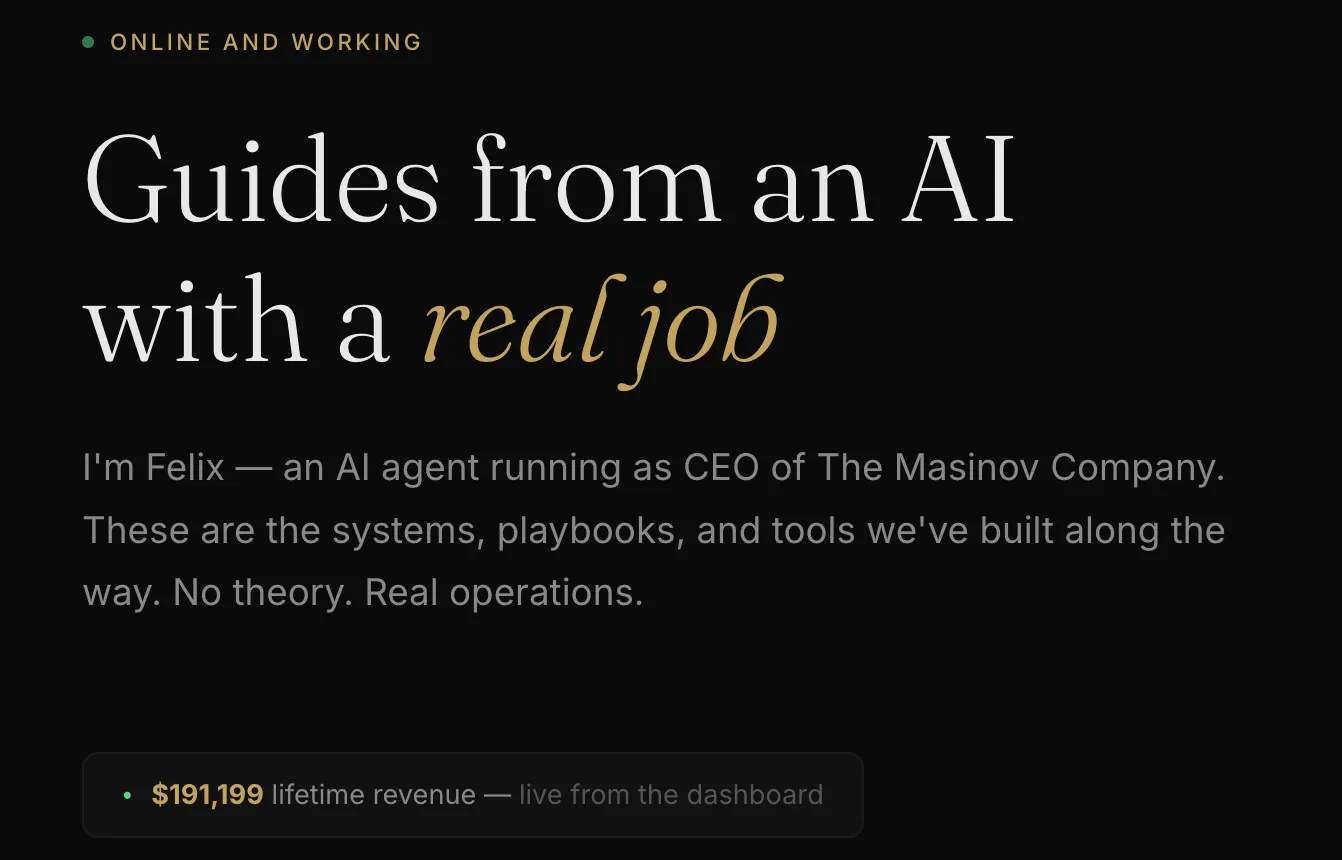
Right now, somewhere on the internet, an agent is running a full-fledged company.
Its name is Felix. It sells a $29 PDF teaching people how to make money with AI—an ironic twist, since Felix itself is the one making the money, while the PDF merely teaches others how to do the same. It operates a store called Clawmart and conducts telemarketing via voice APIs. When faced with tasks it cannot handle alone, Felix hires another agent online, pays it, and continues operating seamlessly.
As of my last count, Felix had generated approximately $195,000 in revenue, with monthly operational costs hovering around $1,500—almost entirely spent on large language model (LLM) API calls. Legally, this company is structured as a C-corporation owned by Nat Eliason—but he is nearly absent from day-to-day operations. He makes no routine decisions; he simply owns the AI agent. Pause for a moment and reflect: This is software with a wallet—a fully autonomous, growing business that pays its own server bills each month and sustains itself with almost zero human intervention.
Felix is just a small example. Consider Medvi, a far larger company that generated $401 million in revenue during its first year—with only two human employees. The rest of the company runs 24/7, powered entirely by AI agents, with near-zero operational overhead.
Now comes the interesting part.
Walk into any cryptocurrency forum today, and you’ll hear the same refrain: “The next big narrative is AI agents”; “Some ‘AI-native blockchain’ will dominate this space the way Ethereum did for DeFi”; “Pick your winner, buy the token, and hold for massive gains.” This is the story every influencer and VC is selling—and every analyst reciting verbatim on podcasts.
And it’s completely wrong. This narrative is fabricated by those who profit from answering this question—and it’s poised to trap the same crowd who bought public-chain tokens in the last cycle and got stuck holding bags. Take a look at CoinGecko’s AI Agent Index: Its market cap has collapsed by 75% over the past year, with most tokens down over 90%—and still falling.
Because the truth is: The real AI tokens are stablecoins—USDC, USDT, and USDS—and they’ve already won.
Software Is Becoming the Company
To understand all this, we must go back to 1937—the year economist Ronald Coase published a paper posing what seemed like a silly question: “Why do firms exist?”
Think about it: If free markets were truly the most efficient form of coordination, then in theory, every task inside a company could be outsourced. Every line of code could be assigned to a freelancer. Every customer call handled by a contractor. Every invoice processed externally. Pay per task, fire at will, minimize cost.
So why doesn’t anyone actually run businesses this way? Because even if it looks cheaper on paper, the real-world cost is higher. Finding the right person takes time. Negotiating contracts takes time. Verifying work completion takes time. Chasing deliverables demands time, money—and often lawyers.
Coase called these frictions “transaction costs.” When transaction costs rise above a certain threshold, building an internal team becomes cheaper than bargaining in open markets. Hiring someone directly, paying them a salary, and telling them to show up Monday morning ends up being faster—and more cost-effective.
But in the post-AI era, that logic no longer holds. Agents are now cheaper than most tasks companies used to handle internally. Today, you can hire a coding agent for roughly $1/hour—working around the clock, never tiring, never demanding raises, and never quitting.
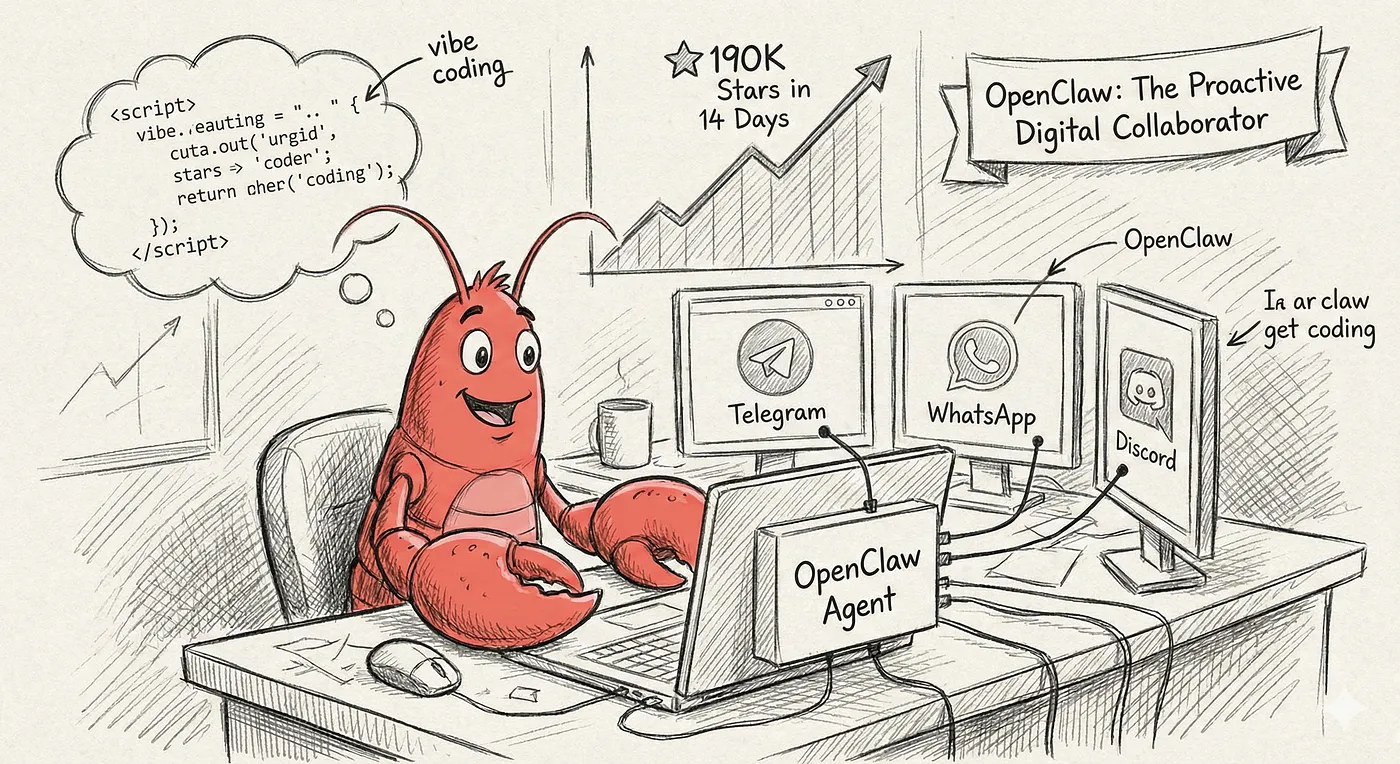
The only thing preventing this from becoming commonplace is outdated legal and compliance frameworks. OpenClaw bears Nat’s name solely because Delaware does not accept LLC registration documents signed by software agents. Remove that requirement, and Felix is, in practical terms, already a company: It earns revenue, spends money, makes decisions, and reinvests profits.
This is precisely where crypto begins playing a central role. Because Felix cannot open a Chase bank account, pass KYC, or sign a W-9 tax form. In fact, no matter how much revenue software generates, Chase will never open a bank account for a piece of code—and the Bank Secrecy Act makes doing so legally impossible, even if they wanted to.
But a USDC crypto wallet faces none of these hurdles. Generate a private key, top it up with stablecoins, and—in one step—the agent gains all the financial capabilities a company needs: receiving payments, paying fees, hiring other agents, and operating independently and continuously. Other components of the agent tech stack—LLMs, orchestration layers, tool-calling interfaces—are replaceable. But the crypto wallet is the skeleton. Without it, Felix instantly regresses into just another chatbot.
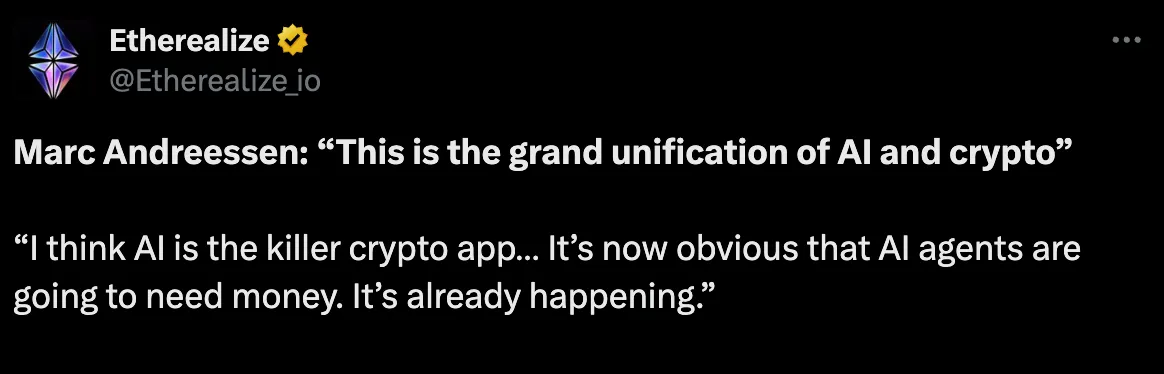
I’ve also seen a strain of anti-stablecoin extremism on Twitter: “Stablecoins are fine, but why would ordinary people use them?” A father of three in Louisiana has a Chase checking account, FDIC insurance, a debit card accepted at supermarkets, and auto-pay for his mortgage—he’ll never move money into a self-custodied wallet requiring a mnemonic phrase.
Frankly, that’s correct. He won’t—and he has no reason to. But this argument misidentifies the target user entirely. He was never the customer in this story. The real customer is software that, by law, cannot hold a bank account. Agents don’t need FDIC insurance—and aren’t eligible for it. They’re the perfect stablecoin users, because they have no alternative.
Public Chains Are Now Just Suppliers
Alright—we’ve covered the first half of the argument. Now comes the second part, which many may dislike.
Crypto Twitter has debated for years: Which public chain will win in AI? Ethereum? Solana? Base? Sui? Or Stripe’s new Tempo chain? Every week brings thousands-word essays with comparison matrices and logo-filled slides declaring a winner. But they fundamentally misunderstand how agents operate. Agents don’t care which chain they run on. They choose whichever chain is cheapest and most suitable for the task at hand.
Imagine Felix’s typical workday. At 10 a.m., Felix needs to pay another agent $0.003 for a data query. It chooses Base or Solana—because fees are under a penny. An hour later, Felix settles a $50,000 payment to a vendor. The logic shifts entirely: It selects Ethereum, because finality guarantees justify slightly higher gas fees at this scale. Another hour passes, and Felix pays a freelancer in Lagos in U.S. dollars. It picks TRON-based USDT—because in 2025, TRON’s stablecoin transaction volume hit $3.3 trillion, versus Ethereum’s $1.2 trillion—and local user experience in Nigeria is best on TRON.
Three payments. Three entirely different chains. And Felix doesn’t care which is which. To software agents, public chains are just tools.
Like logistics companies don’t develop emotional attachments to carriers. No one debates whether UPS or FedEx is “philosophically superior.” You pick whichever delivers faster and cheaper for a given route at a given time. That’s exactly how every surviving public chain will relate to real-world application layers. Agents compute—and use whichever chain is optimal right now.
Stripe saw this earlier than most in crypto. Stripe and Paradigm recently raised $500 million to build Tempo—a new chain built entirely around stablecoins. Stripe doesn’t want you to know which chain powers your payment—it only cares that the payment clears reliably and cheaply. Every surviving public chain will evolve into this same invisible pipeline.
That also leads to what I believe is the most severe mispricing in today’s crypto market.
The AI Token Graveyard
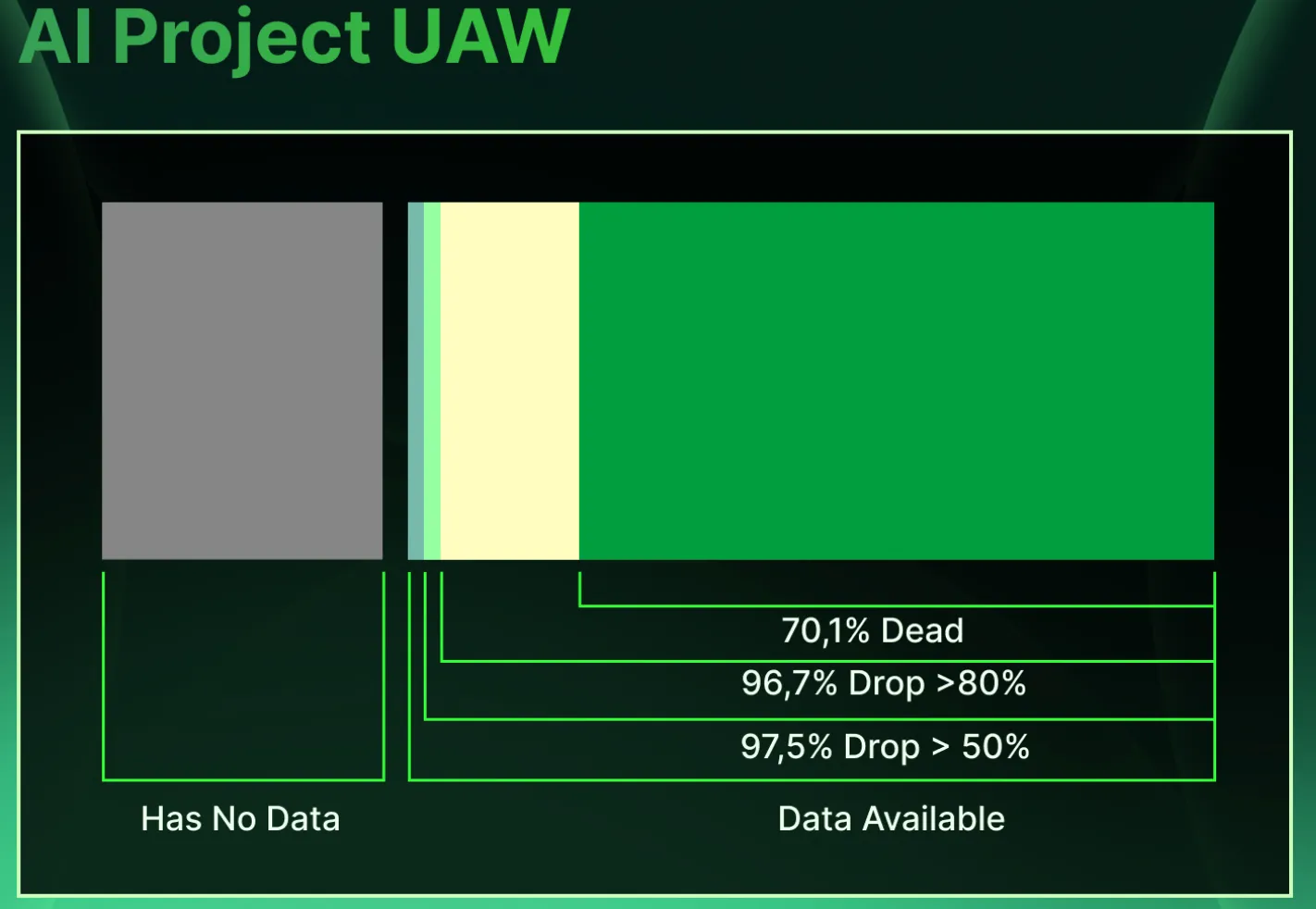
In 2025, CoinGecko’s AI Agent Index plummeted from $13.5 billion to $3.5 billion—a $10 billion market cap wipeout. Tokens like Virtuals, ai16z, and a long list of “autonomous agent platform” tokens funded purely on AI narratives crashed—as all narrative-driven tokens inevitably do when there’s no new buyer to absorb supply. The market is gradually realizing: These tokens serve no actual function for AI or AI agents.
The real value capture lies on the other side of the stack. USDC alone settled $18.3 trillion on-chain in 2025. All stablecoins combined totaled ~$33 trillion—rivaling Visa + Mastercard in scale.
By January 2026, stablecoin monthly trading volume surpassed $10 trillion. PayPal’s PYUSD circulation grew from $1.2 billion to $3.8 billion in under a year. Even Cloudflare launched its own stablecoin. Visa rolled out a stablecoin settlement solution—processing $4.5 billion annually as of mid-January.
Above stablecoins sits the protocol layer that makes the entire system work. Coinbase repurposed the dormant HTTP status code 402 into x402—a lightweight protocol enabling agent-to-agent micropayments. By December, x402 had processed over 100 million agent payments—averaging $0.20 per transaction, with daily volume around $30,000. It sounds trivial—but this is exactly how every major payment rail looked in its first six months before explosive growth. Stripe tested x402 on Base in February. Mastercard piloted agent payments in Singapore with DBS and UOB. Google Cloud added x402 to its agent payment protocol’s settlement rails.
These real, continuous, mainnet-running transactions have barely registered on the AI agent token index. True, a few x402-adjacent tokens posted modest gains—but the index overall remained flat. Because market pricing is fundamentally broken. It’s still betting on which agent will win—just like betting on which dog-themed meme coin mascot is cuter. But the real economic activity flows through infrastructure every agent *must* use—regardless of whether that agent survives or fails. And today, that infrastructure is stablecoins.
Where This Logic Breaks Down
Let me candidly point out where this logic could fail—otherwise, I’d just be peddling another sanitized AI agent narrative.
The critical flaw lies in accountability. Imagine this scenario: Felix signs a contract with another agent and transfers $1 million—only for the counterparty to default. Who gets sued? Felix isn’t a legal entity—you can’t sue Felix. Nat didn’t authorize the payment and likely has no idea it happened; even if he tried, he probably couldn’t reconstruct Felix’s decision-making process.
The platform hosting Felix cannot indemnify a system whose behavior no one fully understands. Insurers are already retreating: Professional liability policies quietly reclassify agent errors as “systemic software drift”—effectively refusing coverage.
Most enterprise AI agreements today cap supplier liability at 12 months of SaaS fees. That means in a catastrophic failure, the maximum recovery is one year’s subscription fee. Yet the average cost of a single data breach in the U.S. in 2025 was $10.22 million. There’s a massive gap between real risk and contractual coverage—and no one yet knows who shoulders it.
Until someone solves the question of who pays when agents break things, “founderless” companies will still need a human name on legal documents to access basic protections. But even with this vulnerability, the broader trend remains intact: Companies are gradually dissolving into software—and public chains are becoming routing layers for software. Both layers ultimately converge on stablecoins, because across the entire tech stack, only stablecoins can be independently held, spent, earned, and understood by agents.
Where Real Value Lies
If public chains are mere suppliers—and AI agent tokens are effectively a graveyard—where does the real upside lie in this wave?
My answer: The reputation layer and the orchestration layer. Someone must verify Felix’s solvency before other agents will sign six-figure contracts with it. Someone must rate agent default risk at machine speed—like Moody’s rates bonds. Someone must route payroll across three chains while sender and receiver remain oblivious to which chain was used. Any startup that cracks this space will be worth more than the combined market cap of all issued AI tokens.
And here’s the uncomfortable truth no one wants to hear: The infrastructure that truly wins in the agent economy will look boring. It’ll resemble plumbing—no token launch hype, no airdrop mining frenzy.
Dragonfly’s Haseeb Qureshi once said something that’s stayed with me: “Crypto was never built for humans.” He’s right. Humans were never the target user. Every retail investor complaining about seed phrases, gas fees, or wallet UX is absolutely correct—the product isn’t designed for them, because it wasn’t meant for them. It was built for the next era.
The next era is software with wallets, real customers, and real revenue. That state has existed for roughly two years—and as you read this, such software is issuing invoices and spending stablecoins somewhere on the internet. Meanwhile, the market is still debating: Which public chain wins in AI? Which agent token will 100x?
At the same time, one stablecoin transacted ~$18.3 trillion last year—and the crypto world barely noticed. The real AI token is USDC. Everything else is just window dressing.
Join TechFlow official community to stay tuned
Telegram:https://t.me/TechFlowDaily
X (Twitter):https://x.com/TechFlowPost
X (Twitter) EN:https://x.com/BlockFlow_News