Conversation with Ray Dalio: Why Do I Trust Only Gold, Not Bitcoin?
TechFlow Selected TechFlow Selected
Conversation with Ray Dalio: Why Do I Trust Only Gold, Not Bitcoin?
Whether it’s the pain of failure or the pain of investing in failed projects, finding balance is the most important thing.
 Navigating Web3 tides with focused insights
Compiled & Translated by TechFlow
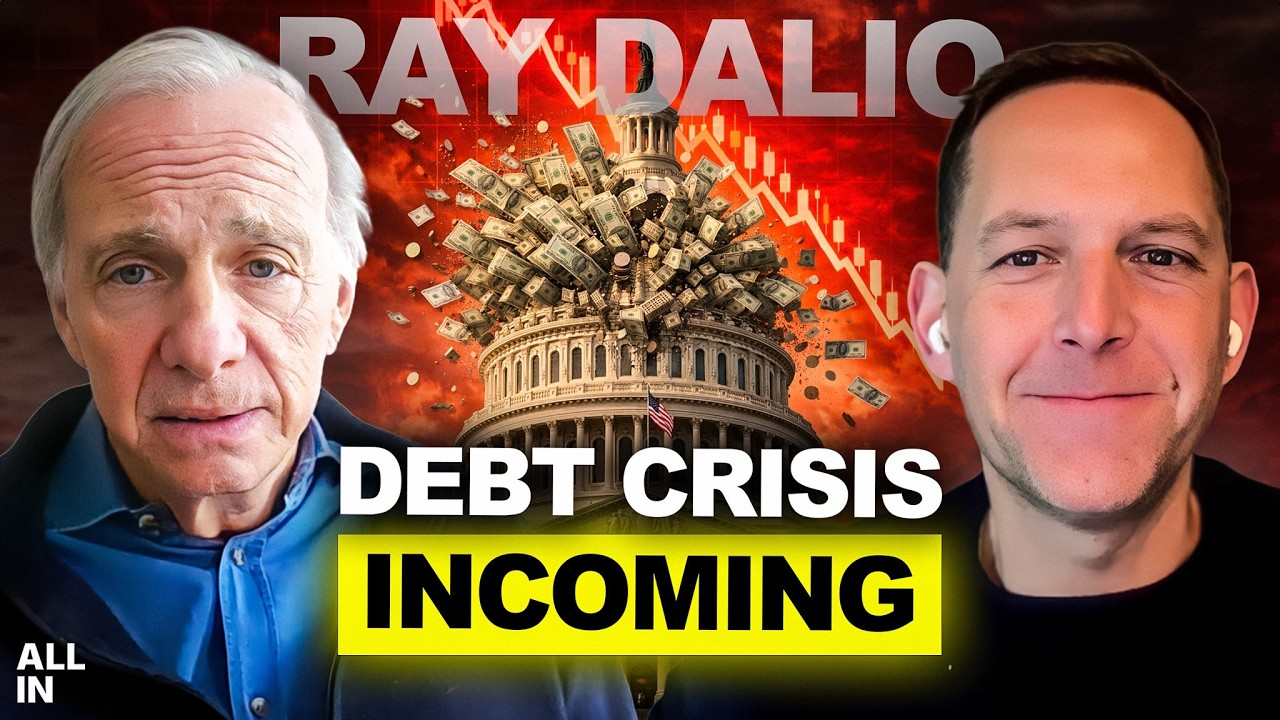
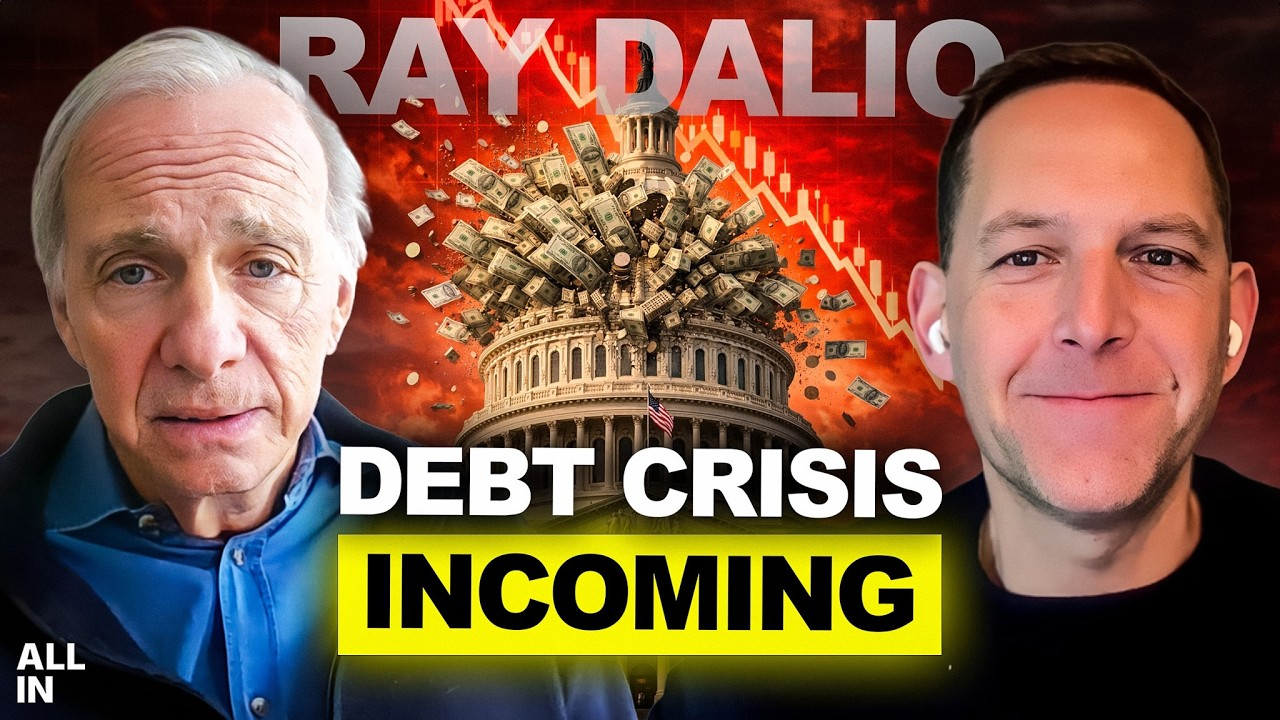
Guest: Ray Dalio, Founder of Bridgewater Associates
Host: David Sacks
Podcast Source: All-In Podcast
Original Title: Ray Dalio: "AI Is Eating Everything — and It Might Eat Itself"
Air Date: March 3, 2026
Key Takeaways
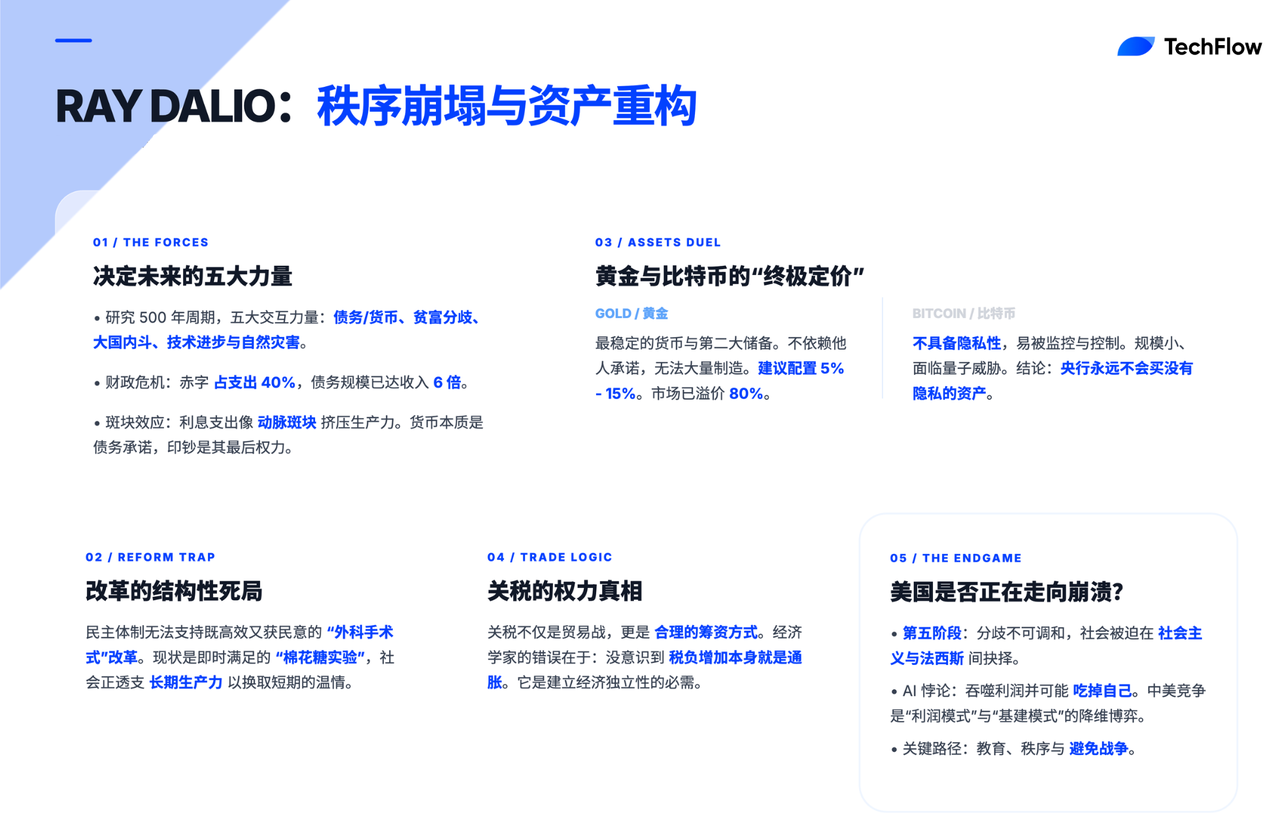
On his third appearance on the All-In Podcast, renowned investor Ray Dalio delivered a deep analysis of the severity of the U.S. debt crisis and offered predictions about its potential trajectory. He detailed the five major forces currently reshaping the global order, the structural constraints facing the Government Efficiency Department, the drivers behind gold’s record-high price, the reasons for Bitcoin’s underperformance, and the real story behind tariffs and trade deficits. He also explained why he believes the United States may be approaching the brink of collapse.
Highlights of Key Insights
On the Nature of Debt and the Economy
- The debt cycle functions like the human circulatory system. When debt-service costs rise relative to income and become unpayable, they constrict other expenditures—just as arterial plaque accumulates and restricts blood flow.
On Structural Obstacles to Government Reform
- Making an already efficient government even more efficient is no easy task. Attempting reform in a “surgical” manner—fast, effective, and minimally disruptive—is nearly impossible.
On the Foundational Logic of Money
- Structurally speaking, money is fundamentally debt. When you hold money, you’re holding a debt instrument—a promise that someone will give you money. When central banks accumulate excessive debt, their power lies in printing currency.
On Gold’s Irreplaceability
- Gold is the only long-standing historical asset that is portable, cannot be mass-produced, and does not rely on anyone else’s promise. In contrast, most currencies, debts, and equities are merely promises to deliver purchasing power.
On the Differences Between Bitcoin and Gold
- Bitcoin lacks privacy—its transactions can be monitored and potentially indirectly controlled. Central banks have no interest in buying or holding Bitcoin. Furthermore, questions remain about emerging technologies, such as whether quantum computing could undermine Bitcoin.
On the Misconception Linking Tariffs and Inflation
- A common error economists make is excluding taxes from inflation calculations. If your tax burden rises, that too is inflation. Why should that differ from how rising home prices affect you?
On the Three Keys to National Success
- First, educate children well. Second, society must provide an orderly, civilized environment. Third, avoid war—both civil and international. When all three are achieved, nations succeed—a fact repeatedly confirmed by history.
On the Endgame of Societal Fragmentation
- We are moving toward that “war”—in fact, we are already in it. When people’s allegiance to a position matters more than the system itself, the system faces crisis.
On the Paradox of AI “Eating Itself”
- Artificial intelligence appears to be consuming everything—but it may “eat itself.” It might fail to generate sufficient profit… China may treat AI as infrastructure—as essential and freely accessible as electricity—offering it to everyone at no cost. How do we compete under those conditions?
On the Metaphor for America’s Current State
- This is precisely our problem—the demand for instant gratification, and ignorance about whether certain actions actually enhance productivity.
The Five Forces That Will Determine America’s Future
David Sacks: Looking back over the past year—government performance, congressional action, and economic outcomes—I want to ask you: Are we on the right path? Or has there been little change compared to a year ago—or are we simply moving too slowly?
Ray Dalio:
I’ve studied the grand cycles spanning the past 500 years and identified five interlocking forces that collectively determine the answer to your question. First is the debt-and-currency issue, which I’ll elaborate on shortly. Second is domestic polarization, including disparities in wealth and values. These gaps fuel irreconcilable divisions between left and right, affecting tax policy, democratic institutions, and every facet of governance. Third is great-power conflict among nations. This follows the classic pattern where a rising power challenges the existing hegemon, thereby reshaping the global order. Fourth is technological advancement. Technology plays a pivotal role in every historical cycle. Fifth is natural disasters, including droughts, floods, and pandemics.
When we speak of “order,” we refer to monetary order—and all monetary orders ultimately collapse for the same reason. Likewise, all political orders—domestic and international—undergo transformation. America’s political order has remained relatively stable for 250 years, though it endured one civil war. Internationally, order shifts far more frequently—for example, the transition from a unipolar to a multipolar world—and technology continuously reshapes reality.
Now that these forces are all present, let me further explain the government’s fiscal condition and directly address your question. A nation’s economy operates much like a corporation or individual—except governments possess the power to print money. Viewed as a company or person, the U.S. government spends roughly $7 trillion annually but earns only $5 trillion—resulting in a deficit equal to 40% of spending. The U.S. has run deficits for decades, and today its debt stands at six times its income—providing grounds for forecasting.
The debt cycle functions like the human circulatory system, with capital markets channeling credit into various parts of the economy. If this credit boosts productivity and generates enough income to cover debt-service costs, the process remains healthy. But the problem arises when debt-service costs grow relative to income and become unpayable—just as arterial plaque constricts other expenditures.
Currently, the U.S. runs a $2 trillion deficit, half of which goes to interest payments, while another $9 trillion in maturing debt must be rolled over. Applied to a company or individual, this situation would clearly constitute a crisis. To stabilize, a 3% GDP deficit might be reasonable. Yet the current state is profoundly unhealthy—not just because it crowds out other spending, but also due to imbalances in debt supply and demand.
We must roll over $9 trillion in maturing debt and issue an additional $2 trillion in new debt. Who buys this debt? Partly domestic investors, partly foreign ones—about one-third. From their perspective, the risk profile has worsened.
First, U.S. dollar-denominated debt already constitutes a very high share of their portfolios—likely exceeding prudent investment thresholds. Moreover, geopolitical risks loom large. Consider possible conflict with China—or tensions with Europe. Europeans may fear sanctions disrupting debt-service payments; the U.S. must likewise worry about attracting sufficient capital.
The dynamics I’ve described recur throughout history—such as during 1929–1945. Thus, this fiscal condition is inherently unhealthy for the U.S. government—but the deeper problem lies in how other forces exacerbate it.
Why Government Reform Is Nearly Impossible
David Sacks: You previously raised this issue and offered a diagnosis: reducing the deficit to 3% of GDP would alleviate pressure. Yet that hasn’t happened. A year ago, many placed high hopes in Elon Musk’s decision to lead the Government Efficiency Department—planning bold reforms including spending cuts and fraud crackdowns.
Do you believe this reform failed because the measures themselves were flawed—or because the system, at this stage of the cycle, is structurally incapable of change? Is the economy so saturated with capital flows—and individuals and businesses so dependent on them—that escaping this trap is structurally impossible? Does this attempt tell us anything about the feasibility of government reform at this juncture?
Ray Dalio:
Making an already efficient government even more efficient is no easy task. Especially under time pressure—driven by election cycles—when people typically oppose such reforms and public support may erode. Moreover, in societies like ours, virtually any action invites criticism and scrutiny. That raises a broader question: Can democracy and our institutional framework truly support an administrative leadership model that is both highly efficient and broadly acceptable?
For instance, cutting spending inevitably targets programs like school lunch initiatives. Attempting “surgical” reform—efficient, fast, and minimally controversial—is nearly impossible.
Historically, whether viewed politically or through common sense, finding an administrative leadership model that satisfies the majority while enabling rapid reform remains an exceptionally difficult challenge.
David Sacks: Recently, a major story emerged suggesting widespread fraud in Nevada’s public funds—for example, daycare centers that don’t exist receiving billions of dollars. Do you see this as a symptom of this phase of the cycle? How does this relate to the issues we’ve discussed?
Ray Dalio:
Yes, this is indeed a manifestation of this phase. If you seek a well-run government, ask yourself: how well can government actually be managed? Visit a Department of Motor Vehicles—you’ll quickly grasp the scale, complexity, and dysfunction of the system. So, when you observe such inefficiencies, are you surprised? Probably not.
Gold vs. Bitcoin
David Sacks: You mentioned earlier that part of your portfolio is allocated to gold—which rose from $2,900 to $5,200 per ounce. How has gold performed over the past year? Is this surge driven by markets finally recognizing the cyclical phase you’ve long highlighted—or by China’s structural shift away from dollars and U.S. Treasuries toward greater gold holdings? Or is it due to other central banks pivoting to gold? Or perhaps heightened interest among retail speculators and market participants?
Ray Dalio:
This ties directly to the grand cycle. We must recognize that gold isn’t merely a speculative precious metal, as many assume. Gold is one of the oldest, most stable currencies—and the second-largest reserve asset held by central banks. For multiple reasons—including economic supply-demand dynamics, politics, and geopolitics—central banks themselves are buying gold to increase reserves. Simultaneously, individuals and other investors seek an alternative currency.
The core question is: what is money? Structurally, money is fundamentally debt. Holding money means holding a debt instrument—a promise that someone will give you money. As noted earlier, when central banks accumulate excessive debt, their power lies in printing currency. Grasp that, and you understand what’s unfolding now. The critical question, David, is: what kind of money do you consider safe?
David Sacks: I want a commodity-backed currency—an asset with tangible physical limits.
Ray Dalio:
Especially one that can be transferred from place to place. After all, money serves both as a medium of exchange and a store of value. When one country’s central bank or government needs to pay another, it requires real money—not illiquid assets like buildings. To transact, you need transferable assets. And gold is the only long-standing historical asset that is portable, impossible to mass-produce, and independent of others’ promises. Put differently, most currencies, debts, and equities are merely promises to deliver purchasing power.
We must distinguish wealth from money. Wealth exists in forms like stocks, buildings, and companies—but you cannot spend it directly. To spend, you must convert wealth into money. Today, however, our ratio of wealth to money is extremely high. The problem arises when converting wealth into money—authorities may simply print more. This has occurred consistently since fiat money was introduced.
David Sacks: When you speak with market participants, are they converting wealth or money into gold? How much upside remains in the dollar-denominated gold price cycle?
Ray Dalio:
I typically examine who holds what assets—including central bank holdings and asset composition. I assess the wealth-to-money ratio—or wealth-to-gold ratio. We see that total wealth and central banks’ holdings of other currencies vastly exceed hard-currency gold.
Gold’s price has surged from a historically low level to a high one—this rise and the accompanying shift in asset composition have nearly restored historical averages, though not yet fully. Yet the persistently high wealth-to-money ratio remains a serious concern.
Take a concrete example: wealth taxes pose a latent risk. One might ask, “Are we in a bubble?”—for instance, in AI-related stocks or similar assets. But we know a hallmark of bubbles is surging demand for money, forcing people to sell assets to raise cash to meet that demand.
Typically, such demand stems from borrowing to buy assets, pushing up prices. But this cannot last—because debt-service costs must be paid, and assets rarely generate sufficient cash flow to cover them. Eventually, people must sell assets to repay debt—or liquidate to pay wealth taxes.
Whether or not people support wealth taxes, such taxation alone could redirect wealth toward cash. The sole way to obtain cash is selling assets or borrowing against them—triggering liquidity strain. Moreover, the social impact of wealth inequality makes this politically fraught.
Thus, I believe individuals, corporations, and even nations should worry about whether they hold enough gold. Even if you hold no strong view on gold, allocating 5% to 15% of your portfolio to gold is prudent. Because gold exhibits negative correlation with other assets, it typically performs well when economies falter—while other assets suffer.
David Sacks: Why hasn’t Bitcoin mirrored gold’s trend? Since our last conversation, gold rose 80%, while Bitcoin fell 25%. What explains Bitcoin’s performance—and why hasn’t it become the safe-haven asset many expected?
Ray Dalio:
Bitcoin differs from gold in key ways. First, Bitcoin lacks privacy—its transactions are monitorable and potentially subject to indirect control. Central banks have zero interest in buying or holding Bitcoin. Thus, not just individuals—but institutions and central banks alike—are unlikely to adopt Bitcoin as a reserve asset. Additionally, questions persist about emerging technologies, such as whether quantum computing could compromise Bitcoin.
Bitcoin’s market size remains relatively small and more easily manipulated. Though Bitcoin garners attention, its scale as a currency pales next to gold’s. These represent the key dynamic differences between Bitcoin and gold.
David Sacks: What about silver? Its price surged significantly over the past year. Is silver merely a derivative of gold—or are people simply chasing silver due to gold’s momentum?
Ray Dalio:
Silver is largely a byproduct of industrial production, making supply expansion difficult. Historically—like when the British pound was tied to silver—silver served as currency, yet it gradually evolved into a speculative asset, drawing followers purely on hype.
David Sacks: Last time, you emphasized the importance of maintaining low interest rates to mitigate impacts of the current economic cycle. What’s your view today on interest-rate levels and the Fed’s actions over the past year? Have these measures sufficiently eased pressures inherent to this cycle?
Ray Dalio:
Interest rates are one of three primary levers for managing the economy—the others being taxation and government spending. But we cannot artificially suppress interest rates too far, because one person’s debt is another’s asset. Excessively low rates hurt creditors—triggering familiar dynamics: increased borrowing fuels asset bubbles.
Simultaneously, rates cannot be set too high—or debtors face unbearable pressure. Hence, balance is vital: rates must be high enough to satisfy creditors, yet low enough to spare debtors. This equilibrium becomes extraordinarily difficult when the economy contains massive volumes of “dead assets” and liabilities—since each dead asset corresponds to a debt burden.
This challenge intensifies in what’s termed a “K-shaped economy”: one segment experiences bubbles—e.g., “Who will be the next trillionaire?”—focused on the top 1%. Meanwhile, another segment struggles—e.g., 60% of Americans read below a sixth-grade level. Enhancing their productivity—especially amid labor-replacement pressures—is immensely difficult.
When asset and liability scales balloon alongside extreme inequality, achieving balance grows harder still—making monetary policy formulation exceptionally complex.
David: Over the past year, numerous reports noted global central banks halting purchases of U.S. Treasuries and shifting into gold. Given this global market shift, must the Fed resume Treasury purchases and expand its balance sheet? At this stage of the economic cycle, is another Fed balance-sheet expansion inevitable?
Ray Dalio:
I believe it’s plausible in the long term. Currently, the Fed is shortening debt maturities to address this—though that increases rollover risk. The government is trying to reduce long-dated debt issuance and keep short-term rates low to curb long-term rate hikes. Diplomatic efforts may also persuade other countries to buy or hold U.S. Treasuries—or attract alternative capital inflows into the U.S.
Economists’ Misjudgment of Tariffs
David Sacks: Over the past year, many economists strongly opposed tariffs, warning they’d spark inflation and reduce consumption—potentially harming GDP growth. The President and administration imposed several tariff policies under the Emergency Economic Powers Act—though the Supreme Court recently struck down that law. Looking back at tariffs’ economic impact, what aspects of economists’ forecasts proved correct—and which were mistaken? Did they overlook or misunderstand fundamental issues?
Ray Dalio:
First, tariffs generate tax revenue. A common economist error is omitting taxes from inflation metrics. If your tax burden rises, that too is inflation. Historically, tariffs constituted a major source of government revenue across many eras. For numerous countries, tariffs remain a perfectly legitimate funding mechanism—and deserve inclusion in our analysis. Moreover, foreigners bear part of the tariff cost.
Yet from the grand-cycle perspective, our larger problem is economic interdependence. We’ve experienced “hollowing out” of manufacturing and the middle class—a critical issue. Now the question is: Should we rebuild these industries? Should we sustain massive trade deficits? America’s trade deficit is unsustainable—it depends on foreign capital to finance deficits, a dependency that cannot endure. We must find ways to correct this.
Tariffs can form part of the solution—and I deem them entirely reasonable. But they aren’t a standalone fix; they must integrate into a broader strategy—including developing needed industries, building infrastructure, and attracting related sectors. Such efforts serve not only economic needs but geopolitical imperatives.
We’re entering a world of escalating conflict—shifting from a multilateral world order to a power-based, adversarial global economy. In this environment, threats among nations intensify—from commodity wars to capital wars. Therefore, we must build economic and political independence—a cornerstone of shaping the future world.
David Sacks: In this week’s State of the Union, President Trump proposed replacing U.S. income tax entirely with tariffs. Is this feasible? Can tariffs serve as an effective tax tool—even fully supplanting other tax forms?
Ray Dalio:
I don’t think it’s realistic—mainly due to the scale of tariffs and their combined impact. Tariffs are regressive, and we still must address wealth inequality. In my view, wealth inequality is not just a profound social issue—it’s also a productivity issue. We must boost most people’s productivity via infrastructure development and similar measures. This is a critical challenge requiring resolution.
David Sacks: My analysis suggests nearly half of all Americans work directly or indirectly for the government—or for government service providers. Over the past year, federal government employment fell by ~317,000—14% of the federal workforce. This administration downsized certain agencies and cut staff. Do you think these workers will enter the private sector and become more productive—or will they be absorbed by other government agencies, continuing work with little substantive contribution to economic growth?
Ray Dalio:
I’ve reviewed these figures—but I don’t claim full expertise here. Overall, government efficiency is extremely low. While government serves vital functions, even those are executed poorly. Other countries manage domains like education more effectively. What we need is fundamental reform.
Education, for instance, is among the highest-return investments. Wherever these government workers go, their reassignment and functional roles—and systemic inefficiency—are all part of the problem. Capitalism offers one advantage: if no one invests in something—or it fails to generate profit—it cannot survive. Yet even then, systems remain rife with inefficient personnel and mechanisms.
David Sacks: Is there insufficient productivity-driven growth to lift incomes, wealth, and living standards for more people—or are people’s capabilities and education simply inadequate for productivity, meaning the system itself has failed them?
Ray Dalio:
Success hinges on three keys. First, educate children well—equipping them to contribute productively and teaching them to coexist civilly with others. Second, society must provide an orderly, civilized environment—where people can compete and cooperate to boost productivity and broadly share gains. Third, avoid war—both civil and international. Achieve all three, and nations succeed—a truth repeatedly validated by history.
David Sacks: Are these the remedies for current societal problems? For instance, rising unionization, growing socialist movement support, and wealth-tax debates—can these all be resolved through education, civilized environments, and war avoidance?
Ray Dalio:
We must end internal strife. Right now, we face irreconcilable divisions. When people’s loyalty to positions outweighs loyalty to the system itself, the system enters crisis. Our system is endangered—because people reject both the current system and alternatives, choosing instead to fight.
David Sacks: How does this affect productivity?
Ray Dalio:
When striving to build a sound education system, we confront chaos and inefficiency—with no one truly in control. Historically, Plato wrote around 350 BCE about democracy’s cyclical vulnerabilities. Today’s situation resembles Rome at Caesar’s time—assassinated in the Senate.
We need strong leadership to drive reform and ensure national functionality. But the challenge lies in uniting fractured groups—halting conflict and focusing on productivity. This demands a resolute leader who compels collective action toward shared goals—not mutual combat.
Is America Heading Toward Collapse?
David Sacks: It sounds like we’re on an unavoidable path—ultimately forced to choose between some form of socialism and some form of fascism. Is this truly our national predicament?
Ray Dalio:
I believe yes—we’re heading toward that “war,” and in fact, we’re already in it. I call this “Stage Five.” This dynamic emerges when a nation suffers poor fiscal health, vast wealth and values gaps, irreconcilable divisions, and internal-external threats. I believe this is precisely our current reality.
I’m like a mechanic—my aim isn’t ideological, but practical: to profit in markets and describe what’s happening. From that vantage point, this is the situation.
David Sacks: On the AI bubble: what’s your take? Many believe investing in tech means investing in those companies’ stocks. Is that a misconception?
Ray Dalio:
Yes—it’s a common misunderstanding. There’s a huge distinction between technology and the companies deploying it. Typically, most startups fail; only a few succeed—yet technology itself advances steadily and improves. This dynamic profoundly impacts markets. Recall the 2000 tech bubble—or even the late 1920s: technology progressed, but companies didn’t necessarily survive.
Currently, AI seems to be eating everything—but it may “eat itself,” failing to generate sufficient profit. We can’t view this solely domestically—we must consider China, whose economic philosophy differs markedly from America’s. America’s economy is profit-centric, whereas China may regard profit as secondary. For example, China might treat AI as infrastructure—freely accessible like electricity—open-sourcing it. This could yield higher adoption, boosting productivity through usage.
In that scenario, how do we compete? Suppose their technology matches ours in quality—and is free and open-source—while ours must sustain profitability. Such systemic differences introduce AI-specific risks, though many unknowns remain.
David Sacks: Reflecting on U.S. history, I often ask myself: how did we get here? Whether regarding debt scale, government spending, or the Fed’s evolving role and associated risks—all seem avoidable had different decisions been made earlier. If you could travel back and help draft the Constitution as a Founding Father, what changes would you make? What clauses would you add to prevent today’s predicament?
Ray Dalio:
This reminds me of the “marshmallow test”: offering a child one marshmallow now—or two after twenty minutes. Children who wait tend to demonstrate superior decision-making later in life. This is precisely our problem—the craving for instant gratification, and ignorance about whether certain actions yield productivity.
That said, the system has shown remarkable adaptability. We’ve weathered crises, cleared debt, and emerged stronger—always finding paths forward. Yet balancing fiscal prudence with innovation remains tough. With today’s AI, none of us knows its ultimate impact—or whether returns will materialize. Writing constitutional provisions ensuring fiscal discipline without stifling innovation or entrepreneurship is profoundly challenging.
Perhaps my main recommendation would be: study history. Understand these patterns—and strive for balance across all dimensions. Balance is central to everything—whether enduring the pain of failure or the pain of investing in failed projects. Finding that equilibrium is paramount.
Join TechFlow official community to stay tuned
Telegram:https://t.me/TechFlowDaily
X (Twitter):https://x.com/TechFlowPost
X (Twitter) EN:https://x.com/BlockFlow_News
 深潮TechFlow