“The Bitcoin Diplomacy” Rises: Pakistan’s Diplomatic Comeback
TechFlow Selected TechFlow Selected
“The Bitcoin Diplomacy” Rises: Pakistan’s Diplomatic Comeback
Pakistan has transformed into a U.S.-Iran mediator—thanks to its connection with Trump’s crypto firm, World Liberty Financial.
 Navigating Web3 tides with focused insights
By Faseeh Mangi
Translated by Saoirse, Foresight News
In January this year, inside an ornately decorated building in the heart of Islamabad, Pakistan’s most powerful leaders gathered to welcome a special guest: Zachary Witkoff, CEO of World Liberty Financial—a cryptocurrency platform co-founded by U.S. President Donald Trump.
The event’s guest list was extraordinarily high-profile—resembling a state visit more than a non-binding, exploratory stablecoin collaboration with no major financial commitments. A group photo shows the 32-year-old son of Trump advisor Steve Witkoff standing beside Pakistani Prime Minister Shehbaz Sharif and General Asim Munir—the country’s even more powerful Chief of Army Staff.
Standing on General Munir’s other side is Bilal Bin Saqib, 35, a key figure who has driven the transformation of U.S.-Pakistan relations over the past year—and who describes himself as a “crypto person.” He candidly admits he worked three jobs while in university, including cleaning toilets. At the event, Saqib praised Zachary Witkoff’s visit and that of other World Liberty Financial executives, calling it instrumental in helping “Pakistan step onto the international stage.”
Pakistan’s adept use of cryptocurrency diplomacy—which Saqib dubs “bit diplomacy,” a play on Bitcoin—has solidified the rapidly warming friendship between Trump and General Asim Munir. Islamabad’s high-level reception of the U.S. president’s family business underscores how this increasingly vital geopolitical relationship continues to deepen. Amid a conflict that could upend the global economy, Pakistan has emerged as a critical mediator between the U.S. and Iran—further amplifying the significance of this bond.
Steve Witkoff confirmed last week via Bloomberg Terminal that Pakistan has submitted a 15-point action plan. With Trump’s April 6 deadline looming—by which Iran must either reach an agreement or face strikes on key infrastructure—Islamabad has also been named as a potential venue for negotiations. Pakistan itself has strong incentives to facilitate this: Iran’s blockade of much of the Strait of Hormuz has triggered a severe energy shortage crisis in Pakistan.
“Given the importance of personal relationships in decision-making within the Trump White House, Pakistan likely gained some influence there—giving it an advantage when pitching itself to Washington as a mediator,” said Michael Kugelman, Senior South Asia Analyst at the Washington-based Atlantic Council, commenting on Pakistan’s collaboration with Zachary Witkoff. “With such an unconventional U.S. administration, unconventional factors often matter—and cryptocurrency is clearly one of them.”
Saqib was virtually unknown last year but has now surged into one of Pakistan’s most influential figures. He has forged partnerships with multiple crypto industry titans—including CZ (Changpeng Zhao), founder of Binance, the world’s largest cryptocurrency exchange. He also maintains close ties with fund manager Cathie Wood, Bitcoin billionaire Michael Saylor, and Salvadoran President Nayib Bukele—who in 2021 made Bitcoin legal tender and established a national Bitcoin Strategic Reserve.
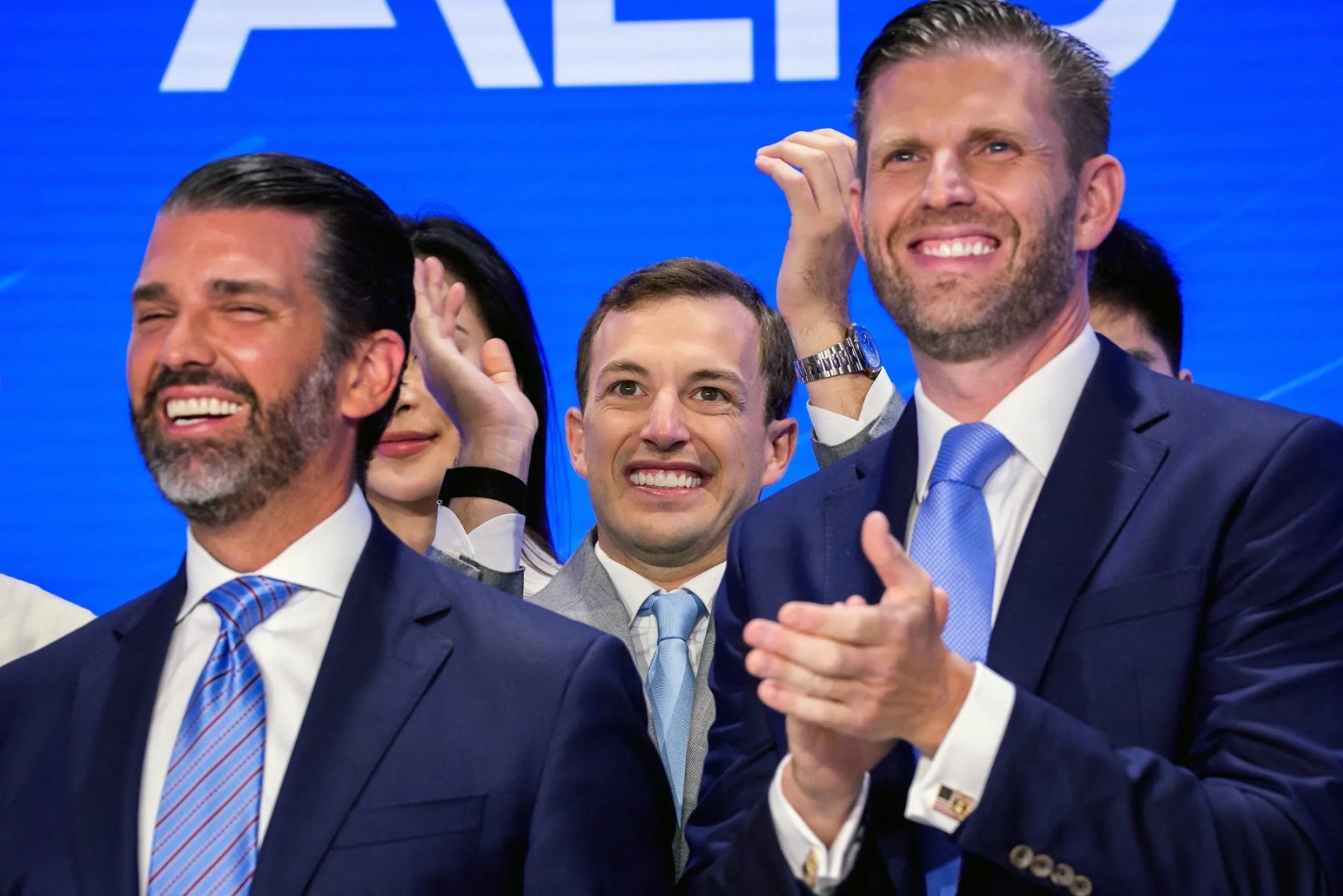
Zachary Witkoff stands alongside Donald Trump Jr. and Eric Trump at Nasdaq’s opening ceremony in New York on August 13, celebrating a deal reached by World Liberty Financial. Photographer: Adam Gray / Bloomberg
Yet his greatest diplomatic and commercial returns have stemmed from his close ties with World Liberty Financial. The company hired Saqib as an advisor in April last year. David Wachsman, a spokesperson for World Liberty Financial, stated that Saqib resigned from this role upon entering government service—and received no compensation during his tenure.
Last month, Saqib posted a selfie with Zachary Witkoff and other World Liberty Financial executives at Trump’s Mar-a-Lago Club in Florida. Almost simultaneously, Pakistan and the U.S. agreed to renovate Manhattan’s Roosevelt Hotel—a deal negotiated by Steve Witkoff.
“Crypto opened the door,” Saqib said in a recent interview. “New dialogues began. Trust was built. We got a chance to reshape our national image.”
For Pakistan, this marks a stunning reversal. Over the past decade, the U.S. intensified its courtship of India to counterbalance China’s growing military and economic clout, leaving Pakistan perennially teetering on bankruptcy and mired in diplomatic isolation. Then, in May last year, the situation abruptly shifted: Pakistan’s military claimed Trump had prevented an armed Indo-Pakistani conflict—a claim Delhi categorically denied and which strained U.S.-Pakistan relations for months.
Although the White House later repaired ties with India, Trump continued to frequently praise General Asim Munir. In February, at a Peace Council meeting, the president called the Pakistani military chief a “great general,” a “remarkable man,” and a “steadfast fighter.” In return, Pakistan urged awarding Trump the Nobel Peace Prize and extended other gestures of goodwill—while further cementing its bond with the White House through cryptocurrency.
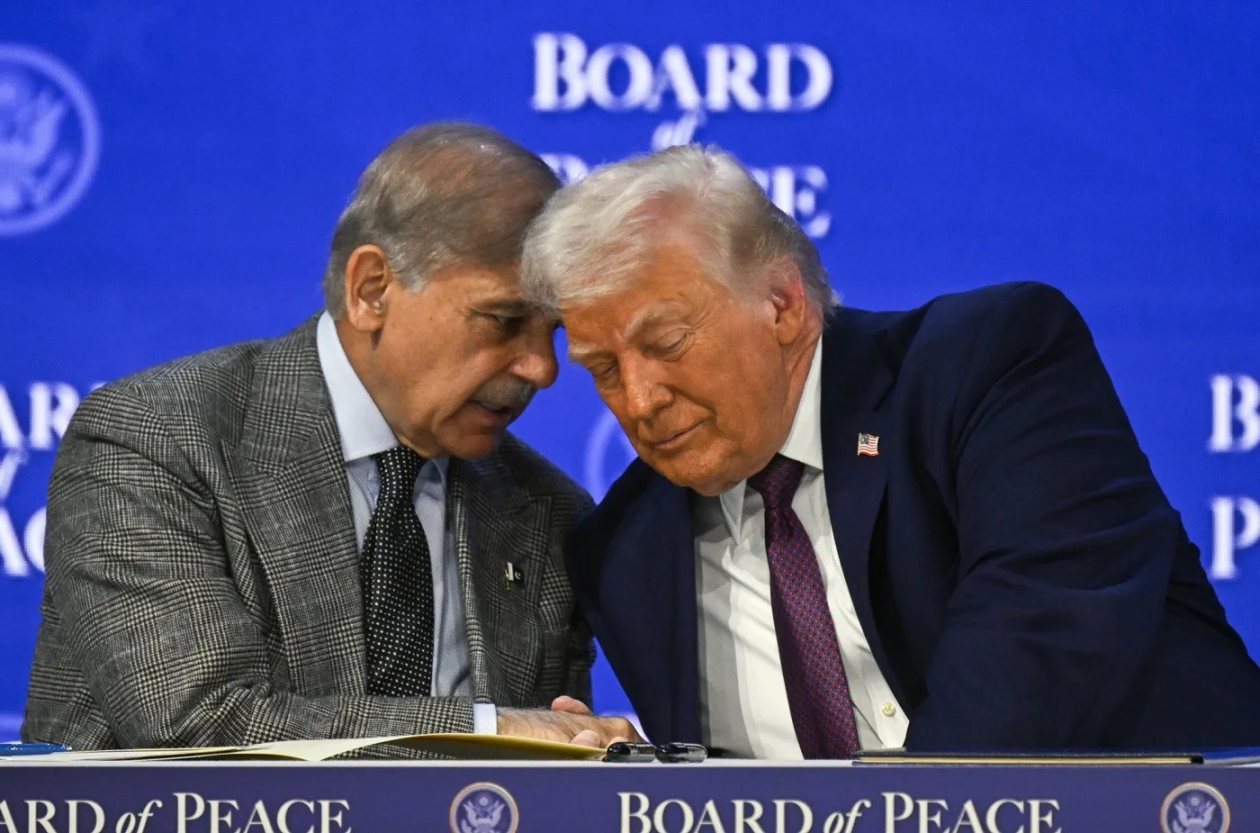
U.S. President Donald Trump (right) and Pakistani Prime Minister Shehbaz Sharif attend a Peace Council meeting during the World Economic Forum in Davos on January 22. Photographer: Harun Özal / Anadolu Agency / Getty Images
“For a country lacking global investor attention, keeping pace with Washington’s crypto pivot isn’t just about technology,” said Uzair Younus, Partner at Washington-based consulting firm The Asia Group. “It’s a signal: Pakistan remains relevant amid a shifting global order.”
Until two years ago, Pakistan kept cryptocurrency at arm’s length. Its regulators had maintained distance from the sector for a decade, citing concerns over fraud, Ponzi schemes, and money laundering risks. Deeply mired in high inflation, heavy debt burdens, and depleted foreign exchange reserves—and reliant on IMF bailout loans under immense repayment pressure—Pakistan remained wary.
But by 2024, attitudes shifted. As the economy improved, Pakistan’s top military leadership recognized cryptocurrency’s potential as a useful tool in global diplomacy. The country swiftly enacted virtual asset regulatory legislation, established a dedicated regulatory authority, and invited global exchanges to apply for licenses. Pakistan also proposed creating a national crypto reserve and allocated 2,000 megawatts of electricity—about 5% of the national grid—for cryptocurrency mining.
Implementing this suite of initiatives required a single point person—and Saqib stepped into that role. Starting in March last year, he was successively appointed: Chief Advisor on Crypto Affairs to the Finance Minister; CEO of the Pakistan Crypto Council; Special Assistant to the Prime Minister on Blockchain and Crypto Affairs; and ultimately, Chairperson of the Pakistan Virtual Assets Regulatory Authority.
How he rose so rapidly to become one of Pakistan’s most influential officials remains unclear. When asked who invited him into government, Saqib declined to elaborate—only saying it came from the Ministry of Finance.
When questioned about his professional expertise, Saqib described his core strength as “getting ideas executed.”
“I’m not a trader,” he said. “I’m a builder. I’m an artist—not a scientist.”
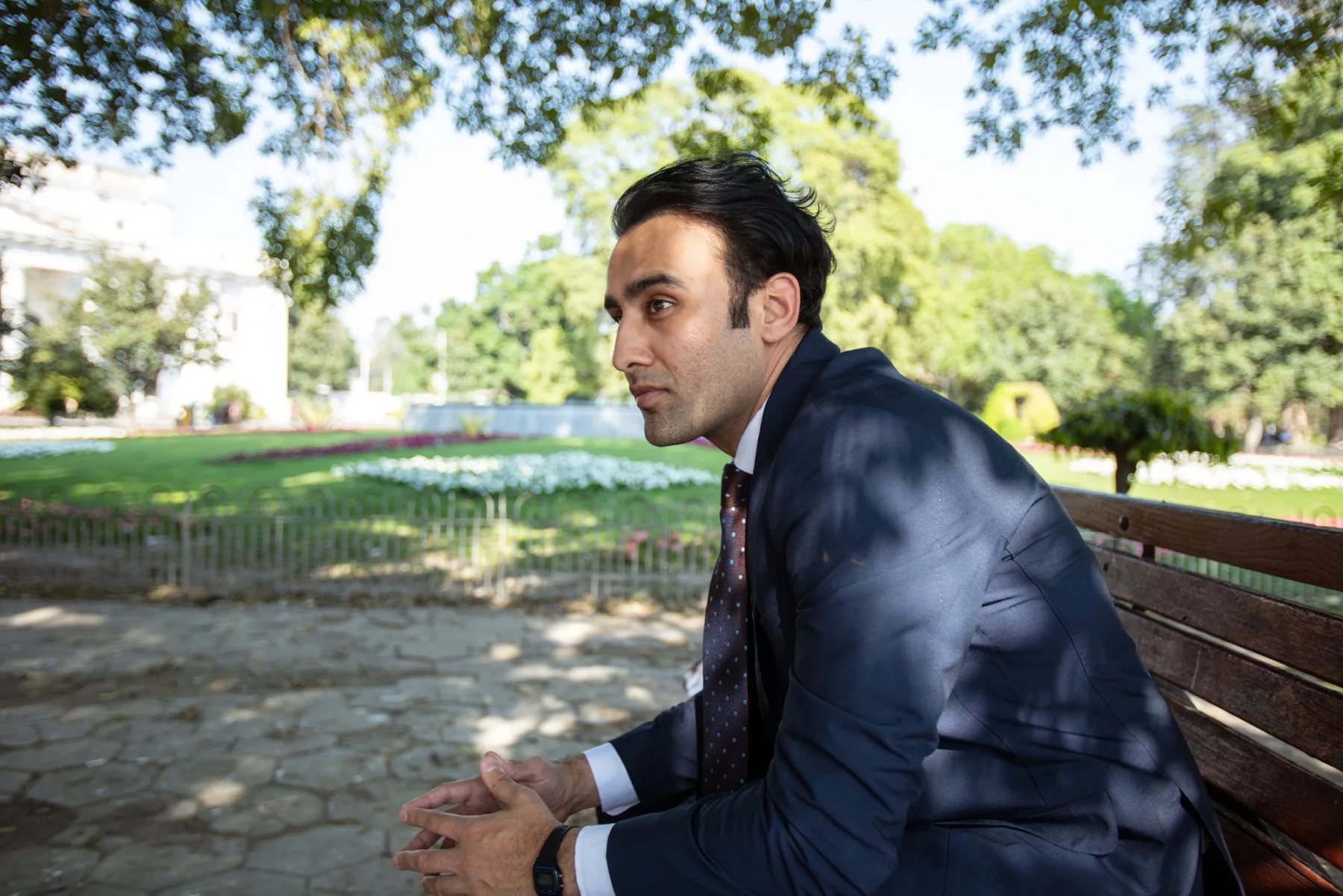
Bilal Bin Saqib outside Jinnah Library in Lahore on March 27. Photographer: Shah Zaman / Bloomberg
Whatever label he chooses for himself, success has followed fast. Saqib hails from Lahore, Pakistan’s second-largest city, and says his interest in cryptocurrency began during Bitcoin’s historic 2017 bull run—when Bitcoin surged from under $1,000 at year’s start to $14,000 by year-end.
He lived between the UK and Pakistan, working three jobs during his undergraduate studies—including cashiering and shelf-stocking at a university supermarket and cleaning toilets. Later, he earned a master’s degree in Social Innovation and Entrepreneurship from the London School of Economics and soon took the TED stage. In 2019, he co-founded Tayaba, a charity helping impoverished women access clean drinking water—with recognition landing him on Forbes’ list.
During the pandemic, while living in the UK, Saqib co-launched the “Million Meals” initiative, delivering fresh meals to healthcare workers and vulnerable groups—earning commendations from then-Prime Minister Boris Johnson and the British royal family, and resulting in his appointment as a Member of the Order of the British Empire (MBE).
Despite numerous honors in public service, Saqib struggled in the crypto industry. For four years before his government appointment, his LinkedIn profile listed work at The Coin Master—a firm with only 2–10 employees and a slogan promising to “help tokens navigate their path to Web3 markets.”
In interviews, Saqib acknowledged enduring many difficult moments—but offered no specifics.
“In crypto, failure is the best teacher,” he said. “There’s no formal school for this. You learn only by doing—and by rising again after every mistake.”
“I know just one thing,” he added. “If you throw enough mud at a wall, some of it will stick.”
After formally joining Pakistan’s government in March 2025, Saqib quickly delivered results. The following month, he persuaded Binance’s CZ to serve as Strategic Advisor to the Pakistan Crypto Council—CZ having previously served prison time in the U.S. for failing to implement adequate anti-money laundering controls, and later receiving a presidential pardon from Trump in October.
“The chef has arrived in Pakistan. Full steam ahead—vibes are high, momentum unstoppable!” Saqib posted on X. His profile picture features a T-shirt emblazoned with “Crypto Is Not Crime.”
A Binance spokesperson said the company has received regulatory approval to operate in Pakistan and “will continue to comply fully with all applicable regulations, collaborate closely with local authorities, and support the responsible development of the digital asset ecosystem.”
Recruiting CZ was just the beginning. Roughly three weeks later, Saqib hosted Zachary Witkoff and other World Liberty Financial executives in Islamabad, where the company signed a memorandum of understanding with the Pakistani government to deepen cooperation on stablecoin applications.
Pakistan heavily promoted the event. Its official statement described World Liberty Financial as “backed by the Trump family—including President Donald and his sons”—and noted that Trump had “personally endorsed WLF.”
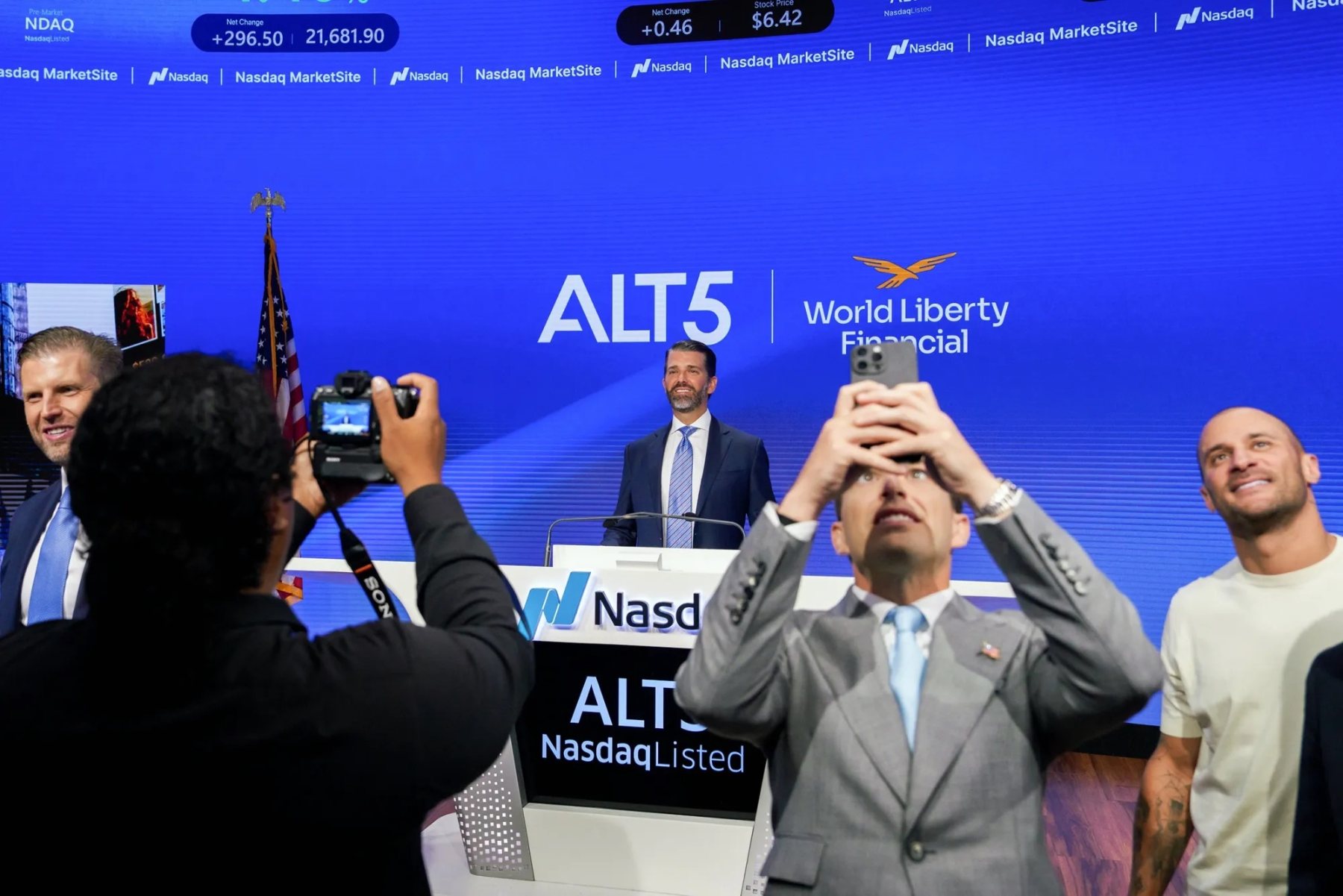
Eric Trump (far left), Donald Trump Jr., Zachary Witkoff, and Chase Herro—co-founder of World Liberty Financial—at Nasdaq’s market site in New York on August 13. Photographer: Adam Gray / Bloomberg
Zachary Witkoff is equally ambitious. In May this year, during a video call with Saqib at Lahore’s picturesque Shalimar Gardens, he expressed hopes to help digitize Pakistan’s economy—tokenizing the country’s multi-trillion-dollar rare earth assets—and deploying digital wallets and stablecoins to serve the world’s third-largest unbanked population. He declared Pakistan possesses “enormous potential.”
In late May, Saqib promoted Pakistan’s crypto industry ascent at a Bitcoin conference in Las Vegas—attended by U.S. Vice President JD Vance and Trump sons Donald Jr. and Eric, both co-founders of World Liberty Financial. Days later, Saqib met Bo Hines—the then-Chair of the President’s Digital Asset Advisory Committee—at the White House.
The next month, Saqib was hastily added to Pakistan’s trade delegation to the U.S. At the time, he was vacationing with family in a Himalayan hill resort with extremely poor mobile signal—when an official urgently called: “You’re going to Washington—pack immediately.”
Despite having zero background in tariffs, no knowledge of the agenda, and no formal attire, Saqib seized the opportunity. Upon arriving in Washington, he rushed to a store and bought a suit jacket. The next morning, he sat across from U.S. trade officials and spoke confidently about digital assets and trade corridors. By the time he left Washington, he had helped draft a framework for a trade agreement.
That agreement is merely one of several tangible benefits the Trump administration has granted Pakistan. The U.S. slashed tariffs on Pakistani goods to 19%—well below rates applied to many Asian nations and far lower than previous duties on Indian goods, which stood as high as 50% until Trump reduced them to 18% in January this year. The Trump administration also formally designated the Balochistan Liberation Army as a terrorist organization—a designation Pakistan had long sought internationally.
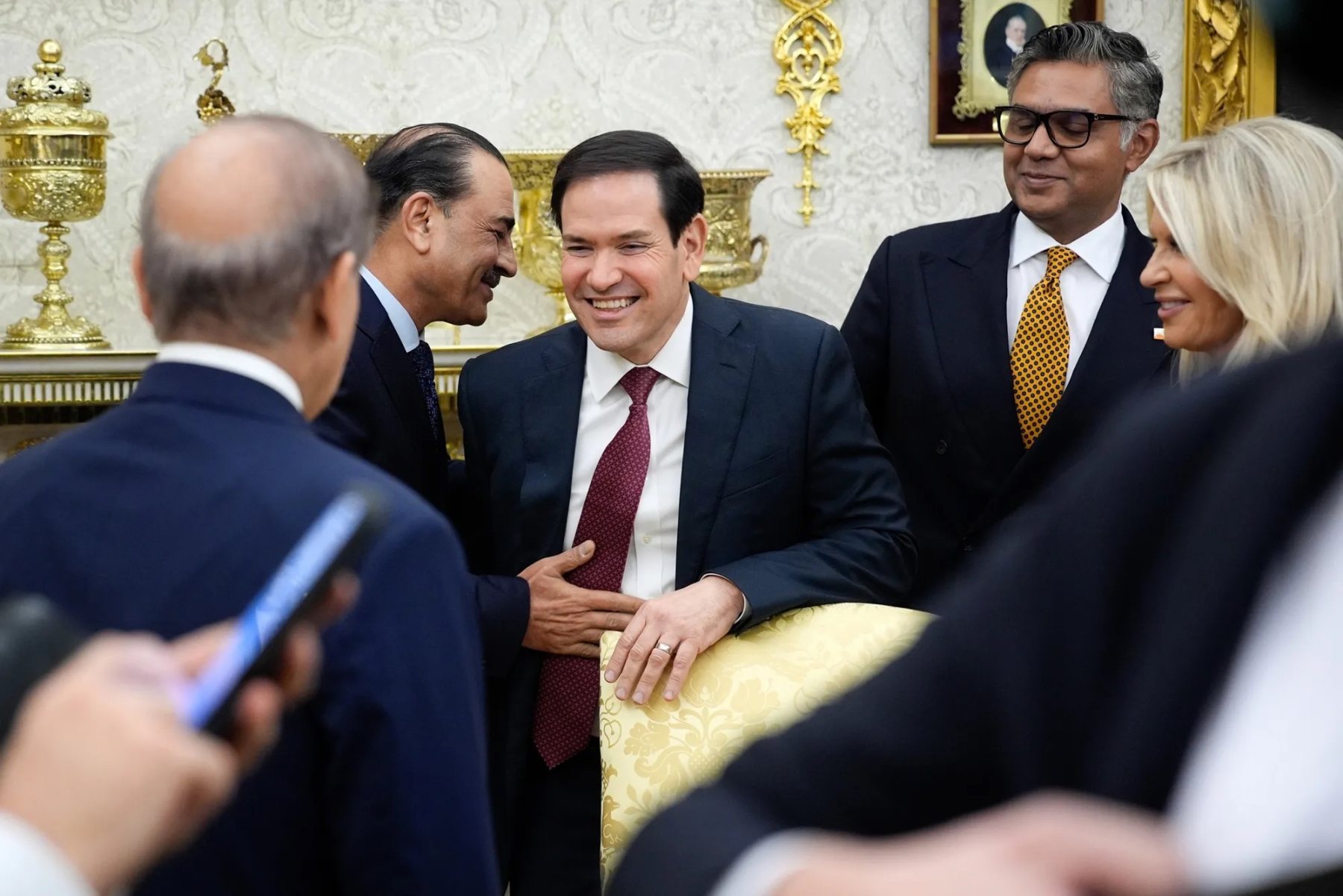
General Asim Munir (second from left, center) and U.S. Secretary of State Marco Rubio in the Oval Office at the White House in September, during President Donald Trump’s meeting with Pakistani Prime Minister Shehbaz Sharif. Photographer: Yuri Gripas / Abaca Press / Bloomberg
For the U.S., Pakistan offers multiple strategic advantages. Beyond being a nuclear-armed nation in a pivotal location, it can aid U.S. efforts to diversify critical mineral supply chains. In September, Missouri-based strategic metals firm Strategic Metals signed a memorandum of understanding with a Pakistan-based, military-affiliated enterprise to jointly develop rare earth resources.
The Trump family business also stands to benefit from entering Pakistan’s virtual asset market. According to Pakistan’s Ministry of Finance, the country hosts 40 million crypto users, with estimated transaction volumes exceeding $300 billion—making it one of the world’s most crypto-saturated nations, as citizens seek alternative investment avenues amid persistently high inflation.
Uncertainties remain—especially amid surging oil prices. Pakistan still faces IMF loan repayments, and the IMF has traditionally opposed sovereign crypto experiments. El Salvador serves as a cautionary precedent: its Bitcoin adoption strained relations with the IMF and stalled financing negotiations.
Trump, too, is famously capricious—even toward longtime allies. He may demand Pakistan, which signed a defense pact with Saudi Arabia last year, participate in some capacity in operations against Iran—an outcome that would place General Asim Munir in an extremely difficult position.
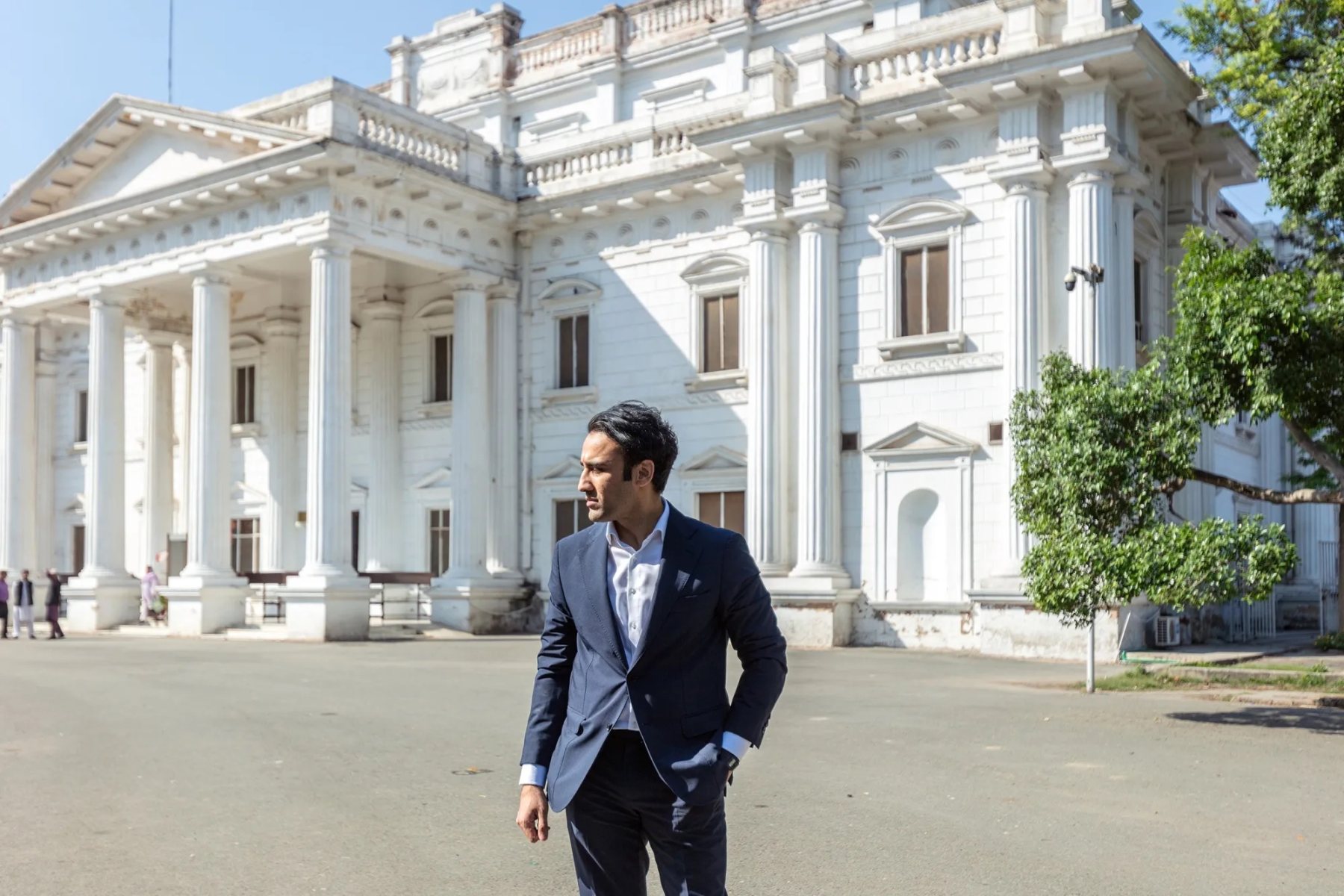
“I’m not a trader—I’m a builder. I’m an artist, not a scientist.” Photographer: Shah Zaman / Bloomberg
For Saqib, however, the focus remains on cultivating technical capacity among Pakistan’s youth to drive economic growth—and avoid recurring reliance on IMF bailouts. Amid global uncertainty, he remains optimistic about his country’s trajectory.
“There’s a lot of serendipity here—and perfect timing,” Saqib said. “All the stars have aligned.”
Reporting assistance: Sidhartha Shukla, Ryan Weeks, Suvashree Ghosh
Join TechFlow official community to stay tuned
Telegram:https://t.me/TechFlowDaily
X (Twitter):https://x.com/TechFlowPost
X (Twitter) EN:https://x.com/BlockFlow_News
 @Bloomberg