Interview with the Founder of DuckChain: Building an Engaging Community, Establishing a Consumer Ecosystem, and Serving Nearly One Billion Users
TechFlow Selected TechFlow Selected
Interview with the Founder of DuckChain: Building an Engaging Community, Establishing a Consumer Ecosystem, and Serving Nearly One Billion Users
DuckChain aims to bring billions of Telegram users from off-chain to on-chain, enabling seamless compatibility between TON and ecosystems such as EVM and BTC.
 Navigating Web3 tides with focused insights
By: TechFlow
The crypto market is undergoing an unprecedented "zoo" cycle, with animal-themed projects emerging one after another in dazzling succession.
In gaming, the battle between cats (Catizen) and hamsters (Hamster) has led the tap-to-earn craze;
Within meme markets, hippos, squirrels, spider monkeys, and eagles have taken turns on stage, repeatedly pushing this highly speculative and absurdly comedic sector to new highs;
And within public chain ecosystems, beyond uniquely cultured communities such as Monad and Berachain, what excites this year’s community most is DuckChain—the consumer Layer powered by the combined magic of TON and Arbitrum.
On November 18, DuckChain announced its mainnet launch, introducing an innovative ISO concept that allows users to convert Telegram Stars into on-chain Stars for seamless blockchain interaction—significantly lowering both cognitive and participation barriers. Within less than a week of going live, DuckChain achieved the impressive milestone of over one million active wallets depositing Stars, with more than five million transactions recorded on-chain at the time of writing.
At this pivotal moment, we had the privilege of conducting an in-depth conversation with DuckChain founder Ducking.
In today's competitive landscape among public chains, identifying the right niche is just as crucial as solid development. To newcomers, DuckChain appears adorned with numerous labels: first EVM-compatible consumer Layer in the TON ecosystem, backed by Arbitrum, over one million paying testnet users, total user base surpassing ten million…
Despite these dazzling figures, Ducking—a founder with rich experience in investment analysis and quant strategies—excels at distilling complex topics into simple insights:
As the first consumer Layer providing developers with an EVM environment on TON, DuckChain aims to bring billions of Telegram users from off-chain to on-chain, enabling seamless compatibility between TON, EVM, BTC, and other ecosystems.
When asked which types of applications are most favored by DuckChain, Ducking candidly shared:
DuckChain will prioritize supporting applications with strong breakout potential—those capable of truly bringing Web2 users into Web3 while offering diverse use cases and frictionless user experiences. These include, but are not limited to, Meme, GameFi, SocialFi, and innovative DeFi projects.
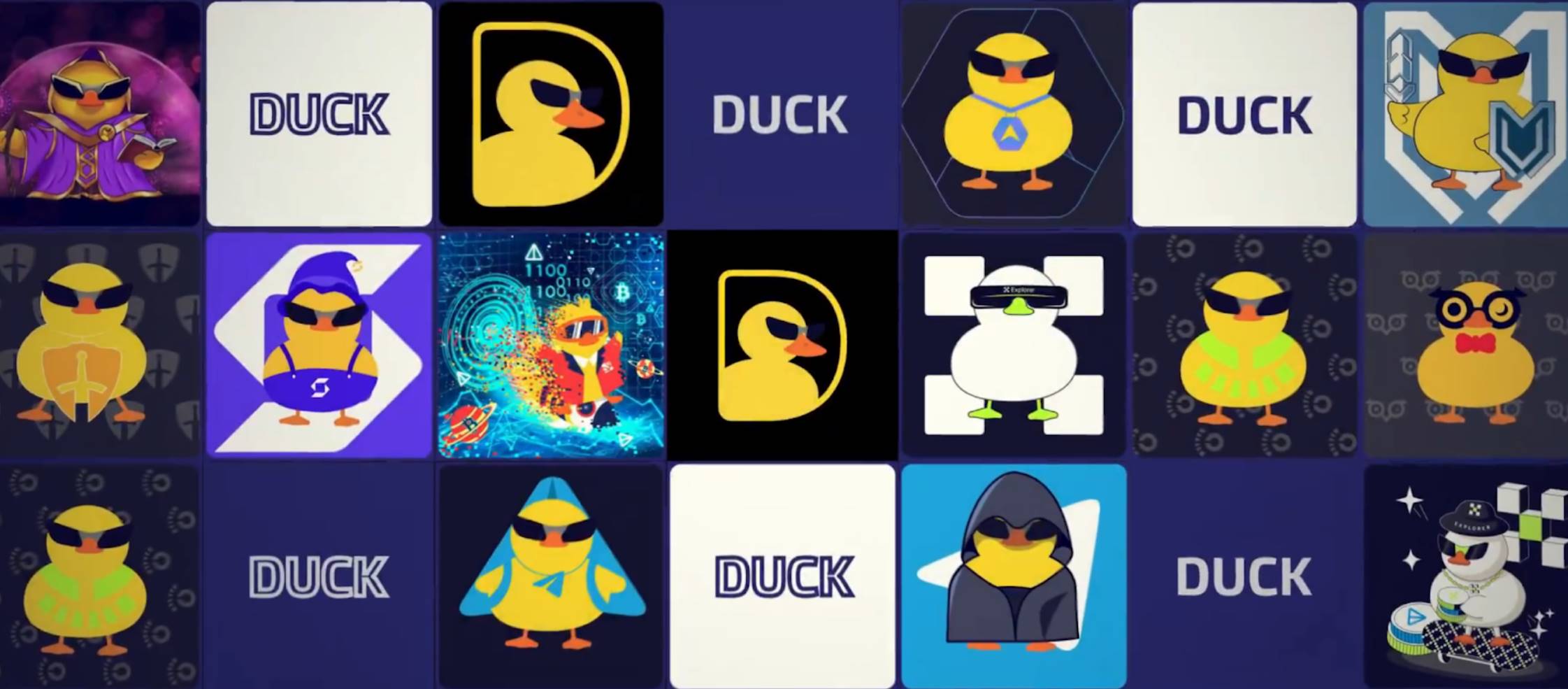
This feature invites you to follow Ducking’s insights and explore the origin story of DuckChain’s unique “consumer Layer,” along with the vibrant community culture shaped by its iconic sunglasses-wearing yellow duck mascot, now serving hundreds of thousands of users.
Meet Founder Ducking: Believing TG Is the Gateway to Web3 Mass Adoption
TechFlow: We’re delighted to have this opportunity for a deep dive interview. To begin, could you introduce yourself? (Feel free to share your educational background, crypto career journey, and how DuckChain came to be.)
Ducking:
Hello everyone, I’m Ducking, founder of DuckChain. It’s a pleasure to connect deeply with all of you.
I went all-in on the crypto industry in 2019. Prior to that, I worked at a Web2 investment firm focusing on investment analysis and quantitative strategies, and I pursued a master's degree in business at Cambridge University—but eventually made the decision to drop out after discovering crypto.
Within the crypto space, my journey spans exchanges, venture capital, and quant funds. In 2021, I founded a studio dedicated to innovating crypto products and provided product support for multiple projects listed on Binance and Coinbase.
Last September, I began paying close attention to the TON and Telegram ecosystem. At the time, the market wasn’t particularly optimistic about it, but I firmly believed Telegram would become the next major gateway for Web3 mass adoption. That’s when our team started planning to build innovative products on TON. During this process, we realized TON’s underlying architecture was extremely unfriendly to developers—many needed months just to grasp the basics. This sparked the idea of improving the developer experience on TON.
In April this year, Tap-to-Earn games surged in popularity on TON. We began to feel the immense traffic红利 (traffic dividend) Telegram offered—an influx of users unseen in nearly a decade of crypto development. We became even more convinced of Telegram’s significance as a traffic gateway.
However, as several viral projects emerged, people also noticed shortcomings in TON’s foundational tech infrastructure and lackluster developer activity. The root cause? Most developers—99%—are unfamiliar with TON’s FunC language.
Therefore, for TON to enter its next phase, the core challenge lies in attracting more top-tier developers. This inspired us to bring the EVM development environment and its vast developer community into the TON ecosystem. If developers can build on TON using Solidity, we believe it will trigger TON’s next wave of growth.
Ten Billion TG Users + Powerful EVM Infrastructure + Full Liquidity Integration = DuckChain
TechFlow: To many, DuckChain carries several striking labels: first consumer Layer in the TON ecosystem, first EVM-compatible L2 on TON, and the first non-EVM layer supported by Arbitrum Orbit. If you could only describe DuckChain in one sentence, what would it be?
Ducking:
As the first consumer Layer providing developers with an EVM development environment on TON, DuckChain aims to bring billions of Telegram users from off-chain to on-chain, enabling seamless interoperability between TON, EVM, BTC, and other ecosystems.
TechFlow: With blockchain launching barriers lower than ever, intense competition means people care more about specific pain points a chain solves. As the first consumer Layer in the TON ecosystem, how did DuckChain arrive at this unique positioning? Amid ongoing discussions around consumer apps in the community, what kind of consumer Layer does DuckChain aim to build?
Ducking:
The core problems we aim to solve can be summarized in three key points:
-
Enable developers to seamlessly create consumer products for Telegram and TON.
-
Through account abstraction and chain abstraction, make it easier for Telegram users to go on-chain—minimizing their need to understand blockchain concepts and lowering the barrier to Web3.
-
Provide richer consumer products tailored for Telegram users.
Hence, one thing is clear: DuckChain was born for consumers. Our identity is that of the next-generation Web3 super platform built for billions of Telegram users. We want Telegram users to enjoy a wide range of consumer applications—from GameFi and SocialFi to various application-level products.
Accordingly, our infrastructure is designed for consumers: for developers, we aim to make building consumer apps on our chain effortless; for end users, we strive to deliver seamless experiences across diverse consumer products, minimizing the complexity typically associated with Web3.
TechFlow: Why did DuckChain choose TON? Do you believe only TON can help realize DuckChain’s vision of becoming a consumer Layer?
Ducking:
TON is the only ecosystem that combines robust technical foundations with a massive user base. Its integration with Telegram offers far greater reach than any other public chain, enabling direct access to billions of users and accelerating our progress toward realizing the consumer Layer vision.
While other chains have their strengths, TON’s unique positioning aligns best with DuckChain’s mission.
Moreover, despite the current momentum in the TON ecosystem, it remains in early stages. The vast majority of Telegram users haven’t yet engaged with TON—creating enormous opportunities and room for growth for DuckChain.
TechFlow: Undeniably, the TON ecosystem has been one of the top-performing blockchain ecosystems this year. Yet, it still faces challenges such as complex development, high user barriers, and isolated liquidity. How does DuckChain plan to leverage its advantages and address these weaknesses to advance its consumer Layer vision?
Ducking:
On one hand, DuckChain lowers the developer barrier by introducing an EVM environment; on the other, we use chain abstraction technology to dramatically simplify the user experience.
Beyond that, I believe DuckChain’s most distinctive advantage is presenting complex Web3 token concepts in the form of DuckChain Stars—making them intuitive for users. By framing DuckChain Stars as similar to Telegram Stars or Q-coins (Tencent’s virtual currency), we greatly reduce the initial learning curve for new users.
Regarding liquidity, DuckChain is committed to integrating liquidity from EVM and BTC ecosystems into TON, resolving fragmentation issues and delivering a seamless Web3 experience.
TechFlow: We’ve noticed there are now many one-click chain-launching toolkits available. DuckChain chose to build on Arbitrum Orbit’s tech stack, bringing an EVM development framework to the TON ecosystem. What factors influenced this decision? What does this mean for developers? And how will this collaboration empower both ecosystems for mutual benefit?
Ducking:
As interest in the TON ecosystem grows, many EVM developers want to explore building on TON—but the unfamiliar development environment presents a significant barrier.
Arbitrum Orbit provides DuckChain with a highly optimized rollup architecture and extensive developer support, ensuring our EVM environment is stable and efficient.
With DuckChain, EVM developers can leverage their existing skills to quickly build on TON, while benefiting from Arbitrum’s advanced technical support. This drastically reduces development costs, shortens timelines, and allows developers to tap into the massive traffic potential of both DuckChain and the broader TON ecosystem.
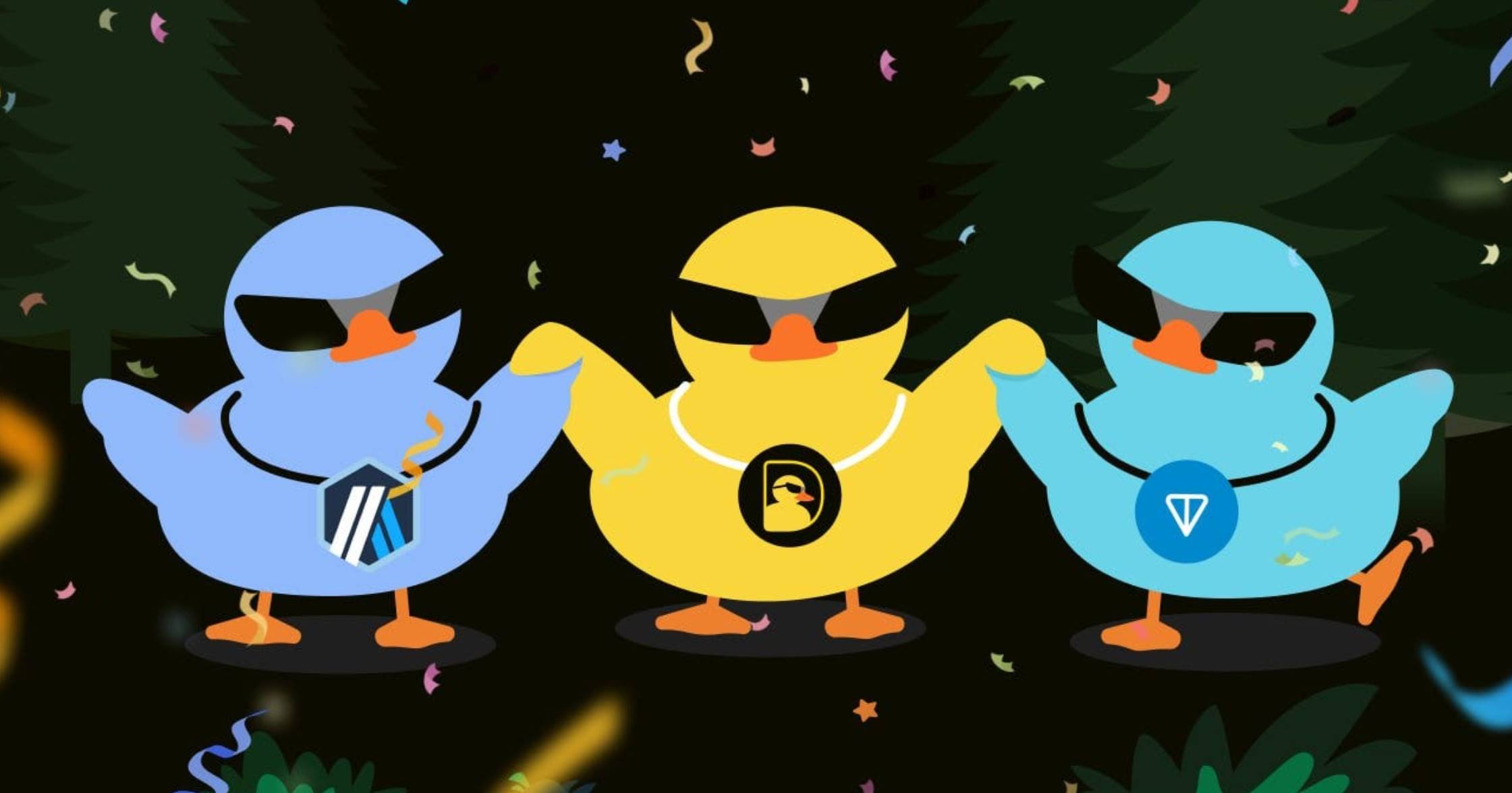
The partnership between DuckChain and Arbitrum Orbit not only brings a fresh cohort of TON users to Arbitrum, but also enhances DuckChain’s performance through cutting-edge technology—helping attract more developers and expand both ecosystems’ influence together.
TechFlow: Addressing liquidity isolation within the TON ecosystem and further integrating liquidity from the EVM and even Bitcoin ecosystems is another key focus for DuckChain. In this cycle where liquidity fragmentation is increasingly apparent, how does DuckChain tackle this issue?
Ducking:
By building cross-chain bridges and unified liquidity pools, DuckChain enables free asset transfers between TON, EVM, and BTC networks.
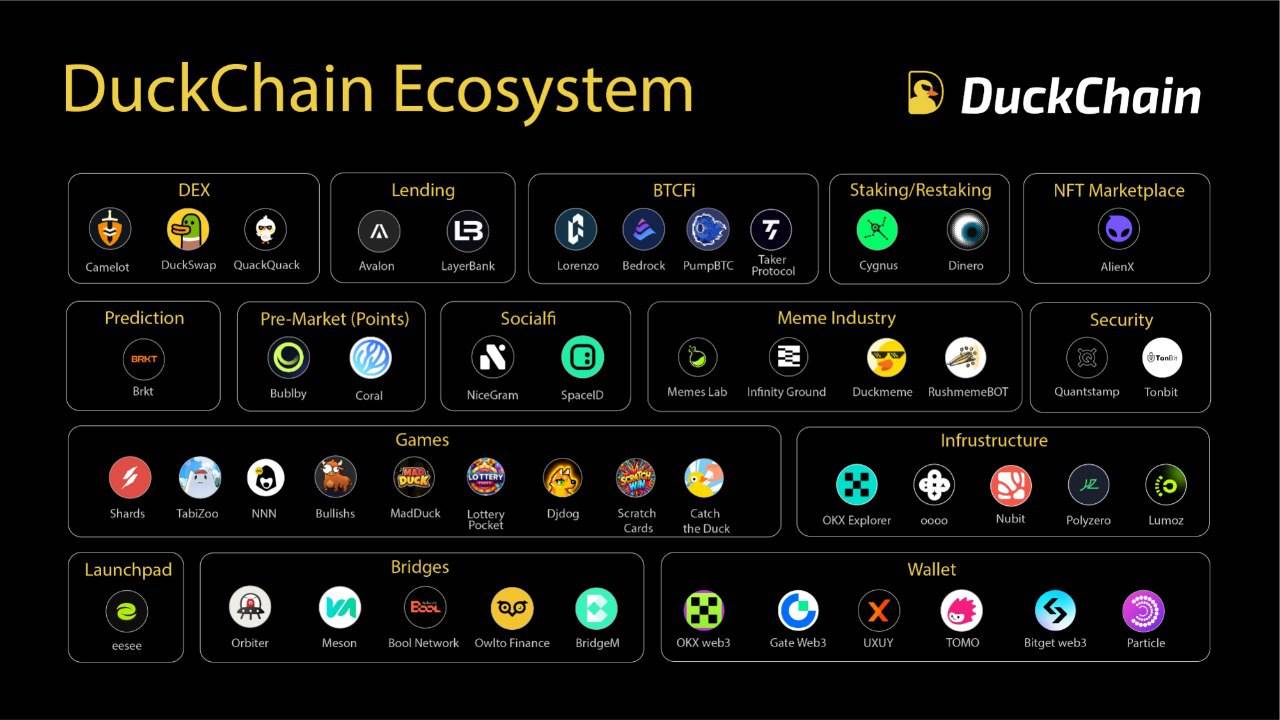
Additionally, we’ve introduced liquidity incentive mechanisms to encourage users and well-known projects (such as PumpBTC, BedRock, Lorenzo, etc.) to inject capital into our ecosystem, fundamentally enhancing overall liquidity integration.
TechFlow: Over recent months, DuckChain has seen frequent ecosystem developments—announcing partnerships with Nubit, Particle Network, Tomo Wallet, and others. Given that ecosystem building is vital to project growth—and that a maturing ecosystem directly improves user experience—could you walk us through the full picture of the DuckChain ecosystem so readers gain a deeper understanding of its expanding landscape?
Ducking:
DuckChain focuses on three pillars: developer support, consumer applications, and strategic collaborations—all aimed at creating a Web3 platform that’s both innovative and practical.
By offering an EVM development environment, DuckChain significantly lowers entry barriers for developers. Combined with traffic support, expert guidance, and ecosystem grants, we help developers rapidly launch and succeed with their projects.
On the consumer side, DuckChain focuses on trending sectors like Meme, GameFi, SocialFi, and DeFi, delivering diverse use cases and smooth user interactions.
Furthermore, DuckChain actively pursues ecosystem partnerships, collaborating with prominent players to co-develop critical infrastructure including decentralized exchanges, lending protocols, launchpads, and oracles—strengthening the foundation for both developers and users.
Reaching Million-User Scale: Breaking the Mold—Community Engagement Can Be Fun
TechFlow: As a key channel for user interaction with Duck Planet, DuckChainBot has gained widespread popularity since launch thanks to its playful and unpredictable gameplay. Some community members even argue that DuckChainBot’s design reflects DuckChain’s philosophy on community building. What do you think about this view? And what guiding principles shape DuckChain’s approach to community culture?
Ducking:
DuckChainBot indeed embodies our core operating principle: “community-first.”
In terms of design, DuckChainBot stands apart from most “serious” public chains by engaging users through a fun, adorable duck persona—which has proven highly effective.
Moreover, we proactively collaborate with well-known projects, distributing partner rewards through entertaining events—a concrete demonstration of our commitment to meeting community needs.
Guided by this philosophy, DuckChain has cultivated a distinct community culture defined by fun, innovation, and openness. We continuously motivate users to enter the Web3 world in light-hearted, enjoyable ways, ultimately fostering a highly active ecosystem.
TechFlow: According to previous data, DuckChain’s testnet surpassed one million paying users, Miniapp daily active users exceeded two million, and total users surpassed ten million. At a time when many users are fatigued by completing tasks and claiming rewards, what do you think enabled DuckChain to achieve such remarkable results during the testnet phase?
Ducking:
DuckChain’s testnet success stems from its pioneering vision and unique advantages.
By addressing critical pain points for both developers and users, DuckChain delivered an efficient and user-friendly EVM framework, lowered onboarding barriers, and provided robust infrastructure support.
Additionally, TON’s unique access to Telegram’s vast user base gave DuckChain broader visibility and participation, while DuckChain’s engaging, low-barrier interactive mechanics attracted a large number of users. An active community culture combined with incentive programs further boosted user engagement. Together, these elements laid the foundation for DuckChain’s outstanding testnet performance.
TechFlow: Now that the mainnet has officially launched, could you guide ordinary users on how they can participate in the DuckChain ecosystem more effectively?
Ducking:
Our mainnet has just gone live, and we’ve launched a flagship campaign called Eggs Season, introducing an innovative concept: ISO (Initial Star Offering). Users simply convert their Telegram Stars into DuckChain Stars with one click, then use those Stars to participate across the chain.
Besides DuckChainBot, we’ll regularly roll out exciting new ecosystem projects for users to try. Stay tuned via our social media channels for announcements.
TechFlow: Finally, developers are the cornerstone of ecosystem growth. With the mainnet launch marking the beginning of large-scale ecosystem construction, what types of projects are most likely to earn DuckChain’s support? And what kind of assistance can developers expect when building on DuckChain?
Ducking:
DuckChain will prioritize applications with strong breakout potential—those that can truly onboard Web2 users into Web3. Examples include, but are not limited to, Meme, GameFi, SocialFi, and innovative DeFi projects.
We encourage teams to unleash their creativity and deliver unique, easy-to-join experiences for users.
Developers building on DuckChain will receive comprehensive support, including ecosystem grants, project consulting, community promotion reaching 10M+ users, and funding connections with top-tier investment institutions.
Join TechFlow official community to stay tuned
Telegram:https://t.me/TechFlowDaily
X (Twitter):https://x.com/TechFlowPost
X (Twitter) EN:https://x.com/BlockFlow_News
 深潮TechFlow