Record of the Rise and Fall of Mainstream SocialFi Platforms and Lessons Learned
TechFlow Selected TechFlow Selected
Record of the Rise and Fall of Mainstream SocialFi Platforms and Lessons Learned
Be realistic, no one will stay interested in decentralization forever.
 Navigating Web3 tides with focused insights
Author: Tiger Research Reports
Translation: Golem, Odaily Planet Daily
Key Takeaways:
-
SocialFi initially gained attention by combining decentralized finance with social media, enabling users to monetize content and control their data. However, the sector's initial boom was short-lived. Platforms struggled to maintain user engagement and deliver innovative experiences beyond token speculation.
-
Platforms like Friend.tech highlighted SocialFi’s heavy reliance on early FOMO (fear of missing out). Due to a lack of continuous updates, fresh content, or unique user experiences, its user base rapidly declined, leading to sharp drops in daily active users and connections.
-
For SocialFi to recover and thrive, companies must move beyond simply replicating traditional social media on blockchains. Sustainable success requires integrating innovative user experiences, fostering genuine engagement, delivering real value beyond speculative investment, and forming partnerships that bridge Web2 and Web3 platforms.
From Hype to Reality
For a time, SocialFi was hailed as blockchain’s next “big thing,” merging decentralized finance with social media to create platforms where users could monetize content, control their data, and actively participate in governance.
This concept—combining blockchain with social experiences—promised a paradigm shift akin to groundbreaking platforms like WeChat and TikTok. Just as ZEPETO and Roblox captivated younger generations with immersive digital world experiences, SocialFi aimed to revolutionize how people interact, transact, and create value online.
Despite its immense potential, early excitement around SocialFi has faded due to declining user engagement, waning interest, and unsustainable project models. As a result, user activity and participation on once-prominent projects promising to transform social interaction have plummeted.
Understanding why this decline occurred is crucial—not to assign blame, but to identify opportunities for SocialFi’s resurgence. This report examines the rise and fall of major SocialFi platforms and analyzes key trends and challenges companies must consider moving forward.
Lessons from Leading SocialFi Projects
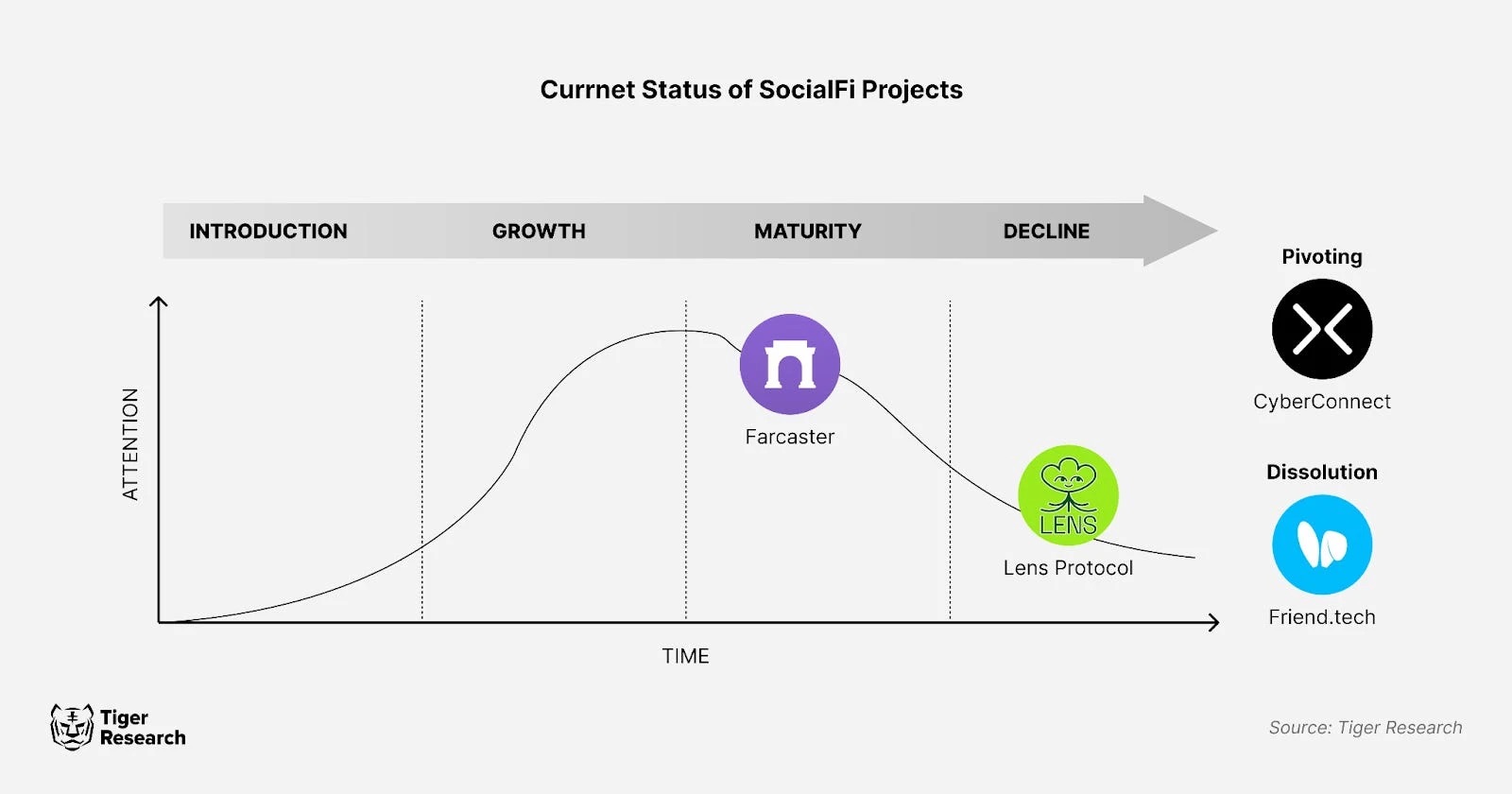
Source: Tiger Research
Dissolution: Surrendering Control (Friend.tech)
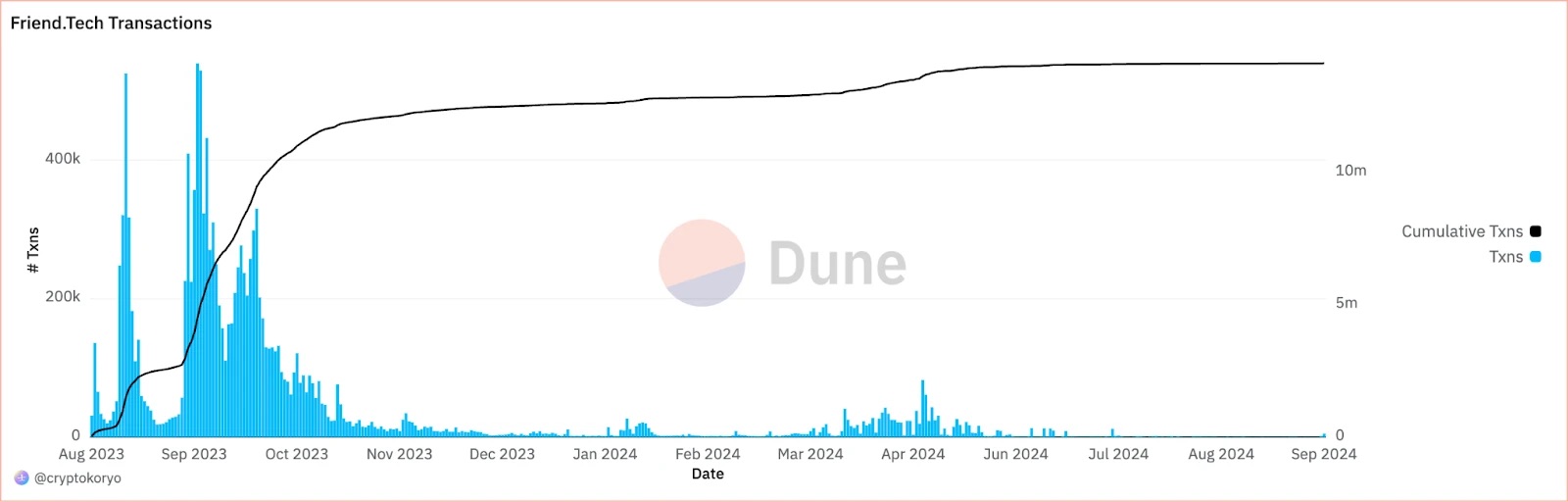
Friend.tech experienced a complete collapse | Source: @cryptokoryo Dune Dashboard
Friend.tech launched with massive fanfare, quickly attracting users through airdrops and version upgrades (V2). Users were excited by the platform’s unique model of tokenizing social interactions on social media. It created an instant marketplace where users could trade social influence and engagement. Early adopters flocked in, generating significant user activity and token speculation.

Official announcement of Friend.tech on Twitter | Source: @friendtech Twitter
However, shortly after initial success, the situation at Friend.tech took a sudden turn. After launching V2, the team relinquished control of the smart contract on September 8, transferring it to an empty Ethereum address. This decision prevented any future updates or new feature implementations.
While the platform remains operational, the absence of new features caused it to lose novelty, and user engagement swiftly declined. This product stagnation directly impacted user loyalty, as the lack of ongoing updates led many early users to abandon the platform.

Fees generated by Friend.tech dropped sharply | Source: Defillama
As the platform became stagnant, the FRIEND token also lost utility, becoming just another meme coin within the SocialFi ecosystem. By September 2024, Friend.tech’s revenue had collapsed—from over $2 million in fees generated on September 14, 2023, to just $71 a year later. With no real use case, the value of the FRIEND token plummeted. This effectively marked the end of Friend.tech’s market relevance.
The downfall of Friend.tech illustrates the risks of premature decentralization before sustainability is ensured. This is especially dangerous in emerging markets like SocialFi, where user interest can fade rapidly. Companies should balance decentralization with centralized control to avoid project stagnation. User retention depends on continuous innovation and updates to keep users engaged—even after transitioning away from centralized mechanisms.
Stagnation: The Decline of SocialFi Platforms (Lens Protocol)
Despite a promising start, SocialFi continues to face significant challenges in sustaining long-term growth. Much like other short-lived booms in the blockchain space, many SocialFi platforms faltered once early hype dissipated. Lens Protocol, which made waves during the 2024 bull run, serves as a classic example.

A pattern similar to Farcaster | Source: @filarm Dune Dashboard
Lens Protocol saw a surge in registrations fueled by market FOMO and early enthusiasm for its promised decentralized social features. Initially, growth appeared strong, with thousands of new users rushing to create accounts. Yet, once the novelty wore off, growth sharply declined. In recent months, new registrations dropped to only 142, a stark contrast to earlier highs.
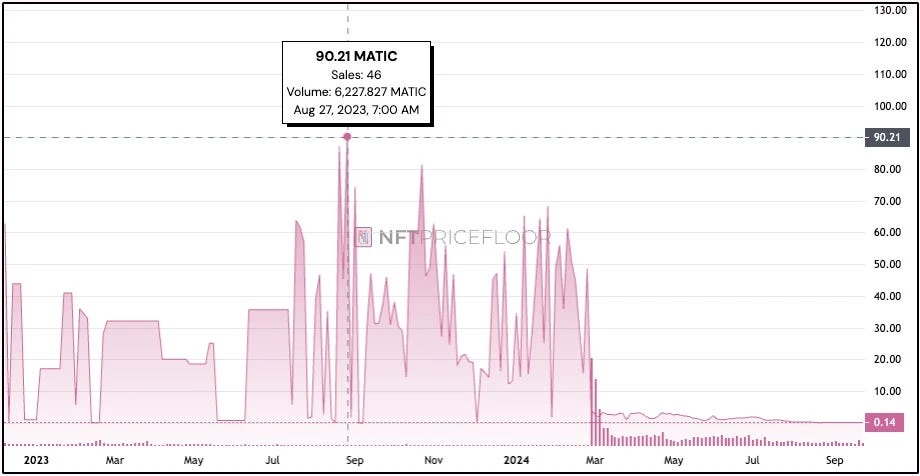
The price of Lens Profiles is also falling | Source: NFT Price Floor
Another clear indicator of Lens Protocol’s decline is the steep drop in Lens Profile prices. During the peak, a single Lens Profile could sell for over $200, reflecting high market demand and expectations. Today, the same asset is worth less than one dollar. This underscores the dramatic decline in user interest and perceived value.
The rapid depreciation of assets shows that if SocialFi platforms fail to deliver sustained value, they quickly lose connection with users. For SocialFi ventures to thrive, they must continuously engage users through meaningful content, community interaction, and practical applications.
While Lens Protocol’s early performance excited the market, its swift deterioration serves as a cautionary tale for the industry. Without a clear long-term growth strategy, even the most promising platforms can fail.
Maturity: Growing Too Fast Without Content to Sustain It (Farcaster)
Farcaster and its app Warpcast attracted widespread attention early on, raising over $150 million in May 2024. Additionally, initial FOMO drove a spike in daily active users, making the platform appear poised for success.

From a daily peak of over 15,000 in early February to fewer than 500 new users today | Source: @filarm Dune Dashboard
Despite continuous infrastructure updates and its decentralized potential, the platform failed to scale its user base—a symptom of a broader issue in SocialFi: maintaining user interest after the initial hype. Farcaster’s new user registrations plunged from over 15,000 in February to just 545 in September.

However, Farcaster’s daily user count shows a positive trend|Source: The Block
Farcaster’s loyal user base ultimately faced a content shortage. While daily user numbers remained relatively stable, user engagement dropped 60% from its peak. The primary reason? A lack of compelling content. As a social platform, Farcaster should strive to provide sufficiently engaging content to sustain long-term user interest.
Farcaster’s evolution also reveals a truth about blockchain-based platforms: content and service quality matter far more than decentralization features. Continuous content creation and user interaction are essential for any successful social application. Blockchain-based social networks must heavily invest in content production and incentivize meaningful user contributions. From a business perspective, they should prioritize building a diverse and engaging ecosystem that gives users a reason to log in every day—rather than relying on airdrop speculation.
Transformation: New Business Models (Cyber)
In response to declining user engagement and weakening connections, some SocialFi platforms have attempted to pivot to new business models in hopes of regaining momentum. A notable example is CyberConnect. It recently rebranded to Cyber and shifted focus toward L2 solutions.
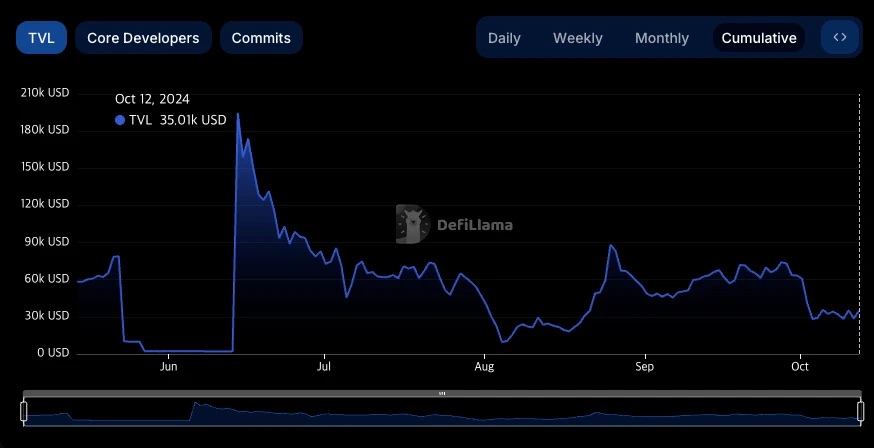
Source: Defillama
While this shift may seem strategic, it did not reignite user interest as Cyber had hoped. The platform’s TVL (Total Value Locked) plummeted to just $35,000, far below previous highs. Despite efforts to refocus and rebrand, Cyber’s struggles show that merely adapting to new technologies or trends is insufficient to re-engage users over the long term.
This reflects another critical lesson for SocialFi ventures: shifting to new models or technologies must be accompanied by innovative and engaging user experiences. Without continuous innovation, even strategic moves like rebranding are unlikely to succeed.
What Remains of SocialFi’s Future?
The rise and fall of platforms like Friend.tech expose major flaws in the SocialFi space. While initial interest and market FOMO can drive early adoption, long-term success requires more than speculative hype. Meaningful, engaging experiences are essential to sustain user interest. Unfortunately, many projects failed to deliver on their promises, resulting in disillusionment and a sharp decline in user engagement.
SocialFi projects face several core challenges that hinder their development. These include a lack of sustained user engagement, overreliance on decentralization, and gaps in content and innovation. Additional issues further exacerbate these problems:
-
Clumsy wallet experience: Wallet usage introduces too many extra steps, increases service complexity, and often comes with unfriendly terminology. This creates friction in the user experience, particularly for new users unfamiliar with decentralized systems.
-
Lack of differentiated competition: Many decentralized social media platforms closely resemble their Web2 counterparts, offering little differentiation. Without a compelling advantage, they are often seen as merely “inconvenient alternatives,” limiting their ability to attract active users. Just as TikTok revolutionized social media with short-form content and viral mechanics, decentralized platforms must find strong competitive advantages to stand out.
-
Absence of native KOLs: The success of platforms like TikTok and Instagram owes much to the rise of native influencers. Figures like the D'Amelio sisters built massive followings on TikTok, drawing in new users and boosting engagement. The emergence of such KOLs is crucial for driving organic growth on new platforms. However, decentralized social media platforms have yet to cultivate native KOLs, hindering their potential for organic expansion.
A key takeaway from SocialFi’s struggles is clear: simply replicating Web2 models on blockchain technology is not enough. To succeed in this space, platforms must offer users truly novel experiences and tangible value. Only innovative and adaptable platforms will thrive in the long run.
Join TechFlow official community to stay tuned
Telegram:https://t.me/TechFlowDaily
X (Twitter):https://x.com/TechFlowPost
X (Twitter) EN:https://x.com/BlockFlow_News
 @tiger_research