How SBF Missed Out on Anthropic’s $35 Billion Super Jackpot?
Author: David Yaffe-Bellany, The New York Times
Compiled by: TechFlow
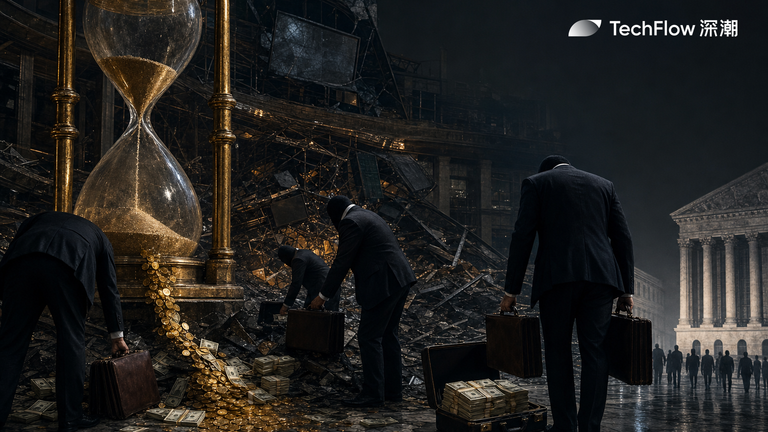
TechFlow Guide: In the history of tech business, few wealth turns have been as dramatic and ironic as this one. At the end of 2021, at the peak of his power, SBF spent $500 million betting on the then-emerging AI startup Anthropic, securing a 13.5% stake. Today, as Anthropic prepares to go public with a staggering $1.4 trillion valuation—one of the largest tech company debuts in Wall Street history—the value of that stake has ballooned to $35 billion, comparable to the entire FTX business empire at its zenith.
However, fate left no room for vindication for the imprisoned SBF. In 2024, a liquidation team led by bankruptcy trustees sold the entire stake to institutions like Jane Street at an incredibly low price of $1.34 billion. While this disposal allowed victims to achieve full repayment on paper, the hundreds of billions in missed upside premium became an enduring source of deep frustration and resentment for SBF behind bars.
But no matter how staggering the investment returns, business acumen cannot erase the original legal sin of misappropriating client funds. As presiding Judge Lewis A. Kaplan pointed out, gambling winnings made with stolen money can never serve as an excuse to evade liability. Through exclusive prison phone calls and a retrospective analysis of multi-party maneuvering, The New York Times reconstructs this epic financial tragedy and comedy woven from greed, foresight, and unyielding legal principles.
The $35 Billion Regret Behind Bars
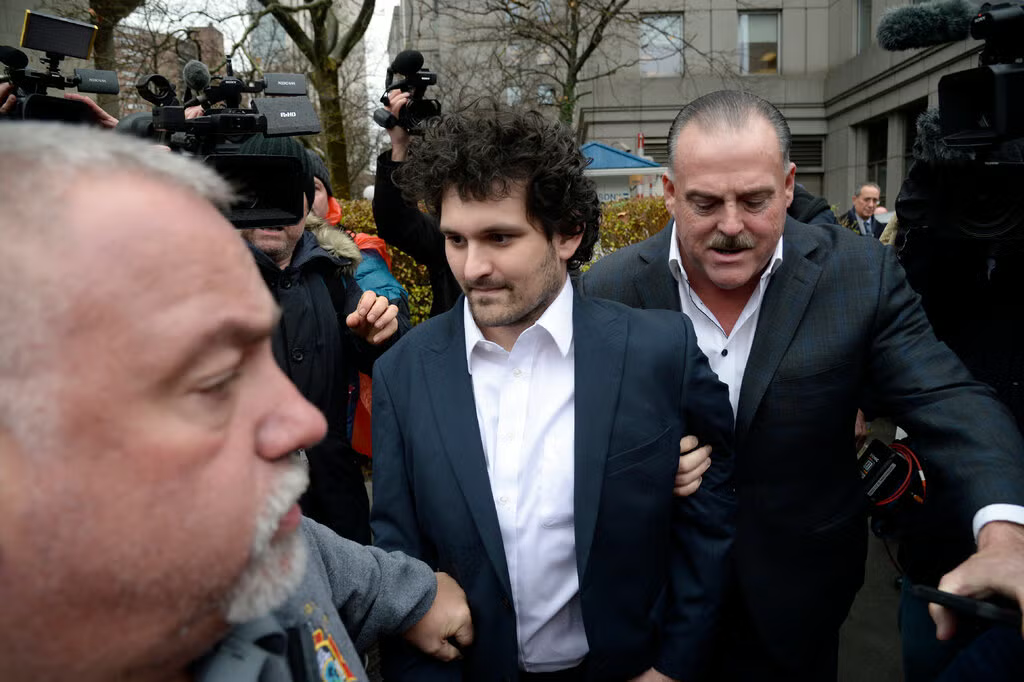
Convicted Sam Bankman-Fried (SBF) of cryptocurrency fraud is currently housed in a 30-bed dormitory at the Lompoc Federal Correctional Institution in California.
The barbed wire and towering walls here contrast sharply with his past life as a billionaire tech magnate enjoying penthouse estates and commanding influence across the Bahamas—a difference of millions of miles.
In a recent cross-ocean phone call, the now 34-year-old SBF said he spends most of his time trying to stifle thoughts of futures that "could have been."
Yet there is one thing he simply cannot let go of.
At the height of FTX's dominance in late 2021, SBF invested $500 million to acquire a 13.5% stake in the then-obscure AI startup Anthropic.
This week, Anthropic is preparing for its initial public offering (IPO), with an expected valuation of a staggering $1.4 trillion, positioning itself as one of the largest tech company debuts in Wall Street history.
Against this astronomical valuation, even after reasonable dilution from multiple funding rounds over the years, the current value of SBF’s original stake would reach $35 billion, nearly equivalent to the total valuation of FTX at its historical peak.
But this life-altering equity long since ceased to belong to him.
A Crossroads of Effective Altruism: The Initial $500 Million Bet
Before FTX collapsed, SBF’s personal net worth was estimated to have reached $24 billion, wielding unparalleled influence in both business and political circles.
The platform he founded was one of the world’s largest cryptocurrency exchanges, handling spot trading and asset custody needs for millions of clients globally.
At the time, SBF was also a central figure and major funder of the "Effective Altruism" movement. This philosophical school focuses on addressing potential existential threats to humanity that could emerge over the next few decades or centuries.
Like many in the movement, long before artificial intelligence sparked fervor among mainstream U.S. politicians and Wall Street, SBF remained highly vigilant about the potential dangers of runaway AI.
This shared conviction forged a deep connection between him and Anthropic CEO Dario Amodei, who previously moved within the same Effective Altruist social circles.
By the end of 2020, following philosophical disagreements over how best to make AI safe, Amodei left competitor OpenAI to found Anthropic independently.
SBF recalled contacting Amodei shortly afterward while based at FTX’s Hong Kong headquarters. "We were connected through just a few degrees of separation, sharing quite a few mutual friends," SBF noted, describing Amodei as "extremely smart, focused, and well-read."
In April 2022, Anthropic officially announced strategic investments from SBF and two other FTX executives. Back then, the $500 million deal barely registered with tech media.
"What mattered to us was ensuring AI developed responsibly, benefiting society rather than destroying humanity," SBF said during a prison phone call. "At the time, Anthropic seemed more committed to that promise than any other mainstream tech giant."
A Watershed Moment: The Collapse of an Empire and the Ignition of ChatGPT
Yet the ironies of the business world often defy imagination.
Just months after closing the investment, in the fall of 2022, FTX faced a bank run. An accounting shortfall of up to $8 billion in customer accounts was laid bare, causing the empire to crumble overnight.
Only three weeks later, OpenAI globally released the ChatGPT chatbot, igniting a global surge of generative AI capital frenzy overnight.
Over the following year, SBF was swiftly arrested, tried, and convicted on seven counts of fraud and conspiracy. Meanwhile, Anthropic skyrocketed to fame with its flagship model, Claude, securing billions in fresh funding from tech giants like Amazon.
As Anthropic ascended to become Silicon Valley’s hottest super-unicorn, the fate of this lingering equity became the focal point of fierce maneuvering at Delaware Bankruptcy Court.
A $400 Million Fire Sale: The Liquidation Team's Hardest Call
After FTX declared bankruptcy, SBF handed control of the company to renowned restructuring expert John J. Ray III, who previously oversaw the Enron bankruptcy proceedings.
Ray III teamed up with Sullivan & Cromwell LLP with the goal of raising every possible dollar to repay damaged FTX customers.
Presenting the liquidation team was a highly chaotic portfolio of assets: a collection of crypto altcoins with near-zero liquidity, luxury real estate in the Bahamas, and equity stakes in external startups.
The liquidation team began urgently searching for buyers worldwide. In any bankruptcy proceeding, quickly converting assets to cash to maximize recovery rates for current creditors is a standard legal mandate.
Yet some key creditors strongly urged the liquidation team to hold onto the Anthropic equity long-term, waiting for a much larger value breakout.
"I desperately hoped they would hold onto this equity," FTX creditor representative Sunil Kavuri, who testified at SBF’s sentencing hearing, said. "I had already foreseen it becoming the crown jewel of the bankruptcy estate."
Even more awkwardly, trustee Ray III severely underestimated the stunning potential of this equity at the time. In an interview with acclaimed biographer Michael Lewis, he dismissively scoffed at the AI unicorn, referring to it only as "that thing called Anthropic."
"It’s just a bunch of people with some ideas throwing something together," Ray III asserted at the time. "It’s nothing."
Ultimately, according to documents filed in Delaware court, the FTX bankruptcy liquidation team sold the entire Anthropic stake in a package to dozens of institutional investors in 2024 at approximately $30 per share, raising $1.34 billion.
Among the lucky buyers were investment vehicles linked to the UAE sovereign wealth fund Mubadala, the nonprofit Ford Foundation, and Jane Street, the premier Wall Street quantitative trading market maker that once employed SBF.
Victims Made Whole, Yet Resentment Lingers
Bankruptcy administrators wield broad statutory discretion over the timing and method of asset dispositions. Lindsey Simon, a professor at Emory University School of Law, noted that given the harsh circumstances at the time, the liquidation team’s choices were completely defensible legally and procedurally.
"At that specific juncture, there was absolutely no concrete news regarding an Anthropic listing," Professor Simon analyzed. "Today we know it skyrocketed into a trillions-dollar beast, but what if it had faltered and gone to zero back then?"
In May 2024, the liquidation team announced an unprecedented repayment plan in crypto bankruptcy history: FTX creditors are projected to receive up to $1.18 for every $1 lost, achieving over-full repayment on paper.
Yet this seemingly flawless repayment scheme failed to fully quell the victims' intense dissatisfaction.
The reason lies in the fact that the payout amounts calculated by the liquidation team were strictly anchored to the crypto bottom prices at the exact moment of FTX’s collapse in late 2022.
If a client held one Bitcoin in their FTX account on the day of bankruptcy, the compensation they received amounted to little more than its sub-$17,000 fiat value at the time, completely missing out on Bitcoin's subsequent historic bull run that pushed prices above $60,000.
"That was our hard-earned money. We never authorized him to gamble or squander it however he pleased," creditor Kavuri angrily stated. "It is utterly disgusting."
"The Gambler and Stolen Funds": Irreversibility Under Iron Legal Principles
Now, residing in federal prison, SBF can only interact with the outside world through extremely limited channels. He is allowed a maximum 15-minute daily call via payphone, with automatic line cutoff upon expiration.
Across multiple conversations this autumn, he consistently directed his criticism squarely at Ray III and the bankruptcy legal team.
"I find it hard to imagine a worse way to manage assets than what they did," SBF remarked sarcastically. "I certainly can't think of a second worst."
Yet the ironclad wall of law and justice never wavered, despite the astonishing evolution of investment returns.
In a final appeal submitted to the U.S. Supreme Court in September, SBF maintained that the presiding judge in his case had stripped him of his right to defend himself, failing to allow him to prove that FTX itself possessed the potential and capacity to fully repay customer assets.
However, U.S. District Judge Lewis A. Kaplan of the Southern District of New York had already delivered his verdict during the sentencing phase. The judge offered a thought-provoking classic analogy:
SBF’s actions were, in essence, indistinguishable from a thief who "stole illicit funds, ran to a Las Vegas casino, and got lucky winning big off bets."
Fortuitous commercial investment success can never offset the fraudulent nature of illegally misappropriating billions in customer deposits. Ultimately, the judge sentenced SBF to 25 years in prison.
When asked if he ever pictured another parallel universe—one where FTX never imploded, and the billions in Anthropic stock propelled him back to the top of the global wealth rankings?
"To some extent," SBF began to reply. "I try not to spend too much time thinking about it..."
Before he could finish, the 15-minute countdown at Lompoc Prison expired, leaving only cold, rapid dial tones over the phone line.
Join TechFlow official community to stay tuned
Telegram:https://t.me/TechFlowDaily
X (Twitter):https://x.com/TechFlowPost
X (Twitter) EN:https://x.com/BlockFlow_News
 @nytimes