Curated Vaults Attract $1.81 Billion in Q3, with Curators Behind Robinhood, Coinbase, and Kraken Capturing 60% of New Funds
Author: Alea Research
Translated by: TechFlow
TechFlow Highlights: As DeFi lending gradually evolves toward modularity, risk-tiered curatorial vaults (Curated Vaults) are becoming the core infrastructure for absorbing mainstream institutional and retail capital. In Q3 2026, curated lending vaults saw net inflows of $1.81 billion in a single quarter, pushing total deposits past the $9.31 billion mark. Among them, Steakhouse and Sentora captured 60% of new funds by leveraging front-end wealth management channels and treasury allocation demands from Robinhood, Coinbase, and Kraken. Deep integration of retail-grade compliant applications with next-generation L1 blockchains is reshaping on-chain capital flows.
As the curators behind Robinhood, Coinbase, and Kraken, Sentora and Steakhouse accounted for 62% of the quarter's new capital. Total curated deposits increased by $2.61 billion in Q3, with net new capital reaching $1.81 billion. These inflows primarily came from retail applications, treasury asset allocators, and three emerging public chains, while Nonce Capital and K3 Capital both achieved robust scale growth exceeding 100%.
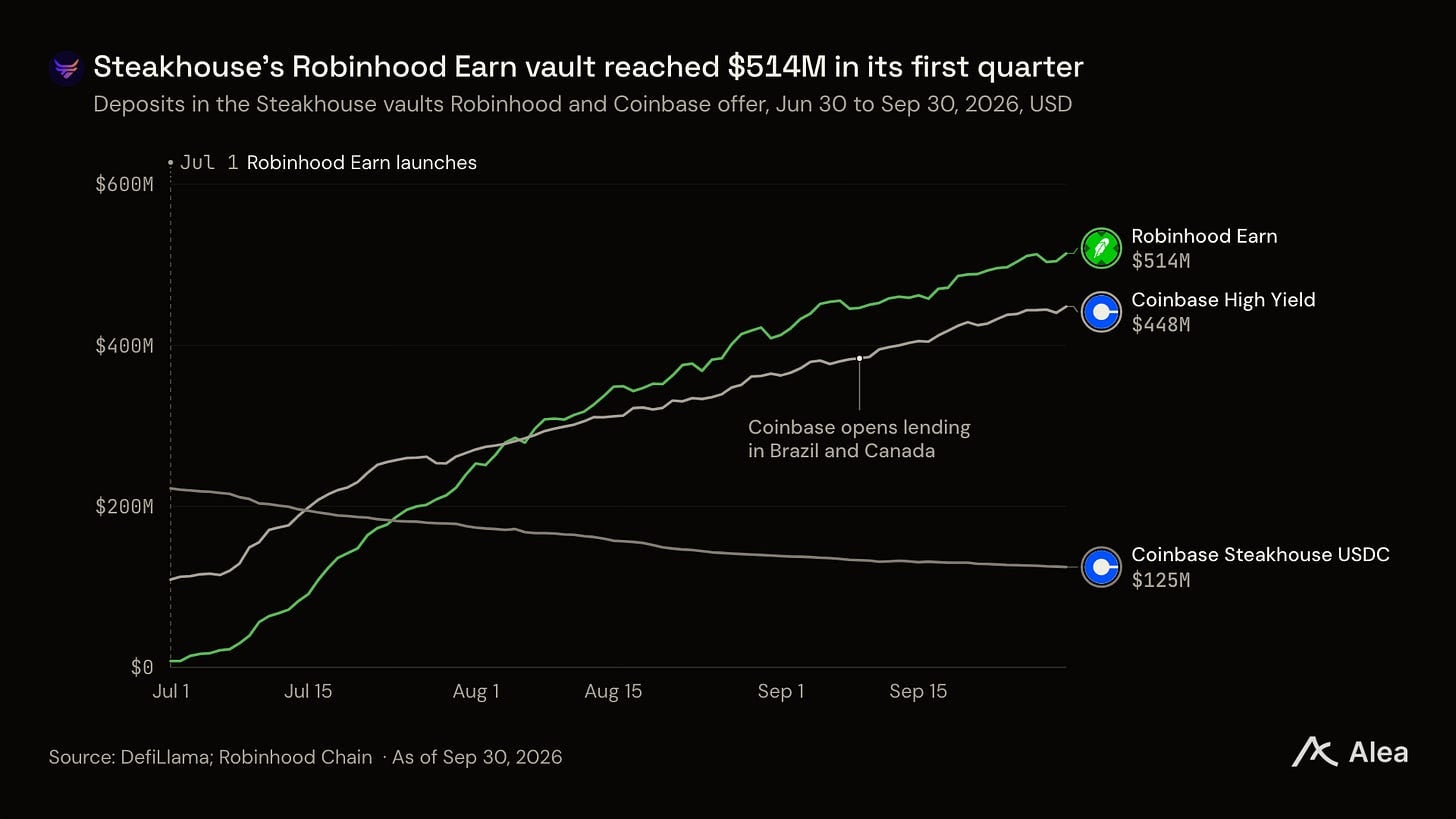
Figure 1: Robinhood Earn reached a scale of $514 million in its inaugural quarter, while Coinbase's two Steakhouse vaults combined for $242 million in growth, led by the High Yield vault.
Key Takeaways
• Total curated vault deposits grew 39% to $9.31 billion, with asset price appreciation accounting for only 28% of this increase. Ethereum, Bitcoin, and BNB contributed 93% of the $740 million price gain.
• Steakhouse captured $743 million in new capital, representing 41% of total new inflows. As of September 30, Robinhood Earn reached $514 million, while Coinbase’s two Steakhouse vaults held $573 million.
• Sentora achieved 32% growth; excluding its Euler markets transferred in September, its growth rate was actually 73%. The Kraken DeFi Earn vault on the Ink chain attracted $215 million in new capital, Spark filled a $250 million RLUSD vault, and Sentora also submitted the first external curator hub proposal on Aave V4.
• Concentration in the curation market declined, with the top three curators' market share dropping from 72.5% to 68.9%. Combined, Nonce Capital and K3 Capital gained 3.4 percentage points of market share.
• Three emerging public chains that accounted for only 3% of total deposits in June captured 55% of new capital. Specifically, Robinhood Chain secured $501 million, Monad received $321 million, and Arc took $165 million.
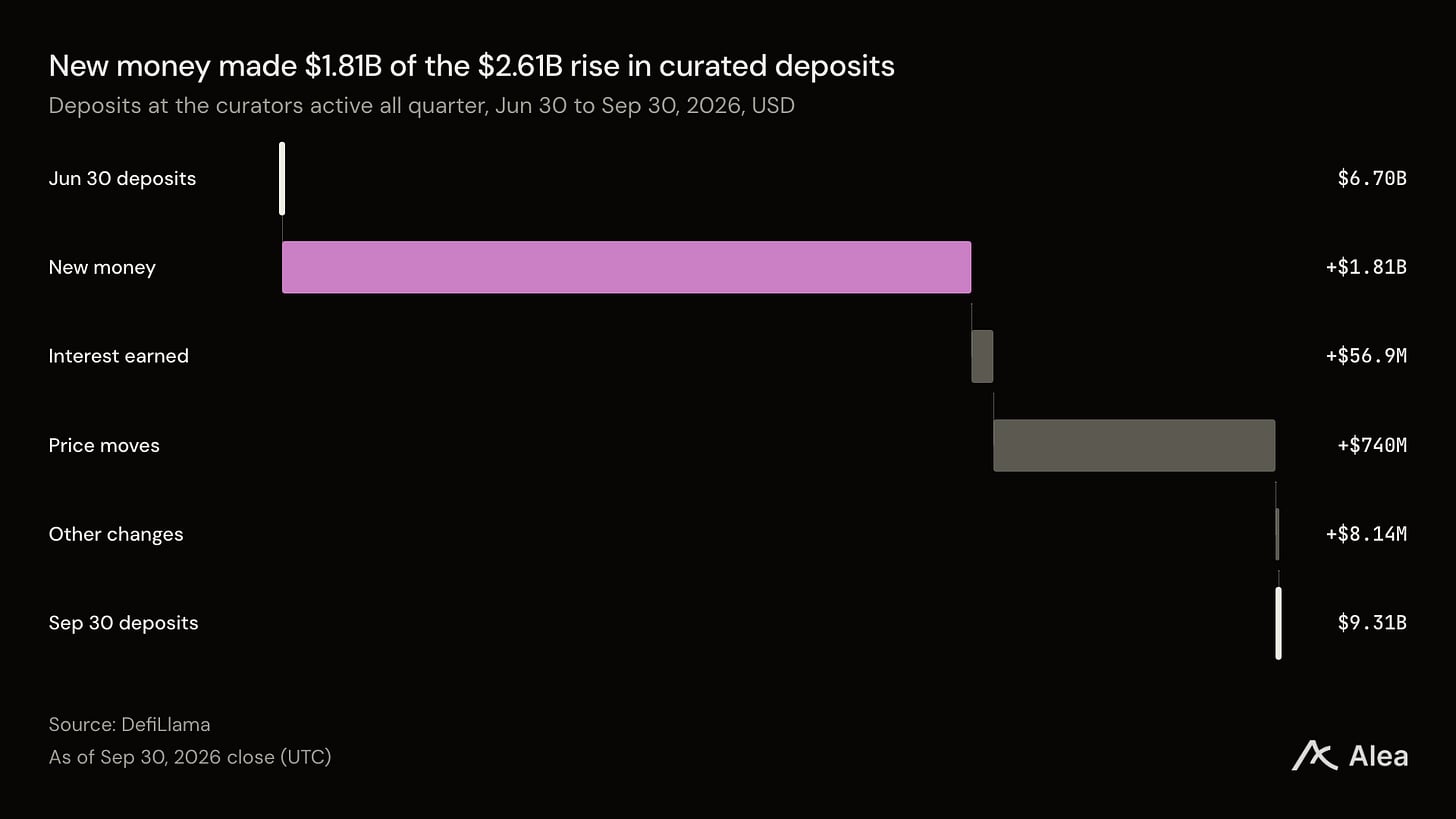
Figure 2: Asset price movements drove $740 million in growth, primarily fueled by Ethereum, Bitcoin, and BNB, while interest earnings contributed $56.9 million in growth.
Curators who were active throughout the quarter held $6.7 billion on June 30 and $9.31 billion on September 30. As the largest holders of Bitcoin, BNB, and Ethereum, Sentora, Gauntlet, and Nonce Capital alone gained $441 million from price appreciation, while price appreciation added only $48.6 million to Steakhouse.
How Curators Profit: Depositors Retain $93.17 Out of Every $100 in Interest
Frontend applications manage customer relationships, curators set risk parameters, and depositors retain the vast majority of interest earnings. Curated vaults collectively earned $56.9 million in interest during Q3, a 34.4% increase over Q2, of which curators took $3.89 million in fees, a 30.4% quarter-over-quarter rise.
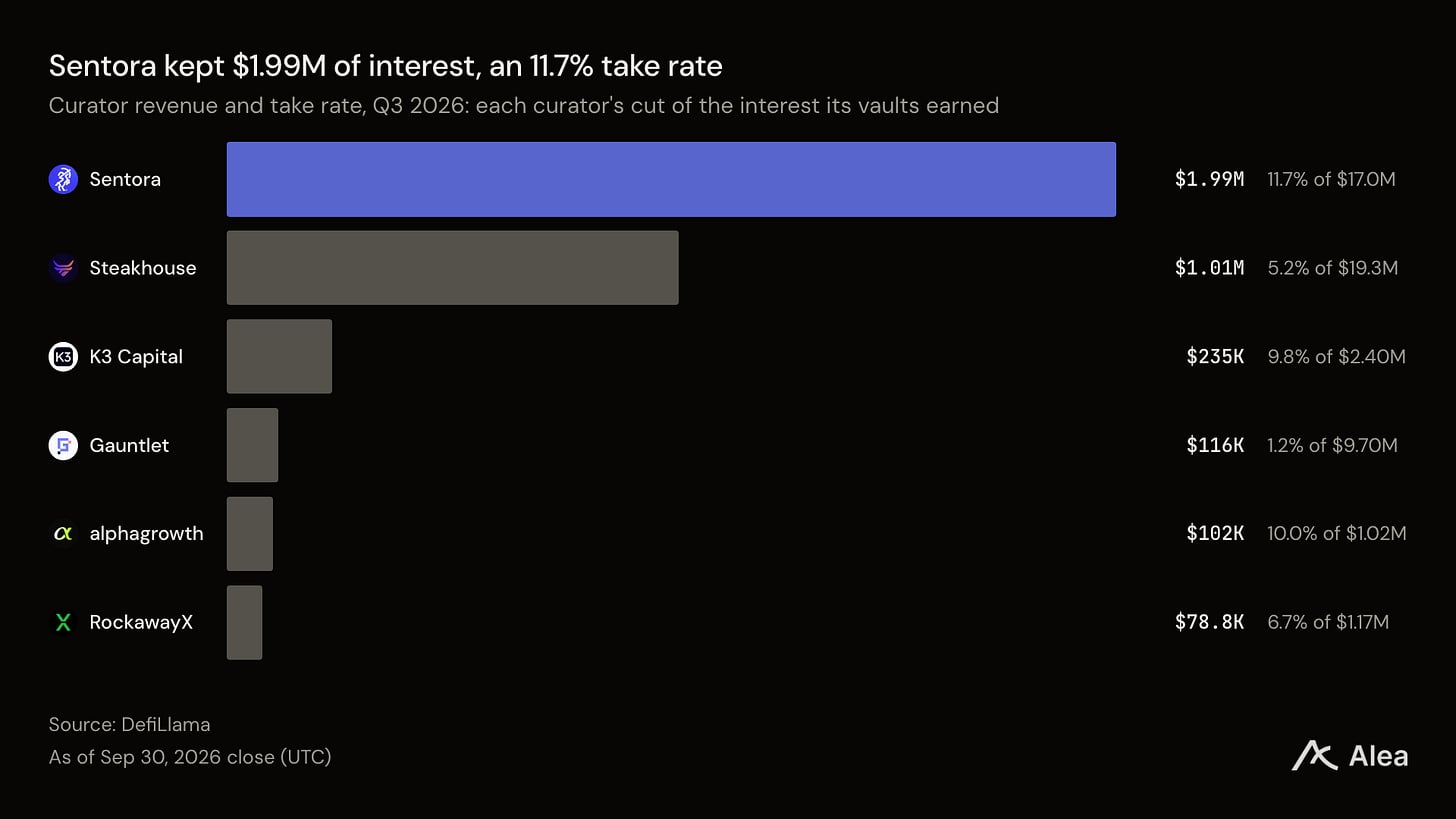
Figure 3: Sentora collected the highest interest commission at $1.99 million, representing an 11.7% commission rate.
Steakhouse takes 5.2% from its vault interest, while Gauntlet takes 1.2%. Across all curators, the overall average fee ratio dropped from 7.04% in Q2 to 6.83%.
Core Drivers of Q3 Growth: Applications, Allocators, and Three Emerging Public Chains
The most significant growth this quarter was driven through various pathways: two curators leveraged frontend applications and centralized exchanges, one relied on ether.fi's proprietary vault, and the rest were propelled by new chain launches, credit lines, and individual new vaults.
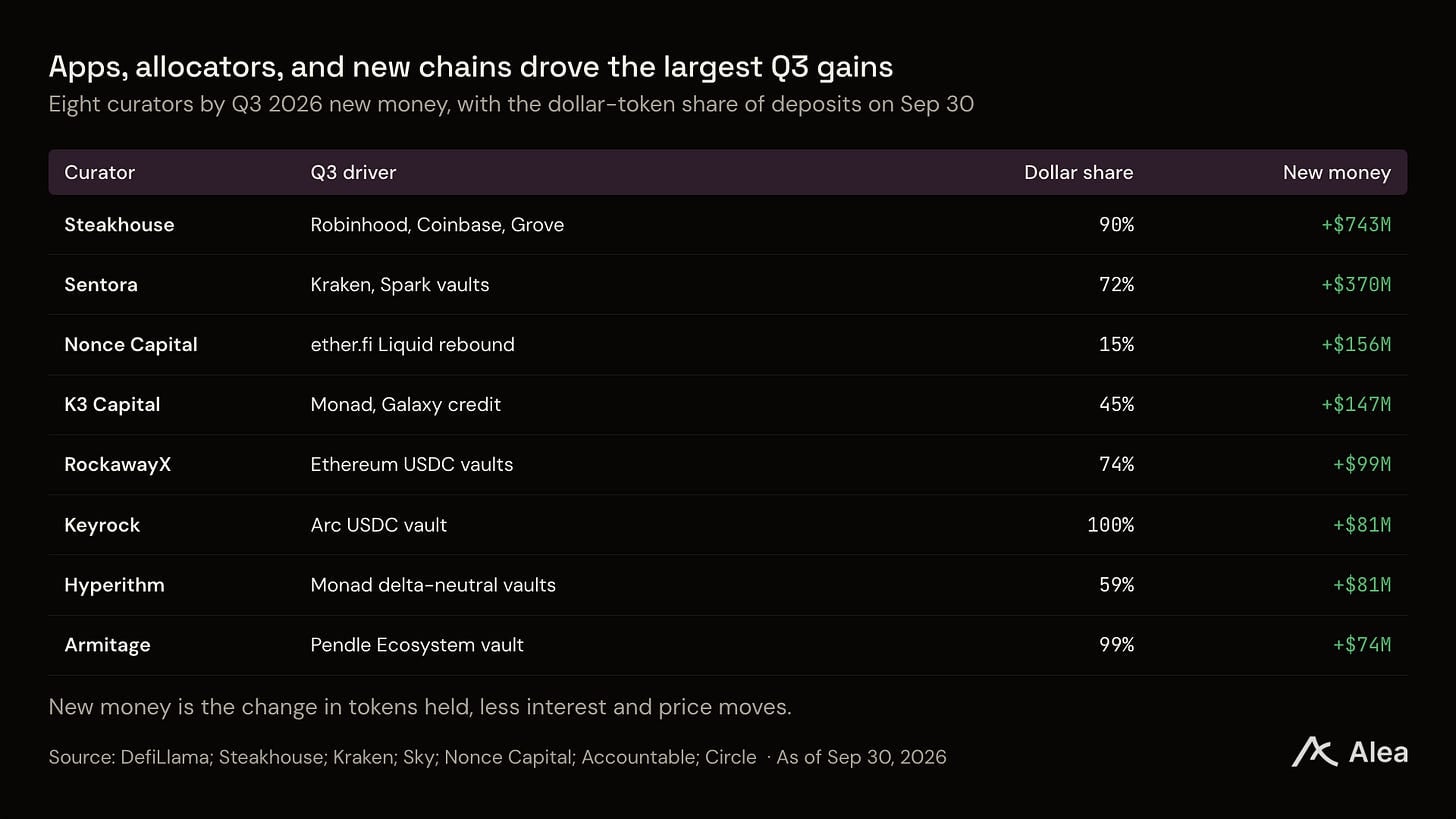
Figure 4: Frontend applications and capital allocators drove the two largest increments, while individual products and new chains drove the subsequent six.
Of the $1.86 billion in newly added tokens including interest, stablecoins accounted for $1.48 billion. Stablecoins made up all of Keyrock's deposits and represented 15% of Nonce Capital's holdings.
With WBNB holdings remaining stable, BNB price appreciation alone increased portfolio value by $109 million, with the vast majority parked in the Lista BNB vault co-curated by Gauntlet and Lista DAO. Kraken launched a Bitcoin vault designed by Sentora in May, which added $165 million in net kBTC inflows on top of a $142 million price gain.
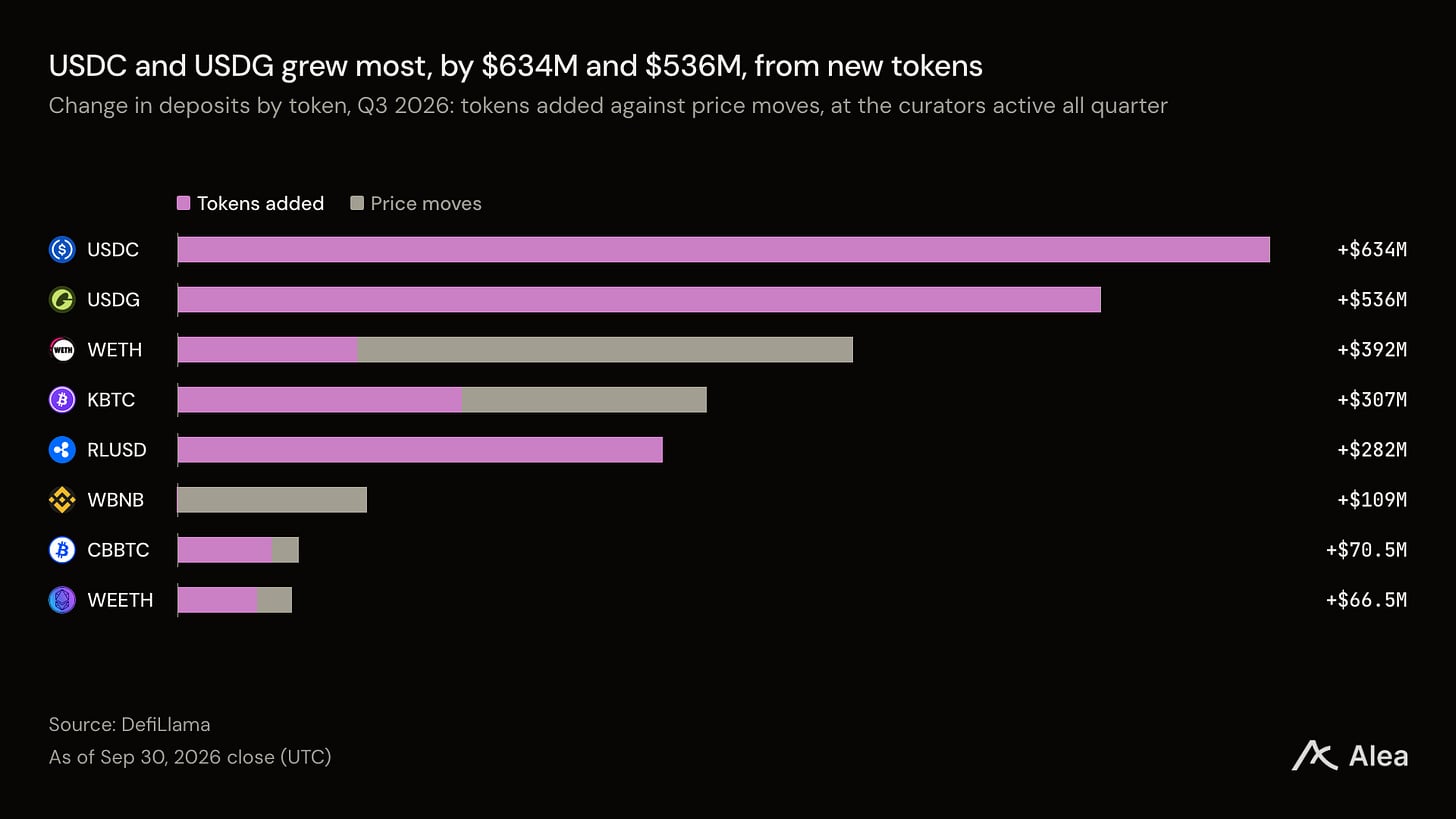
Figure 5: Price appreciation drove most of Ethereum's value growth, while stablecoins saw almost no appreciation from price fluctuations.
New capital on Robinhood Chain came almost entirely from Robinhood Earn, a product jointly launched by Steakhouse and Robinhood on July 1. Over the year ending July 1, 2027, Merkl will pay Robinhood depositors an additional 115 million steakUSDG as rewards, equivalent to roughly $29 million per quarter. For Arc, launched by Circle on September 16, most funds came from two deposits of approximately $75 million each into Galaxy and Keyrock's USDC vaults.
Most new capital on Monad flowed to K3 Capital and Hyperithm. Coinbase's USDC lending runs on Base, with Coinbase rolling out the feature to users in Brazil and Canada on September 9. The Kraken DeFi Earn vaults account for all new capital on the Ink chain.
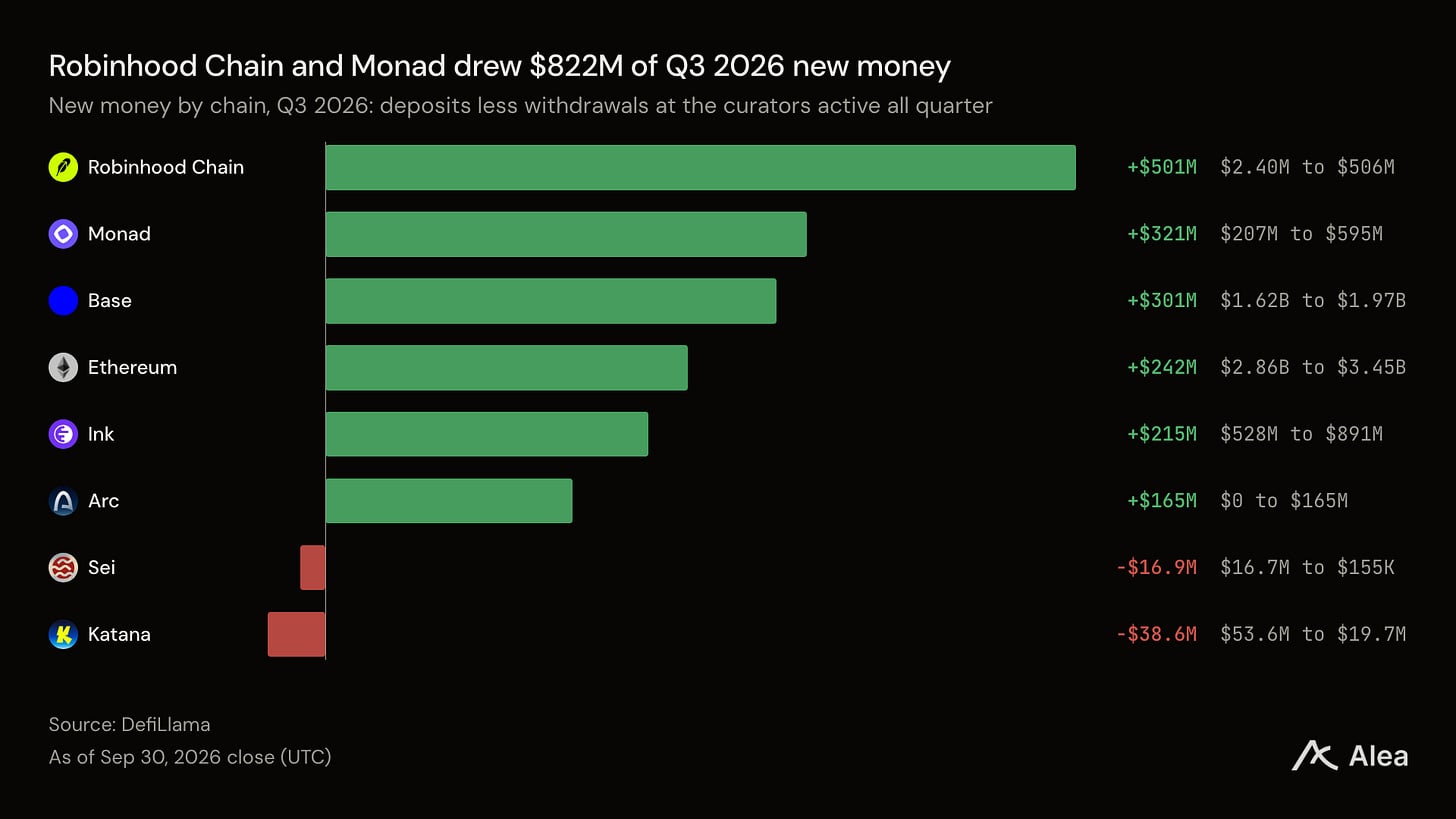
Figure 6: Robinhood Chain and Monad combined for $822 million in new capital, while Katana experienced a $38.6 million outflow.
Capital allocators moved the largest single transaction amounts. Spark under the Sky ecosystem introduced a new Sentora RLUSD vault, injecting $240 million within a day after its initial deposit on September 16. Another Sky ecosystem allocator, Grove, netted $135 million into a Steakhouse vault on Base. A whale wallet withdrew $207 million from Steakhouse vaults in Q3, depositing $100 million into Gauntlet and $113 million into Sentora.
Nonce Capital, which operates the ether.fi Liquid vault, surged 108% from its June lows in Q3, with Ethereum price appreciation contributing $102 million. K3 Capital achieved 159% growth driven by its presence on Monad and a fully subscribed $30 million credit line for Galaxy initiated in July. RockawayX grew 54%, primarily concentrated in its USDC vault on Ethereum. With deposits growing 46%, Steakhouse's market share in curated deposits rose by 1.4 percentage points.
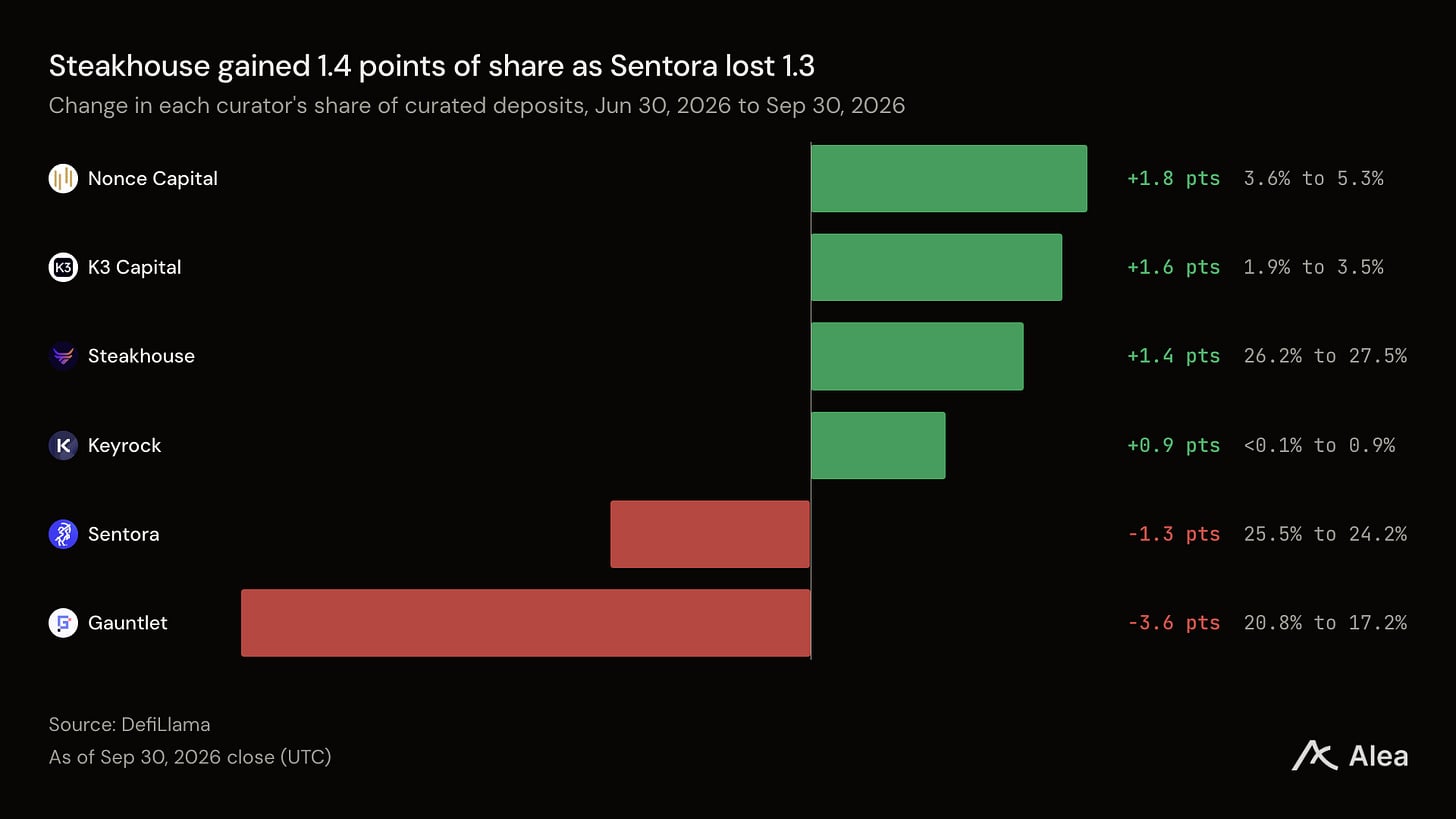
Figure 7: Nonce Capital saw the largest share increase, rising 1.8 percentage points; Gauntlet experienced the largest decline, falling 3.6 percentage points, despite an increase in absolute deposits.
Gauntlet's total deposits grew 15%, but due to faster overall growth in curated deposits, its market share fell to 17.2%. Of its $204 million increase, $177 million came from price appreciation, primarily from the Lista BNB vault. Its USDC Prime vault on Base received $100 million from the aforementioned whale wallet, while its Katana vault was nearly emptied as capital fled the Katana chain. Gauntlet completed a $125 million Series C funding round in July. On July 31, Uniswap Earn and Bitget Earn on Morph integrated with Gauntlet vaults, while apps such as Liquid, DPT, Raenest, and Exa continue to drive traffic to Gauntlet's USD Alpha vault on Aera.
Excluding the Euler market, Sentora achieved 73% growth in Q3. The Kraken DeFi Earn vault, operated in partnership with Sentora (who acts as the risk manager), attracted $215 million in new capital on the Ink chain, while the ether.fi Liquid vault injected $126 million into Sentora's PYUSD and RLUSD vaults.
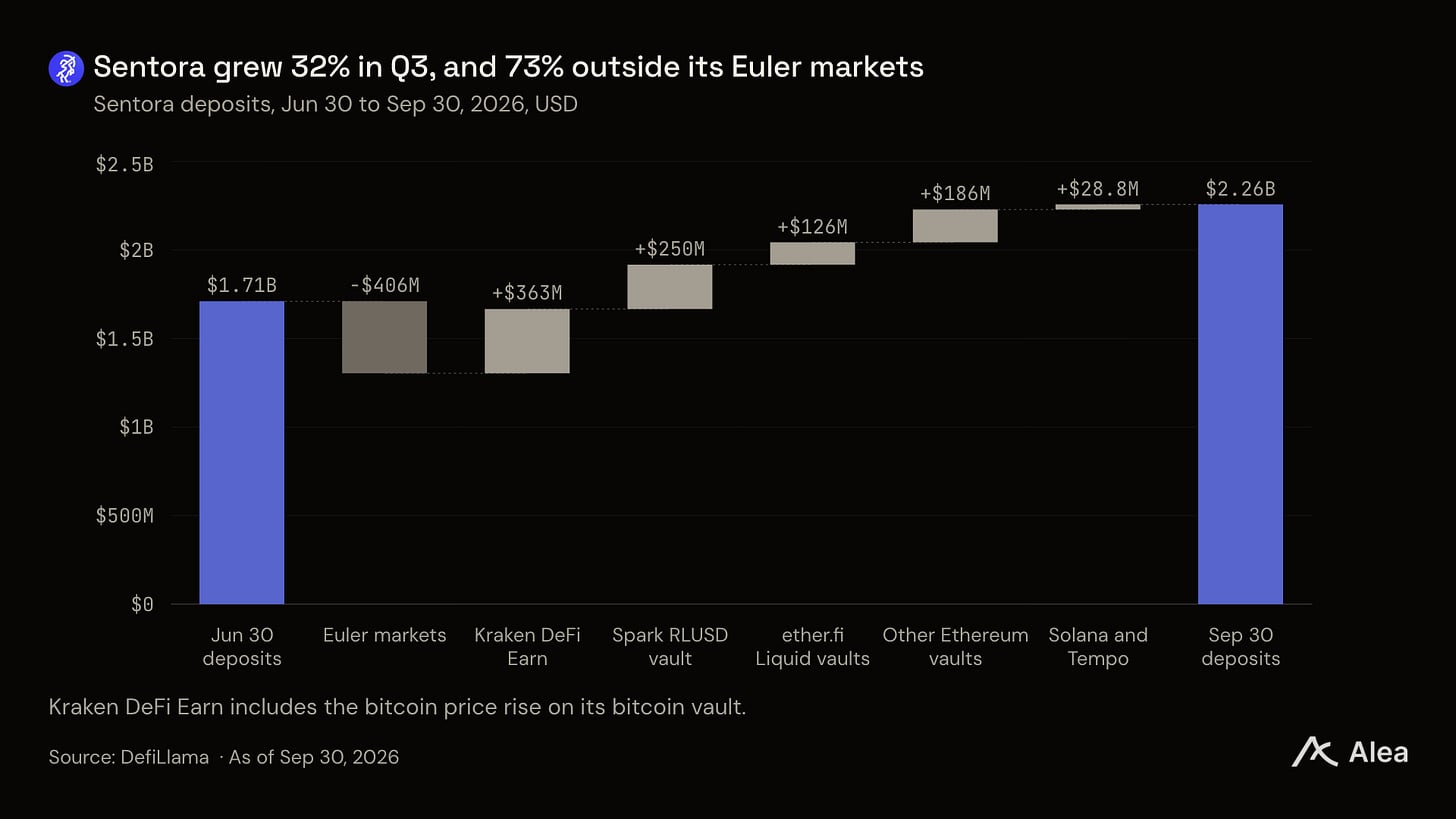
Figure 8: Capital inflows from Kraken DeFi Earn, Spark's RLUSD vault, and ether.fi's Liquid vault exceeded the outflow from the Euler market.
Sentora's overall scale grew 32%, lagging behind the 39% growth in total curated deposits, primarily because it lost almost all $406 million held on its Euler PYUSD and RLUSD markets as of June 30. Due to weekly supply incentives tapering off across Q3 and terminating completely on September 3, roughly 80% of the capital had already withdrawn before Sentora handed the markets over to Euler DAO on September 8. Euler DAO placed these markets under K3 Capital's operation the following day.
Outlook: Robinhood to Report First-Ever Q3 Earn Earnings on October 27
Robinhood is scheduled to release its Q3 earnings report on October 27, marking its first quarterly statement since launching Robinhood Earn. Galaxy, which curates USDC vaults on Arc and borrows from K3 Capital vaults, will also report on the same day. Coinbase is slated to publish its Q3 earnings on October 29. On September 28, Sentora proposed the first external curation hub on Aave V4, where half of the revenue will be allocated to the Aave DAO. The Aave community governance vote formally approved this proposal on October 5.
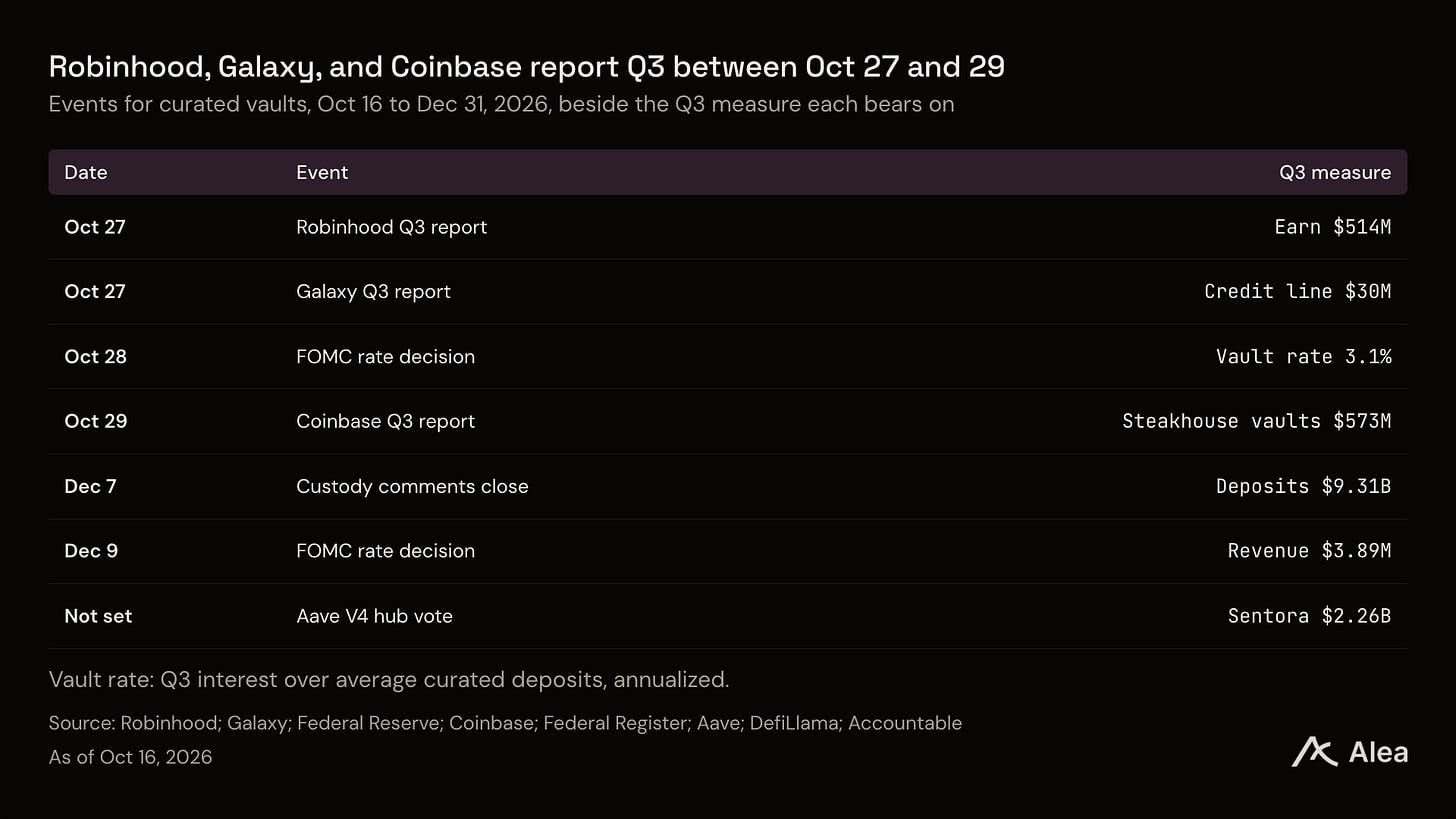
Figure 9: As of September 30, ahead of both companies' Q3 reports, Robinhood Earn reached $514 million, and Coinbase's Steakhouse vaults totaled $573 million.
On the regulatory front, Hester Peirce issued a statement regarding crypto vaults on July 22, but the U.S. Securities and Exchange Commission (SEC) subsequently announced her departure on October 1. In response to SEC custody proposals questioning whether investment advisors and funds can deposit client crypto assets into DeFi contracts, Morpho proposed splitting vaults into non-custodial and discretionary categories. The public comment period for this proposal closes on December 7.
S&P Global launched its "Vault Risk Assessment" framework on October 4. The evaluation model scores each vault based on curator assessment and liquidity assessment metrics: the final score can exceed the lower of the two ratings by no more than two points. Governance and security scores also cap the overall rating.
Scenario Analysis: Q4 Curator Revenue Projected at ~$5 Million if Q3-End Scale Persists
If the deposit scale at September 30 persists along with Q3 interest and fee rates, curator revenue in Q4 will approximate $5 million, surpassing Q3's $3.89 million. The Federal Open Market Committee (FOMC) is scheduled to announce its next interest rate decisions on October 28 and December 9.
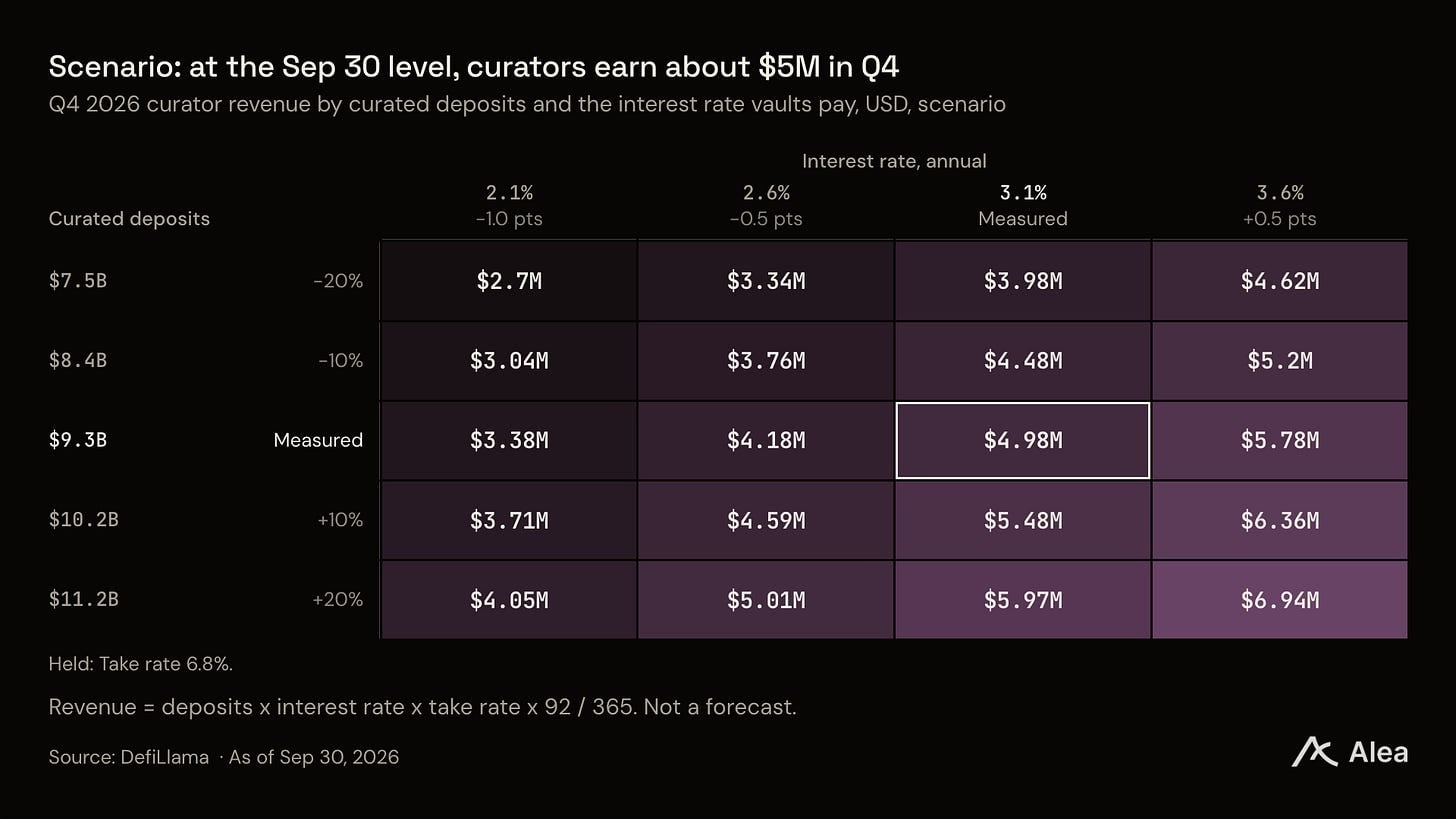
Figure 10: At September 30 asset levels, a 1-percentage-point change in interest rates corresponds to approximately $1.6 million in quarterly curator revenue.
In stablecoin and crypto asset vaults, a 0.5-percentage-point cut in blended interest rates would reduce Q4 revenue by approximately $800,000, equating to four-fifths of the loss caused by a 20% shrinkage in total deposits. If total deposits grow by 20% at Q3 interest rates, Q4 curator revenue would rise to $5.97 million.
Retail applications brought the most consistent new capital in Q3. Both Robinhood Earn and Coinbase's High Yield vaults posted weekly growth throughout the quarter, with Merkl's rewards for Robinhood depositors extending until July 1, 2027; meanwhile, Spark, Grove, and a specific whale wallet each deployed single transactions exceeding $100 million. Q4 revenue hinges on which capital types remain sticky: at Q3 interest rates, every 20% change in deposit scale translates to roughly $1 million in quarterly curator revenue.
Join TechFlow official community to stay tuned
Telegram:https://t.me/TechFlowDaily
X (Twitter):https://x.com/TechFlowPost
X (Twitter) EN:https://x.com/BlockFlow_News
 @AleaResearch