Castle Labs Research Report: Solana Builds a Full-Stack On-Chain Economy, From Consumer-Grade Applications to the RWA Flywheel
Author: Noveleader, Castle Labs
Compiled by: TechFlow
TechFlow Summary: Market consensus holds that Solana's massive application revenue is primarily driven by short-term, attention-fueled meme frenzies, which tend to vanish quickly once interest fades. However, Castle Labs' latest in-depth research report indicates that Solana's consumer-grade applications have established a solid foundational revenue floor. Not only do they maintain a category retention rate exceeding 80%, but they are also driving momentum deep into full-stack financial infrastructure such as lending, perpetual contracts, and real-world assets (RWAs). Over the past year, Solana's RWA market size has surged by over 600%, reshaping the competitive landscape of public blockchains with yield-generating real assets and leverage loops.

Chart: Comparison of application-layer revenue across major public chains and top protocols over the past 30 days. Solana leads far ahead at $193.1 million.
In the rolling 30-day period, Solana generated up to $193.1 million in application-layer protocol revenue, nearly double its closest competitor Hyperliquid ($86.5 million), followed by Ethereum ($53.8 million) and traditional internet finance giant Robinhood ($34.6 million).
This significant lead is primarily attributable to consumer applications, which contribute roughly 80% of Solana's application-layer revenue. These encompass token launch platforms (launchpads), trading terminals, collectible markets, and wallet applications. The remaining 20% comes from decentralized exchanges (DEXs), decentralized lending, and other core DeFi protocols.
However, this revenue structure is frequently questioned within the crypto industry: critics argue it is essentially a commission on speculative meme coin trading volumes, which are entirely narrative-driven. Consequently, the prevailing market consensus holds that once user attention wanes, trading volume and fees will quickly evaporate. To test whether this hypothesis holds true, this report thoroughly evaluates the actual sustainability and resilience of Solana's consumer application revenue.
Subsequently, we look beyond the consumer application layer to horizontally analyze the diverse infrastructure categories rapidly building on Solana and their growth trajectories. This includes lending markets, DEX matrices, and real-world assets (RWAs) that have experienced explosive growth on Solana over the past year.
Solana Consumer Applications Have Reached Escape Velocity
Solana is a blockchain network with ultra-high throughput, enabling chain transactions to remain exceptionally fast, cheap, and seamless. This forms the core foundation for attracting consumer applications, as these apps generate extremely high-frequency trading demands and urgently rely on near-instantaneous, ultra-low-latency user interaction experiences. Furthermore, startup teams seek to deploy on active networks with ample liquidity and accumulated real demand, conditions that Solana perfectly fulfills.
Currently, consumer applications on Solana can mainly be divided into three major categories: launchpads, professional trading terminals, and mobile wallets.

Chart: Categorized ecosystem map of Solana consumer applications, covering launchpads, trading terminals, and wallets.
Launchpads currently constitute the largest segment of application-layer revenue, with PumpFun holding an absolute dominant position. PumpFun alone generated approximately $39 million in revenue from issuance activities over the past 30 days, accounting for 20% of Solana's total application revenue.
In fact, Solana possessed all the technical elements necessary to incubate viral consumer applications long ago, but until PumpFun officially launched in January 2024, did massive incremental users truly flood onto the chain.
This application serves not only as an asset generator but also acts as a native distribution layer, facilitating instant matching for all newly issued assets. Leveraging Solana's high-throughput architecture, over 20 million meme coins have been created on the network to date, serving as the core driver behind the snowballing growth of application-layer revenue.

Chart: Cumulative token issuance volume and key metric breakout curve for PumpFun.
Following closely are the professional trading terminal and mobile wallet matrices, including products like Axiom, Fomo, GMGN, and Phantom. The core moat of these products lies in firmly controlling traffic entry distribution. They seamlessly integrate social trading, on-chain perpetual contracts (perps), and prediction markets into a single interface. Beyond relying on commissions from core trading tools, they have successfully tapped into the most lucrative commercial territory of the crypto ecosystem.
This also indicates that their prosperity does not exist in isolation; rather, it generates a strong ecological network spillover effect, continuously injecting incremental capital into underlying protocols. For example, the Fomo adapter automatically dynamically routes buy orders on the platform to the most liquid DEXs on Solana (such as Raydium and Meteora) and aggregators like Jupiter.
In the early stages of PumpFun's development, once a coin reached a certain market capitalization trajectory, it would "graduate" and establish standardized liquidity pools on Raydium. However, by March 2025, PumpFun launched its proprietary PumpSwap to further expand revenue sources (generating $15 million in revenue over the past 30 days), as trading slippage and swap fees represent the substantial portion of actual profits.
PumpSwap's strategic move clearly reflects the common ambition of launchpads: to completely control the entire lifecycle of assets from issuance to secondary circulation, continuously monetizing as asset market caps rise.
Conversely, underlying DEXs also desire to take root downward and control issuance-side business, as the continuous birth of new coins is the evergreen source of trading fees. This is precisely the vertical integration we have densely witnessed in the Solana ecosystem.
In April 2025, Raydium, one of Solana's leading DEXs, launched LaunchLab, a foundational issuance engine based on bonding curves. Third-party developers can directly build distinct launchpads on it and seamlessly funnel mature tokens into Raydium's liquidity pools.
In September 2026, the innovative project StonkFun fully migrated its issuance architecture to LaunchLab. StonkFun rose rapidly because it introduced more flexible underlying asset anchoring mechanisms (such as real assets like U.S. stocks) and allowed token creators to customize tax rates per trade. The tax portion automatically purchases real stocks on-chain and distributes them to meme coin holders. This flywheel gives users direct dividend exposure to real-world assets while speculating on memes, significantly expanding the holder base and on-chain scale of RWAs on Solana.

Chart: Asset issuance and tax flywheel model pioneered by Raydium LaunchLab and StonkFun.
Beyond these headline protocols, the collectible card game (TCG) platform Collector Crypt has averaged $8 million in fee revenue monthly this year, vividly demonstrating the diversified consumer commercial landscape thriving in the Solana ecosystem beyond pure meme speculation.
How Solid Is Consumer Application Revenue?
As mentioned earlier, critics often argue that consumer application revenue heavily relies on attention bubbles and therefore lacks sustainability. To scientifically test this argument, we established the following three core testing dimensions:
1. The Floor: Within the past year, what was the drawdown floor for weekly consumer application revenue?
2. Retention: Are the top applications that led Solana last year still dominating today?
3. Competitive Landscape: Did the shares lost by top applications shift internally to other Solana-native teams, or did they flow completely out to other public chains?
We pulled a full year of complete on-chain data from October 2025 to October 2026 for backtesting.
Test data shows that Solana's consumer application weekly revenue fluctuates between $13.5 million and $42.6 million, with a median stabilizing at $18.2 million. The biggest contributor maintaining this solid floor remains PumpFun's high-frequency sticky revenue. As shown in the chart below, the red volatility zone at the top of the graph is primarily composed of mid-to-long-tail lightweight applications; meanwhile, in Q3 2026, driven by innovative products like StonkFun, overall consumer application revenue experienced another accelerated breakthrough.
This thoroughly answers the first question: Solana's consumer application revenue has passed cyclical tests, forming an extremely solid, highly certain cash flow floor.
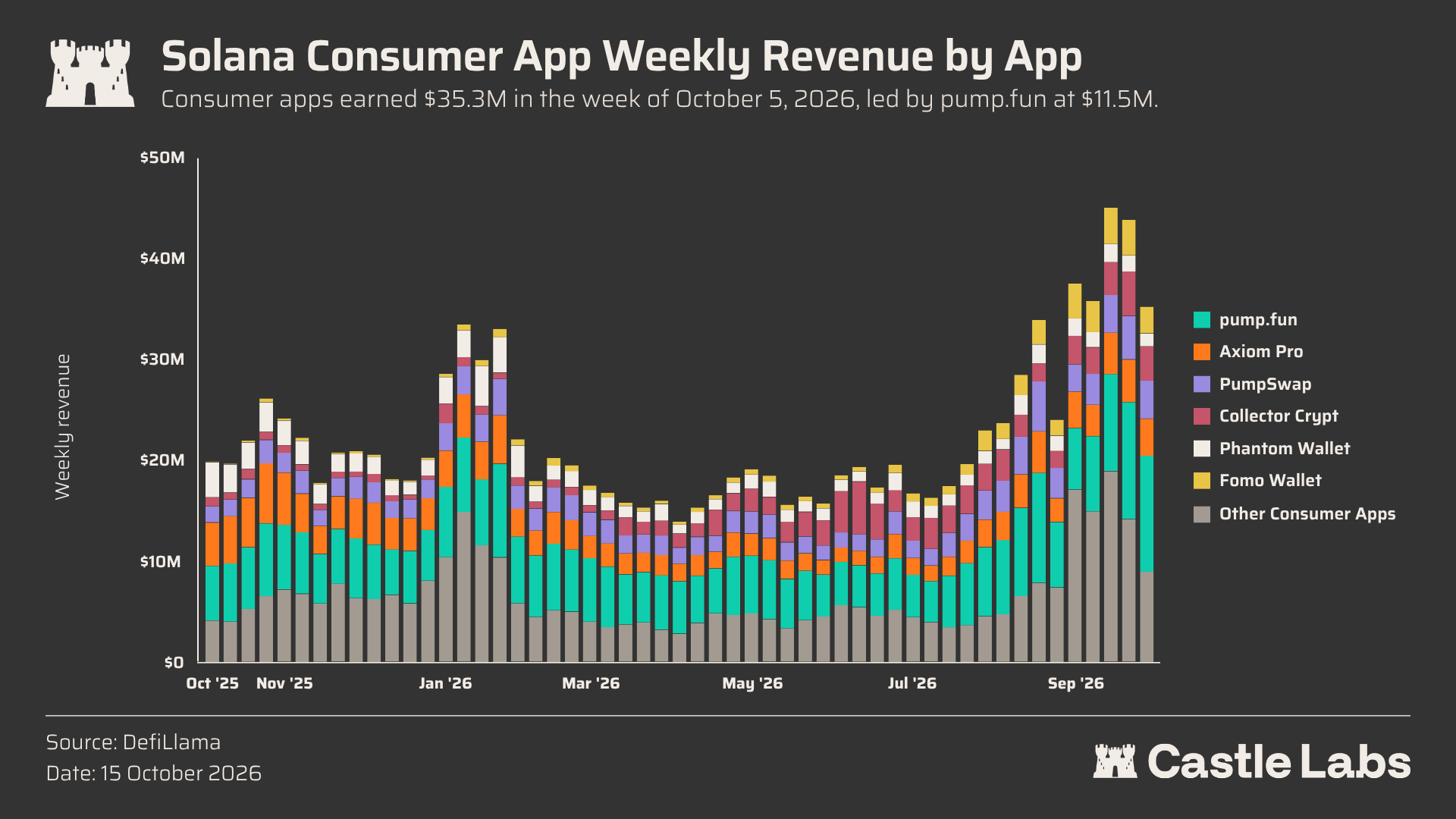
Chart: Comprehensive overview and base breakdown of Solana consumer application weekly revenue from October 2025 to October 2026.
Regarding application retention, we tracked the top 10 consumer applications ranked in Q4 2025. At that time, these 10 apps generated $211.7 million in single-quarter revenue; by Q3 2026, their total revenue not only grew to $261.3 million, but 8 of these applications remained firmly in the top 10 ranking (including PumpFun, Axiom, etc.).
An even more positive signal lies in the healthy dilution of top concentration: the revenue contribution share of the top 3 applications gradually improved from 64% at the end of 2025 to the current 50.2%, indicating that the market continuously provides emerging protocols with ample development space. The standout newcomer, StonkFun, generated $27 million in a single month in September (compared to $46 million for PumpFun during the same period).
Although StonkFun's recent popularity has cooled somewhat (its 7-day average daily revenue is approximately $490,000, equivalent to 21% of its $2.3 million peak), this again validates a pattern: new products can rapidly explode and complete cold starts on Solana. While heat ultimately dissipates, it establishes a higher baseline for sustained retention.
In summary, Solana's consumer application revenue possesses strong sustainability and expansion momentum. It is not merely a high-cyclicity bubble, but demonstrates robust resilience to continuously capture genuine market demand, making Solana the most vibrant testing ground for new products in the current Web3 landscape.
Maturity Stress Test: The Deep Evolution of Solana DeFi
Although traditional DeFi is currently not the most core source of Solana's application-layer revenue, it continues to integrate new financial primitives at an astonishing pace, particularly real-world assets (RWAs). To objectively present this progression, we conducted a horizontal comparison of the growth rates across major DeFi sub-niches on Solana and Ethereum over the past 30 days.
Benefiting from relatively flexible baselines and high efficiency, Solana's growth rates in most DeFi niches have surpassed Ethereum's. However, localized pullbacks occurred in the synthetic dollars and yield tokenization sectors on Solana, primarily because its infrastructure in these areas remains relatively nascent (e.g., short-term fluctuations in locked amounts for yield tokenization protocol Exponent).
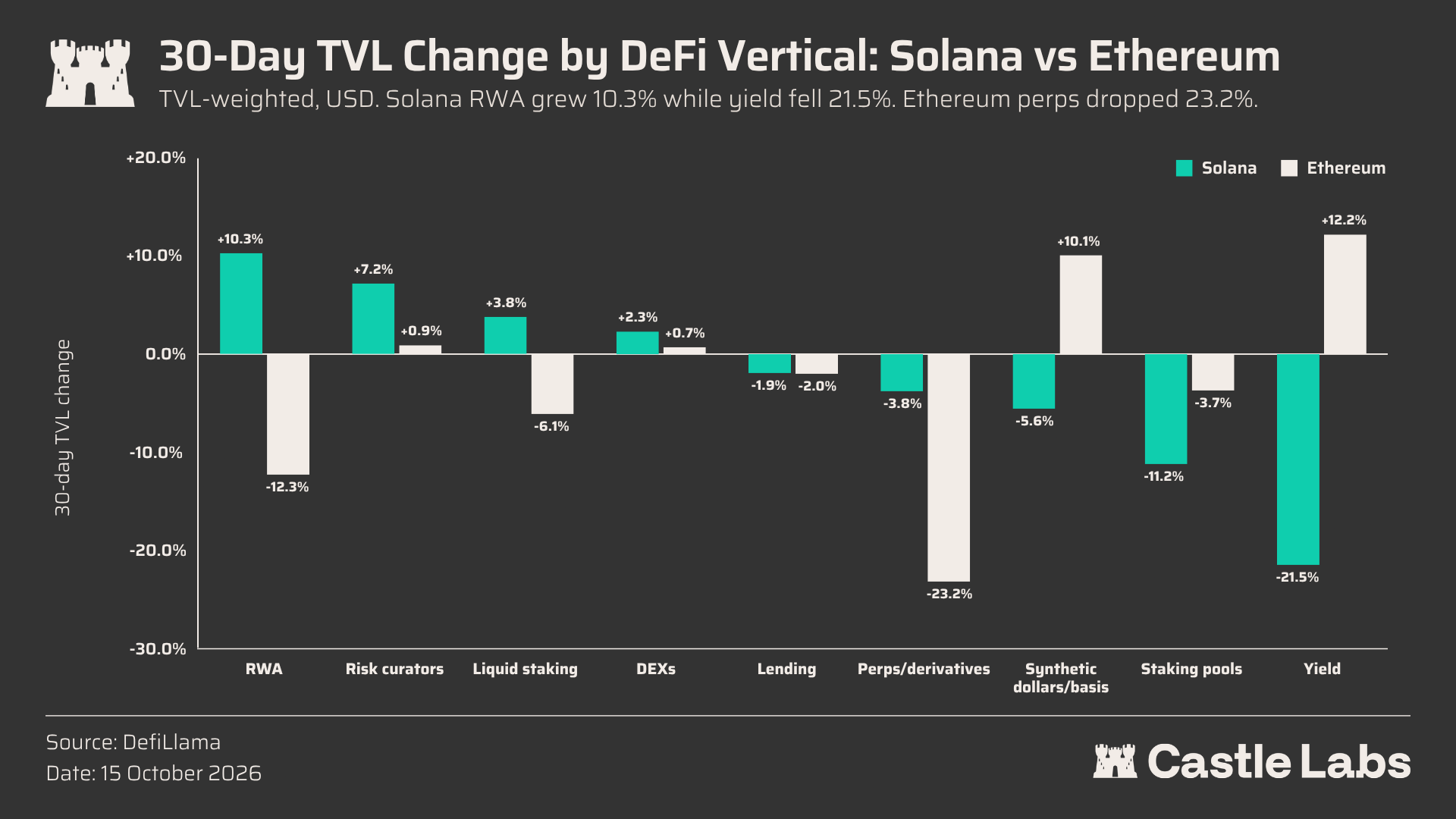
Chart: Horizontal comparison of growth rates across major DeFi sectors on Solana and Ethereum over the past 30 days.
From a traditional finance perspective, lending is the ballast that best reflects the maturity of a financial system, as it must rely on real hard assets as collateral and imposes extremely high requirements for system stability and long-term user retention.
The current Solana lending market is dominated by a duopoly of Jupiter Lend and Kamino, which have adopted vastly different development paths. To understand the core leverage of lending protocols, we first deconstruct the successful model on Ethereum.
On Ethereum, lending TVL is 11 times that of Solana, and its massive lending demand is fundamentally driven by three core underlying assets:
1. Liquid Staking Tokens (LSTs);
2. Yield-bearing Stablecoins (YBS);
3. Pendle Principal Tokens (PTs).
The first two asset types inherently carry native yield attributes, while PT assets lock in fixed returns at maturity. Users employ a recursive staking leverage strategy (looping), where they borrow base assets using these yield-generating assets as collateral and reinvest in yield-generating assets again. As long as the underlying asset yield consistently exceeds the borrowing rate, substantial arbitrage profits can be generated.
This recursive lending brings massive real borrowing demand to lending protocols, boosting total protocol revenue and the baseline annualized returns for depositors.
Although Solana boasts a developed LST system, it has historically lagged in scaling yield-bearing stablecoins and PT assets. Nevertheless, Kamino and Jupiter are working tirelessly to close this gap.
Currently, liquidity for yield-bearing stablecoins on Solana primarily stems from USDe and USDY, with their combined supply exceeding $635 million. USDe is deeply embedded in Jupiter Lend ($313 million) and Kamino ($190 million). Through incentive mechanisms targeting sUSDe, the first leveraged flywheel for the Solana lending market has been activated.
Regarding PT assets, Kamino has enabled cross-chain principal token introduction and leverage loops through Chainlink CCIP integration. Meanwhile, Solana-native Pendle-like protocol Exponent contributes over $7 million in deposit scale. Once yield and principal tokens achieve economies of scale on Solana, the ceiling for whole-network lending depth will be completely shattered.
Notably, the Solana lending market is recently facing a new macro adjustment: the newly passed Double-Disinflation Proposal will gradually reduce SOL's net inflation rate, which also means the native staking annualized yield for LSTs will decline synchronously. To maintain lending attractiveness, market borrowing rates will be forced downward, thereby compressing depositor yields.
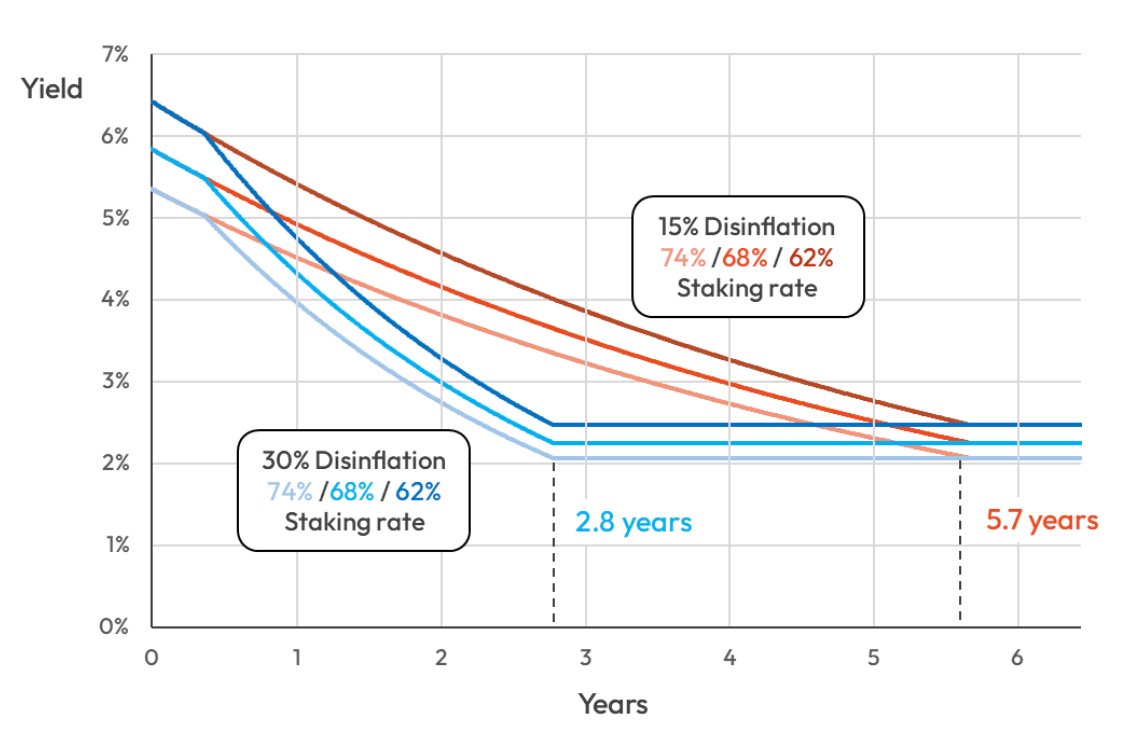
Chart: Transmission path of Solana's double-disinflation proposal on validator yields and staking rates.
To resist the potential shock to the lending ecosystem from declining staking yields, vigorously developing yield-bearing stablecoins (YBS) and diversified RWA assets appears particularly urgent. Only by building higher-yielding pools of real underlying assets can lending protocols continue to leverage borrowing demand and maintain a healthy balance between deposits and loans.
In the perpetual contracts (perps) sector, Solana recorded $42 billion in trading volume over the past 30 days, equivalent to 20.6% of Hyperliquid's total network volume, ranking fourth globally among on-chain perps. Core protocols include GMTrade, Pacifica, and Jupiter Perps.
Among them, GMTrade specializes in RWA perp matching依托 GMX V2 architecture, while Pacifica rapidly breaks through through yield-on-resting-orders, touch trading, and AI-assisted tools.
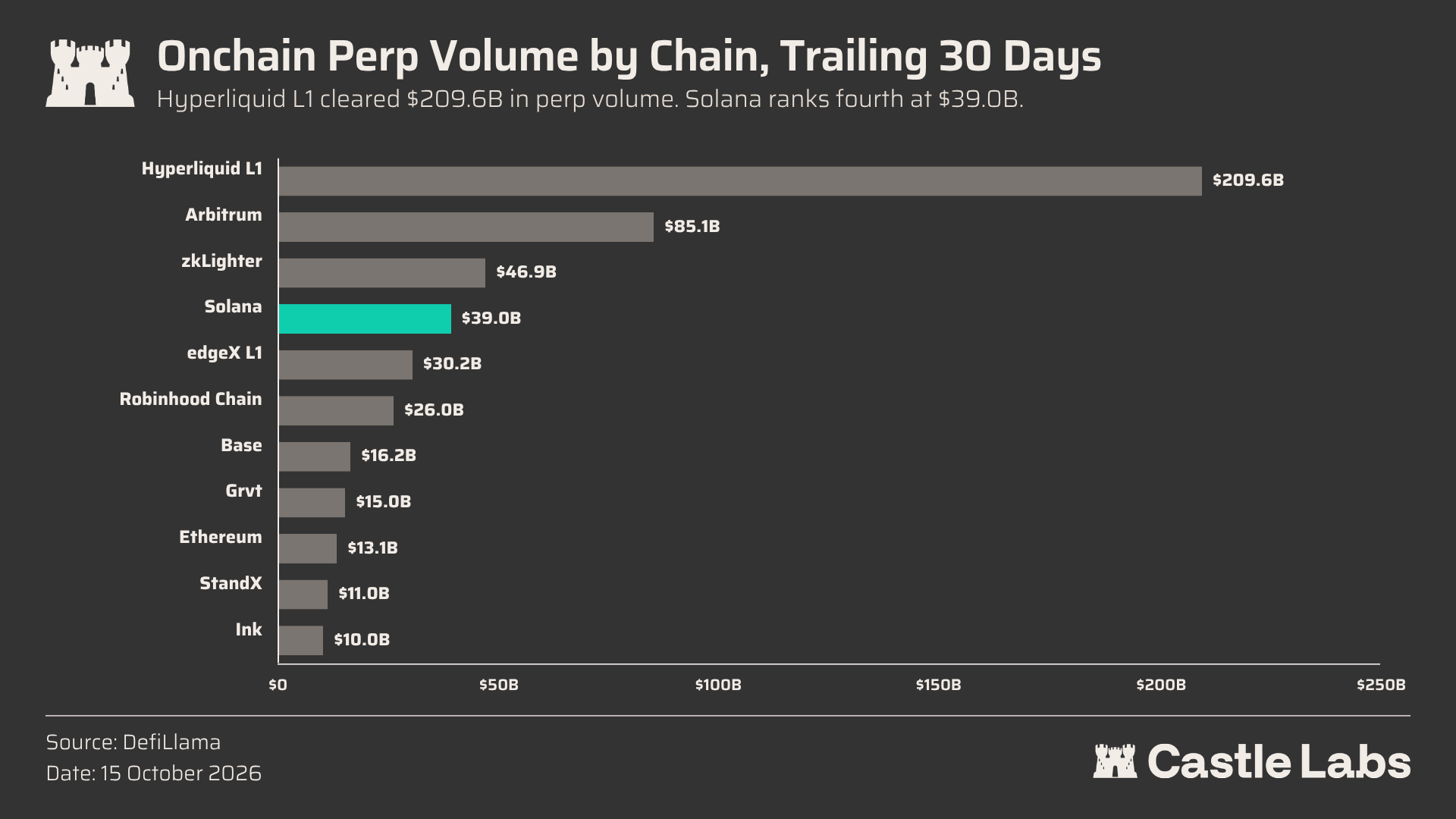
Chart: Comparison of on-chain perpetual contract trading volume shares across mainstream public chains.
Regarding stablecoin infrastructure, the total on-chain stablecoin issuance on Solana has exceeded $16.3 billion, growing counter-trend by approximately 6% to 7% year-over-year; in contrast, the total stablecoin supply on Ethereum declined by 9% to $146 billion during the same period.
Although USDC's absolute dominance on Solana has receded (dropping from 72% to 42%), newly issued stablecoins such as USDGO, USD1, and BlackRock's BUIDL collectively injected $3.5 billion in incremental liquidity. However, currently only about $5.6 million of these new stablecoins are deposited in DeFi protocols, leaving enormous room for converting dormant funds.
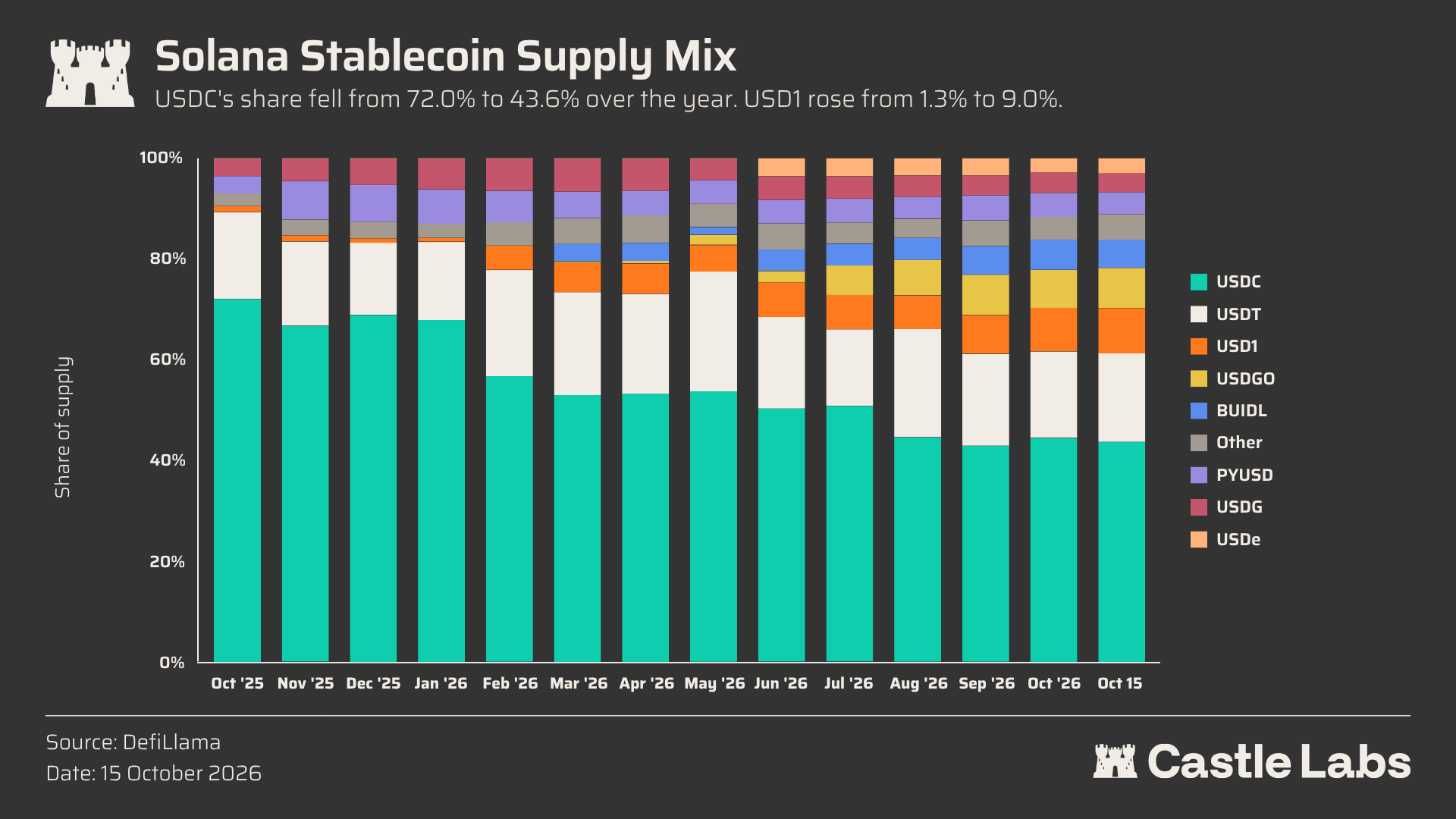
Chart: Trends in stablecoin issuance volume changes on Solana and Ethereum over the past year.
In terms of actual DeFi capital utilization rate, USDC still ranks first with $544 million deployed via staking/collateral and $930 million lent out; meanwhile, benefiting from deep integration with Ethena, Jupiter, and Kamino, USDe has risen to become the second most frequently utilized stablecoin asset.
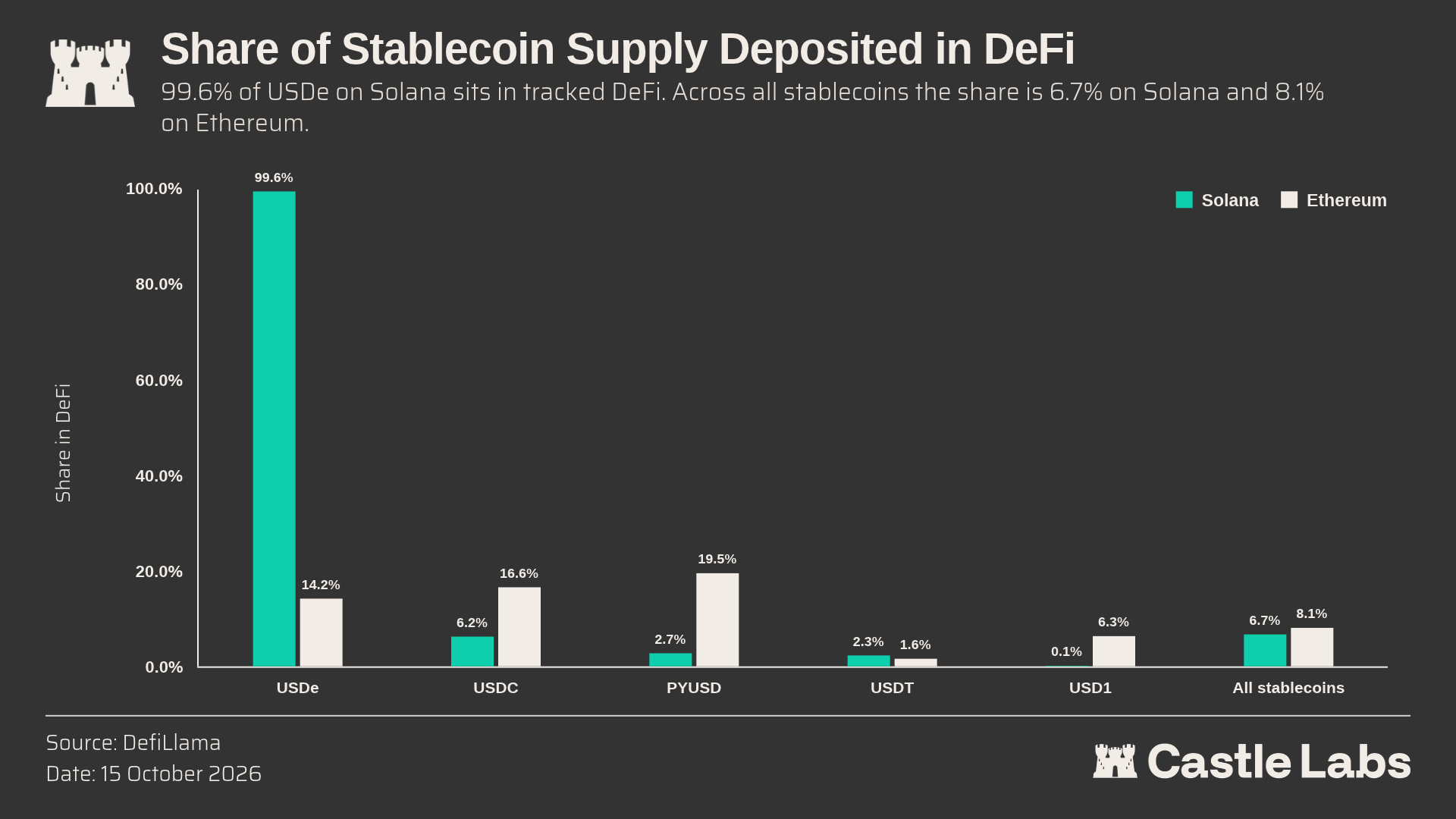
Chart: Breakdown of actual utilization rates for each major stablecoin on Solana in the lending and trading markets.
Solana RWA: The Real-Asset Engine Behind Over 600% Explosive Growth
In the real-world assets (RWA) track, Solana has demonstrated explosive power far surpassing Ethereum's: over the past year, Solana's on-chain RWA market cap exploded from $700 million to $4.3 billion, surging over 600%; meanwhile, on-chain RWAs on Ethereum only saw a marginal 7% increase from $15.5 billion to $16.6 billion. A year ago, Solana's RWA scale accounted for only 4.5% of Ethereum's, whereas today that ratio has skyrocketed to 26%. Currently, Solana users can conveniently access U.S. Treasuries, asset-backed credit, tokenized stocks, curated quant strategies, and even commodities.
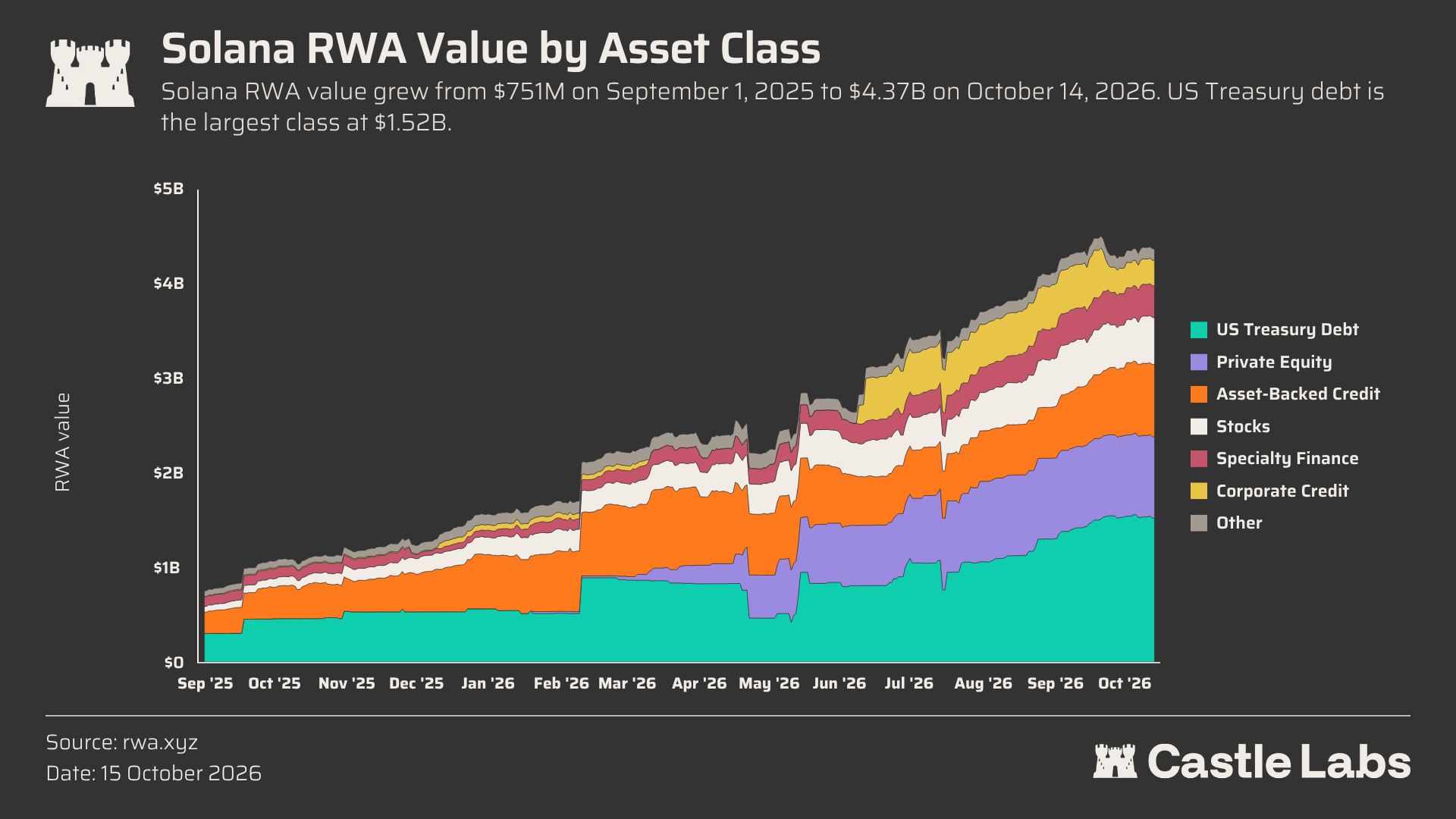
Chart: Comparison of the expansion rate of on-chain RWA asset scales on Solana and Ethereum over the past year.
Among numerous sub-categories, tokenized stocks stand out exceptionally brightly, with scale jumping from $63 million to $455 million, primarily driven by top issuers like xStocks and Backpack. Ethereum's current market cap for this same category is approximately $750 million, meaning Solana has achieved parity on this track.
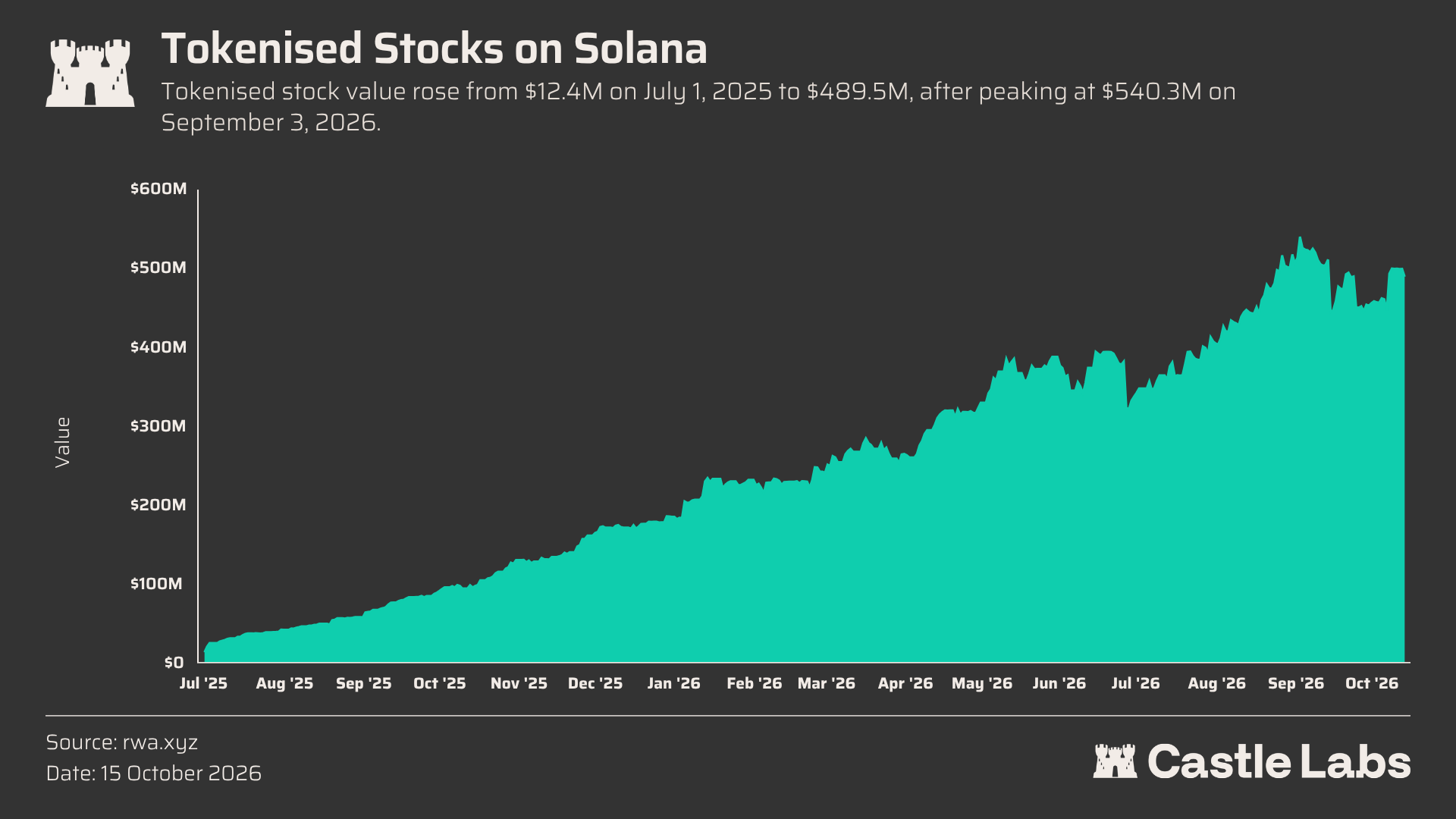
Chart: Growth curve of on-chain tokenized U.S. stock holdings and market cap on Solana.
The most critical significance of bringing real-world assets on-chain lies in unlocking their productivity. On Solana, asset utilization rates are rising rapidly, with over $65 million in tokenized U.S. stocks now continuously generating on-chain yields. xStocks assets are particularly prominent, having been widely included in the officially recognized list of pledgeable collateral by Kamino and Jupiter Lend.
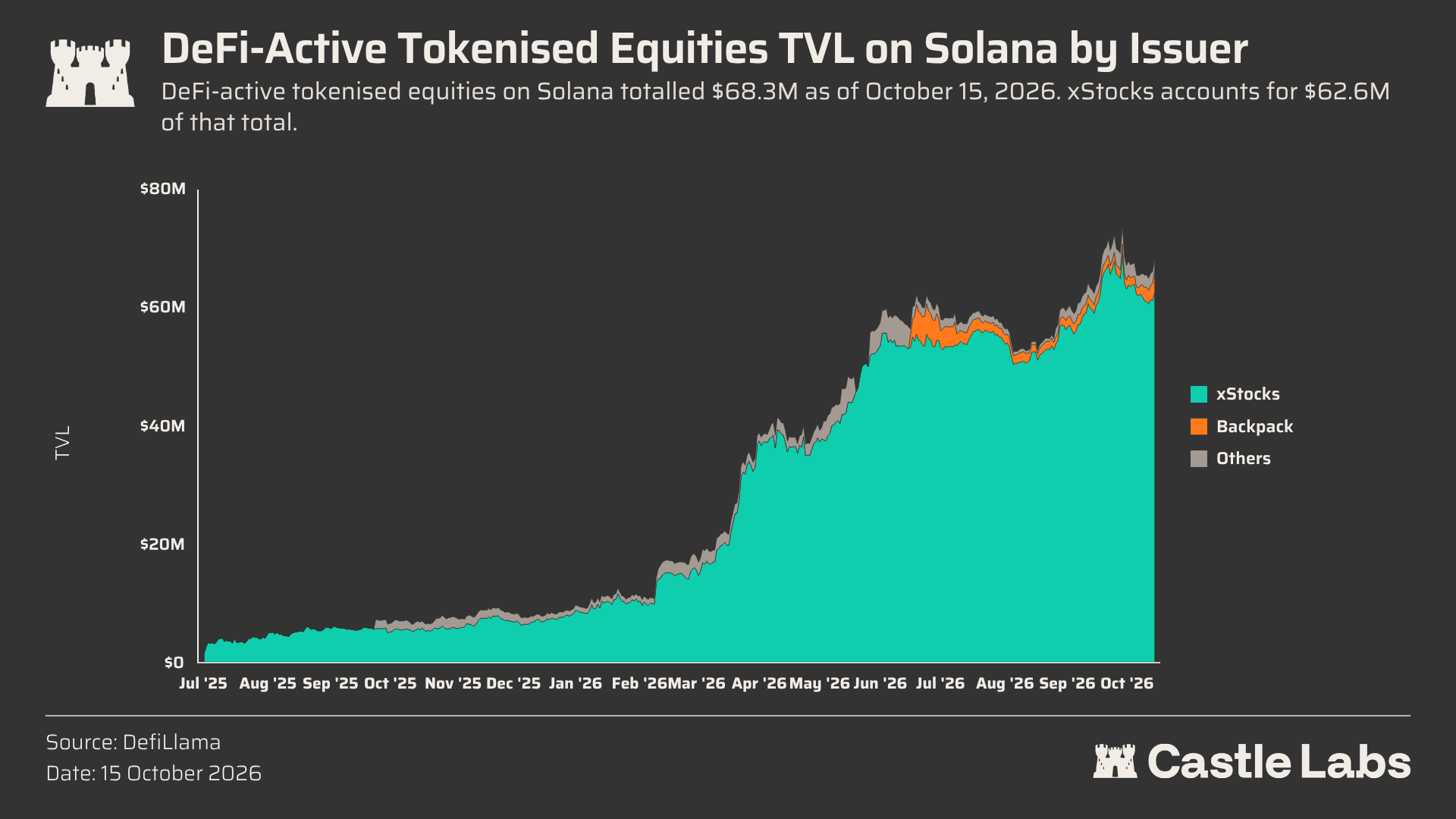
Chart: Active asset pools in the Solana lending market supporting yield generation and staking for real stocks.
In a broader active RWA matrix, OnRe launched ONyc, backed by reinsurance premium yields, while Hastra issued PRIME and AUTO, supported by property ownership and auto consumption loans. Meanwhile, institutional lending leader Maple also brought syrupUSDC to Solana, allowing regular on-chain users to effortlessly capture high spreads from top-tier institutional lending and private credit.
These yield-generating assets, combining high credibility with competitive returns, are continuously injecting high-quality collateral into the lending market, thereby driving recursive leverage (looping) to achieve positive cash flow self-sufficiency.
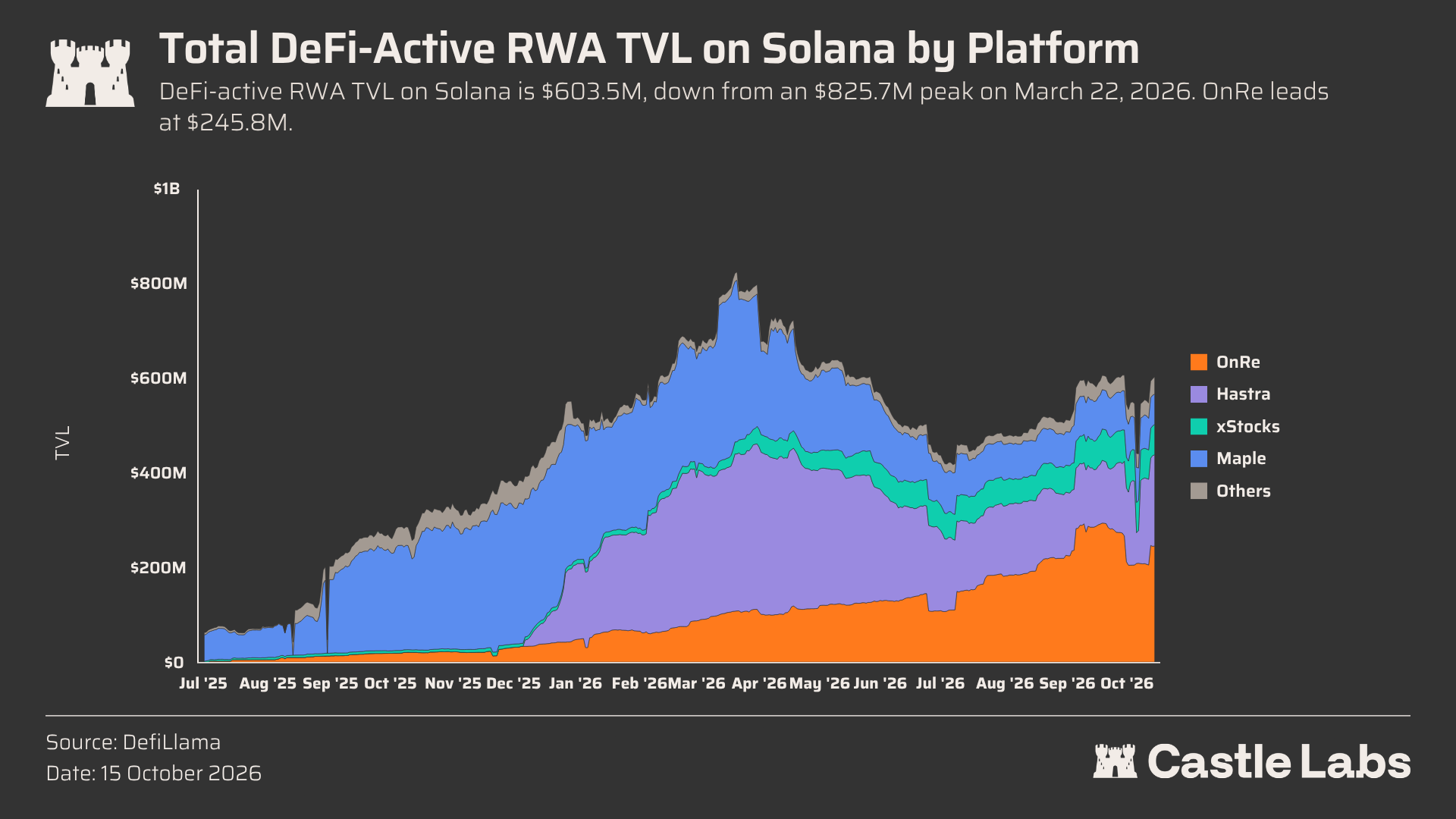
Chart: Detailed structural distribution of active on-chain RWA TVL on Solana.
Summary and Outlook
Today's Solana has nurtured the most revenue-generating cluster of consumer applications in the entire Web3 space. In absolute protocol revenue value, it unconditionally dominates the industry. More crucially, these applications have sedimented a resilient, counter-cyclical baseline revenue floor, thoroughly breaking down the market's prejudice that they are purely short-term speculative bubbles.
Even more noteworthy is that Solana's growth momentum is successfully spilling outward from consumer applications into the broader DeFi and RWA domains. Liquid staking, DEXs, lending, and emerging derivatives have all recorded steady upward trends. On the RWA track, Solana completed a large-scale on-chain inclusion of traditional financial assets over the past year with a growth rate exceeding 600%, achieving comprehensive blossoming ranging from U.S. stocks and Treasuries to reinsurance and consumer credit.
The root cause of this explosion lies in the ecosystem consciously promoting institutional-grade asset onboarding and precisely focusing on the financial composability of assets at the foundational layer. These are seamlessly integrated into money markets like Kamino and Jupiter Lend, ultimately transforming into organic nourishment that drives the prosperity of the entire financial network.
Currently, active RWA TVL deposited in DeFi protocols has surpassed $500 million, accounting for approximately 8% of the chain's net locked value. Due to their inherent native yield attributes, they are becoming the brand-new core engine igniting lending cycles and credit expansion.
Solana has transcended the early stage of single-point breakthrough, comprehensively stepping toward a new heights of a full-stack self-sustaining on-chain economy. Looking to the future, as long as the ecosystem continuously strengthens this full-stack synergy and constantly expands into basis trading and yield-bearing derivative tracks, it will inevitably stimulate deeper capital borrowing demand, driving the entire flywheel toward a more magnificent long-term prosperity.
Join TechFlow official community to stay tuned
Telegram:https://t.me/TechFlowDaily
X (Twitter):https://x.com/TechFlowPost
X (Twitter) EN:https://x.com/BlockFlow_News
 @castle_labs