Galaxy Research Report: U.S. Stocks Move Toward 24/7 Trading as the SEC Begins Overhauling the Underlying "Ownership Ledger"
Author: Thaddeus Pinakiewicz
Compiled by: TechFlow
TechFlow Summary: For US equities to move toward true 24/7 trading, the bottleneck isn't just trading hours; it lies in how transfer agents record transactions. This week, the SEC proposed significant updates to transfer agent rules, explicitly allowing blockchain-based accounting and raising the sensitive question of whether "wallet addresses could replace names and physical addresses"—a matter directly tied to whether tokenized stocks can circulate more like bearer assets.

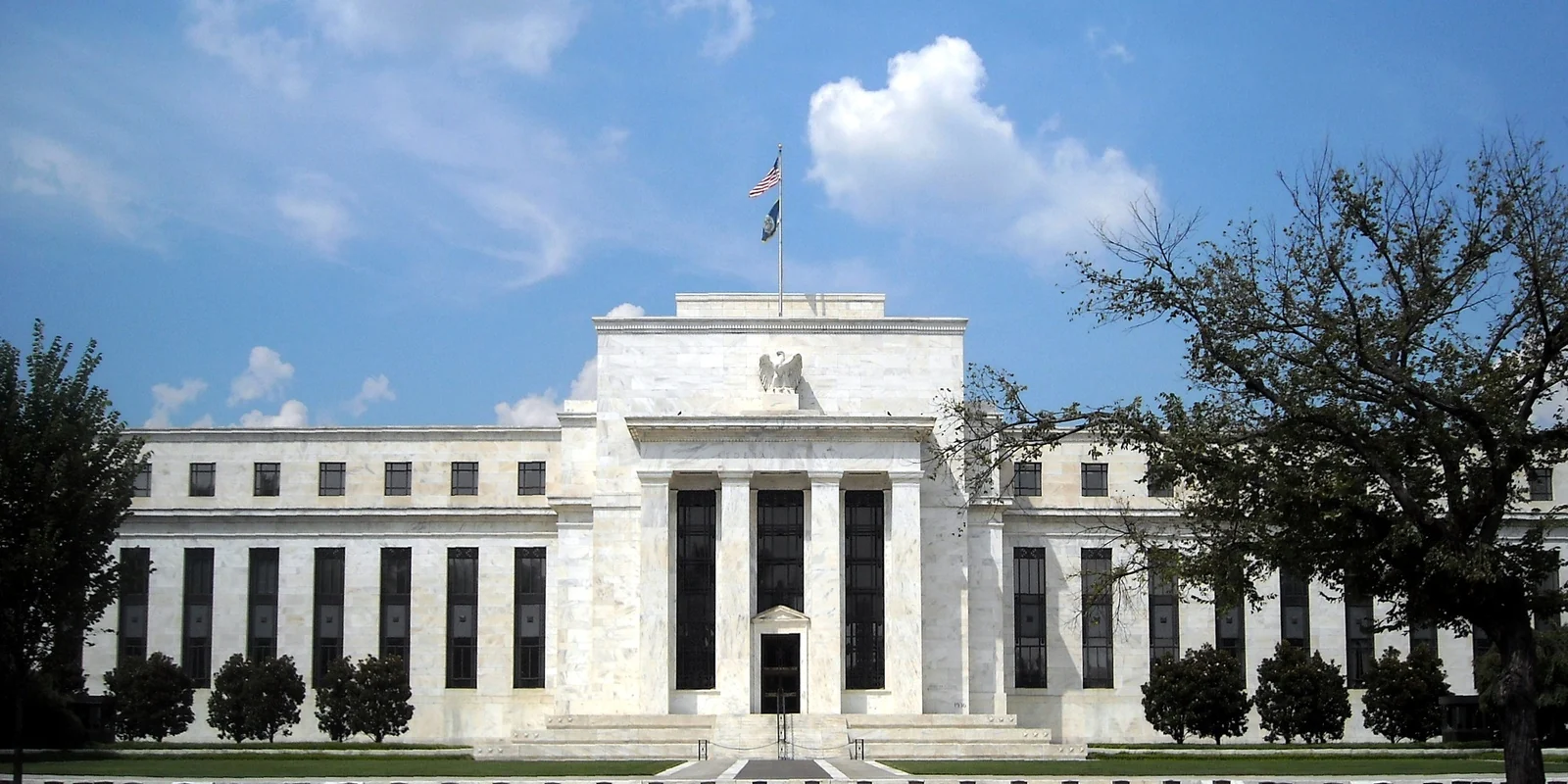
The U.S. Securities and Exchange Commission (SEC) has taken another major step toward modernizing the "plumbing" from trade to settlement in the American financial system. This week, the Commission proposed comprehensive updates to transfer agent rules—these institutions maintain issuers' official ownership records, process transfers, and ensure that one share held by Alice doesn't accidentally become two shares held by Bob. Most relevant rules have seen little substantive revision since the late 1970s and early 1980s, when physical certificates and manual processing were still the default, and "digital assets" were largely meaningless. Meanwhile, the SEC is also preparing a September 17 roundtable on 24-hour trading, with an agenda covering exchange and broker readiness, overnight surveillance, closing price mechanisms, clearing and settlement, expected liquidity, cybersecurity, staffing, market continuity, and the path from extended daytime hours to a truly 24/7 market. While these two initiatives might seem like separate tracks (updating transfer agent rules here, discussing trading sessions there), they converge at the same destination: how long a market can trade continuously depends on how well ownership records, along with clearing, settlement, and compliance rails, can sustain that pace. The relevant puzzle pieces are already moving:
On June 26, the SEC approved expanded operating hours for consolidated equity data feeds: Sunday at 9 p.m. to Friday at 8 p.m., with a one-hour technical pause each weekday night.
On June 29, DTCC's National Securities Clearing Corporation (NSCC) launched 24x5 clearing, running from Sunday night through Friday night.
On August 5, the SEC approved temporary overnight price bands. Unlike daytime Limit Up-Limit Down halts, hitting the overnight band will not automatically trigger a trading halt.
On December 6, FINRA's Trade Reporting Facilities plan to extend their operational hours to align with the broader expansion into overnight markets.
In a sense, the market is already close to 24/7—if you know the right people, or have a broker willing to accept overnight orders (for a fee, of course). Investors can access Alternative Trading Systems (ATS) and broker platforms, but the national market infrastructure that makes quotes and trades during regular hours "readable" is not yet truly running overnight. The result is a patchwork, not a unified market.
You might ask: Why hasn't this arrived yet? Ask someone at a bank or fund what happens after the closing bell, and you will likely hear plenty of grievances. Unless everything happens within the same platform, or you possess top-tier infrastructure bought with plenty of cash—even then, end-of-day processes still take time. Positions, cash, failed deliveries, and corporate actions must be reconciled across institutions. One entity keeps one set of books, another keeps a different set, and several people spend the entire night figuring out who owns what and where the human errors occurred. These are mostly remnants of decades of inefficiencies stacked up during the evolution of the financial ecosystem: different ledgers, different security formats, different custodians, different clearing systems, and an institutional structure where "everyone holds a slice of the truth, and every night hosts a séance to see if the truths align."
Blockchain and common standards have spent over a decade proving how far shared state and programmable settlement can push this problem. Even traditional giants are proving it. JPMorgan stated that its Kinexys currently processes around $7 billion daily, having handled over $4 trillion cumulatively since launch. It is largely private and permissioned, yes, but it remains a shared, programmable ledger operating at scale.
The important thing isn't ideological purity regarding "using blockchain," but rather improving the overall efficiency of the entire financial system through common standards and platforms. The proposed changes to transfer agent rules will explicitly acknowledge blockchain and distributed ledger technology as permitted accounting media. To be fair, they weren't necessarily prohibited before either. Current rules are technologically neutral; transfer agents could legitimately argue—with some SEC staff guidance backing them—that on-chain records already satisfy their obligations.
Galaxy and our on-chain transfer agent, Superstate, have already done this with GLXY shares on Solana. As a registered transfer agent, Superstate records legal ownership on-chain in real time. These shares remain restricted to verified investors and whitelisted wallets, meaning they aren't yet permissionless composable stocks across the entire DeFi ecosystem, but it proves the underlying model has long been viable.
The SEC's proposal bridges the gap between "our lawyers think this is allowed" and "the rule text explicitly permits it." After all, lawyers are an incredibly expensive consensus mechanism. Consensus, rollback, and fork risks won't disappear; they will become operational risks that transfer agents must control and record, rather than reasons to reject blockchain altogether. The most interesting part comes from Commissioner Hester Peirce, who zeroed in on the most "heretical" question in the proposal (from a regulatory perspective):
"Should transfer agents continue to be required to collect the name and physical address of security holders, or should the rules allow collecting other identifiers, such as email addresses and digital wallet addresses?"
This would undoubtedly spark the most sarcastic email chain ever circulated among AML/KYC fundamentalists, but it is indeed a fascinating question.
Those advocating for personal privacy would welcome this shift, but under our current patchwork securities laws, it introduces a host of challenges.
Can tokenized stocks be bearer assets? The analogy to bearer bonds isn't perfect, but it's useful. For true bearer instruments, possession is everything (ask Hans Gruber what he was looking for in the World Trade Center). The U.S. Congress essentially "nuked" domestic bearer issuances decades ago using tax measures, rather than pretending the concept was metaphysically impossible or outright banning it. Not all tokenized stocks are, or should be, bearer instruments. But for those designed to circulate in a pseudo-bearer manner, a public wallet address technically contains more information than an issuer holds under a true bearer model: it is persistent, observable, and auditable. This doesn't mean you know the person behind it, but it's certainly not "zero information."
Next comes a series of intriguing follow-up questions. What happens when a single wallet—or twenty wallets controlled by the same person—crosses the 5% beneficial ownership threshold? The wallet address won't file a Schedule 13D or 13G; the person controlling it will. Cross 10%, and the Section 16 reporting regime steps in. In theory, identity can remain private at typical holding levels and only disclosed once statutory thresholds are hit, but someone still needs to use defensible methods to aggregate addresses under common control.
So what exactly constitutes "control"? Private keys? Multi-sig signers? Smart contracts? Custody-held accounts? DAO votes? Advisor-managed wallets economically owned by clients? These questions have long plagued DAO designers and governance token architects: without explicit ownership lines, how do you distinguish aligned voters from clusters of wallets controlled by a single entity? Pushing the issue to its logical extreme reveals sharp fractures with existing regulations.
There's an even bigger question. If a wallet address can serve as the registered holder, and a transfer agent's ownership records only require an address, could issuer-sponsored tokenized shares eventually escape closed whitelist frameworks and flow freely on public networks—much like xStocks and other SPV-structured equity wrappers (such as Robinhood's Euro stocks)?
The SEC has made clear that putting securities on-chain does not alter the application of securities law. Beneficial ownership reporting, transfer restrictions, sanctions screening, and the broader BSA/KYC stack surrounding brokers, custodians, and regulated financial institutions will not evaporate simply because certificates turn into tokens. On the other hand, the proposal itself asks: Does requiring full names and physical addresses create unnecessary risks of unauthorized disclosure? There is a massive policy chasm between "blockchain can maintain ownership records" and "any anonymous wallet can freely receive the security." Even so, updating transfer agent rules still matters: it could reduce the volume of personally identifiable information sitting in centralized, hackable databases.
The benefits of automated, standardized clearing systems built on blockchain and open protocols are becoming increasingly compelling. For those who don't care about clearing and think all-hours markets are only useful for "degens," consider reading research on the differences between overnight returns and daytime statistics. Material information arrives while major exchanges are closed, and overnight price movements are largely driven by this information (the SEC's August filing on overnight price bands explicitly addresses this). Closed exchanges do not create informational silence; they create a divide between investors who can access OTC or alternative venues and those who cannot.
This proposal lays the groundwork for the "sober version" that DeFi has been trying to achieve for years. Allowing more investors access to all-hours, and ultimately 24/7, trading should compress the rents brokers charge for "finding" overnight liquidity, commodifying more core financial functions. It won't eliminate intermediaries, but it will force middlemen to compete on service and cost rather than relying solely on gatekeeping privileges.
The flow of information won't stop when markets close. Right now, closed markets only serve to let privileged institutions touch OTC desk deals. Regulation is finally catching up. Onward and upward. — Thad Pinakiewicz
Join TechFlow official community to stay tuned
Telegram:https://t.me/TechFlowDaily
X (Twitter):https://x.com/TechFlowPost
X (Twitter) EN:https://x.com/BlockFlow_News
 @galaxyhq