Vitalik Buterin: Why My "Doomsday Probability" Is 12%, and the "Decentralized Democratic Defense Acceleration" Concept
Compiled by: Techub News
Introduction
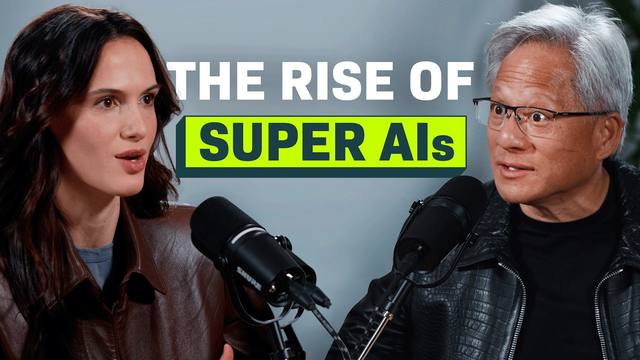
In August 2025, Ethereum co-founder Vitalik Buterin appeared as a guest on the podcast "Doom Debates," which focuses on technological existential risks, in a rare appearance for an in-depth conversation lasting nearly two and a half hours. In this dialogue titled "Vitalik vs. AI Doomer," Buterin systematically laid out for the first time his assessment of the existential risks posed by Artificial Superintelligence (ASI) and shared his response philosophy—Decentralized Democratic Defensive Acceleration (d/acc).
As an iconic thought leader in the blockchain space, Buterin has long focused on technology governance, institutional design, and existential risk. However, he had rarely discussed AI alignment and the probability of doom (P(Doom)) in such detail in public before. This intervention comes at a time when AI capabilities are advancing rapidly and global discussions on AI risks are intensifying; drawing on his unique cross-disciplinary perspective and calm, rational analysis, Buterin provides invaluable insights from the crypto world to this debate concerning humanity's future.
Summary
- Vitalik Buterin estimates the probability of human extinction due to artificial superintelligence (P(Doom)) at approximately 12%, considering it a comprehensive judgment based on the timeline of technological development and geopolitical circumstances.
- He proposes the concept of Decentralized Democratic Defensive Acceleration (d/acc), advocating for responding to AI risks by building a diverse, decentralized ecosystem of agents, emphasizing the combination of defensive technologies with open and democratic governance.
- Buterin believes that discussions on addressing AI risks must move past ad hominem attacks and ideological positioning to return to high-quality rational debate, calling on the tech industry to respect and take seriously the concerns of AI safety researchers.
- While a technological optimist who believes technology can solve most problems, he emphasizes that artificial superintelligence possesses independent agency, representing a fundamental risk distinct from all previous technologies and requiring special handling.
Vitalik's "Probability of Doom": Why 12%?
When directly asked by the host, "What is your P(Doom)?", Vitalik Buterin gave a specific number: approximately 12%. He explained that this probability is not fixed, but dynamically adjusts according to assessments of the technological development timeline and global circumstances. About a year ago, his estimate was likely around 10%, dipping at one point before recently climbing back to 12%, having even reached 15%-16% earlier this year.
Two main factors influence his judgment: first, the deterioration of the geopolitical environment. Over the past year, the atmosphere and willingness for international cooperation seem to have worsened, weakening the world's capacity to jointly address potential global crises, including AI risks. Buterin believes that a more fractured and irrational geopolitical environment is a key factor driving up these risks. Second, the shortening of the AI capability development timeline. The emergence and advancement of technologies like Chain of Thought have compressed the time he originally anticipated would be needed for AI to reach critical capability thresholds. He explicitly stated that most of his "probability of doom" is concentrated before 2050; the shorter the timeline, the higher the P(Doom); conversely, extending the timeline lowers the risk probability.
Regarding the definition of "doom," Buterin clarified with the host that it mainly refers to extreme scenarios where humanity goes extinct due to artificial superintelligence. He places his probability estimate within a broader "reasonable range," considering ranges like 10% to 90% proposed by figures such as OpenAI's Ilya Sutskever to be reasonable, whereas extremes too close to 0% or 100% may indicate overconfidence.
Buterin famously signed the 2023 Statement on AI Risk, which lists mitigating AI-caused extinction risk as a global priority alongside pandemics and nuclear war. His rationale for this action is that artificial superintelligence carries the logical appeal of the "standard doomsday scenario"—namely, rapid capability growth, the orthogonality thesis, and instrumental convergence could lead a supremely powerful AI to act in ways detrimental to humanity. Given that the scale of social resources dedicated to this risk is far from matching its development pace, he considers it crucial to issue warnings and mainstream the concern.
Examining the AI Future: Timelines, Limitations, and the Possibility of Surpassing Humanity
Buterin holds a cautiously open attitude toward the arrival timelines of artificial general intelligence (AGI) and artificial superintelligence (ASI). He offers two coexisting narrative frameworks: the first is the "accelerating train" narrative, where AI makes continuous rapid progress driven by computing investment, capability growth, and industrial self-sustenance; extrapolating from certain current metrics (such as how long AI can execute tasks without human intervention), AGI could emerge in the early-to-mid 2030s and rapidly leap to superintelligence. The second is the "history repeating" narrative, suggesting that current AI advancements (particularly large language models) might resemble the 1970s AI boom by primarily automating subsets of human capabilities (such as pattern interpolation), but may hit bottlenecks in areas requiring genuine innovation, extrapolation, and holistic processing of entirely new complex tasks (like independently founding and operating a large online enterprise), thereby delaying AGI realization to mid-century or later.
In Buterin's view, the core limitation of current LLM-based AI systems lies in their heavy reliance on vast training samples; they excel at assisting in "human-footprint-heavy" domains (interpolation) but perform poorly on tasks requiring deep original thought, navigating entirely new domains, or systematic extrapolation. Citing his own experiences in cutting-edge cryptography or deep debugging of Linux systems, he illustrates that AI can occasionally propose seemingly ingenious solutions, yet frequently fails in actual execution. This limitation is crucial for risk assessment: if AI cannot robustly step outside its current knowledge distribution to achieve "scientific paradigm"-level innovation, then risk pathways leading to rapid "capability bursts" and loss of control may be severed.
However, Buterin firmly rejects any reductionist dismissal couched as "AI will always just be..." He argues that either AI is already more than some simple mechanism, or it will soon surpass it, or humans themselves may eventually be explainable by similar mechanisms. On the debate regarding "whether consciousness acts as a firewall," Buterin holds an algorithm-centric view, considering consciousness a property of specific types of algorithms; if physical laws can be realized in silicon, then simulating the human brain or developing AI with similar functions could produce consciousness. He dismisses the possibility of "philosophical zombies," arguing that entities capable of discussing conscious experience likely possess consciousness themselves.
Looking at the headspace beyond human intelligence, Buterin believes ASI has significant potential to vastly surpass humanity. The key lies not only in the linear increase of IQ-style intelligence, but more importantly in the order-of-magnitude leap in processing speed. An AI whose thought process is thousands of times faster than a human's could, even with an IQ only slightly above average, achieve planning and action capabilities far exceeding human limits on a subjective time scale, fundamentally transforming economics, society, and even physical interactions (such as perceived light speed). Meanwhile, he maintains an open but uncertain stance toward sci-fi-grade capabilities like molecular nanotechnology, believing empirical analysis is needed for specific technical paths, while acknowledging that if such technologies prove viable, their potency would be terrifying.
Warnings from a Technological Optimist: Why AI is Different?
Vitalik Buterin defines himself as a technological optimist. He firmly believes that historically, technology has been the most powerful force driving the world for the better; from extended lifespans and disease cures to environmental pollution management, technological progress continuously solves problems of its own making. Citing charts showing the steady rise in human life expectancy over the past century, he points out that even colossal disasters like World War II saw their negative impacts ultimately overcome and bridged by technological progress.
However, he particularly emphasizes that artificial superintelligence constitutes a fundamental exception. Past technological products were essentially tools, with ultimate control remaining in human hands. But artificial superintelligence possesses independent agency; it is no longer a tool, but a species that could surpass and replace humanity. This qualitative shift brings the risk that two historical patterns may fail: first, the AI development process may not allow for reboots. Typically, technological iteration allows for learning from mistakes to improve, but once AI capabilities break through a certain threshold, its feedback loops could be so rapid that they offer no opportunity for humans to implement a version 2 correction. Second, AI-driven extinction risk possesses a hunt characteristic. Unlike nuclear war or natural pandemics which might leave survivors, a supremely intelligent AI with clear objectives (even if not directly targeting humanity) might systematically hunt and eradicate all humans to ensure task completion.
Addressing the recent division in tech discourse between the effective accelerationism (e/acc) and slow/safety camps, Buterin criticizes this culture of taking sides based on vibes rather than deep deliberation. He understands that e/acc's aversion to overregulation and degrowth ideologies has merit across many specific tech issues, but believes uncritically elevating acceleration itself to a creed—especially applied to a specialized field like AI—is dangerous and irresponsible. He notes that many current ideological manifestos are low in quality, lacking clear principles, goals, and implementation pathways, resembling emotional venting rather than serious contemplation.
d/acc: A Decentralized, Democratic, and Defense-Oriented Response Framework
In response to these risks, Buterin puts forward what he calls the Decentralized Democratic Defensive Acceleration (d/acc) concept. At its core, this philosophy holds that facing the potential threat of artificial superintelligence, neither pure technological slowdown nor blind technological acceleration offers the optimal solution. Instead, we should accelerate the development of technologies and institutions that enhance societal resilience, defensive capacity, and democratic oversight, while ensuring these capabilities are distributed decentrally.
d/acc encompasses several key dimensions:
Decentralized: Avoiding excessive concentration of power and critical capabilities in the hands of a few entities (whether states or corporations). An ecosystem composed of diverse, independent actors can maintain stability and attack resistance even if some actors fail or fall under malicious control. Blockchain technology and the governance principles it embody are practical implementations of this dimension.
Democratic: Ensuring that the development and deployment of technology are subject to broad democratic oversight and accountability, preventing their use for anti-human or oppressive purposes. This pertains to the openness, inclusivity, and legitimacy of governance processes.
Defensive: Prioritizing the development and deployment of defensive technologies. For example, in the military domain, prioritizing air defense and protective systems over offensive weapons; in the biological field, prioritizing public health surveillance and response capabilities over pathogen creation. Defensive technologies typically possess a stability advantage, meaning they reduce the risk of conflict escalation and contribute more favorably to global security even when held by more parties.
Acceleration: Not a comprehensive slowdown, but actively and rapidly advancing research, development, and application in the aforementioned specific directions.
Buterin believes the d/acc framework applies not only to AI risk but also to other existential threats such as biological and nuclear risks. Its goal is to build a world that is robust across multiple possible futures, allowing us to avoid the worst-case outcomes even if our judgments on many specific issues (including the difficulty of AI alignment) turn out to be wrong. He acknowledges that the AI alignment problem may be inherently intractable, so we cannot pin all hopes on the single path of perfectly solving alignment; instead, we must increase humanity's survival odds by constructing robust, defensive socio-technical structures.
Countering Ad Hominem Attacks: The Importance of High-Quality Discourse
During the conversation, Buterin and the host devoted considerable time to discussing various ad hominem attacks surrounding AI doomerism, unanimously refuting these tropes. They aim to steer the discussion back to a rational examination of the substantive issues.
Regarding claims that doomers are fringe minorities trapped in echo chambers, Buterin points out that deep concern over AI risk is quite prevalent within the AI research community, and public surveys show the majority harbor moderate to high levels of worry. Although the public's specific theoretical rationales may differ, the targets of concern are similar.
Countering accusations that doomers don't build and stay out of the arena, Buterin cites early builders like Jaan Tallinn (Skype co-founder) and Dustin Moskovitz, along with scientists at major AI companies working on alignment research; they are both profound risk worriers and accomplished practitioners.
Dismissing the notion that people who truly understand AI won't become doomers as very wrong, Buterin uses Eliezer Yudkowsky as an example, noting that many deeply concerned individuals actually possess profound understanding of machine learning, gradient descent, Transformers, and other principles.
Addressing the claim that the doomer narrative is a tool used by large corporations to seek regulatory arbitrage, Buterin acknowledges that commercial interests may have indeed influenced parts of the debate on open source vs. closed source security (for instance, arguments against open source might facilitate monopolies by commercial closed-source models), but he emphasizes this is far from the primary motivation driving many AI safety researchers, many of whom think sincerely and independently of such commercial interests.
Responding to the mockery that people don't genuinely believe in doom and it is a religion substitute for nerds, Buterin analyzes from a psychological perspective that many worriers initially viewed AI risk as an interesting intellectual puzzle, only reluctantly kicking and screaming coming to take its real-world consequences seriously over time as evidence accumulated; this process resembles being dragged by rational argumentation rather than actively embracing a doomer belief system. What attracts them is more the process itself of discovering astonishing truths about the world through pure reasoning rather than the specific conclusion of doom.
Buterin highly praises the formative influence of the rationalist community (especially early LessWrong) on his values, including epistemic honesty, meta-level thinking, altruism, and transcending tribal stances. He emphasizes that high-quality, candid discourse is crucial for tackling complex challenges like AI, and participates in such dialogues practically, even amidst disagreements (such as his differing specific P(Doom) estimates compared to the host). He calls on the tech industry, particularly those who respect his views on decentralization and systems design, to similarly respect the profound thinking of AI safety pioneers like Eliezer Yudkowsky and to take their warnings seriously.
Join TechFlow official community to stay tuned
Telegram:https://t.me/TechFlowDaily
X (Twitter):https://x.com/TechFlowPost
X (Twitter) EN:https://x.com/BlockFlow_News
 @News_Techub